The Final Words of a Black Hawk Pilot Before the Deadly Crash With the Passenger Jet Are Revealed
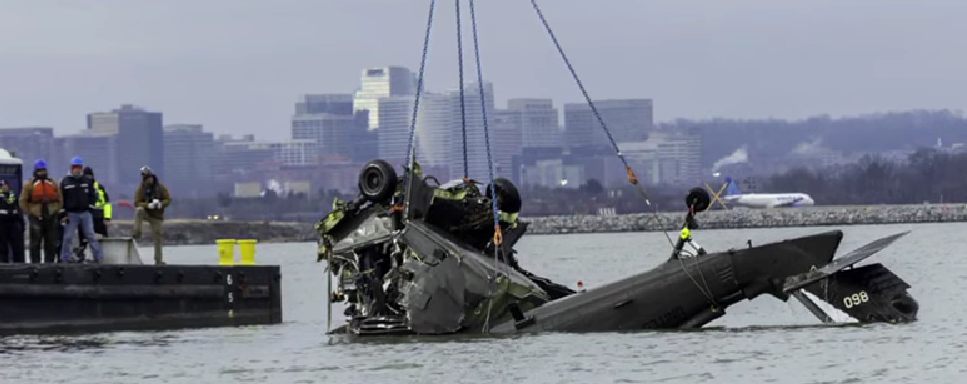
© CBS Evening News / YouTube
What new details did the Black Hawk crash investigation reveal about the pilots’ final conversation?
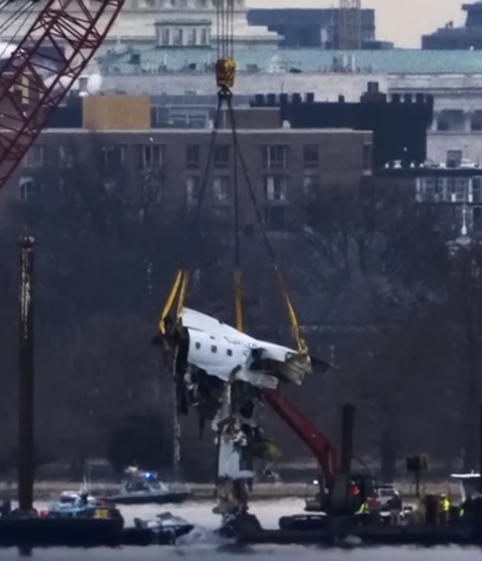
On a chilly January night in 2025, a routine training flight turned into a devastating disaster near Washington, D.C. An Army Black Hawk helicopter collided with an American Airlines passenger jet, killing all 67 people on board both aircraft.
The National Transportation Safety Board (NTSB) has been investigating this tragedy, and recent hearings have revealed critical details about what happened in the moments before the crash.
Newly released information, including pilot conversations and air traffic control records, paints a picture of confusion and missed opportunities that led to one of the deadliest aviation accidents in recent U.S. history.
Black Hawk Crash Investigation Reveals Pilot and Controller Errors
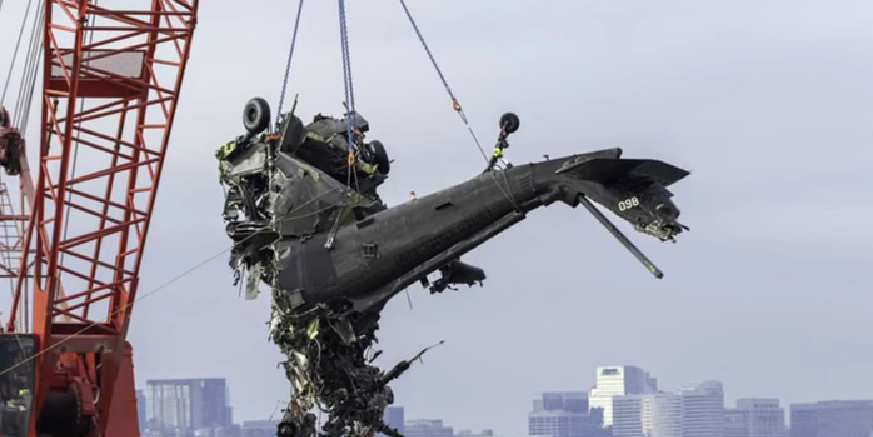
The Black Hawk was on a night training mission for Captain Rebecca Lobach, a 28-year-old pilot with about 500 hours of flight experience. Her instructor, Chief Warrant Officer Andrew Eaves, 39, was guiding her, along with Staff Sergeant Ryan O’Hara, 28.
The helicopter was flying near Ronald Reagan Washington National Airport when air traffic controllers warned them twice about an approaching American Airlines Flight 5342. The warnings came about two minutes and then 90 seconds before the collision.
Each time, the Black Hawk crew said they could see the jet and asked for “visual separation,” meaning they would navigate around it themselves. The controller approved this request.
However, about 20 seconds before the crash, the controller told the helicopter to “pass behind” the jet. This instruction was not heard because the Black Hawk’s microphone was briefly active, blocking the transmission.
Five seconds later, Eaves told Lobach, “Alright, kinda come left for me, ma’am, I think that’s why he’s asking.” Lobach replied, “Sure.” Just three seconds later, at 8:48 p.m., the helicopter, flying at 270 feet, collided with the jet, which was descending at 320 feet. The crash happened over the Potomac River, and both aircraft plunged into the water.
Altitude Confusion and Systemic Issues
One major issue revealed during the NTSB hearings was that the Black Hawk was flying higher than allowed. The helicopter’s route had a maximum altitude of 200 feet, but it was often between 270 and 300 feet. The crew believed they were lower, possibly due to faulty altimeters.
Tests after the crash showed that similar Black Hawk models had altitude readings off by 80 to 100 feet. This error may have contributed to the crew’s lack of awareness about their position relative to the jet.
Air traffic control also faced scrutiny. The controller did not warn the American Airlines pilots about the nearby helicopter, possibly due to staffing shortages and a busy night at the airport. The jet had been redirected to a different runway, Runway 33, which is less commonly used.
This change may have added to the complexity of the situation. The Black Hawk’s ADS-B system, which helps track aircraft, was turned off as part of the training mission, making it harder for controllers to monitor its position.
Lessons and Ongoing Questions
The NTSB hearings, held from July 30 to August 1, 2025, highlighted several safety concerns. The close proximity of helicopter and airplane routes near Reagan National Airport has been a known issue, with near-misses reported regularly.
In response, the Federal Aviation Administration (FAA) has limited helicopter flights in the area and restricted the use of visual separation. The Army is also reviewing its altimeter systems and training protocols.
This tragedy has raised tough questions about aviation safety. Why didn’t the Black Hawk crew adjust their altitude sooner? Could air traffic controllers have done more to prevent the collision? The NTSB’s final report, expected in 2026, will provide more answers.
For now, the families of the victims, including those of the 64 passengers on the jet, many of whom were young figure skaters, are left seeking closure. The hearings have been emotional, with relatives wearing photos of their loved ones as they listen to the painful details of that fateful night.
You might also want to read: 83-Year-Old Man Dies Mid-Air Then Disappears