Flat Earther Reveals Updated Perspective After Accepting He Was Wrong During an Antarctica Adventure to Prove the Earth Is Flat
What if everything you thought you knew about the world was wrong?
For some people, the idea that the Earth is flat—not a round globe—feels like a hidden truth.
They share videos, posts, and theories online, convinced that science has it all wrong.
But what happens when these beliefs face real-world tests?
For one YouTuber, this adventure to Antarctica turned into something unexpected.
It started as a mission to confirm ideas about the world, but the icy landscape had other plans.
Setting Out on the Expedition
What evidence led to the flat-earthers’ beliefs being debunked in Antarctica?
In late 2024, a group of people with different views on the shape of the Earth came together for a special trip called “The Final Experiment.” Organized by a pastor from Colorado named Will Duffy, the goal was to settle a big debate once and for all.
Some believed the Earth is flat, like a disk, while others knew it as a round globe. The flat Earth believers thought Antarctica was a huge ice wall around the edge of the world, and that the sun should rise and set every day there, just like everywhere else.
The team included popular online creators who supported the flat Earth idea, such as Jeran Campanella, who runs a YouTube channel called Jeranism, and Austin Whitsitt from Witsit Gets It.
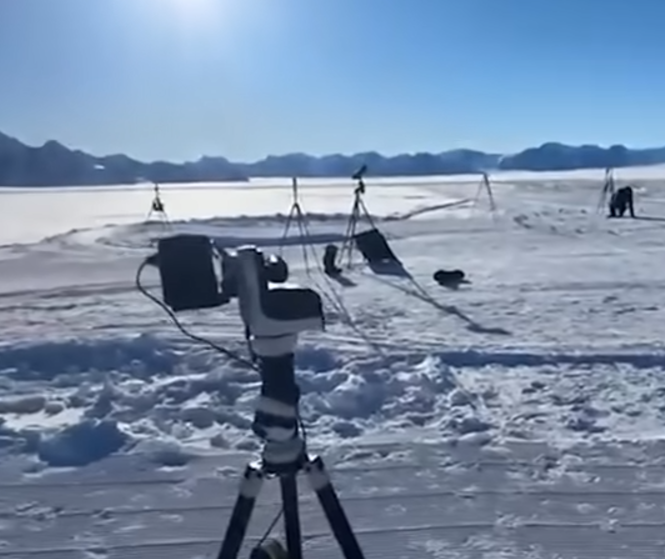
They raised money from fans to cover the high cost—about $35,000 per person—and flew from Chile to a camp in West Antarctica called Union Glacier. The trip lasted four days in December, during the southern summer when days are long. They used satellite internet to share live videos with the world, so everyone could see what they saw.
The group wanted to check one key thing: Does the sun really stay up for 24 hours straight in Antarctica? Flat Earth models say this can’t happen because the sun moves like a spotlight over a flat surface. If the sun didn’t set, it would mean their ideas needed a rethink.
As they arrived at the camp, about 79 degrees south, the team set up cameras and waited. The cold winds blew, and the endless white snow stretched out, but the real test was in the sky.
Flat Earther Beliefs Debunked: Witnessing the Unexpected
Day after day, the group watched the sun. Instead of going down at night, it kept circling in the sky without disappearing. This is called the midnight sun, and it happens because the Earth tilts on its axis while spinning, letting parts of the south stay lit for full days in summer. The live streams showed this clearly, with time stamps proving it was real and not edited.
Jeran Campanella, who had spent years sharing videos about why he thought the Earth was flat, faced this head-on. He had believed there was no such thing as a 24-hour sun in the south—it was all a trick or a lie, he thought.
But seeing it with his own eyes changed that. In one video from the trip, he said, “Sometimes you are wrong in life. I thought there was no 24-hour sun. In fact, I was pretty sure of it.” He admitted his old map of the world, which showed Antarctica as a wall, didn’t match what he saw.
Not everyone changed their mind the same way. Austin Whitsitt agreed they were wrong about the sun not staying up, but he said it didn’t fully prove the Earth couldn’t be flat. He wanted to think more about how it might fit other ideas.
Another participant, Lisbeth Acosta, talked about putting pride aside and looking for the truth, no matter what. The group discussed a lot during the trip, mixing excitement with surprise. Back home, some in the flat Earth community didn’t accept the videos.
They claimed it was fake, like filmed in a studio or part of a big plot. But for those who went, the experience was real and hard to ignore.
Life After the Ice
Months later, in 2025, Jeran Campanella shared more about how the trip affected him. In interviews and podcasts, he explained stepping away from the flat Earth group. He said his brain had fought against the evidence at first, but he couldn’t deny what he saw.
“I honestly believed there was no 24-hour sun… I honestly now believe there is,” he told reporters.
This shift wasn’t easy—it meant rethinking years of work and facing backlash from old friends.
The expedition sparked talks online and in the news. Some praised the honesty of admitting a mistake, while others kept debating. Will Duffy, the organizer, said the flat Earth community was splitting apart because of it.
For Jeran, the journey wasn’t just about the shape of the Earth; it was about being open to new facts. He spent over $37,000 and traveled thousands of miles, but what he gained was a fresh view.
This story shows how one trip can challenge deep beliefs. Antarctica’s endless daylight proved stronger than expected, leading to personal growth for some. In a world full of ideas, sometimes seeing is believing. The debate goes on, but for Jeran, the path forward is clearer now.
You might also want to read: Earth Is Spining Faster and Scientists Are Considering Doing Something They Have Never Done Before