Trump Deploys AI Meme to Threaten “War” on Chicago—“Chipocalypse Now” Sparks Outrage
© Donald Trump / Truth
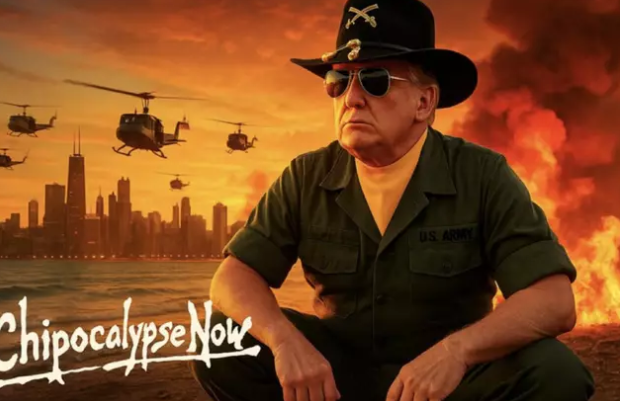
On September 6, President Donald Trump posted a provocative AI-generated image on Truth Social that appears to threaten Chicago with militarized action.
Inspired by the film Apocalypse Now, the image depicts Trump as Lt. Col. Kilgore, sitting amid helicopters and fire over the Chicago skyline—labeled “Chipocalypse Now.” The caption reads: “Chicago about to find out why it’s called the Department of WAR,” followed by the line: “I love the smell of deportations in the morning…”—a disturbing twist on the movie’s iconic quote.
Violent Imagery, Political Intent
The aggressive visual message arrived amid Trump’s broader immigration crackdown and his recent executive order to rename the Department of Defense as the “Department of War.”
His post hints at National Guard deployment and intensified ICE activity in Chicago, without naming a timeline or official details.
Local Reaction: Alarm and Rejection
Illinois Governor J.B. Pritzker condemned the post as authoritarian and terrifying, stating that threatening war on one of America’s largest cities is “not normal.”
Chicago Mayor Brandon Johnson similarly described the message as beneath national honor and unconstitutional. U.S. Senator Dick Durbin called it “disgusting,” and late-night host Stephen Colbert mocked the rhetoric, defending Chicago with biting satire.
Trump Tries to Reframe the Narrative
When questioned at the White House, Trump backpedaled: “We’re not going to war. We’re going to clean up our cities—so they don’t kill five people every weekend,” he said.
He framed the meme as symbolic, intended as a metaphor for combating urban crime—not a literal mobilization.
Policy Backdrop & Legal Doubts
The post comes amid debates over Trump’s authority to deploy the National Guard without state approval. Courts recently ruled such deployments illegal in California, raising constitutional flags.
While Trump claims Chicago needs federal intervention, state data shows declines in crime, and officials assert there is no emergency warranting such drastic measures.
Why It Matters
Trump’s use of cinematic-style AI to deliver threatening domestic imagery represents a new frontier in political messaging and meme warfare.
It blurs the line between parody and policy. This raises critical questions: How should serious governance handle stylized threats? What protections exist when graphic social media posts come directly from the president? And how do communities shield constitutional norms from such digital intimidation?
You might also want to read: Trump Turns “Heaven” Into a Fundraising Theme in Baffling $15 Blitz