Ukraine Strikes Chemical Plant Deep in Russia; WWIII Fears Escalate after Gubakha Drone Attack

© ASTRA
On the evening of September 13, 2025, a Ukrainian drone strike targeted the Metafrax Chemicals plant in the city of Gubakha, located in the Perm Krai region of Russia—roughly 1,118 miles from the Ukrainian border.
What Is Going on?
The chemical facility, which produces ammonia, urea, and melamine, sustained a hit. Local Russian officials reported that emergency services had responded, and while the plant continued operating, no immediate threat had been posed to nearby civilians. The production site recently added an AUM (Ammonia-Urea-Melamine) line, which is a key industrial asset.
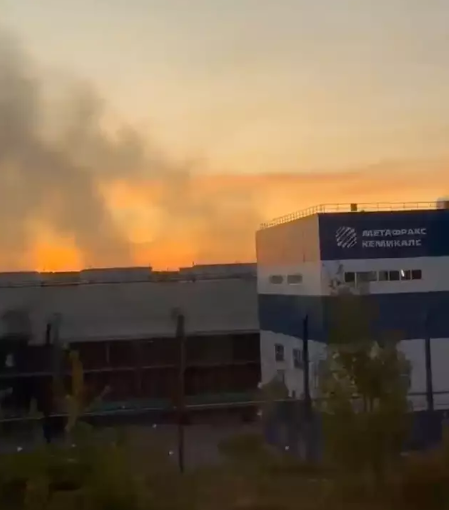
This attack follows a string of Ukrainian strikes into territories deep inside Russia, including oil refineries in regions like Bashkortostan, which lie hundreds of miles from the front lines.
Such operations reflect enhanced reach and coordination by Ukrainian forces using drone technology and long-range unmanned aerial vehicles.
Why It’s Raising Alarm
The penetration of Ukrainian drones into deeply held Russian territory, especially targeting high-value industrial infrastructure, is feeding growing anxiety internationally. Analysts and observers view this as a possible escalation—and not only in the Ukraine-Russia war.
These strikes expand the geographic footprint of conflict, and concern is rising that what was once strictly regional warfare could ignite broader confrontation.

Polls in the U.S. reflect this unease: a significant share of Americans now believe there is a real chance of World War III in the coming years.
Meanwhile, geopolitical tensions across NATO countries are intensifying. Reports of border airspace violations, drone incursions, and heightened military alertness amplify the sense that the conflict’s reach is expanding.
Russian Response & Official Reactions
Perm Krai officials, while confirming the strike, emphasized that the plant continues to operate normally despite damage. They also stressed there is no immediate danger to the local population. Moscow has not yet issued a detailed military response but routinely condemns Ukrainian deep incursions as provocations.
Influential leaders abroad have weighed in. E.g., in Poland, Romania, Estonia, and other NATO member states there is increasing concern that these drone operations and airspace violations may test alliance boundaries. These nations are pushing for stronger collective responses and clearer rules of engagement to prevent broader escalation.
What’s Next & Broader Stakes
With Ukraine increasingly capable of striking deep into Russian industrial zones, there are several potential consequences:
- Further Russian retaliation could target Ukrainian infrastructure or attempt strikes further from contested front-lines, risking civilian areas and international fallout.
- NATO alignment and response may be tested: airspace protections, military deployments, and diplomatic pressure are under review in multiple member states.
- International diplomacy risks escalate: sanctions, political isolation, and global economic disruptions may accelerate.
- Civilian and environmental dangers: Chemical plants pose a high risk—if infrastructure is damaged more severely, there could be chemical leaks, environmental damage, and human health hazards.
You might also want to read: Russia Dismisses Trump’s Sanctions Threat as ‘Absolutely Useless’