Major Internet Outage Hits Popular Apps & Websites
© Canva
On October 20, 2025, a sweeping internet outage disrupted dozens of high-profile apps and websites around the world, highlighting the fragility of digital infrastructure.
The root cause: problems at Amazon Web Services (AWS), the cloud-computing giant whose services underpin much of the modern internet.
What Went Wrong & What Got Hit
The outage began early in the morning (U.S. Pacific time) with AWS reporting “increased error rates and latency” in its US-EAST-1 region, a major data-center hub in Virginia. Tools such as DynamoDB and related API endpoints were flagged as affected.
Because many apps and websites rely on AWS’s infrastructure—everything from storage, compute power, authentication, and databases—the disruption cascaded widely. Platforms affected included:
- Social & messaging apps: Snapchat, Signal
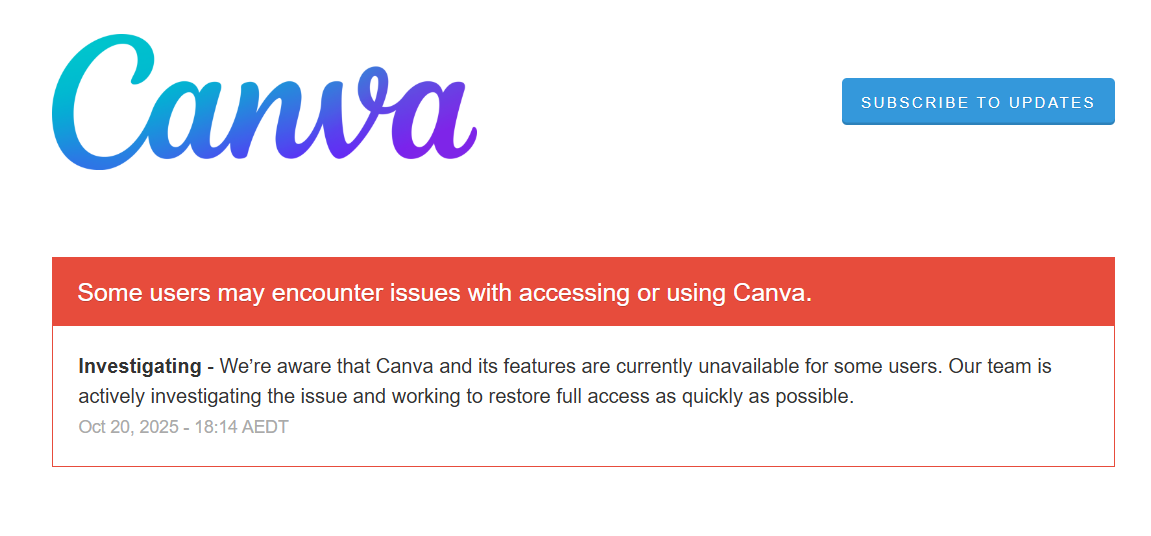
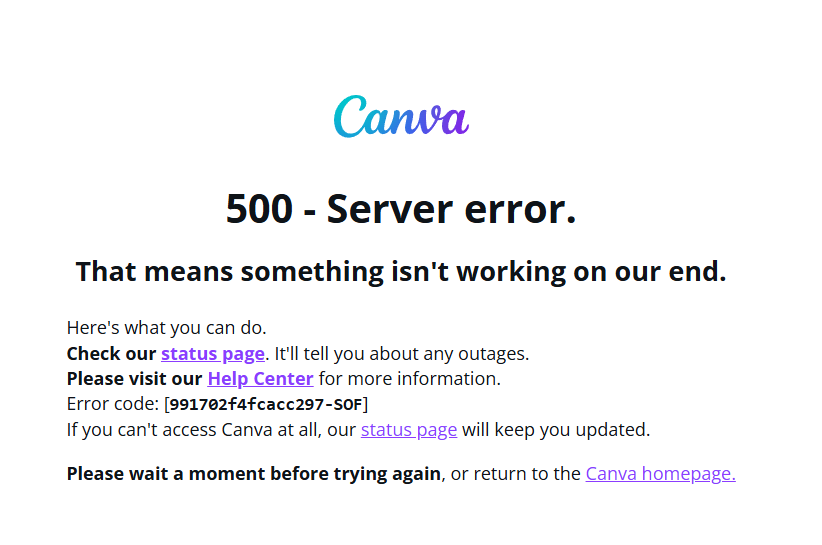
- Gaming & entertainment: Fortnite, Roblox, Canva
- Financial & service apps: Robinhood, Venmo
- Others: streaming services, bank login portals, government websites
In the UK, bank groups including Lloyds Banking Group (with its brands) reported customers unable to log into online banking. Government tax authority websites also flagged disruptions.
Why the Outage Is a Big Deal
- Concentration of risk: One cloud-region issue at AWS brought down services that seemed unrelated. That reveals how much of the internet runs on a small number of infrastructure providers.
- Business & consumer impact: From gamers to bank users, the interruption halted access, degraded services, and raised questions about backup/safeguard practices.
- Trust & reputation risks: For companies relying on cloud services—and for the cloud providers themselves—this kind of event reduces confidence and may prompt regulatory or competitive shifts.
- Tech dependency spotlighted: Many users don’t see cloud infrastructure; when it fails, the visible result is “apps down,” but the problem is deeper.
What’s Next: Recovery & Lessons
AWS engineers have reportedly identified a “potential root cause” in the US-EAST-1 region (specifically DNS resolution issues for DynamoDB API) and are working on mitigation.
For affected companies, the focus will shift to:
- Reviewing dependencies and how resilient their systems are (geographic redundancy, multi-cloud setups)
- Communicating with users about outages and recovery
- Considering cost-benefit trade-offs: one provider may be cheaper, but exposes the risk of single-point failure
For users, the incident serves as a reminder: app downtime isn’t always a “bug” in the app—it can be deeper in the infrastructure stack.
You might also want to read: Austria Surgeon on Trial for Letting Daughter Assist in Surgery