Scientists Claim Two People Communicated in Their Dreams
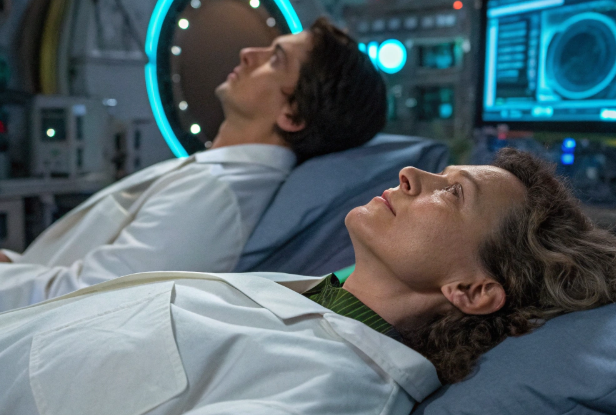
© Generated by Recraft
A team led by the California startup REMspace says it has, for the first time, enabled two people to exchange a message while both were asleep and lucid dreaming, using brain-wave monitoring and specially designed equipment.
The Dream Experiment — What They Reported
According to published articles:
- The participants were experienced lucid dreamers—people trained or practiced at recognising when they are dreaming.
- Both were in separate locations. Their brain activity, breathing, sleep stage, and other biometrics were tracked via sensors, WiFi, and a “server apparatus.”
- Once the system detected the first participant had entered a lucid dream, a random word in a made-up language (“Zhilak”) was delivered via earbuds to that participant. The first participant repeated the word in the dream.
- Later, the second participant entered a lucid dream, was given the same word, and upon waking, confirmed they had heard it in their dream. This is reported as the first “dream-to-dream” communication.

Why It’s Interesting
- If replicated and verified, it suggests the possibility of two-way communication during sleep—a feat many considered belonged only in science fiction.
- Potential applications: therapy (intervening in nightmares), training (learning while asleep), or new forms of interaction during sleep states.
- For neuroscience, it challenges assumptions about how isolated the dreaming brain is from external communication and whether the sleeper can reliably process and respond to external signals.
Caveats & Skepticism
- The results come from a startup claim, not a fully peer-reviewed scientific paper (so far). Several outlets note that the technology and methods are not completely transparent.
- It’s unclear how robust or reproducible the results are, including the number of participants, trials, and error margins.
- The message exchanged was extremely simple (one word), and both participants were experienced lucid dreamers, which may limit generalisability.
- Dream communication (sometimes called “dream telepathy”) has historically been fraught with controversy, replication issues, and scepticism from mainstream science.

What This Means Going Forward
- Further research: independent labs will likely attempt to replicate the experiment to test validity, scalability, and reliability.
- Ethical & technological issues: If it becomes possible to transmit messages into a dream, questions arise about consent, privacy, manipulation, or unintended consequences.
- Practical applications may be many years away, and the hype should be tempered with caution—just because something is claimed doesn’t mean it’s confirmed.
- For now, we should see this as a provocative proof-of-concept rather than a ready-made technology.
You might also want to read: 10+ Mind-Blowing Dream Facts You Never Knew