Australia’s PM Pushes Stricter Gun Laws After Bondi Beach Terror Attack

© CC BY 4.0
Before legislative debate resumes in Canberra and state capitals, Australia’s political leadership has signalled a major shift in its approach to firearm regulation. After the Bondi Beach terror attack — a mass shooting that killed at least 15 people at a Jewish Hanukkah celebration — Prime Minister Anthony Albanese and state premiers have announced plans to strengthen national gun laws, addressing shortcomings exposed by the tragedy.
Australia has historically had strict firearms regulations since sweeping reforms after the Port Arthur massacre in 1996, but the horror at Bondi Beach — where suspects legally owned multiple weapons — has sparked fresh urgency for reform.
Licensed Guns in Bondi Beach Terror Attack
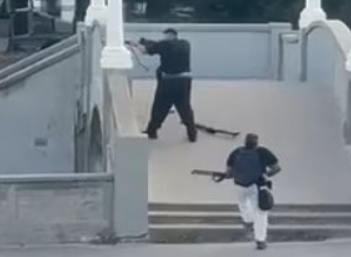
In the Bondi Beach shooting, a father-and-son team allegedly used legally held firearms to open fire on a crowded holiday event, prompting national shock and calls for change. The older suspect had held a gun licence for years and legally accumulated multiple firearms, raising alarm about how existing licensing and monitoring systems failed to flag potential danger.
Prime Minister Albanese responded by calling the attack “a dark moment for our nation,” and saying the government is “prepared to take whatever action is necessary” to tighten gun laws and improve public safety.
What Reforms Are on the Table Because of the Bondi Beach Attack
Australian leaders — in cooperation with state and territory governments — have outlined several key proposals:
Limits on Number of Firearms Per Owner
New national limits would cap how many guns an individual can hold legally — a move designed to reduce stockpiles of weapons that could be misused.
License Eligibility Tightened
Only Australian citizens would be eligible for firearm licences, closing some loopholes currently open to non-citizens with residence or other categories of licences.
Stricter Licence Review and Replacement Rules
Authorities want to reassess permanent or long-term licences, including periodic reviews of holders’ circumstances, to better detect changes — such as radicalisation or mental health risks — over time.
National Firearms Register & Cooperation
Moreover, federal and state leaders are discussing a renewed commitment to a fully functioning national firearms register, alongside improved coordination of background checks and monitoring across jurisdictions.

These plans represent the most significant push on firearm policy since the 1996 Port Arthur reforms — when Australia banned automatic and many semi-automatic weapons and established uniform licensing to reduce mass-shooting risk.
Political Context — National Unity After Tragedy
The Bondi Beach massacre — declared a terrorist attack targeting a Jewish community celebration — has united much of Australia’s political leadership in support of the reforms. Both Prime Minister Albanese and New South Wales Premier Chris Minns have emphasised the need to prevent future attacks and ensure that legally held guns cannot be misused by extremists or others who pose a threat.
In addition to gun-law reform, the government has vowed to bolster protections for Jewish communities and counter rising hate-motivated violence.
Public Reaction and Debate
The public response to the reform proposals has been intense and varied. Many Australians, still mindful of the historic Port Arthur reforms, have expressed broad support for tightening gun ownership laws even further. Others have called for careful investigation before imposing changes, warning against knee-jerk policy that may not address the root causes of extremism or violence. (Discussion threads and community reactions reflect these debates across social platforms.)

Gun-control advocates see the proposals as overdue, while some critics argue that the existing stringent laws have long kept gun violence rare compared with other countries and that the focus should remain on mental-health and security monitoring. (Online commentary illustrates this split in public sentiment.)
Why This Matters After the Bondi Beach Attack
The Bondi Beach attack — one of the deadliest in Australia’s recent history — has exposed gaps in what has been widely regarded as a robust firearm regulation regime. With legally held guns used in a mass casualty event, politicians and the public alike are questioning whether more stringent licensing, monitoring, and ownership limits can help prevent future tragedies without undermining community safety and lawful use.
As national leaders discuss and refine the reforms, Australia’s approach may set a new benchmark in how democracies balance individual rights with public safety in a world where violent threats have evolved.
You might also want to read: Mass Shooting at Bondi Beach During Hanukkah Shocks Australia