Sergei Krikalev: The Cosmonaut Who Found His Country Gone
Public Domain
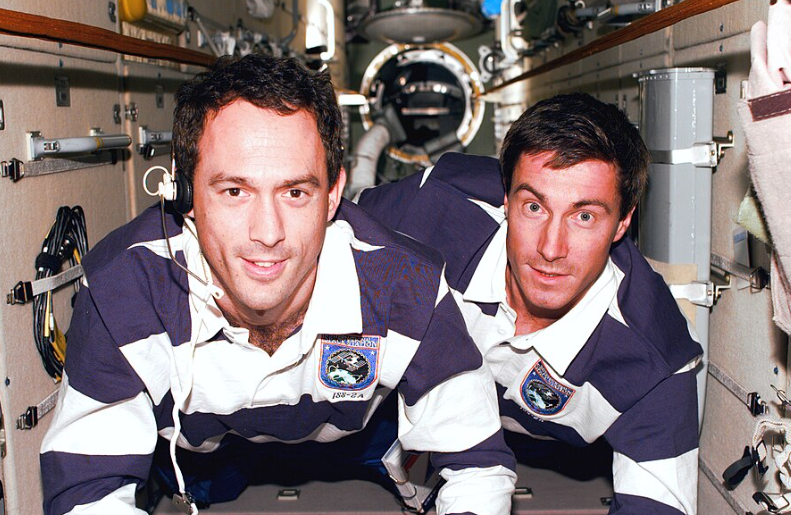
In May 1991, Soviet cosmonaut Sergei Krikalev launched aboard the Mir space station for what was supposed to be a routine, five-month rotation mission. But as that mission unfolded, events back on Earth took a dramatic turn that no astronaut could have anticipated: the Soviet Union began to collapse.
Krikalev spent the first three months aboard Mir conducting research, monitoring systems, and staying in regular contact with mission control — even as he grew homesick and regularly communicated with friends via radio. Then he began to hear disturbing reports from Earth: food shortages, civil unrest, and the crumbling of the Soviet state itself.
“At first we thought it was rumours,” one account later quoted Krikalev recalling, “but the situation was real.”
Krikalev and His Story: The Country That Sent Him Upwards No Longer Exists
By late December 1991, the Soviet Union had formally dissolved, breaking apart into independent republics at the height of its political and economic collapse. The state that had launched Krikalev into orbit simply ceased to exist.
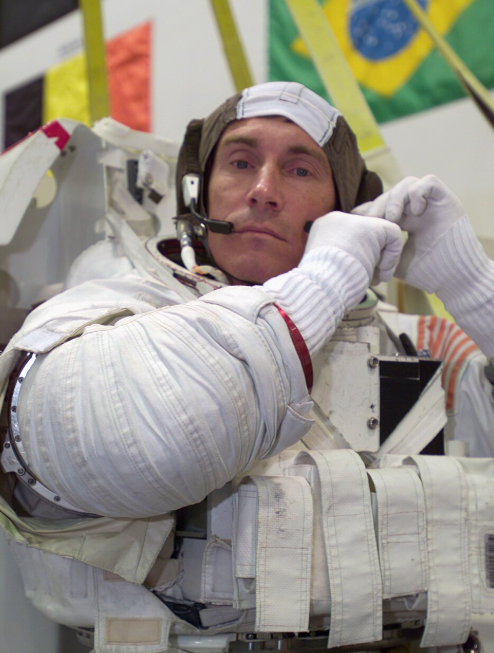
Mission control eventually called Krikalev with shocking news:
“We can’t keep this from you anymore … everything is collapsing around us … we’ve run out of money … the Soviet space agency can’t send someone to replace you.”
He was given a choice: return home as planned — which risked leaving the Mir station unoperated and possibly doomed — or stay and help run Mir as long as needed to keep it functioning. Given the uncertainty of the station’s fate and the logistical nightmare unfolding on Earth, Krikalev chose to stay.
For 311 days, he remained aboard Mir — more than twice as long as his original mission was supposed to last — completing 5,000 orbits of Earth and making history in the process.
A Historic Return and Changing World
When Krikalev finally returned to Earth on March 25, 1992, the world he knew had vanished. The Soviet Union was gone, replaced by new nations and governments. Cities had been renamed — his hometown of Leningrad was now St. Petersburg — and the political landscape of Eurasia had been forever transformed.
Krikalev himself had changed countries, going from a Soviet citizen to a Russian one. His extended, unintended mission made him known as the “last Soviet citizen in space”, a title that symbolised both his unique experience and the historic period of transition he had lived through — on Earth and above it.
Scientific and Personal Impact on Krikalev
Spending nearly a year in space had significant physical effects. Long-term exposure to microgravity can accelerate bone and muscle loss, weaken the immune system, and require extensive rehabilitation after return. Astronauts and cosmonauts regularly train to mitigate these risks, but such an extended mission was beyond anyone’s original plan.
Krikalev himself later described a mix of satisfaction and relief upon returning to Earth: satisfaction for having completed his duties under extraordinary circumstances, and relief at reuniting with family after such an uncertain period.
Krikalev, a Career Defined by Space Exploration
Krikalev’s time aboard Mir was just one chapter in an extraordinary career. Over the 1980s, 1990s, and 2000s, he participated in multiple missions, including becoming one of the first cosmonauts to work alongside NASA in joint U.S.–Russian shuttle flights and being among the first crew to enter and help activate the International Space Station (ISS).

By the time he retired in 2007, Krikalev had logged over 803 days in space — one of the highest totals of any spacefarer in history.
Legacy: The “Last Soviet Citizen”
Sergei Krikalev’s extraordinary story — of orbiting Earth while his own nation dissolved below him — stands as a unique intersection of space exploration and geopolitical change. He did not merely complete a scientific mission; he embodied a moment when humanity’s reach into space inextricably intersected with dramatic transformations on the planet below.
His extended mission remains one of the most remarkable tales in the history of space exploration and serves as a reminder of how exploration often unfolds at the edge of the unknown — whether in orbit or geopolitics.
You might also want to read: A Long-Lost Tomato Was Found in Space After 8 Months