Can Trump Really Break Up the EU?
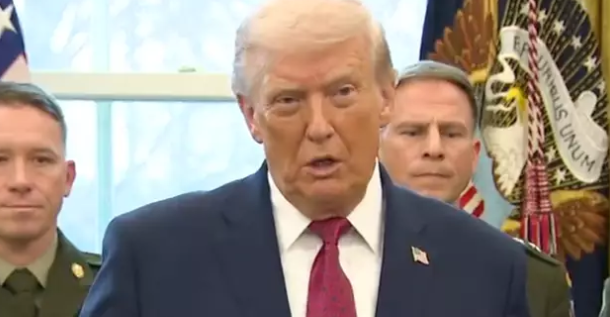
© C Span
This week’s geopolitical buzz in Europe centers not on a trade deal or military pact — but on claims about a Trump U.S. plan that could reshape the future of the European Union.
According to a Deutsche Welle analysis, parts of a leaked draft of the U.S. National Security Strategy under President Donald Trump reportedly outline an approach that might see Washington work more closely with Italy, Austria, Hungary and Poland with the aim, critics say, of drawing them away from the EU’s core influence.
What the Leaked Trump Strategy Claims
While the officially published strategy does not explicitly call for removing countries from the EU, the leaked details — which the U.S. government has not confirmed — show how Trump’s vision for Europe is driving intense debate about transatlantic relations, sovereignty, nationalism and the future of the Union.
According to media outlets reporting on the leaked draft — including a “fuller” unpublished version obtained by Defense One — the U.S. strategy mentions that Washington should:
- Deepen cooperation with select EU member states such as Italy, Austria, Hungary and Poland.
- Focus on supporting political parties, movements and cultural figures who advocate for national sovereignty and traditional values, provided they remain pro-American.
- Approach Europe’s political landscape in a way some analysts interpret as potentially undermining the EU’s cohesion rather than strengthening the bloc as a unified partner.
These details have fueled speculation that part of the strategy could aim to pull these four countries away from the European Union’s political centre of gravity, echoing Brexit-style language sometimes used by commentators.
U.S. Response and Official Context
It’s important to stress that the published version of the U.S. National Security Strategy — the official 33-page document released by the White House — does not explicitly call for EU membership changes. Rather, it criticizes the EU on issues such as migration policy and governance, and calls for “cultivating resistance” to Europe’s current political trajectory while prioritizing bilateral ties based on shared values and interests
The unclassified strategy focuses on concerns about demographic change, migration, and broader geopolitical competition — but not on a direct push for countries to leave the EU.
Reaction in Europe — From Skepticism to Outrage
European leaders have reacted strongly to the leaked narrative, whether or not it corresponds to official policy:
Austria’s chancellor publicly rejected what he called an attempt to influence Austria’s internal affairs, stressing the country’s commitment to the EU and its democratic independence.
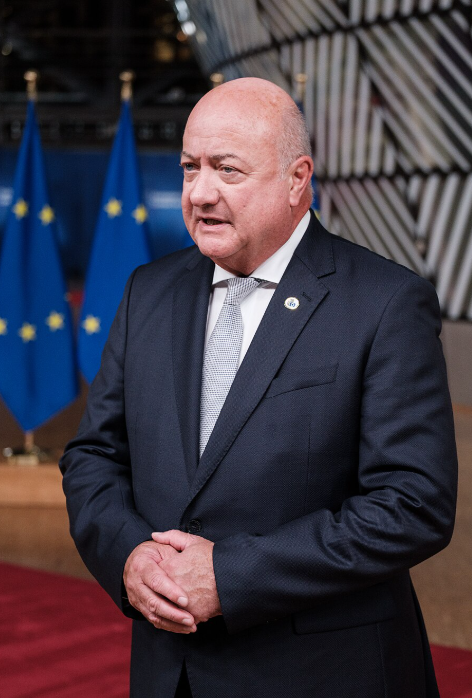
Critics argue that such a strategy — even if meant to strengthen bilateral cooperation — could undermine the unity of the European project, which has been a cornerstone of peace, economic integration and political stability for decades. Such perspectives view the idea of breaking up the Union as unrealistic and destabilizing.
Supporters of stronger bilateral ties, by contrast, see value in focusing on flexible partnerships between like-minded governments, especially among nations with conservative leadership or shared geopolitical concerns — but they stop short of advocating EU withdrawal.
Why This Matter Is Gaining Traction
The leaked strategy has tapped into existing tensions about the EU’s future, the role of the U.S. in European politics, and national sovereignty versus transnational cooperation. It also comes at a time of broader debates about:
- rising nationalism in some EU states
- controversies over migration and border policy
- concerns about Russia and Ukraine
- broader critiques of globalisation and supranational institutions
Leaders in Brussels and capitals across Europe have made clear that EU membership is decided by the member states themselves, not by any external power — and that the bloc’s cohesion is a priority even amid disagreements with the U.S. on trade or security.
You might also want to read: Trump to Sue BBC for $10 Million After Edited Speech