Don’t Miss 2026’s Only ‘Blood Moon’ Total Lunar Eclipse
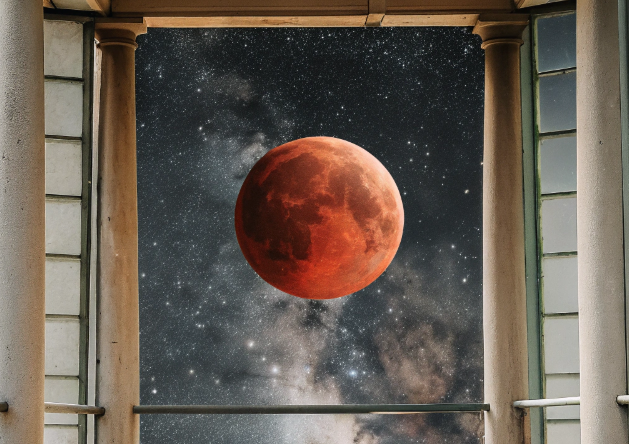
© Generated by Recraft
Astronomy enthusiasts and casual skywatchers alike have a celestial treat to look forward to this year: a total lunar eclipse on Tuesday, March 3, 2026, sometimes called a “Blood Moon” because of the reddish hue the Moon can take on when Earth’s shadow fully covers it.
This will be the only total lunar eclipse of 2026, making it a particularly noteworthy event. During totality — when the Moon is completely within Earth’s umbral shadow — the lunar surface may glow in warm reds and coppery oranges.
What and Why: Understanding the “Blood Moon”
A total lunar eclipse happens when Earth passes directly between the Sun and the Moon, blocking the Sun’s direct light from reaching the lunar surface. Some sunlight still reaches the Moon after passing through Earth’s atmosphere, which scatters shorter blue wavelengths and lets longer red and orange wavelengths reach the Moon — casting that characteristic “blood” color.
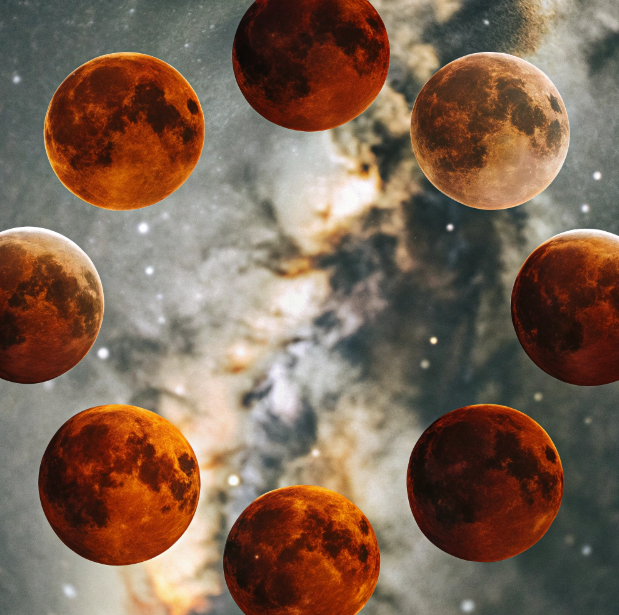
Unlike solar eclipses, lunar eclipses are safe to watch with the naked eye and don’t require protective eyewear. You can enjoy the whole show outdoors as long as the skies are clear.
Visibility: Where You Can Watch
The March 3, 2026, total lunar eclipse will be best seen across western North America, where skywatchers can observe the entire event from start to finish while the Moon is high in the sky.
Eastern Australia, New Zealand, and parts of northern Japan will also enjoy excellent visibility. In other regions such as East Asia and the Pacific, portions of the eclipse will be visible around moonrise or moonset.
In parts of eastern North America (like the U.S. East Coast), totality may occur close to moonset, meaning observers will see the eclipse low on the horizon before the Moon dips out of view.
Skywatchers should check local lunar rise and set times to plan their viewing — a region’s latitude and longitude determine how much of totality is visible in that location.
Timing and Eclipse Phases
According to astronomical calculations, the total lunar eclipse on March 3, 2026, will last about 58 minutes during totality, with the full event (from start to finish) spanning several hours as the Moon moves through Earth’s shadow.
The sequence typically begins with a penumbral eclipse — when the Moon enters Earth’s outer shadow and begins to dim — followed by the partial phase as it moves into the darker umbra, and then totality, when that “blood red” glow appears. After totality, the Moon gradually exits Earth’s shadow in reverse order.
Why This Eclipse Matters
Total lunar eclipses aren’t extremely rare, but they don’t occur every year either — and the 2026 event will be the only total lunar eclipse this year, giving anyone who enjoys night-sky events a special opportunity.
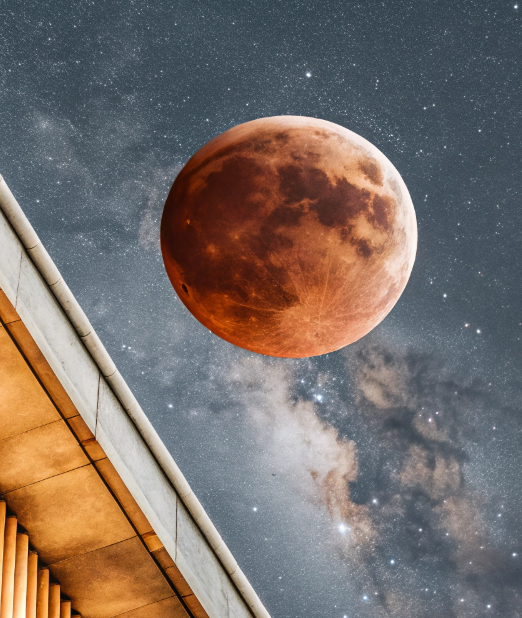
For many observers, the visual drama of Earth’s shadow progressing over the Moon — culminating in the glowing red hue — is both striking and memorable, making it a favorite among amateur astronomers and photographers.
This eclipse also comes at a time when more people than ever are interested in astronomical events, with social media and livestreams bringing the spectacle to global audiences. For those in places where skies are clear, it’s a chance to capture stunning photos or simply enjoy nature’s rhythms.
Tips for Viewing
- Find a dark sky location free from city lights for the best color contrast.
- Check local moonrise/set times so you don’t miss the start of totality in your region.
- No special equipment needed: the eclipse is visible with the naked eye, though binoculars or a telescope enhance lunar features.
- Photographers: use a tripod and zoom lenses for sharper shots of the Moon as it transitions through phases.
You might also want to read: 4 Zodiac Signs Set to Be the Luckiest in 2026