Earth’s “Second Moon”? What Scientists Are Actually Saying
© ShiningScience / X
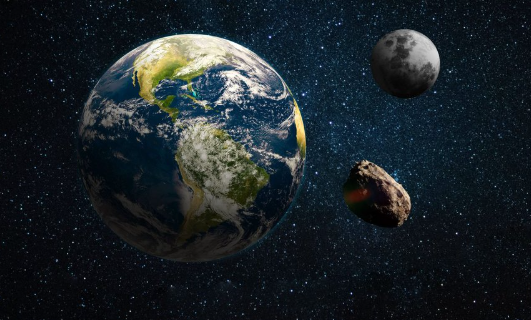
Reports are circulating that NASA has confirmed Earth now has a second moon, one that will stay until 2083. While it makes for a tempting headline, the reality is more nuanced.
The object in question is a small asteroid or “quasi-moon” dubbed 2025 PN7, which shares an orbital path with Earth for a time — but it’s not a full-fledged second moon in the traditional sense.
What Is 2025 PN7?
Astronomers observed 2025 PN7 and calculated that it has been co-orbiting the Sun in sync with Earth for decades. Reports suggest it will remain in Earth’s near vicinity until roughly 2083.
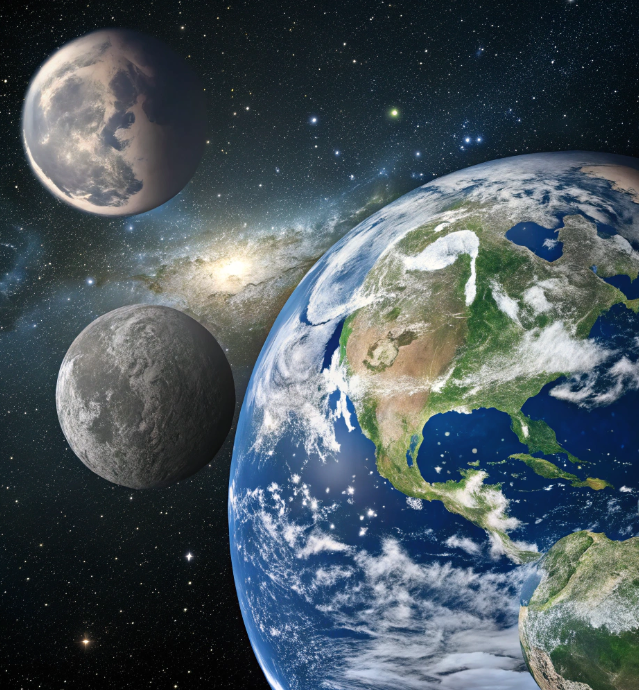
But there are key distinctions: unlike our Moon, 2025 PN7 doesn’t orbit Earth in a stable, bound way. It’s a “co-orbital object” or quasi-satellite — meaning it loops around the Sun in a way that keeps pace with Earth, giving the appearance of a companion, yet it isn’t held in place by Earth’s gravity alone.
Why the “Two Moons” Story Sounds Wrong
- A true moon is gravitationally bound to Earth, completing orbits around our planet. 2025 PN7 does not meet that criterion.
- Earlier examples like 2024 PT5 were captured temporarily (for just weeks or months) and then escaped Earth’s grip.
- The word “moon” carries public weight; calling such an object a “moon” is misleading without the orbital context.
What Makes This Discovery Interesting
Even if it’s not a true moon, 2025 PN7 is fascinating for several reasons:
- Orbital dynamics: It shows how objects can share orbits with Earth without being bound to it, giving insight into near-Earth asteroids and orbital mechanics.
- Detection improvements: Discovering such a small object required modern observational tools and highlights how many similar objects may remain undetected.
- Public perception: Stories like this spark interest in space and remind us how complex the solar system neighborhood really is.
What to Watch For
- As observations continue, astronomers will refine the object’s trajectory and how long it remains a quasi-companion to Earth.
- Researchers may use 2025 PN7 to safely study small-body physics, orbit stability, and even potential resource prospects for future missions.
- Communication matters: how such discoveries are described—and sometimes sensationalised—will influence public understanding of space science.
You might also want to read: Meet the Man “Missing 90% of His Brain”