Erika Kirk Says Husband’s Death Isn’t a “Gun Problem”

© CC BY-SA 4.0
After the assassination of her husband, conservative activist Charlie Kirk, Turning Point USA CEO Erika Kirk declared at a recent panel that she does not believe the U.S. has a “gun problem,” despite the violent context of his death. Instead, she described the root issue as a “deeply human,” or “soul problem.”
What Erika Kirk Is Saying & Why She Rejects the “Gun Problem” Label
Speaking at the DealBook Summit on December 3, 2025, she said she still supports the right to bear arms under the Second Amendment. She argued that violence arises not from the existence of guns per se, but from a combination of mental-health crises, societal division, and people resorting to violence because they “don’t want to hear a different point of view.”
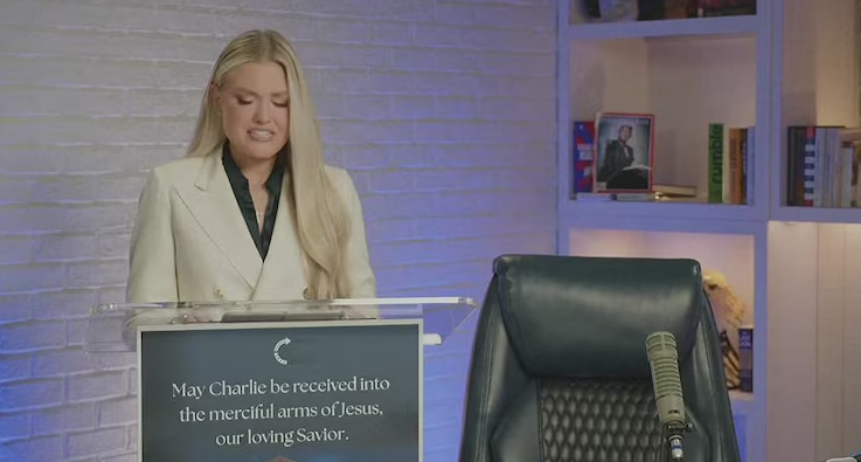
Context: The Kirk Assassination That Shook a Movement
Charlie Kirk was assassinated during a public event at Utah Valley University on September 10, 2025 — an event that stunned his supporters and triggered nationwide shock. His death has reignited debates around gun violence, security at public events, free speech, and political polarization.
Despite her loss, Erika Kirk has taken up leadership of Turning Point USA and is prepared to continue its mission.
Her Arguments — Mental Health, Polarization & Culture Over Weapons
According to Erika Kirk:
- She believes that focusing on guns misses the point: “You can have individuals that will always resort to violence … that is a soul problem.”
- In her view, many Americans — especially young people — are struggling with mental health issues, anxiety, depression, and a breakdown in civil discourse. She feels these deeper social maladies push some to violence.
- She also said she’s forgiven her husband’s killer, framing forgiveness as a way to reject “poison” and move forward — but that forgiving doesn’t mean endorsing what happened.
Reactions & Controversy — Why Many Disagree
Unsurprisingly, her remarks have sparked backlash. Critics argue that rejecting the “gun problem” label after a politically motivated assassination seems tone-deaf or dismissive of patterns of gun violence in the U.S. Some media voices stressed that guns — as tools of fatal violence — still matter, regardless of mindset or motive.

Others say that conflating violence solely with mental health or “soul problems” can downplay broader systemic issues around access to firearms, background checks, security at public events, and political extremism — especially when ideological hate or threats related to free speech may be involved.
What’s at Stake — Gun Laws, Public Safety, and Memory Politics
Erika Kirk’s stance underscores a growing divide in America’s debate over gun violence:
- On one side — calls to tighten gun regulations, increase public-safety measures, and re-evaluate access to firearms.
- On the other hand — arguments that societal factors like mental-health care, social isolation, polarized discourse, and cultural breakdown are the root causes — and legislation must address those instead.
Her public forgiveness of her husband’s killer and reframing the tragedy as a “soul problem” rather than a “gun problem” will likely influence political discourse, especially among conservatives and advocates for gun rights, including within Turning Point USA.
But for many victims, survivors, and advocates of stricter gun control, her message raises tough questions: Can you meaningfully address violence without confronting weapons? Or is rejecting gun-regulation debate a risk to broader public safety?
You might also want to read: Erika Kirk Speaks Out About Hug with J.D. Vance