8 Iconic Wedding Dresses in History, From Queen Victoria to Modern Royals

Catherine and Prince William after their wedding at Westminster Abbey in 2011. Robbie Dale / Wikimedia Commons, CC BY-SA 2.0 (cropped)
Few garments carry as much public meaning as a famous wedding dress. These eight gowns joined personal celebrations with craftsmanship that museums, archives, and fashion historians still document.
The Victoria and Albert Museum’s history of the white wedding dress, updated in 2024, provides the broader context. Royal Collection Trust records, palace announcements, museum catalogs, and government archives confirm the individual details.
Here are eight memorable wedding dresses, arranged from oldest to newest.
Queen Victoria, 1840
At her wedding, Queen Victoria wore a white satin court train bordered with orange blossom instead of the customary crimson robe of state, according to the Victoria and Albert Museum. The museum says expanding print media helped spread the image of the bride in white.
Royal Collection Trust records add that Victoria commissioned Honiton lace and chose silk from Spitalfields in East London. She did not invent the white wedding dress, but her widely discussed choice helped turn it into an enduring ideal.
Queen Elizabeth II, 1947
Princess Elizabeth’s Norman Hartnell gown arrived during Britain’s postwar austerity. Royal Collection Trust says clothing rationing remained in force and that the princess received 200 additional clothing coupons for its creation.
Hartnell used ivory duchesse satin with white seed pearls, silver thread, crystal, and appliqué embroidery. The refined princess-line shape balanced the period’s restrictions with the ceremony expected of a future queen.
Jacqueline Kennedy, 1953
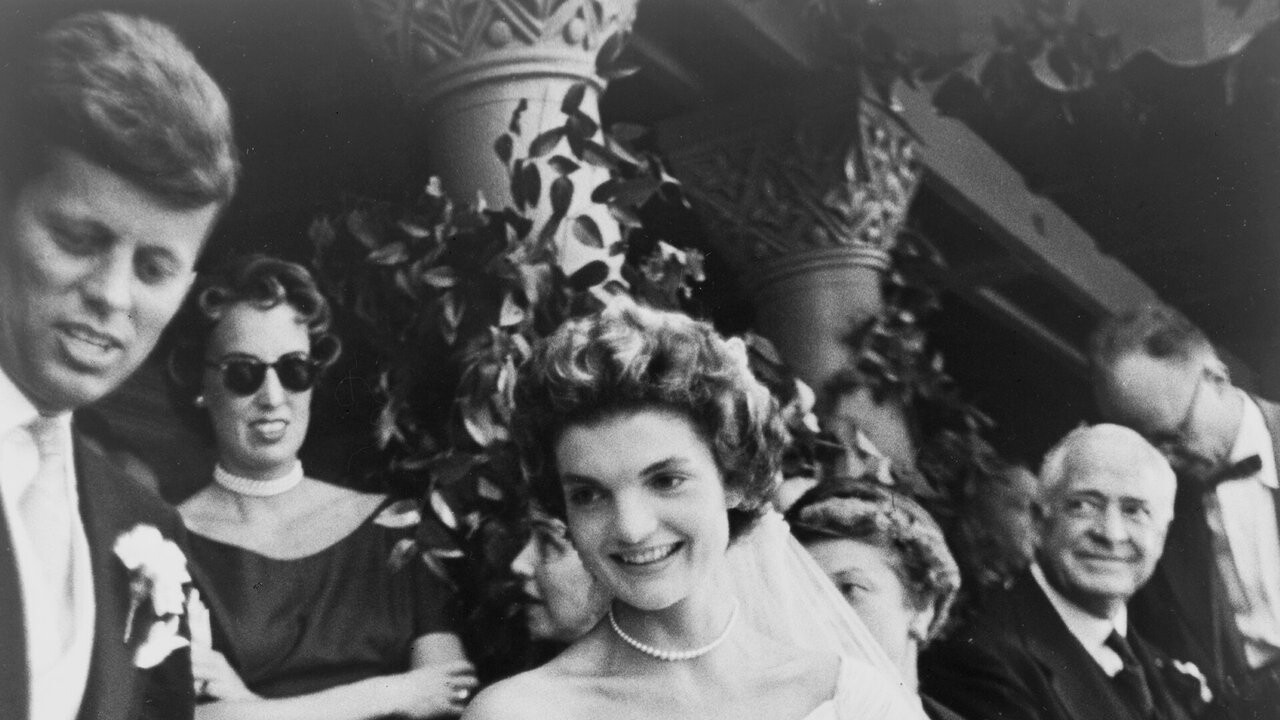
Ann Lowe created the ivory silk taffeta gown Jacqueline Bouvier wore when she married John F. Kennedy. According to the John F. Kennedy Presidential Library and Museum, it required 50 yards of fabric and more than two months of work.
The archive describes a portrait neckline and a bouffant skirt decorated with tucked rosettes and tiny wax flowers. Its sweeping shape captured midcentury formality, while its museum record preserves Lowe’s central place in the dress’s history.
Grace Kelly, 1956
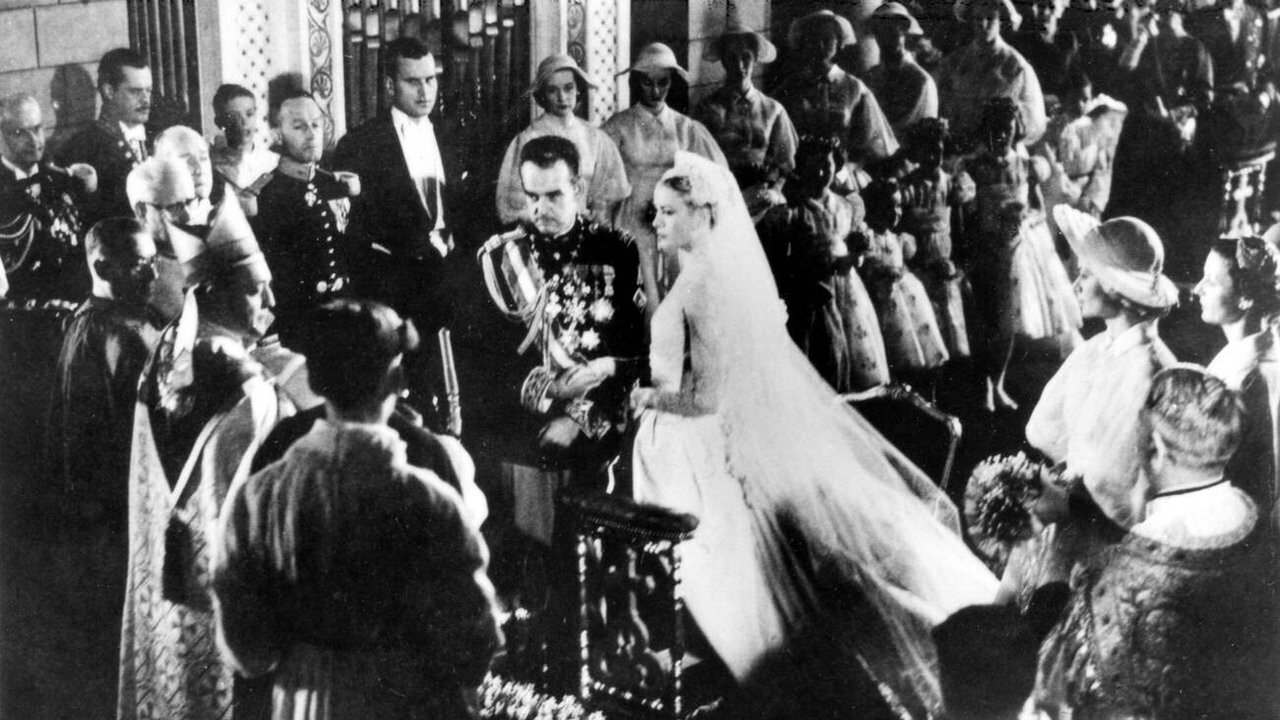
Grace Kelly’s gown was designed by Helen Rose as a gift from MGM Studios and constructed by the studio’s wardrobe department. Kelly later donated the ensemble to the Philadelphia Museum of Art.
The museum describes an ivory peau de soie skirt and a high-necked Brussels lace bodice accented with seed pearls. The covered neckline, long sleeves, and carefully pieced lace produced a composed silhouette suited to both a film star and a princess.
Princess Diana, 1981
David and Elizabeth Emanuel designed the gown Lady Diana Spencer wore for her wedding at St. Paul’s Cathedral. Historic Royal Palaces records that its train stretched more than 7 meters, or 25 feet.
That extraordinary train gave the ivory dress its defining sense of scale as Diana climbed the cathedral steps. Full sleeves, layered fabric, and the extended train made the gown inseparable from the grand setting around it.
Carolyn Bessette-Kennedy, 1996
Designer Narciso Rodriguez told a congressional hearing that he made the wedding dress for his friend Carolyn Bessette-Kennedy in 1996. The commission came before his own label became established.
A contemporary Los Angeles Times report described the design as a pearl-colored, sleeveless silk crepe gown with a draped front. Its piece of silk tulle served first as a mantilla and later as a shawl. After decades of structured bridal gowns, its spareness felt strikingly modern.
Catherine, Princess of Wales, 2011
Catherine Middleton worked with Sarah Burton of Alexander McQueen on her wedding dress, according to the official palace announcement. The design combined a fitted lace bodice, a full ivory skirt, and a restrained train.
The Royal School of Needlework handmade the lace appliqué using the Carrickmacross technique. Rose, thistle, daffodil, and shamrock motifs brought together floral emblems associated with the nations of the United Kingdom.
Meghan Markle, 2018
Clare Waight Keller designed Meghan Markle’s Givenchy wedding dress, the Royal Family announced on the wedding day. Its clean construction relied on six carefully placed seams, an open bateau neckline, and three-quarter sleeves.
The dress’s restraint placed greater attention on the veil. Meghan asked to represent all 53 Commonwealth countries, and Waight Keller incorporated their distinctive flora into its embroidery.
Together, these dresses show how bridal fashion can reflect craftsmanship, changing tastes, and the historical moment surrounding a wedding.
Sources:
- Victoria and Albert Museum: The Victoria Connection
- Royal Collection Trust: Queen Victoria’s Wedding Dress
- Royal Collection Trust: Queen Elizabeth II’s Wedding Dress
- John F. Kennedy Presidential Library and Museum: Jacqueline Bouvier’s Wedding Dress
- Philadelphia Museum of Art: Fit for a Princess — Grace Kelly’s Wedding Dress
- Philadelphia Museum of Art: Grace Kelly’s Wedding Dress and Accessories
- Historic Royal Palaces: A History of Royal Weddings
- U.S. Government Publishing Office: Design Law Hearing
- Los Angeles Times: Talk About a Dress Designer’s Dream
- The Royal Family: Catherine Middleton’s Wedding Dress
- The Royal Family: Meghan Markle’s Wedding Dress