Inside China’s “Vertical Town”: The Insane Apartment Complex
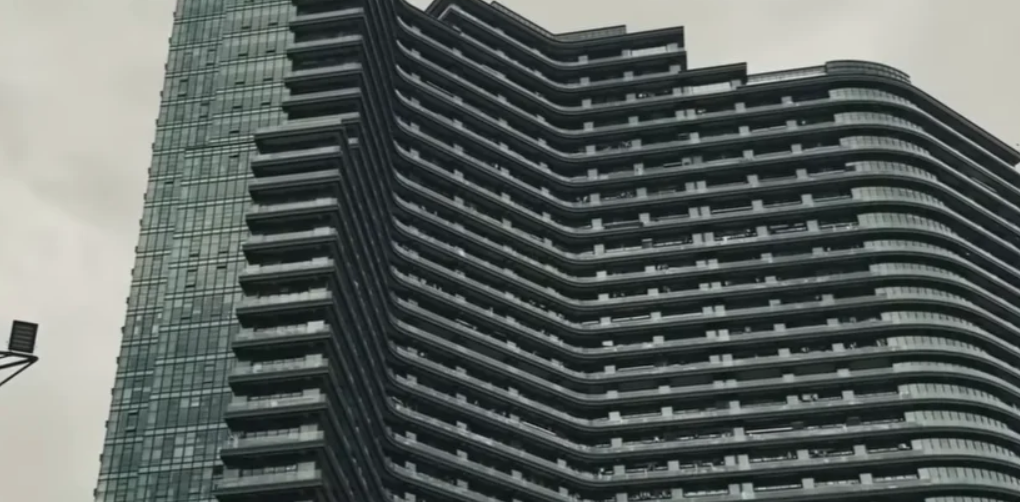
© Naeem Explorer / YouTube
In Hangzhou’s Qianjiang Century City — a commercial and residential hub in China — stands a remarkable building called The Regent International. It’s an S-shaped skyscraper of about 39 floors (36 on one side, 39 on the other), towering approximately 675 ft (or ~206 m) tall. Originally designed to be a luxury hotel, it was ultimately converted into a massive residential complex.
What’s particularly striking is how many people and amenities this building holds. It currently houses somewhere between 20,000 residents, with room for up to 30,000 when at full capacity.
A Building in China That Has Everything
The Regent International is more than just a place to live: it’s built with many features that make it possible to rarely, if ever, step outside. Within the building, there are supermarkets, internet cafés, beauty salons (nail, barber), large food courts, swimming pools, fitness centres, restaurants, and other services like shops and salons.
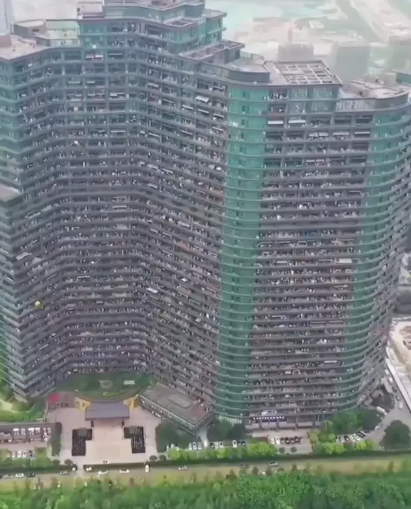
Videos posted on social media (notably TikTok) show that the interior is designed to sustain daily life. That includes everything from getting groceries to having wings of the building with kitchens, stairways, balconies in some units, etc., though many of the smaller or more affordable units reportedly have no balconies or even windows.
Who Lives There & What It Costs
The building attracts a variety of people: many are young professionals, recent graduates, people who have moved (“drifted”) to Hangzhou seeking work or opportunities. Some are well-known on social media.
As for cost, it varies greatly. Smaller units without windows go for around 1,500 RMB/month (roughly $200-220 USD), while larger apartments with balconies rent for up to 4,000 RMB/month (~$550-600 USD) depending on size and features.
“Living Without Leaving” — Utopia or Dystopia?
Because many amenities are contained inside the building, residents theoretically could spend much of their time without going outside. That includes doing groceries, using salons, eating, and recreation — all inside.
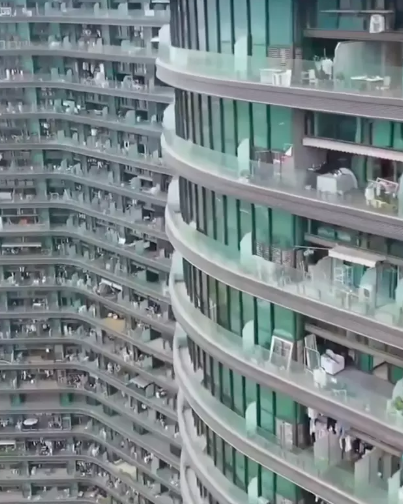
Yet, there are concerns or critiques. People on social media express worries about isolation, lack of natural light (especially in windowless units), dependence on internal services, elevator or infrastructure failures, and the psychological effect of living in such dense, enclosed environments.
The Urban Design & Larger Implications on China and its Architecture
- Efficiency and density: The Regent International is an example of ultra-dense urban housing. In a country and region with high housing demand, such large mixed-use developments may help reduce commute times, traffic, and sprawl.
- Mixed amenities in one structure: It blurs the boundary between residential building and mini-city. Some urban planners point to such models as a possible solution for sustainable city living.
- Cultural & social trade-offs: Living in such a building means a close community, but also less privacy, more noise, longer waits for shared facilities, and limited exposure to nature or public green spaces.
- Regulatory & safety challenges: Fire safety, emergency exits, ventilation, waste management, elevator capacity, and structural integrity become critically important when tens of thousands share one building. Keeping infrastructure running smoothly is a major challenge.
Conclusion
The Regent International is more than an apartment complex: it’s a vertical mini-city, housing thousands with nearly all necessities under one roof. It pushes the concept of living high and dense to extremes — convenience and efficiency on one side, concerns about mental well-being, privacy, light, and life rhythm on the other.
Whether it feels like home or like a giant dormitory likely depends on the person, the unit, what views or windows you get, and how much you value stepping outside. For some, it’s futuristic; for others, dystopian. Either way, it’s an impressive example of how modern urban housing is evolving.
You might also want to read: China’s Public Toilets Now Make You Watch Ads for Toilet Paper