London Woman Gets Fined for Pouring Down Coffee in Drain

© Unilad
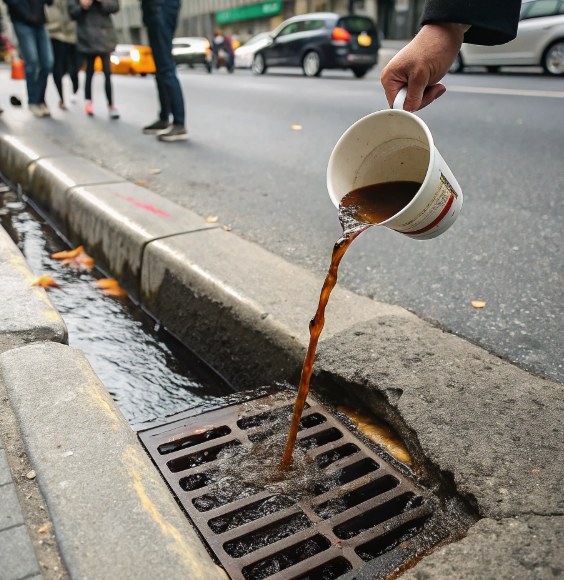
A woman in west London was handed a £150 fixed penalty notice after pouring the remnants of a coffee from her reusable cup into a street drain near Richmond station.
The fine, issued under the Environmental Protection Act 1990 Section 33, makes it an offence to dispose of waste in a way likely to pollute land or water. The council subsequently cancelled the fine after reviewing the case.
What Happened and Why She Was Fined
On October 10 2025, Burcu Yesilyurt, a resident of Kew, was waiting at a bus stop when she poured what she described as “just a tiny little bit” of leftover coffee down a street drain rather than risking a spill on the bus. Almost immediately, three enforcement officers approached and issued the fine.
Moreover, the fine cited Section 33 of the Environmental Protection Act 1990, which covers the deposit or disposal of waste in a way likely to pollute land or water, including liquids entering street drains. Ms Yesilyurt said she was unaware the act applied to pouring coffee and told officers she thought she was acting responsibly.
Council Response and U-Turn
Initially, the Richmond Council defended the fine, stating the officers acted in line with policy and that the offence was taken seriously to protect waterways. After public outcry and review of body-worn camera footage, the council cancelled the penalty notice and notified Ms Yesilyurt by email. Their statement noted that the offence was “minor” and that the fixed penalty likely would have been rescinded on appeal.
Why the Coffee Case Matters
- Lack of public awareness: Ms Yesilyurt and many others said they were not aware that pouring a small amount of coffee down a drain could count as illegal disposal under the Act.
- Proportionality of enforcement: Critics argued the fine was disproportionate to the act, given the small volume and lack of visible harm — one editorial called the case “absurd”.
- Environmental policy vs everyday behaviour: The case highlights tensions between strict environmental regulation and commonly accepted public behaviours, especially when the waste appears trivial.
- Transparency and signage: Ms Yesilyurt called for clearer signage and better public information about what constitutes “waste disposal” in public settings.
What to Take Away
For London residents and visitors, this incident serves as a reminder:
- Be cautious when disposing of liquids or residues into street drains — some areas operate under regulations that treat even small amounts as potential pollution.
- If you receive a fixed penalty notice, the appeal process exists and may be effective — in this case, the fine was cancelled.
- Local enforcement practices and public awareness may lag behind regulation — councils may now reconsider how they communicate about disposal rules and liquid waste.
- On a broader level, it’s worth asking how regulations are applied in everyday scenarios and whether enforcement stays proportional to the harm caused.
You might also want to read: What Is “6-7”? How a Nonsensical Meme Took Over TikTok