Million-Year-Old Skull from China May Upend Human Evolution Timeline
© Science
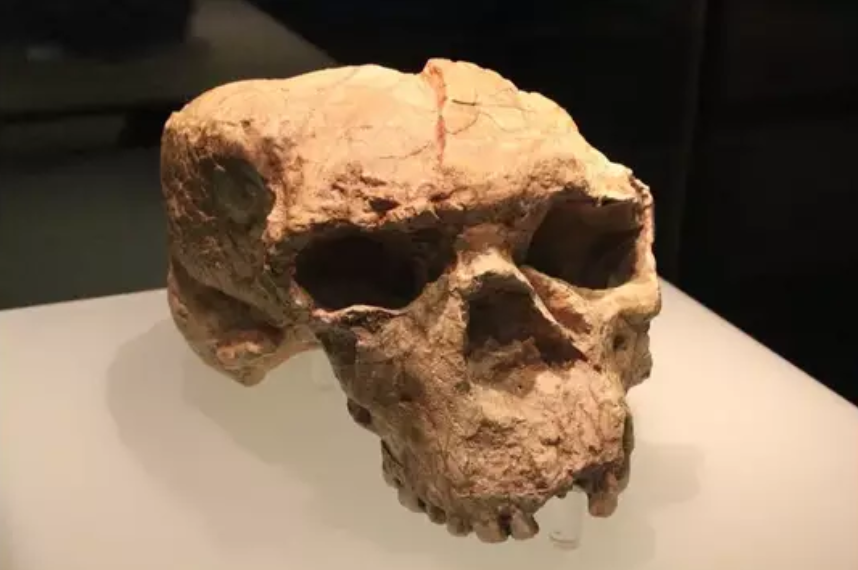
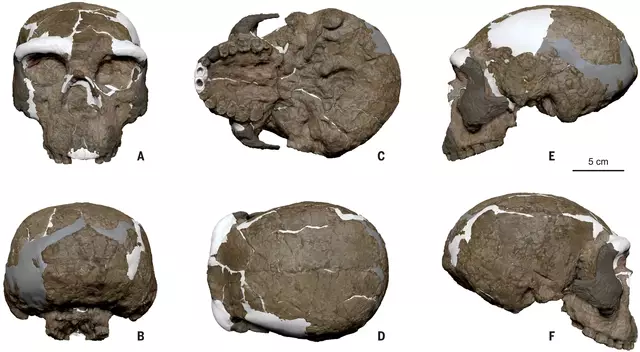
Scientists have reexamined a badly crushed skull discovered back in 1990 in Hubei Province, China — known as Yunxian 2 — and say its new reconstruction could force us to rethink long-accepted ideas about human evolution.
Originally classified as Homo erectus, the skull now appears to share key traits with Homo longi (often linked with the “Dragon Man”) and the Denisovan line. The fossil’s age — between 940,000 and 1.1 million years old — puts it much closer to the divergence point among modern humans, Neanderthals, and Denisonans than previously thought. This discovery has lit up the scientific community.
Using modern scanning and digital reconstruction techniques, the porosity, shape of the teeth, braincase proportions, and facial features were reassessed. The result: Yunxian 2 no longer fits neatly under Homo erectus. Instead, researchers argue it belongs to a sister lineage to Homo sapiens, one that had already diverged a million years ago.
What This Skull Finding Means for the “Muddle in the Middle”
The period between roughly 300,000 and one million years ago in human evolutionary history has long been called the “Muddle in the Middle” due to unclear relationships and overlapping evidence between different hominin species. Yunxian 2 adds an important data point and may help clarify some of those foggy branches. If our ancestors had already separated into distinct groups by one million years ago, then timelines for when Homo sapiens emerged, and how we interacted with other hominins, may need rewriting.
It could also shift some focus away from the traditional “Out of Africa” model being the sole cradle of modern human evolution. The skull’s Asian location suggests that Asia played a more complex role in hominin diversification than previously assumed.
What Has Been Argued — And What Remains Unclear About the Skull
While the new analysis is compelling, scientists warn that it is not definitive. The fossil was severely deformed over time, and reconstructions carry uncertainty. Digital correction helps, but without DNA or proteins from the fossil — which are not preserved in this case — there’s no genetic confirmation of its place in the human family tree.
Skeptics also point out that mixing anatomical inference with geological dating can introduce errors. The morphological changes seen in Yunxian 2 might represent variance within Homo erectus, or other species, rather than a branching off. More fossil finds, especially in Asia, are needed to either support or challenge this reinterpretation.
Why This Finding Is Drawing Attention
This is a rare example of a fossil that’s old enough, morphologically ambiguous enough, and now technologically capable of being reconstructed to challenge current timelines in real time. The discovery forces palaeoanthropologists to re-evaluate when the split between our ancestors and those of Neanderthals and Denisovans occurred. Instead of roughly 500,000-700,000 years ago, this suggests the divergence may have occurred 400,000 years earlier, around a million years ago.
It also reignites debates about how many Hominin species were roaming across Asia, Africa, and Europe contemporaneously, and what the relationships among them were. Yunxian 2 doesn’t provide all the answers, but it creates new pressure to redefine branches of our long evolutionary tree.
Conclusion
The reanalysis of the Yunxian 2 skull could rewrite parts of the human origin story. With its newfound alignment to Homo longi and Denisovan-related lineages, it suggests that the human family tree is more bushy, older, and geographically broader than many scientists have assumed. Where once certain boundaries seemed fixed — such as when Homo sapiens diverged from other lineages — now those boundaries are under pressure.
Until more fossils are found, and perhaps until genetic material is recovered, Yunxian 2 remains a strong candidate for shifting the narrative: modern human evolution began earlier, among more hominin cousins, and was less linear than once believed.
You might also want to read: Why You Can Safely Eat Rare Steak—but Undercooked Chicken Can Make You Sick