Netherlands Builds Floating Farms to Face Rising Seas, Producing Sustainable Food Without Using Land
© Freepik
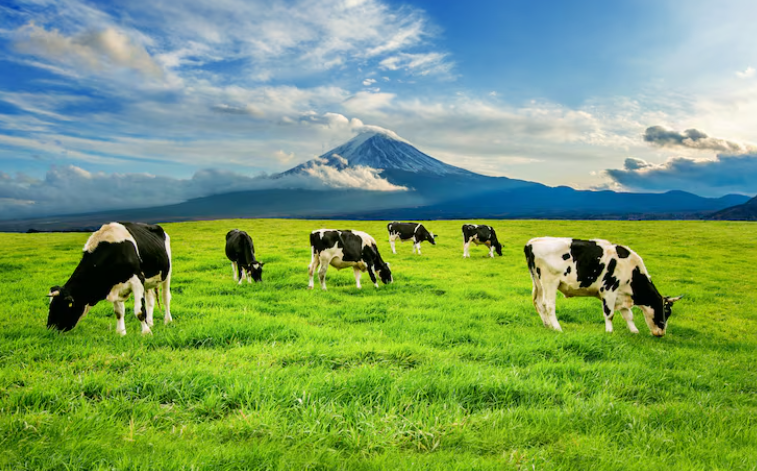
Moored in Rotterdam’s busy port, the world’s first floating dairy farm is redefining food production in an era of climate volatility.
The three-story structure accommodates up to 40 cows, a milk-processing facility, automated manure collection, solar panels, and even a wind turbine. It’s designed to endure flooding, rising sea levels, and supply chain disruptions—while producing fresh milk in the heart of the city.
A Self-Sustaining Circular System
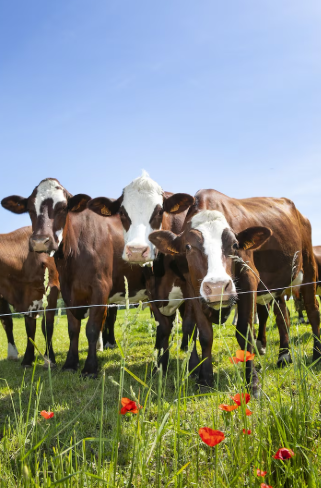
This floating farm operates entirely on circular economy principles. Cows are fed with local waste like grass from golf courses, brewery grains, and sports field clippings—over 80% sourced within Rotterdam. The resulting manure is treated by onboard robots and recycled into fertilizer or energy, significantly reducing carbon emissions.
All electricity is generated on-site from solar panels, while rainwater is collected and purified for farm use.
Climate Resilience in Action
With around 85% of Rotterdam below sea level, extreme rainfall and flooding are constant threats.
By rising with the water, the floating farm demonstrates climate-adaptive farming—a model built for cities exposed to climate hazards. Even if transport infrastructure fails, this setup ensures the food supply remains stable and local.
Innovation Meets Animal Welfare
While rotating milking robots and automated feeding systems keep things ultra-modern, the farm also prioritizes cow comfort.
The Dutch-German Meuse-Rhine-Ijssel cows live in a bright, open-air stable and can step off to graze on a connected pasture. Founders Peter and Minke van Wingerden worked with scientists to confirm the animals don’t suffer motion sickness, ensuring this aquatic lifestyle remains humane.
Proving Grounds for Global Models
Since opening in 2019, the farm has scaled from 32 to 40 cows and produces around 600 liters of milk daily, which is made into cheese, yogurt, and more—sold directly to locals.
It draws international interest from cities like Singapore and Dubai exploring floating farms, poultry systems, and greenhouse models suited for dense, flood-prone urban zones.
Challenges and Criticism
Despite its progress, the floating farm has faced criticism—most notably from Dutch animal welfare advocates after incidents when cows fell into surrounding water. Still, the founders maintain animal welfare is “topic number one.” They also continue working to prove the model’s sustainability, even as critics argue intensive dairy farming isn’t a long-term climate solution.
Why It Matters
As urban centers grapple with water risks, food insecurity, and land limitations, Rotterdam’s experiment offers a scalable, resilient alternative: agriculture built over water, powered by waste, and designed to thrive amid environmental change. It’s a live demonstration that climate-proof cities can also house climate-smart farms.
You might also want to read: German Circus Is Using 3D Holograms to End Animal Exploitation