What Nostradamus’ 2026 Warnings Might Mean
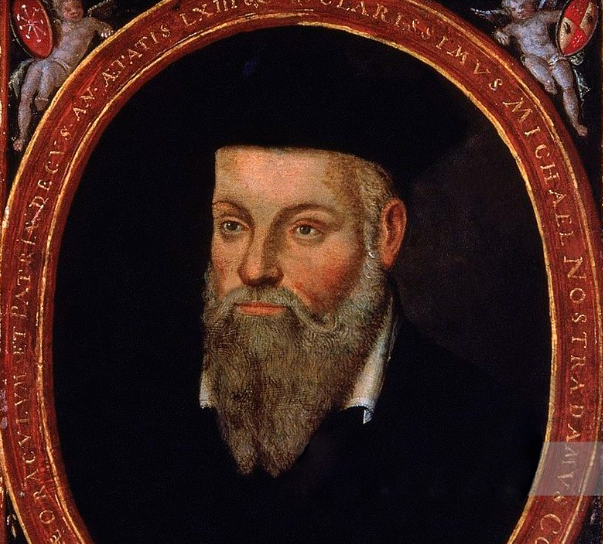
Public Domain
According to an article on the recent prognosis of Nostradamus’s prophecies, one of the most chilling visions tied to 2026 is a “great swarm of bees.”
Metaphorically or literally, it suggests unexpected chaos rising under the cover of darkness.
Nostradamus and His Eerie Predictions for 2026
Another stark image: a “prominent person struck down in a day by a thunderbolt.” Some interpret this as a symbolic forecasting of a high-profile figure’s downfall or an abrupt calamity hitting an individual of global significance.
Then there’s a haunting mention of a region, Ticino, potentially “overflowing with blood.” Whether literal or allegorical, this has sparked speculation about conflict, violence, or upheaval affecting that area.
And for those drawn to maritime or global-scale calamities, there’s a prophecy involving “foists and galleys around seven ships” giving way to a “mortal war” — a verse interpreted by some as a hint toward naval conflict or large-scale strife across seas.
War, Global Shifts & Power Plays — Interpreting the Warnings
Some interpreters of Nostradamus believe 2026 could mark a year of major geopolitical shifts. The swarm, the blood, and the thunderbolt are often read as metaphors for unrest, upheaval, leadership disruptions, and destabilization.
The naval-war references — from “seven ships” to “foists and galleys” — are sometimes tied to fears of international conflict, possibly involving sea routes or maritime power struggles.
Some interpretations go further: the imagery predicts a broader breakdown of old global orders, with possible realignments of power, social chaos, and an atmosphere of uncertainty.
Prophecy or Poetry? A Reality Check
It’s significant to note that Nostradamus never explicitly assigned years such as “2026” to his quatrains. What we see in modern articles are interpretations, often with heavy symbolic reading — not firm predictions.
Because the originals are poetic and ambiguous, many of these “forecasts” depend on numerology, translation choices, and contemporary world-event parallels. That means they’re highly speculative.
While the visions make headlines and stir the imagination, they are not certainties. Rather, they reflect hopes, fears, and cultural fascination with prophecy more than empirical prediction.
What If 2026 Actually Brings … Something Big?
If something dramatic, political unrest, war, or global upheaval happened in 2026, many would look back and cite Nostradamus’s “warnings.” That might intensify interest in prophecy, mythology, and our tendency to find patterns in chaos.
On the flip side, if 2026 remains relatively calm, these predictions may fade into the background — remembered as part of the lore around Nostradamus rather than as credible foretelling.
Either way, the conversation surrounding these prophecies reveals more about our current anxieties and hopes than about Nostradamus himself.
You might also want to read: Nostradamus’ Cryptic Warning for Late 2025