OpenAI CEO Says He Uses ChatGPT to Raise His Own Son
© CC BY 2.0
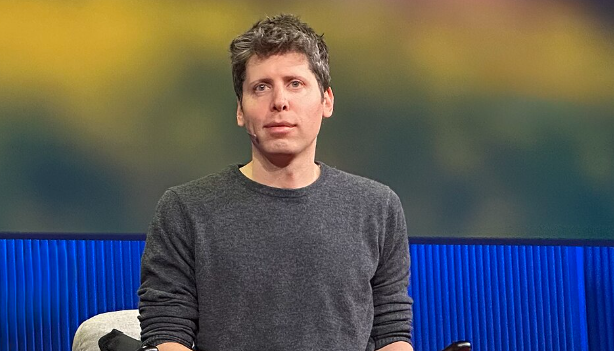
In a recent appearance on late-night TV, Sam Altman revealed that for him, parenting his newborn son has become inseparable from using AI & ChatGPT.
When worries about developmental milestones, sleep patterns, or everyday baby behavior crept in, Altman turned not to a textbook but to an AI companion. What started as tech-curiosity has quietly evolved into a modern parenting experiment: one where parenting books meet neural nets, and crib-side panic meets algorithmic calm.
Why ChatGPT Became Dad’s Go-To AI Babysitter
Altman, who welcomed his son in February, said he “cannot imagine” going through early parenthood without ChatGPT.
Rather than search endlessly through conflicting online articles, Altman uses the chatbot for quick answers to everyday parental anxieties — for example, wondering whether it’s normal that his baby wasn’t crawling yet. In one anecdote, he recalled typing into ChatGPT late at night, worried about his child’s development; the response calmed him down with an explanation that his child was within a typical range.
Altman says that ChatGPT feels more like a helpful aide than a cold database. The conversational tone, the personalization, the speed — it takes the pressure off parents trying to make sense of sleepless nights, unexpected questions, and the jump from “newborn 101” to “parenting for real.”
Parenting in the Age of AI
Altman isn’t just pushing strollers; he’s pushing a new cultural baseline. He believes children born today will grow up never knowing a world without smart AI — and that’s normal.
In that world, using AI for daily parenting questions might come to seem as natural as installing a baby monitor or buying a crib. For adults used to instant access to information, AI becomes more than a research tool — it becomes a digital parent-helper. For many, this may offer convenience, reassurance, or a lifeline during nights when the only interruption is a crying infant.
But it’s not just about convenience. Altman’s adoption of AI-assisted parenthood also normalizes a broader shift: as AI becomes woven into home, family, and developmental routines, we may need to seriously consider what that means for empathy, privacy, childhood development, and human connection.
What Could Go Right, and Where We Should Still Look Twice
Possible upsides:
- Fast access to generalized parenting info — for first-time parents unsure where to start.
- Round-the-clock support for common parenting anxieties (developmental milestones, feeding, schedules, etc.).
- Reducing stress by offering calm guidance instead of alarmist search results.
Potential concerns:
- AI advice isn’t a substitute for medical/child-development professionals. Early warnings or unique situations may need expert attention.
- Over-reliance on AI could dilute human instinct, intuition, or parental bonding that’s built through reflection and experience.
- Ethical/social questions: Should critical aspects of raising children depend on proprietary AI systems? What about privacy and data around children?
Altman himself has acknowledged that AI’s advantages come with trade-offs. In a previous interview, he warned that while there are upsides, dangerous “para-social relationships” or excessive dependence could emerge if AI becomes every parent’s go-to guide.
When an AI Tech Boss Becomes a New Dad
Altman’s public admission does more than just humanize a high-flying tech CEO. It sends a message: parenting in 2025 doesn’t have to look like 1995. Sleepless nights, wild questions, heartfelt worries — they can all be answered by a chatbot. For many new parents, that could mean less panic, more manageable uncertainty, and a partner through midnight doubts.
For others, it raises a bigger question: as AI becomes family-adjacent, how will we balance convenience with context, code with care, and answers with empathy?
You might also want to read: Kim Kardashian Says She Asks ChatGPT for Legal Advice