Scientists Successfully Regenerate Retinas & Restore Sight in Mice
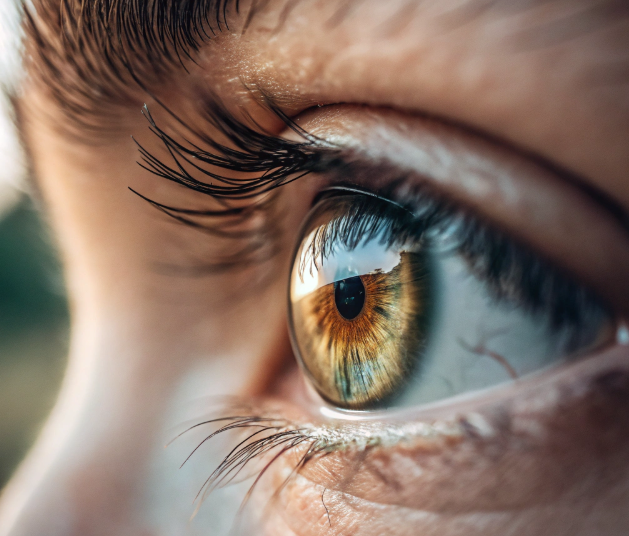
© Generated by Recraft
In a stunning leap for vision science, researchers have successfully regenerated the retinas of blind mice, fully restoring their sight.
The study, recently published in Cell, brings the scientific community one step closer to achieving the holy grail of ophthalmology: reversing blindness in humans.
Turning Time Back on Eye Cells
The team behind this discovery, from the Wilmer Eye Institute at Johns Hopkins University School of Medicine, combined precision gene editing and stem cell reprogramming to turn back the biological clock on retinal neurons.
The results were nothing short of remarkable—mice that were previously blind due to optic nerve damage were once again able to see.
The key to this breakthrough lies in a cutting-edge technique known as cellular reprogramming. Using this method, scientists essentially rewound the age of damaged retinal ganglion cells (RGCs), encouraging them to regrow and reconnect with the brain.

Next Steps for Human Vision
This technique involves introducing three Yamanaka factors—genes used to convert adult cells back into an embryonic-like state.
While previous research had proven successful in rejuvenating cells in petri dishes, this is the first time such restoration has been achieved within a living animal’s eye with meaningful functional recovery.
The RGCs, responsible for carrying visual signals from the eye to the brain, are often irreversibly damaged in diseases like glaucoma and optic neuropathy.
By promoting regrowth, the team has opened up new possibilities for treating such conditions.
Mice See the Light—Literally
To confirm the success of the regeneration, scientists conducted a series of behavioral and neurological tests on the mice.
They found that not only did the regenerated RGCs form proper connections with the brain, but the mice were also able to perform visual tasks they were previously incapable of doing.
“We were amazed to see how robust the regrowth was,” said Dr. Seth Blackshaw, one of the study’s senior authors. “What’s more, the neurons didn’t just grow—they formed functional connections, which is the real challenge in regenerative neuroscience.”
A New Frontier for Human Vision
While these results are still confined to mice, the implications for human medicine are enormous.
Diseases like glaucoma, which affects more than 76 million people globally, have long been considered irreversible. But this study suggests that regenerating the optic nerve and restoring sight may no longer be science fiction.
Researchers are cautious yet hopeful. The next step is replicating this in larger animals before considering human trials. Still, this research lays the foundation for an entirely new approach to treating blindness.
Dr. Donald Zack, a co-author of the study, emphasized that “the ultimate goal is to develop regenerative therapies that can be used in the clinic. We still have a long way to go, but this is a giant step forward.”
Conclusion: A Visionary Breakthrough
This experiment is more than a medical marvel—it’s a vision of the future. While there’s still much to be done, scientists have illuminated a path that could one day return sight to millions. For now, the success in mice offers more than just hope—it offers proof that restoring vision may be closer than we think.
You might also want to read: Body Found 60 Years Ago Identified as Native American Woman