Spain Train Crash Survivor Officially Speaks Out
© X
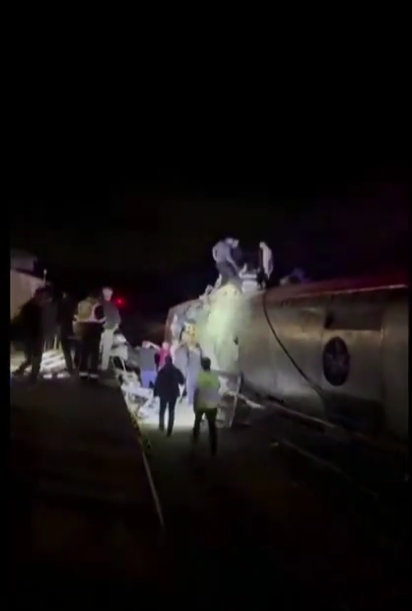
The death toll from a catastrophic train derailment and collision near Adamuz in Córdoba province, southern Spain, has risen to at least 39 people, according to Spanish authorities, and is expected to increase further as rescue teams complete their work at the scene. This tragic event unfolded on Sunday, January 18, 2026, when one high-speed train derailed and struck another on an adjacent track.
The crash involved two high-speed trains — an Iryo service travelling from Málaga to Madrid and a Renfe Alvia train travelling from Madrid to Huelva — resulting in one of the worst rail disasters in Spain in more than a decade.
Details of the Spain Collision and Immediate Aftermath
According to transport authorities, the first train derailed at around 7:45 p.m. local time on a straight, recently renovated section of track before ploughing into the oncoming train on the neighbouring line. The force of the collision caused multiple carriages on both trains to derail, with some tumbling down a 4-metre embankment, severely complicating rescue efforts.
Spain’s Transport Minister Óscar Puente described the incident as “extremely strange” given that it occurred on a straight section of track that was fully refurbished only months earlier, making investigators’ work all the more crucial as they seek to understand what went wrong.
Emergency services remained on site into Monday morning, combing through wreckage and assisting survivors. DNA samples are being collected to identify victims whose remains were found at some distance from the crash site, underlining the severity of the impact.
Spain Train Crash Casualties and Injuries
Officials confirmed that at least 39 people have died, with 152 reported injured, including dozens in serious or critical condition. Among the dead is believed to be the driver of one of the trains, authorities said. Rescue teams and emergency medical personnel — including the Civil Guard, Red Cross and specialised units — have been working tirelessly to treat the wounded and support victims’ families.
Earlier reports had suggested lower death figures and fewer injuries as responders first reached the scene, but the scale of the catastrophe became clearer as the hours passed and more bodies were recovered.
Survivor Accounts and Rescue Efforts
Some survivors described harrowing moments of chaos as the collision unfolded. One journalist onboard compared the impact to an “earthquake,” saying passengers used emergency hammers to break windows and escape from damaged carriages. Others reported darkness, confusion, and frantic calls for help as rescuers worked through the night.
Rescue operations were complicated by the twisted wreckage and scattered debris, requiring heavy machinery and coordinated efforts between medical, fire, and civil protection teams. Local residents in Adamuz also played a role, offering water, blankets and assistance to injured passengers before official support arrived.
Government Response and Suspension of Services
Prime Minister Pedro Sánchez expressed national grief, calling the incident “a night of deep pain” for Spain and extending condolences to the families of the victims. He announced he would visit the crash site to oversee the government’s response and support efforts.
All high-speed rail services between Madrid and Andalucía were suspended on Monday, with infrastructure operator Adif confirming that services, including those to Córdoba, Seville, Málaga, and Huelva, would remain halted as damaged track sections are assessed and repairs begin. Passengers on cancelled services can adjust their travel plans without penalty, the rail network said.
Investigation Underway
Spain’s Railway Accident Investigation Commission has launched a full probe into the derailment, reviewing track conditions, train maintenance records, and black box data from both trains. Investigators caution that determining a cause — whether infrastructure, mechanical failure, or other factors — could take weeks or more.
Officials are also examining earlier complaints about minor irregularities on the same stretch of track, including reports of jolts and bumps by train drivers, though a definitive link to the crash has not yet been established.
What This Means for Spanish Rail Safety
Spain’s high-speed rail network has long been regarded as one of the safest in Europe, with a strong safety record since its launch in 1992. This disaster — the deadliest since the 2013 Galicia derailment that killed 80 people — has renewed calls for a thorough review of maintenance, infrastructure, and emergency readiness even on recently renovated lines.
You might also want to read: High-Speed Train Derails in Spain, Kills Over 35 People