A 19-Year-Old’s Life Was Saved by a World-First Surgery Removing a Spinal Tumor Through Her Eye Socket!
© Glory Glob Tv / YouTube
Imagine a life-threatening tumor nestled deep within your spine, so close to critical nerves that a single wrong move could change your life forever.
For one young woman, this was not just a possibility but a reality—until a team of doctors took a bold step into uncharted medical territory.
In a world-first procedure, surgeons at the University of Maryland Medical Center successfully removed a spinal tumor by entering through the patient’s eye socket.
This remarkable surgery has opened new doors for treating hard-to-reach tumors, offering hope to patients facing complex diagnoses.
Spinal Tumor Removal Through Eye Socket: A New Path to the Spine

Karla Flores, a 19-year-old from Maryland, faced a daunting diagnosis: a rare tumor called a chordoma was pressing against her spinal cord near the base of her skull. Traditional approaches, like entering through the neck or mouth, were risky.
They could lead to infection, limited visibility, or damage to vital structures like blood vessels or nerves that control speech and swallowing. Instead, neurosurgeon Dr. Mohamed Labib proposed a novel idea he had explored in research: using the eye socket as a pathway to the spine.
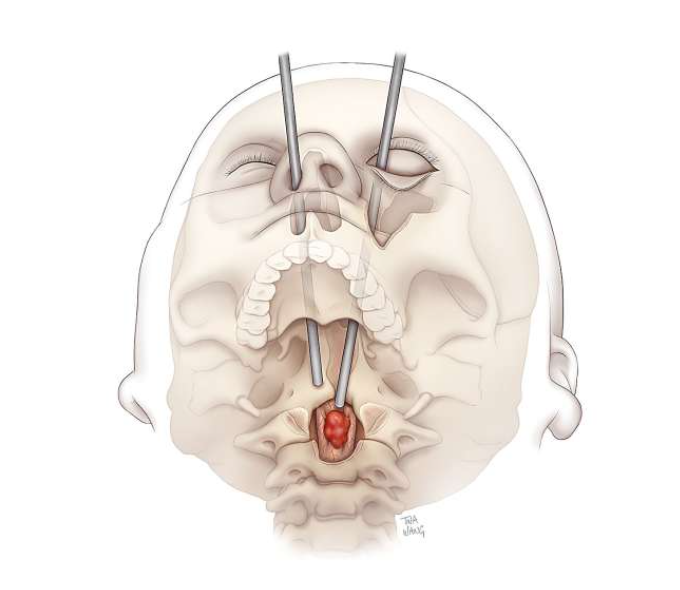
This approach, dubbed the “third nostril,” had never been used to remove a spinal tumor before. By carefully navigating through the lower eyelid, the team created a clear path to the tumor without harming the eye or leaving visible scars.
The Surgery: Precision and Teamwork
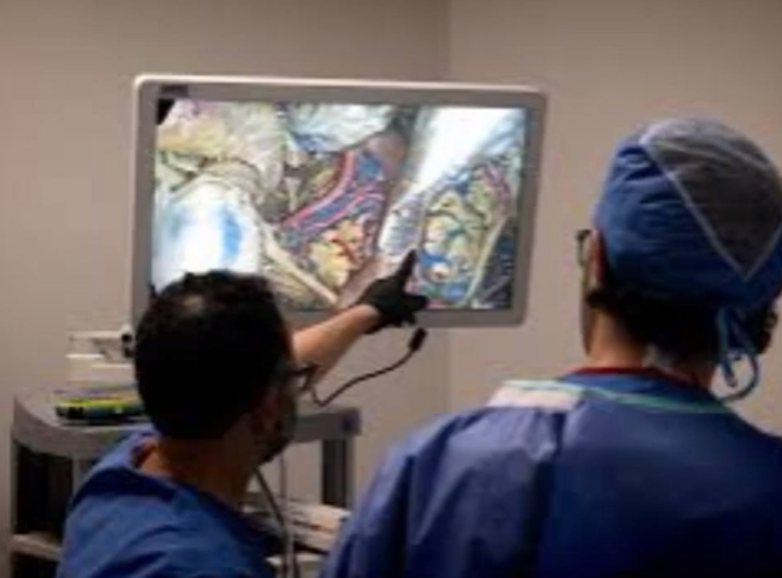
The procedure, performed on May 1, 2024, lasted 19 hours and required extraordinary precision. Dr. Labib, along with facial reconstructive surgeon Dr. Kalpesh Vakharia and head and neck surgeon Dr. Andrea Hebert, worked together seamlessly.
They used an endoscope—a tiny camera and light—through one nostril to guide their tools, while a drill and suction device entered through the eye socket and the other nostril.
The tumor was removed piece by piece, with only millimeters separating success from catastrophic complications like paralysis or a brainstem stroke. After the tumor was gone, Dr. Vakharia rebuilt Karla’s eye socket using a titanium plate and bone from her hip, ensuring no visible signs of the surgery remained.
Karla also underwent proton radiation therapy and spinal fusion to stabilize her neck, and recent scans show no signs of cancer.
A Bright Future for Patients
This groundbreaking surgery is more than a one-time success. It represents a new way to tackle tumors in hard-to-reach areas of the spine and skull base. By avoiding traditional routes that carry higher risks, this transorbital approach could become a game-changer for patients with similar conditions.
Karla, now 20, is recovering well, though she faces some challenges with left eye movement due to nerve damage from the tumor. Her story is a testament to medical innovation and the courage of both patients and doctors willing to push boundaries.
As Dr. Labib noted, the ability to practice on cadavers was crucial to making this surgery possible, highlighting the importance of medical research and donations to science.
This procedure not only saved Karla’s life but also set a new standard for what’s possible in neurosurgery. As doctors continue to refine this technique, it could offer hope to countless others facing tumors once thought inoperable.
You might also want to read: Scientists Found a Way to Turn Off Anxiety Instantly!