Have you wondered whether you should shower in the morning or at night after 65?
Both times can work. An evening shower may suit a relaxing bedtime routine, while a morning shower can feel practical after night sweats or when your hair needs time to dry.
The right choice depends on your sleep, comfort, hair, skin, and balance. Here is what sleep researchers, dermatologists, and healthy-aging experts recommend.
Can an Evening Shower Help You Sleep?
An evening shower may help when you want to wind down. The National Institute on Aging includes a warm bath among its suggestions for a relaxing bedtime routine.
A 2019 Sleep Medicine Reviews meta-analysis found that a warm shower or bath scheduled one to two hours before bedtime, for as little as 10 minutes, was associated with falling asleep faster. The researchers cautioned that relatively little research was available, so treat this as an option rather than a promise.
Try an evening shower if it fits comfortably into your bedtime routine. If evenings feel rushed or mornings are more practical, keep the schedule that works for you.

What About Hot Flashes and Night Sweats?
Hot flashes do not always disappear by 65. The American College of Obstetricians and Gynecologists says, “Some women continue to have hot flashes into their 60s and 70s.”
Night sweats are hot flashes that occur during sleep and may disrupt it. If you often awaken sweaty, a morning rinse may help you feel fresher. You can still use an evening shower as a relaxing ritual if that suits you.
For nighttime comfort, the National Institute on Aging suggests lowering the bedroom temperature and drinking small amounts of cold water before bed when hot flashes interfere with sleep.
Do not assume every night sweat comes from menopause. Mayo Clinic notes that night sweats can have other causes and may occur with fever, weight loss, pain in a specific area, cough, or diarrhea. Consider discussing new or unexplained heavy sweating with a clinician.
Does Shower Time Matter for Aging Skin?
Aging skin benefits from a gentle bathing routine. The American Academy of Dermatology explains that skin in the 60s and 70s is thinner and loses water more easily. Menopause can also reduce the skin’s ability to hold water.
Use the same skin-friendly routine whenever you shower:
- Choose warm water. The American Academy of Dermatology advises, “Use warm (not hot) water.” Hot water can strip natural oils and increase dryness.
- Keep it brief. Limit your bath or shower to 5 to 10 minutes.
- Moisturize promptly. Apply a creamy, fragrance-free moisturizer formulated for dry skin within 3 minutes of bathing.
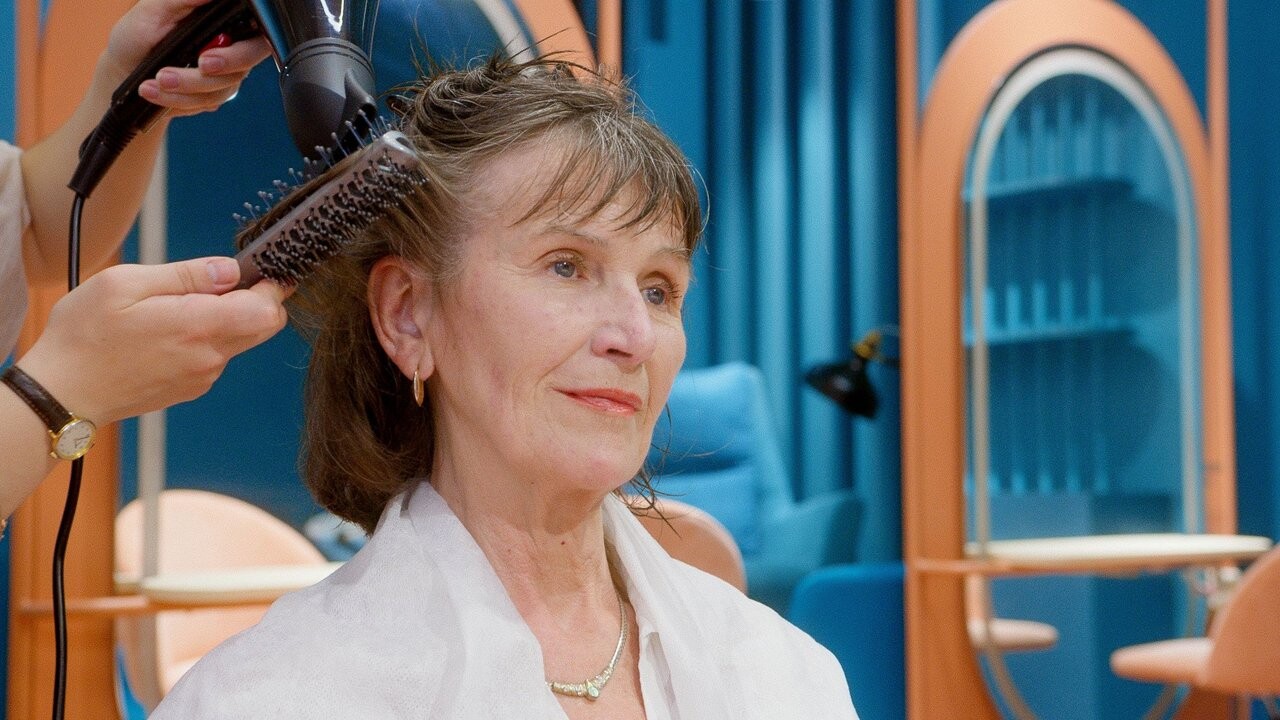
Is Morning Better for Washing Your Hair?
Washing your hair at night is reasonable if it has time to dry before bed. Cleveland Clinic dermatologist Dr. Shilpi Khetarpal explains that wet hair is more fragile and more prone to snapping, stretching, or breaking.
Friction against a pillowcase can contribute to breakage when you sleep with wet hair. If your hair takes a long time to dry, wash it in the morning or earlier in the evening.
You can also split the routine: take a short body shower before bed, then wash your hair in the morning.
Which Shower Time Is Safest?
The safest time to shower is when you feel alert and steady. Women may lose bone mass quickly for several years around menopause, after which the loss slows but continues.
For someone with osteoporosis or osteopenia, a simple fall can cause a broken bone. The National Institute on Aging notes that hip and spine fractures can threaten mobility and independence.
Use extra caution with very hot showers if you have orthostatic hypotension or often feel lightheaded. Cleveland Clinic says heat from a hot shower can worsen symptoms for some people, including dizziness or fainting.
- Follow your balance. If you feel dizzy just after waking, wait until you are steady. If fatigue makes evenings less comfortable, shower earlier in the day.
- Add traction. The CDC advises, “Use non-slip mats in the bathtub and on shower floors.”
- Install support. Install grab bars inside and outside the bathtub or shower. Do not use towel racks as grab bars because they cannot support your weight.
- Dry the exit. Keep the floor outside the tub or shower dry so your first step is not onto a slippery surface.
Choose the shower time that leaves you rested, comfortable, and steady on your feet, then let that routine work for you.
This article is for general information and isn’t a substitute for advice from your doctor.
Sources:
- PubMed: Before-Bedtime Passive Body Heating by Warm Shower or Bath to Improve Sleep
- National Institute on Aging: Sleep and Older Adults
- American College of Obstetricians and Gynecologists: An Ob-Gyn’s Top Tips for Managing Hot Flashes
- National Institute on Aging: What Is Menopause?
- National Institute on Aging: Hot Flashes—What Can I Do?
- Mayo Clinic: Night Sweats
- American Academy of Dermatology: How to Care for Your Skin in Your 60s and 70s
- American Academy of Dermatology: Caring for Your Skin in Menopause
- Cleveland Clinic: Should You Avoid Going to Bed With Wet Hair?
- National Institute on Aging: Osteoporosis
- Cleveland Clinic: Orthostatic Hypotension
- CDC: What You Can Do to Prevent Falls
- CDC: Information for Caregivers
- MedlinePlus: Bathroom Safety for Adults