Can Dowsing Rods Really Find Water for a Well?

A dowser at work in a Dutch field in the early 20th century. Unknown authorUnknown author / Wikimedia Commons, Public domain (cropped)
Watching two rods swing together over an apparently promising patch of ground can be striking. The movement feels real to the person holding them, and a productive well drilled afterward may seem like strong confirmation.
The U.S. Geological Survey has examined water dowsing and advises relying on hydrologic, geologic, and geophysical knowledge to assess groundwater. Controlled tests have not shown that dowsers locate water more reliably than chance.
These eight questions cover the tradition, the movement of the rods, controlled testing, and the evidence professionals use when choosing a well site.
What Is Water Dowsing, and How Old Is It?
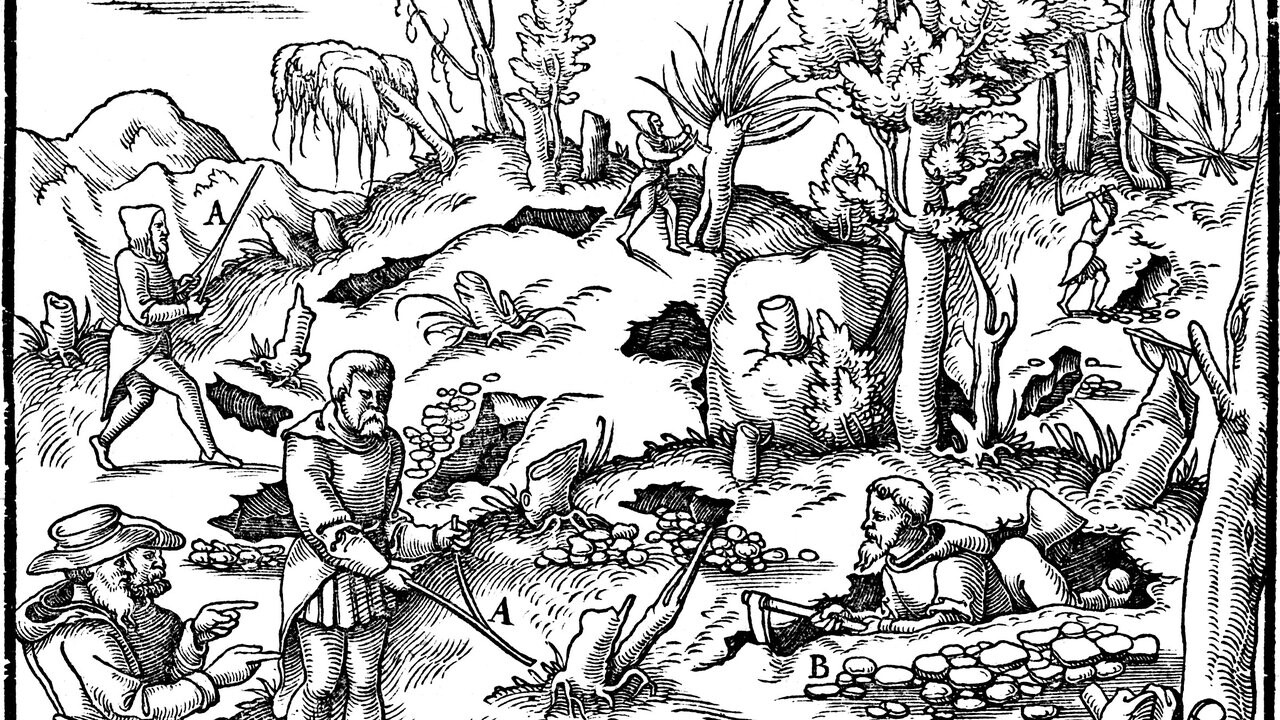
Water dowsing, also called water witching or divining, involves carrying a forked branch, rod, pendulum, or similar pointer while searching for underground water. The USGS says the practice has been discussed and disputed for hundreds, and possibly thousands, of years.
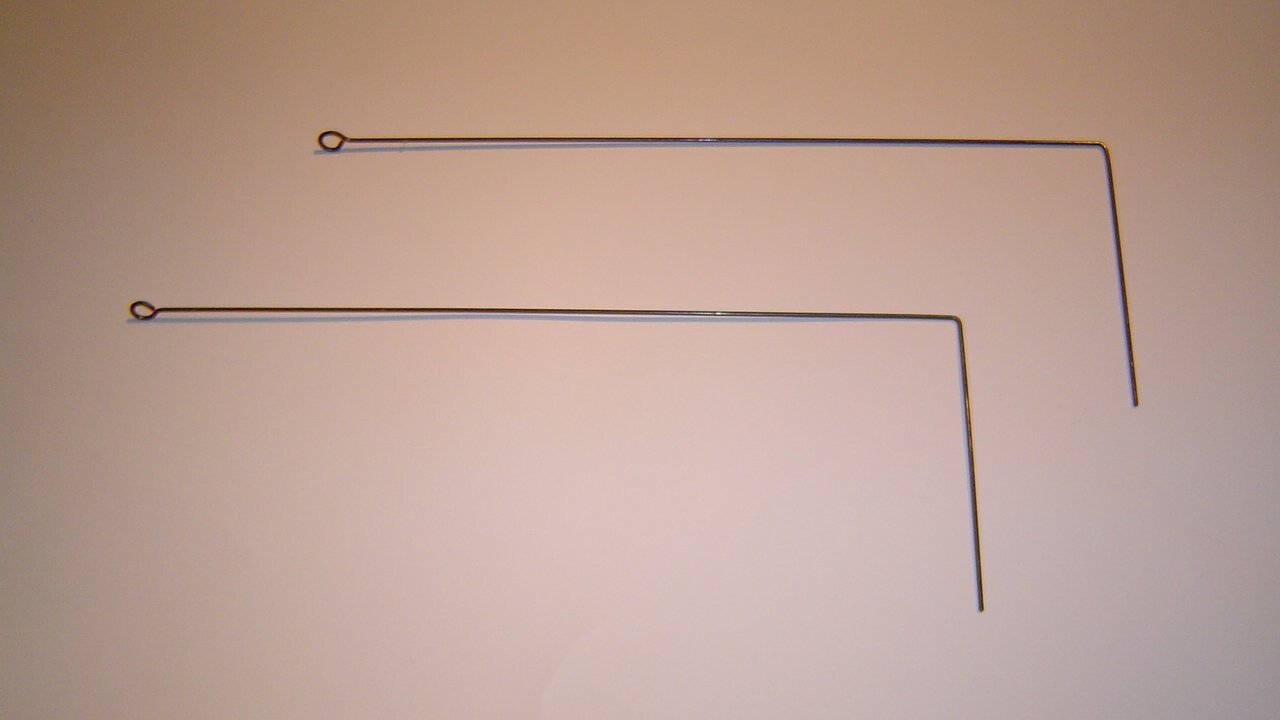
Dowsers may also use wire coat hangers, wire rods, and other improvised tools. In the familiar version, a Y-shaped branch dips or two L-shaped rods cross at a supposedly promising location. An earlier USGS publication advised against paying for water-witching services, machines, or instruments.
Whatever tool is used, its movement does not measure an aquifer’s depth, likely yield, or water quality.
Why Do Dowsing Rods Move?
The rods can move without deliberate trickery. An FBI Laboratory article explains that dowsing pointers are commonly held in an unstable position. A small, involuntary movement in the user’s arm can then become a much larger visible swing.
This response is known as the ideomotor effect. A person’s expectations and perceptions can guide slight muscle movements without conscious intent. The person holding the rods may therefore experience the motion as something happening to their hands, even though their muscles produced it.
What Do Controlled Tests Show?
The important question is not whether the rods move. It is whether they identify hidden water more accurately than ordinary guessing. According to the FBI Laboratory article, several objective studies found that dowsers tested under controlled conditions performed no better than random chance.
A useful test conceals the target’s location, limits clues that might guide the participant, and compares the results with the success rate expected from guessing. Without those safeguards, a moving rod or a successful well cannot show that dowsing detected water.
What Happened in the Munich Barn Experiments?
A large German research program recruited about 500 prospective dowsers and selected 43 for final testing. During two years of experiments in a barn, those participants completed 843 individual tests grouped into 104 series. Double-blind procedures kept both the dowser and the observer from knowing the target pipe’s location.
Seven of the 104 series met the researchers’ threshold for apparently notable results. A later assessment published in Skeptical Inquirer noted that seven such series were not appreciably different from the number ordinary statistical testing could produce by chance. The broad result did not demonstrate a dependable water-finding ability.
Why Does Dowsing Often Seem to Work?
Groundwater is widespread. The USGS explains that in many places it is so common near the surface that drilling a well without finding water would be difficult.
A successful well therefore does not prove that the marked spot was unique or that the rods detected anything. Another location nearby might have produced the same amount of water or more.
Determining how deep groundwater lies, how much is available, and whether its quality is suitable requires knowledge of the area’s hydrology, geology, and geophysics.
Did British Water Companies Use Divining Rods?
In 2017, The Guardian reported that 10 of 12 British water companies told science blogger Sally Le Page they used water dowsing despite the lack of scientific evidence. The answers drew attention because these were technical utilities responsible for maintaining large water networks.
Some companies then clarified their positions. Anglian Water said it did not spend money on dowsing or issue rods to engineers. Southern Water said the method was not company policy, although some leakage technicians might use rods.
Those responses show how an informal practice can persist among individual workers without becoming an evidence-based company procedure.
Is Dowsing Still Used in Rural America?
Yes, as a folk practice. The USGS says water dowsers work mainly in rural or suburban communities, where residents may be uncertain about finding an affordable groundwater supply.
The American Society of Dowsers also remains active. Its website says the nonprofit was founded in Vermont in 1961 and holds an annual convention, regional conferences, and local chapter events. That continued activity illustrates the tradition’s cultural durability, but it is not a substitute for results from controlled tests.
How Do Professionals Choose a Well Site?
The USGS recommends beginning with the state department that regulates water and natural resources. It can provide information about licensed drillers, required groundwater-withdrawal permits, well construction, water testing, maintenance, and required distances from septic or water-treatment systems.
Professionals also consult state databases of previously drilled wells. Nearby records can indicate the likely drilling depth and possible pumping rates. State geological surveys and local USGS Water Science Centers can provide additional information about local geology and hydrology.
A hydrologist may review the locations of nearby wells, their depth to water, pumping rates, and the rock formations they penetrate. Hydrologic reports and geologic maps can then describe where groundwater is likely to occur, its general availability, and its chemical composition.
These methods cannot guarantee a perfect well, but they provide evidence about groundwater that moving rods cannot.
Dowsing remains a meaningful tradition in some communities, but a well investment is better guided by geology, nearby well records, testing, and qualified professionals.
Sources:
- U.S. Geological Survey: Water Dowsing
- U.S. Geological Survey: The Divining Rod—A History of Water Witching, With a Bibliography
- FBI Law Enforcement Bulletin: Dowsing for Human Remains—Considerations for Investigators
- Skeptical Inquirer: Testing Dowsing—The Failure of the Munich Experiments
- The Guardian: Water Firms Backtrack on Admissions That They Use Divining Rods
- American Society of Dowsers: About
- U.S. Geological Survey: How Do I Find the Best Place to Drill for Water on My Property?
- U.S. Geological Survey: How Do Hydrologists Locate Groundwater?






