
Why are people calling the August 2, 2027 total solar eclipse the eclipse of the century?
The answer comes down to its extraordinary length. In the best locations, the Moon will completely cover the Sun for more than six minutes, creating an unusually long stretch of daytime darkness.
Here is why the eclipse will last so long, where totality will be visible, and how to protect your eyes while watching.
Why Is This Eclipse So Unusual?
The nickname highlights one remarkable feature: time. NASA’s prediction says the “Greatest Duration is 06m23.2s.” The calculation does not account for mountains and valleys along the Moon’s edge.
Timeanddate says, “The total solar eclipse of August 2, 2027, will produce the 2nd longest totality of the 21st century.” Only the July 2009 eclipse lasted longer.
Egypt’s State Information Service says the 2027 event will have the longest total-eclipse duration until 2114. Together, these comparisons explain why the eclipse has attracted such a grand nickname.

Why Will Totality Last So Long?
Several pieces of celestial timing line up. NASA’s 2027 calendar places the Moon at perigee, its closest orbital point to Earth, at 06:28 on August 2. The total solar eclipse follows at 10:07.
A closer Moon appears larger in our sky. NASA explains that a Moon near apogee, its farthest point from Earth, can appear too small to cover the Sun completely. During the 2027 eclipse, the Moon’s larger apparent size will allow it to extend beyond the Sun’s bright face along the path of totality.
The observer’s position also affects the experience. NASA’s eclipse map says the event lasts longest on the central line, so travelers seeking the maximum duration need to choose their location carefully.
Where Can People See Totality?
NASA says the path of totality includes southern Spain, Morocco, Algeria, Tunisia, Libya, Egypt, Saudi Arabia, Yemen, and Somalia. Luxor, Egypt, is forecast to receive about six minutes and 22 seconds of totality.
Complete coverage is limited to a narrow corridor. NASA’s eclipse map warns, “You MUST be somewhere within the central path (between the blue lines) to see the total phase of the eclipse.” A location outside that path will experience a partial eclipse instead.
Most of Europe, along with much of Africa, the Middle East, and other surrounding regions, will see a partial eclipse. In those places, part of the Sun will remain visible, so specialized eye protection must stay on throughout the event.
What Will Totality Look Like?
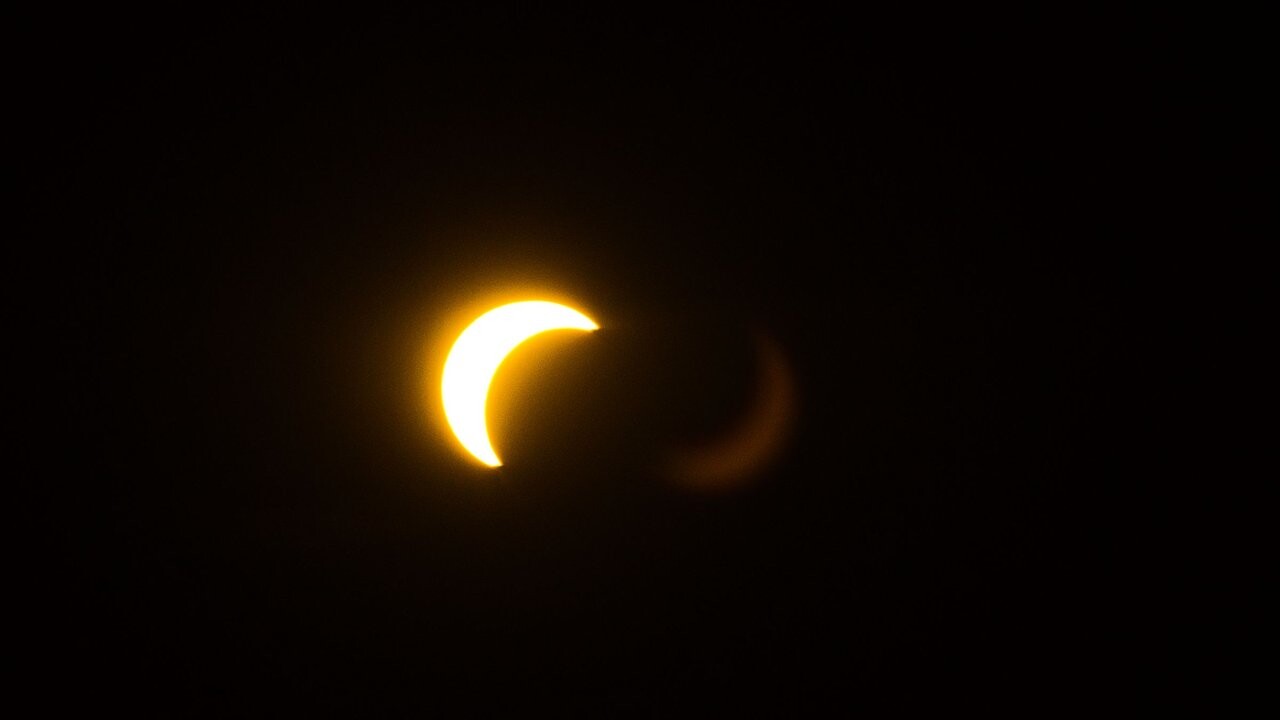
A total eclipse happens when the Moon completely blocks the Sun’s bright face. NASA says the sky inside the path becomes dark “as if it were dawn or dusk.”
The Sun’s faint outer atmosphere, called the corona, can then appear around the dark Moon. This view is possible during totality, while a partial eclipse leaves part of the intensely bright Sun exposed.
Totality ends when the bright Sun begins to reappear. At that moment, viewers should immediately put their eclipse glasses back on or resume using a safe handheld viewer.
Will the Eclipse Be Visible in the United States?
NASA lists a partial eclipse in northern Maine, while the published path of totality crosses parts of Europe, Africa, and the Middle East.
A total solar eclipse will reach Alaska in 2033. For the contiguous states, NASA says totality returns in 2044, but only in North Dakota and Montana.
A much larger event follows in 2045. NASA identifies it as the next total solar eclipse with a path crossing the lower 48 states from coast to coast.
How Can You Watch Safely?
Specialized eye protection is necessary whenever any part of the Sun’s bright face is visible. That includes every moment of a partial eclipse and the partial phases before and after totality.
- Choose Proper Viewers. NASA says safe solar viewers should comply with the ISO 12312-2 international standard. It cautions that “regular sunglasses, no matter how dark, are not safe for viewing the Sun.”
- Inspect Them First. Discard eclipse glasses or handheld viewers that are torn, scratched, or otherwise damaged. Children should use solar viewers with adult supervision.
- Keep Eyeglasses On. If you normally wear prescription glasses, place eclipse glasses over them or hold a safe handheld viewer in front of them.
- Protect Optical Devices. Never look through a camera, telescope, or binoculars while wearing eclipse glasses. These devices require appropriate solar filters attached securely to the front of the optics.
- Know When to Look. Inside the path of totality, eye protection may come off only after the Moon completely covers the Sun’s bright face. Put it back on as soon as any bright sunlight returns.
A pinhole projector offers a safe indirect alternative. Keep the Sun behind you, and watch its projected image instead of looking through the opening.
With thoughtful preparation, this unusual eclipse can be both memorable and safe. Have you ever experienced totality, and what do you remember most?
Follow The HyperHive on MSN for more stories like this.
Sources:



