Vintage Playgrounds That Would Never Be Allowed Today

Seattle Municipal Archives from Seattle, WA / Wikimedia Commons, CC BY 4.0 (cropped)
Old playgrounds promised height, speed, and just enough uncertainty to make recess unforgettable. This gallery moves from early schoolyard apparatus to midcentury metal icons, then finishes with the guidance and standards that changed public playground design.
The photo ideas point toward historical collections, municipal archives, and freely licensed image repositories. Together, they show how playgrounds evolved while preserving the bold shapes, shared challenges, and neighborhood memories that made the originals so distinctive.
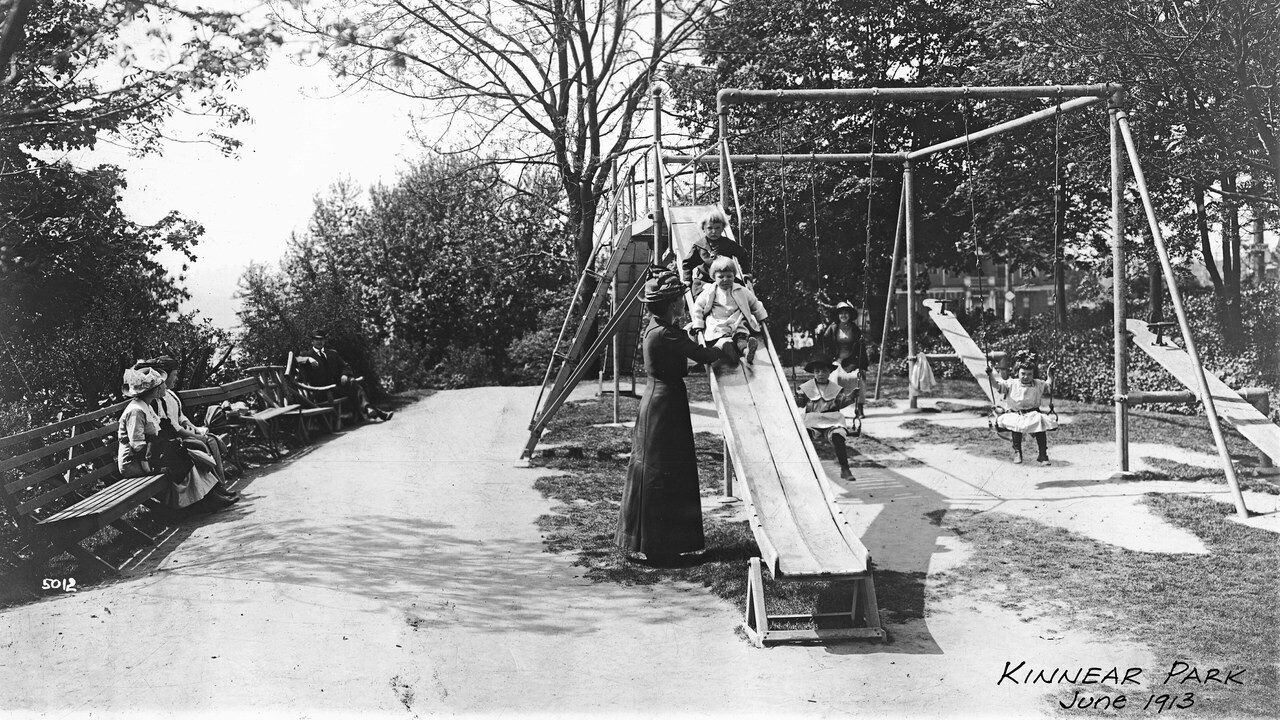
The All-in-One Playground Apparatus
Early playgrounds sometimes packed ladders, ropes, rings, swings, and climbing frames into one busy structure. To children, the tangle looked like an invitation to invent a route. In old photographs, notice how many activities share the same footprint and how little empty space separates one challenge from the next.
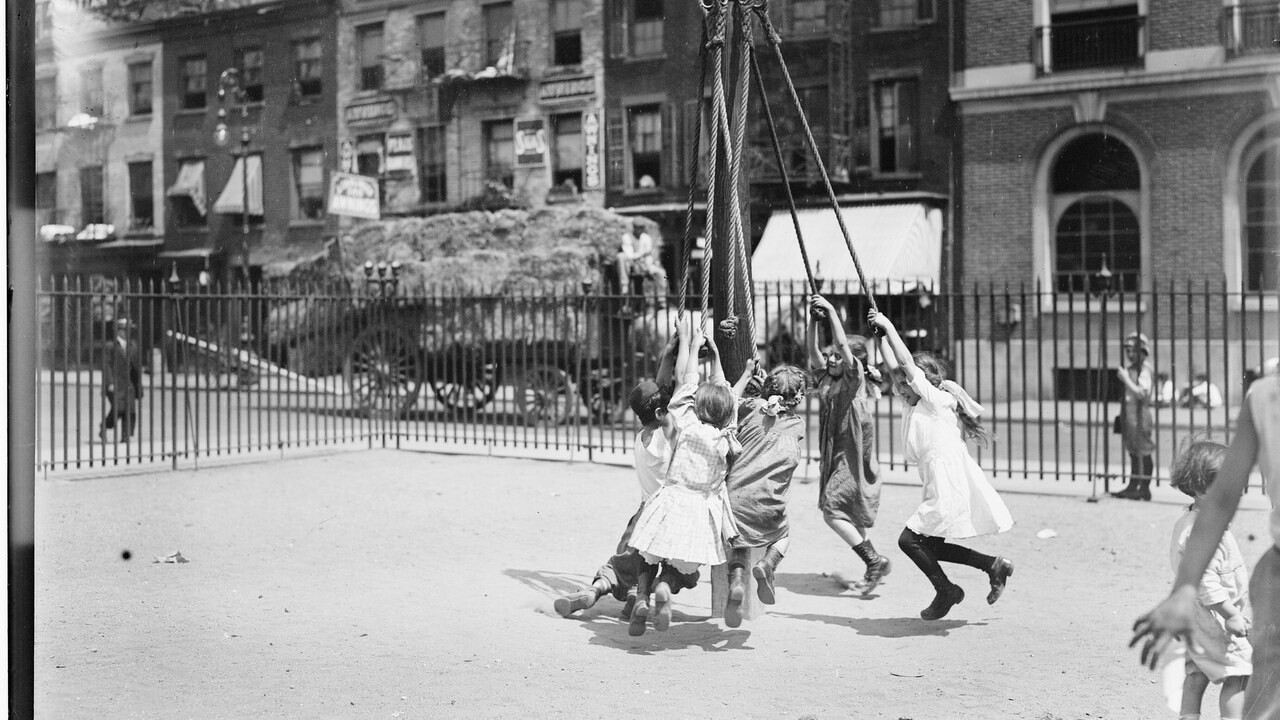
The Giant Stride
Children grabbed hanging ropes or chains and ran around a tall center pole until momentum lifted their feet. It was part teamwork and part airborne gamble. The current CPSC handbook includes giant strides among the equipment it does not recommend for public playgrounds, turning this once-familiar contraption into a genuine relic.
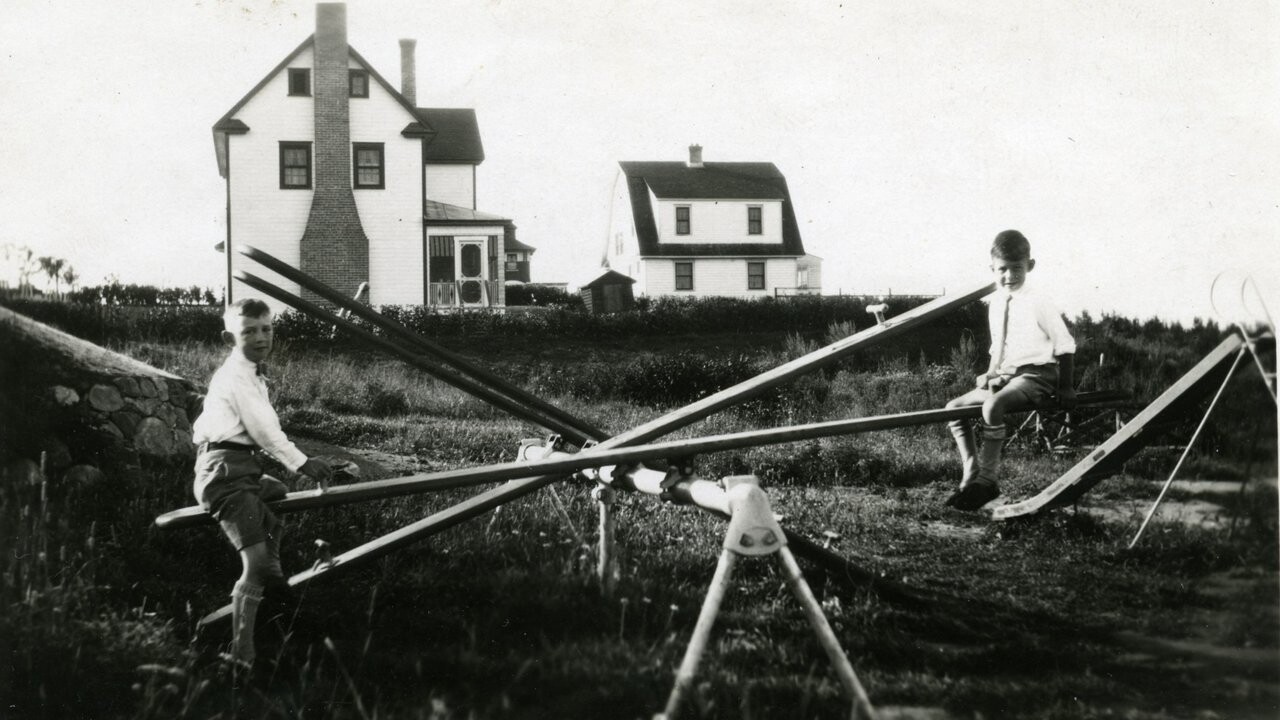
The Full-Force Teeter-Totter
A long wooden board, a metal fulcrum, and a trusted friend were all this ride required. Its reputation came from the jolt when one rider suddenly jumped off. The CPSC does not recommend traditional fulcrum seesaws for toddlers or preschool-age children, although older children may still encounter updated versions.
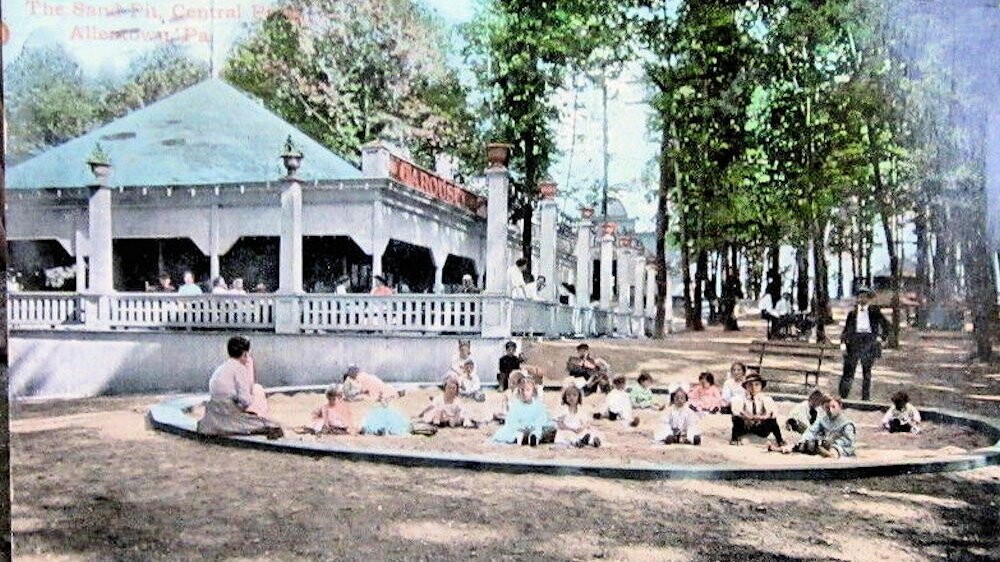
The Neighborhood Sandpile
The sandpile was the quiet corner where roads, forts, and entire towns appeared before lunch. Unlike the towering equipment nearby, it invited children to settle in and build at their own pace. Vintage photographs often capture a striking contrast between this low patch of sand and the tall steel structures surrounding it.
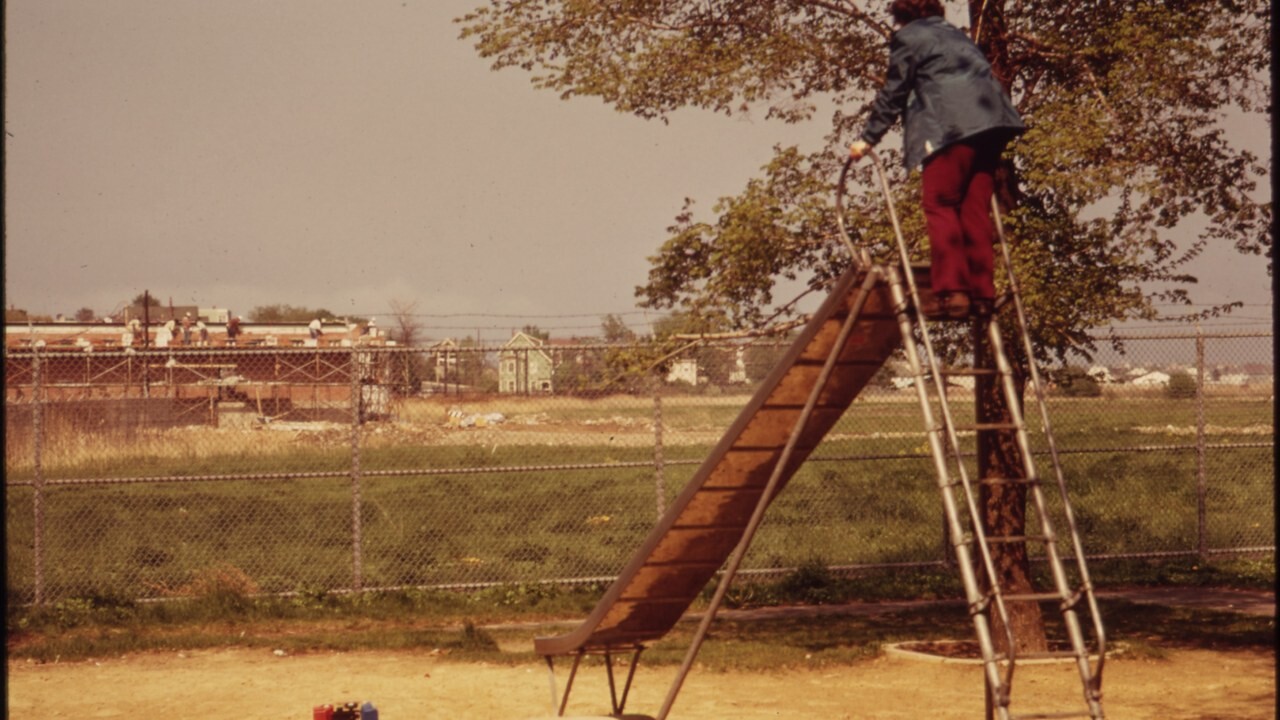
The Towering Straight Slide
The climb seemed endless, and the view from the top felt enormous. Vintage slides often paired a lofty platform with a narrow metal chute and an abrupt arrival at ground level. When studying the photographs, follow the rider’s entire route from the first ladder rung to the bare landing area below.
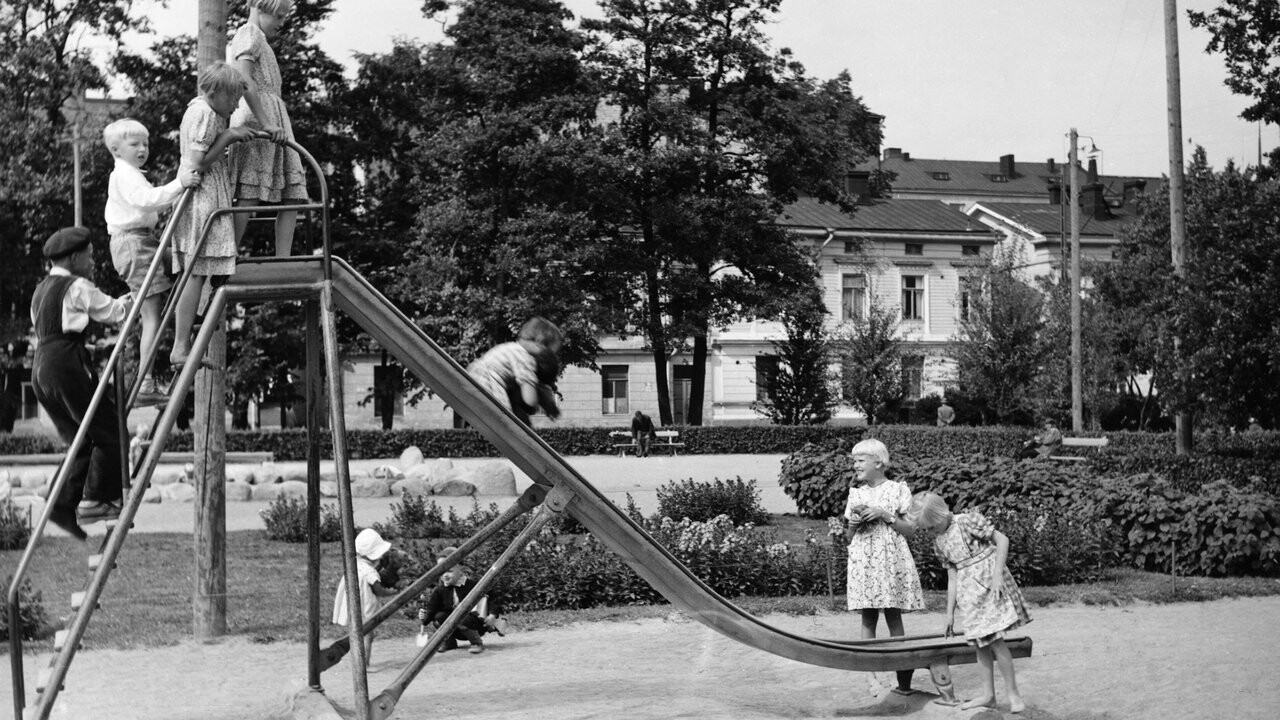
The Open Ladder to the Top
Reaching the slide could be as memorable as riding it. Slim rungs rose toward an exposed platform, rewarding anyone who resisted looking down. The old images make the scale especially clear: a child could appear tiny beside the ladder, while the top platform seemed to hover far above the playground.
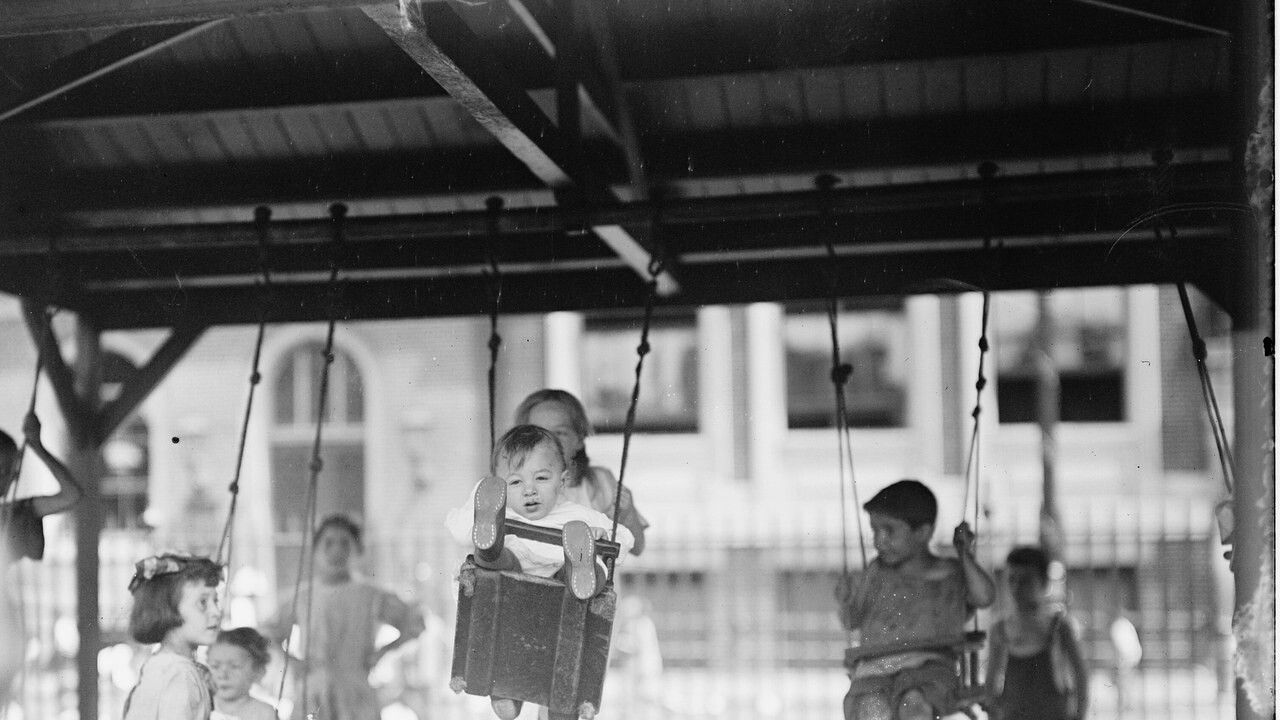
Wooden Swing Seats
A wooden plank on two chains made a wonderfully simple swing, but it also became a heavy moving object. The CPSC now recommends lightweight rubber or plastic seats to reduce the severity of impact injuries and advises against wooden or metal seats. The old boards remain an unmistakable feature of vintage playground photographs.
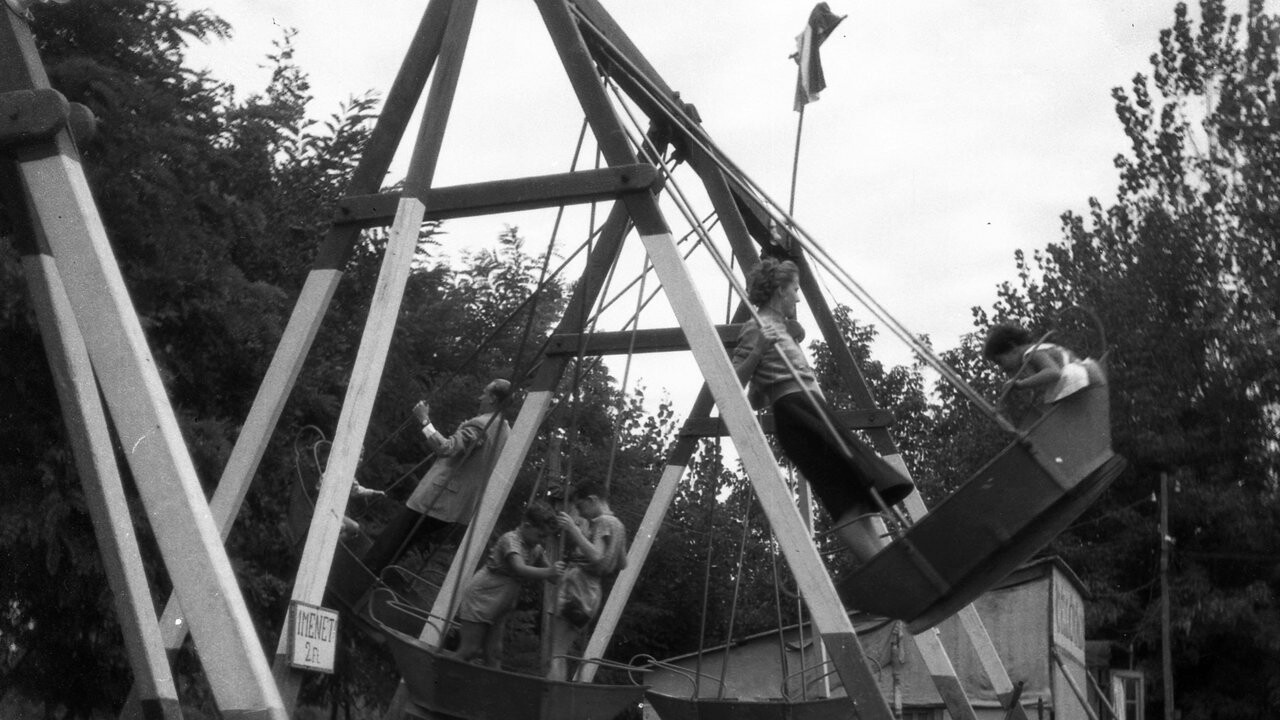
The Multi-Rider Glider
Gliders turned swinging into a group project. Children faced one another, pumped together, and tried to send the shared seat higher with every pass. Their size gave them the presence of a small vehicle, while the need to coordinate several riders made each trip feel more complicated than an ordinary swing.
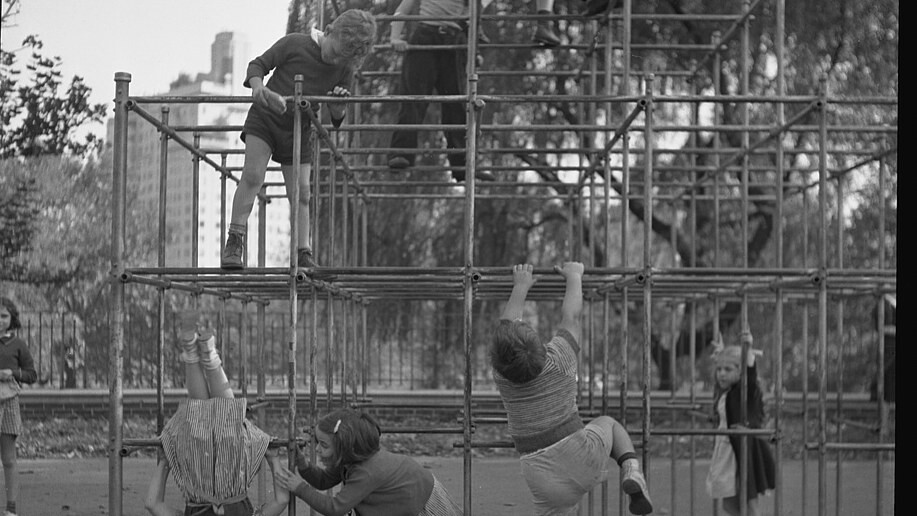
Monkey Bars Over Packed Ground
Crossing the bars without dropping was a small childhood triumph. Falling often meant meeting packed dirt, grass, or pavement. Modern playgrounds pair climbing challenges with protective surfacing because the CPSC identifies shock-absorbing material beneath and around equipment as an important factor in reducing life-threatening head injuries from falls.
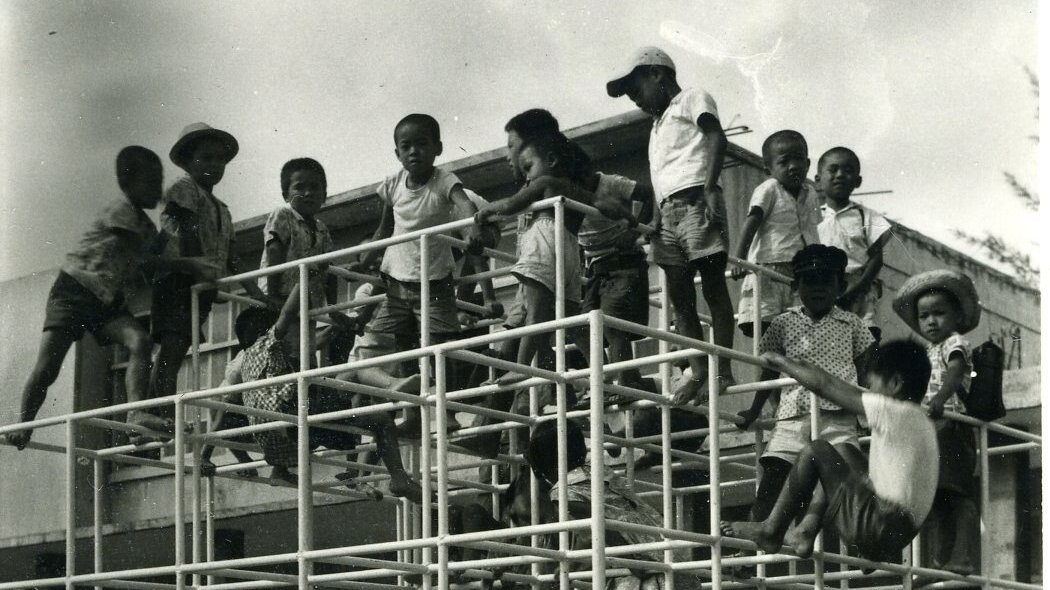
The Crowded Pipe Jungle Gym
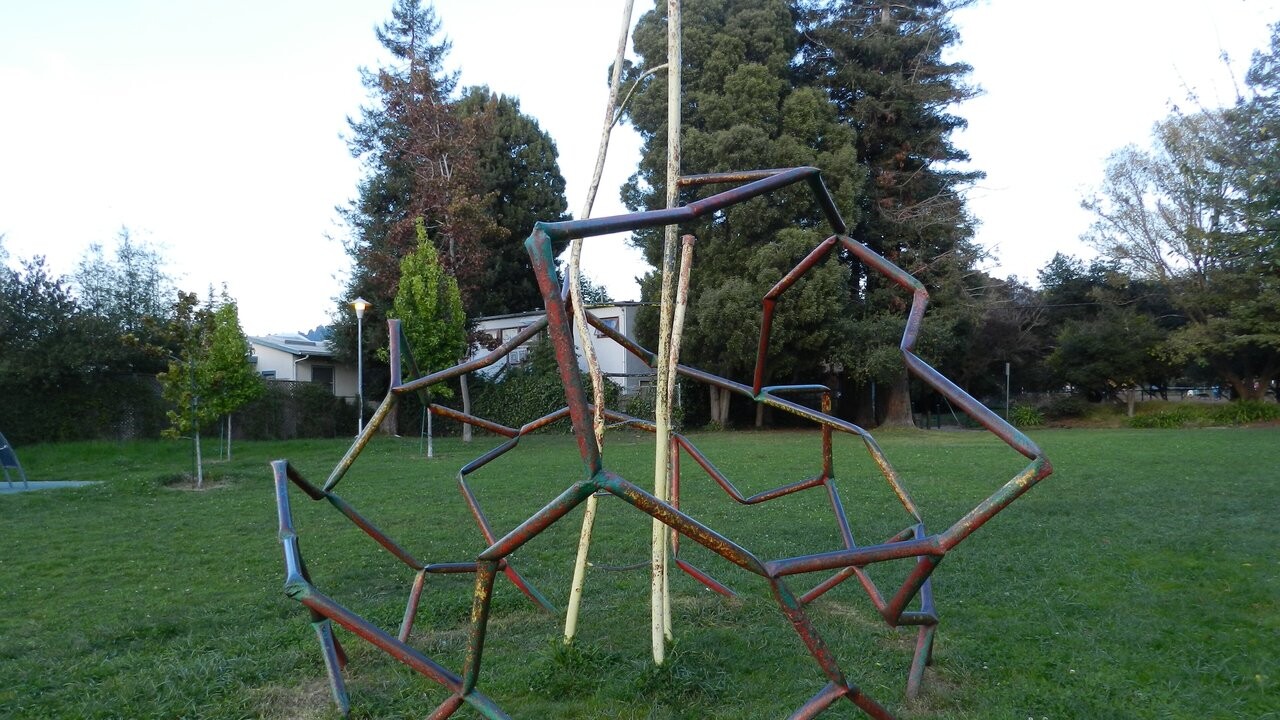
The classic jungle gym was a geometric mountain of steel pipe. Children climbed inside, outside, and straight across the top, often all at once. In gallery images, look for the improvised routes: one child might sit at the summit while others threaded between the bars or crossed beneath dangling feet.
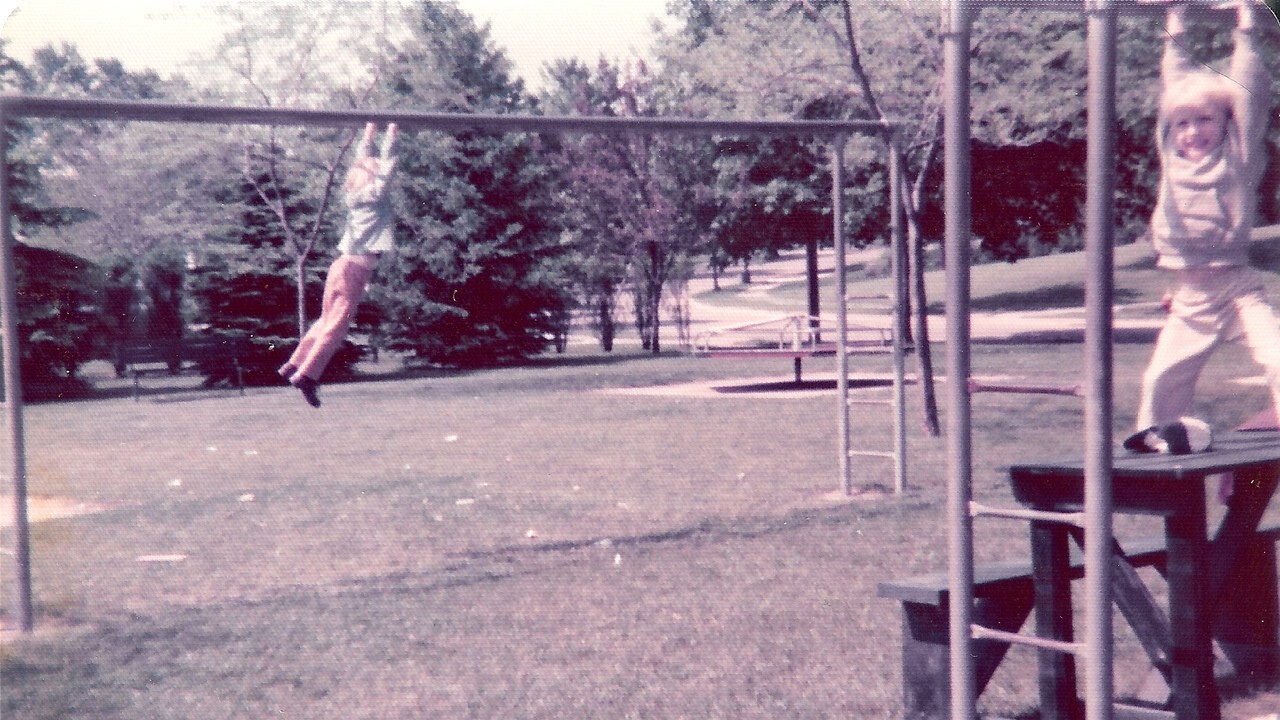
The High Horizontal Ladder
Overhead ladders turned recess into an endurance test, especially when the final rung felt impossibly far away. The challenge was easy to understand and difficult to fake. Vintage photographs reveal the crucial details at a glance: the height of the bars, the reach between rungs, and the ground waiting underneath.
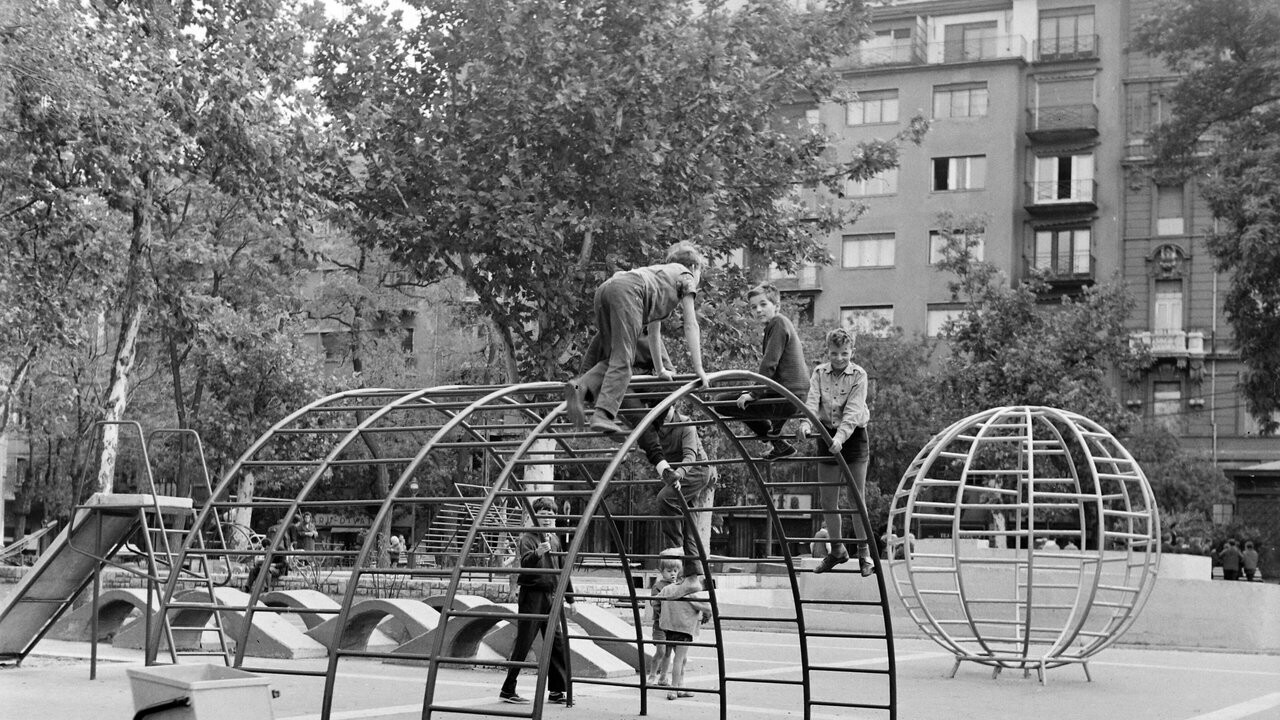
The Freestanding Arch Climber
An arch climber invited children to scramble up one side, sit proudly on the crown, and decide how to get down. That curved silhouette made it instantly recognizable. Current CPSC guidance does not recommend freestanding arch climbers for toddlers or preschool-age children, placing this familiar form outside the youngest playground areas.
Rings on Long Chains
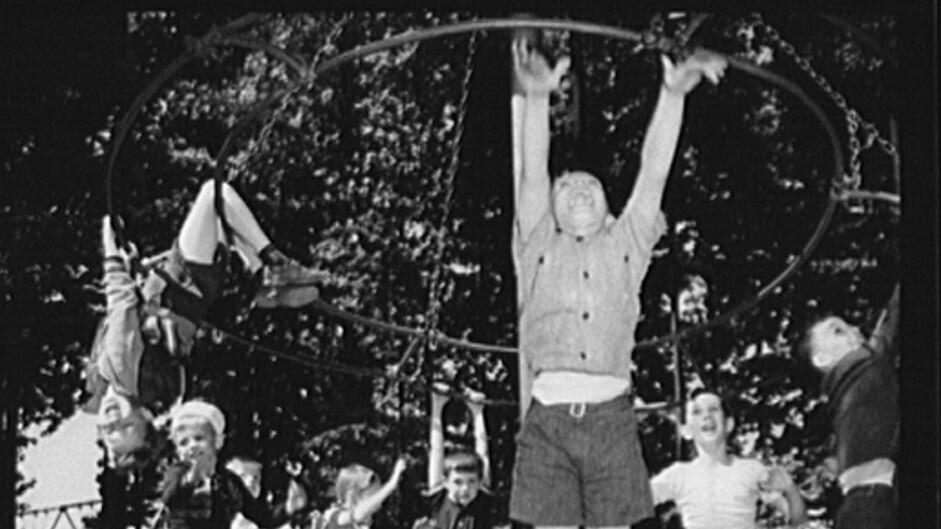
Long swinging rings and trapeze bars could twist and sway as children crossed between them. The CPSC classifies versions suspended on long chains as athletic equipment and does not recommend them for public playgrounds. That recommendation does not apply to the shorter overhead hanging rings found in ring treks or ring ladders.
The Fast Merry-Go-Round
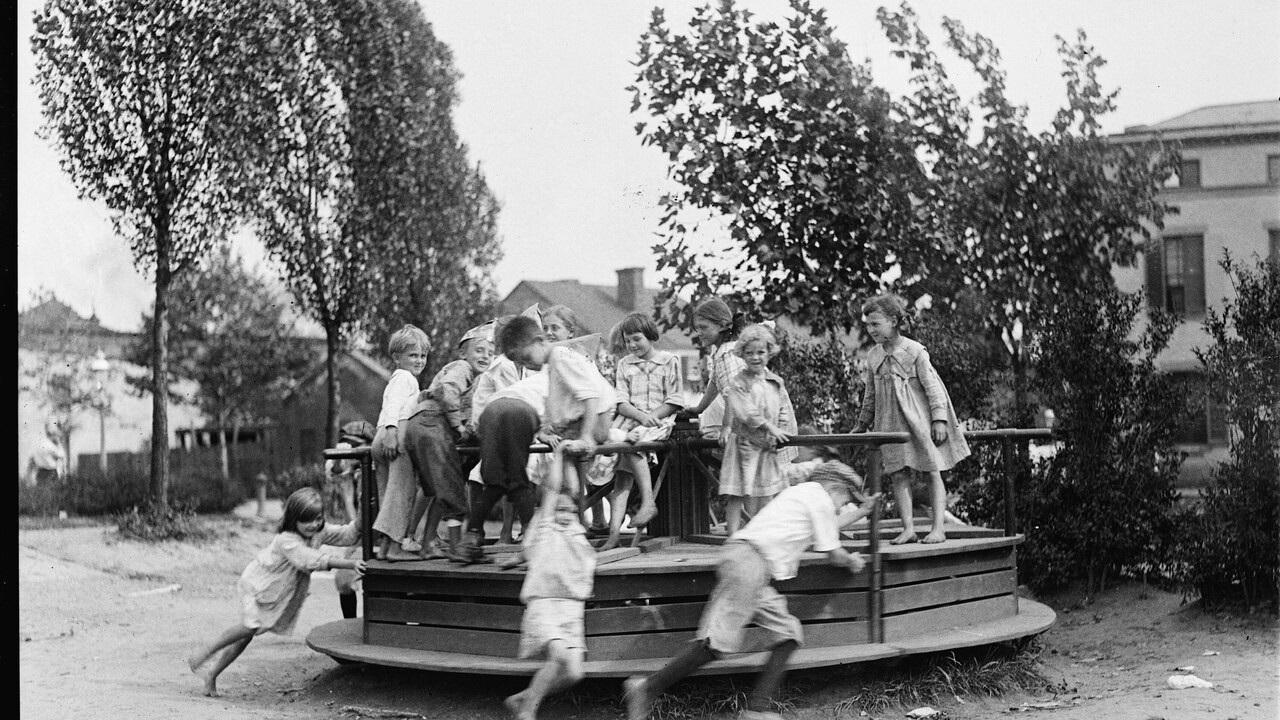
Someone always volunteered to push, and someone else always demanded more speed. The classic merry-go-round transformed a flat platform into a test of grip, balance, and nerve. Old photographs also show its social appeal: a whole group could pile aboard while another child supplied the power from the ground.
The Witch’s Hat
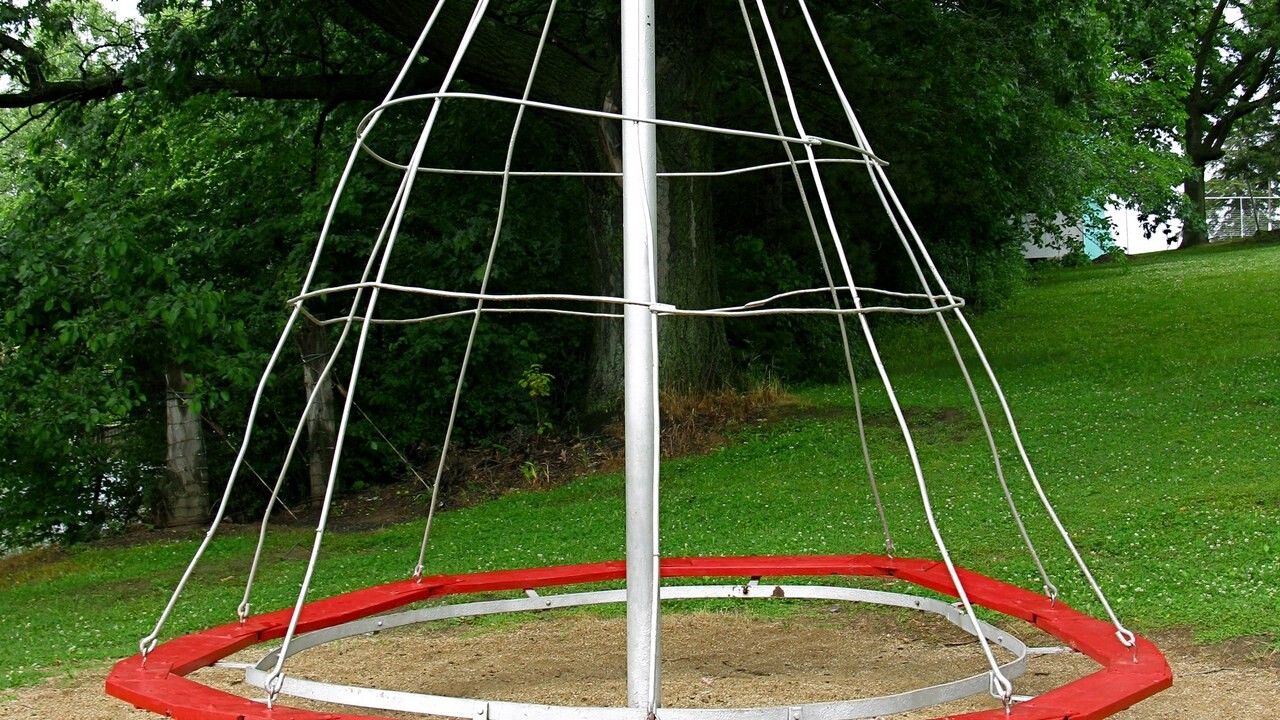
The witch’s hat added a swooping motion to the ordinary roundabout. Riders clung to a hanging circular frame as it traveled around a center pole, sometimes rising and dipping along the way. Current CPSC guidance says spinning playground equipment should not move up and down, leaving this dramatic design firmly in the past.
The Homemade Roundabout
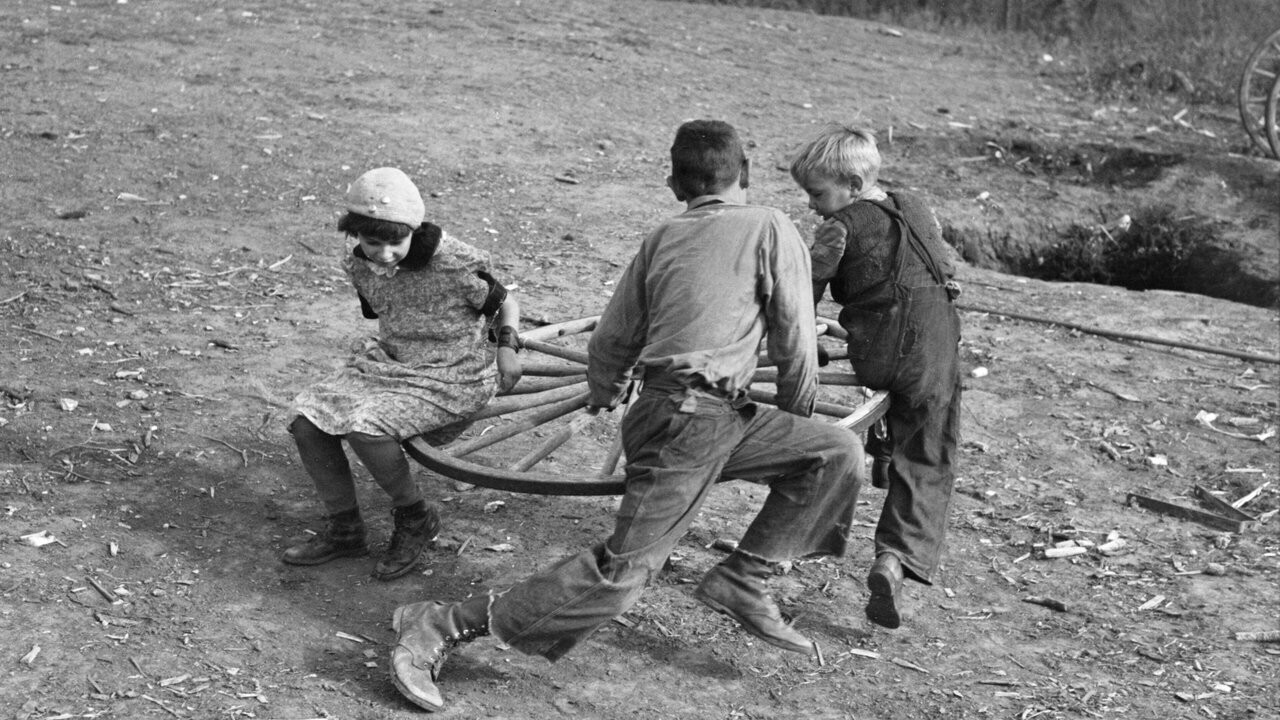
Improvised merry-go-rounds could be little more than boards, a central pivot, and youthful determination. Their handmade character is part of their visual appeal. Look closely at old examples and ask practical questions: where did riders place their hands, how did the platform turn, and who decided when the ride stopped?
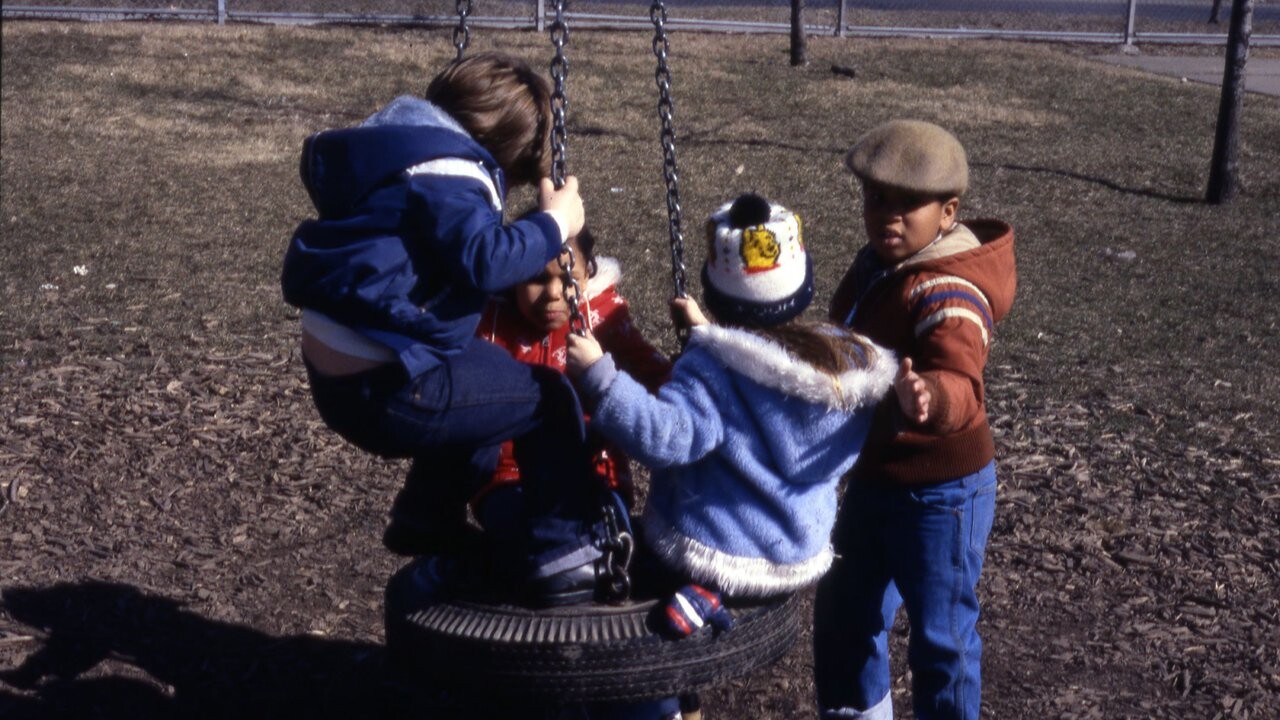
The Old Tire Swing
A discarded tire and a strong branch created hours of spinning, bumping, and arguing over whose turn came next. Tire swings still carry that simple appeal, but reused materials deserve a careful look. The CPSC says steel-belted radial tires used on playgrounds should be checked regularly for exposed belts or wires.

The Rocket-Ship Climber
Space-age playgrounds let children climb into rockets without leaving the neighborhood. Tall cages, steep ladders, and elevated openings made the fantasy convincing. In photographs, the best examples resemble public sculpture as much as play equipment, with fins, portholes, control panels, and pointed noses transforming ordinary steel into a launch vehicle.
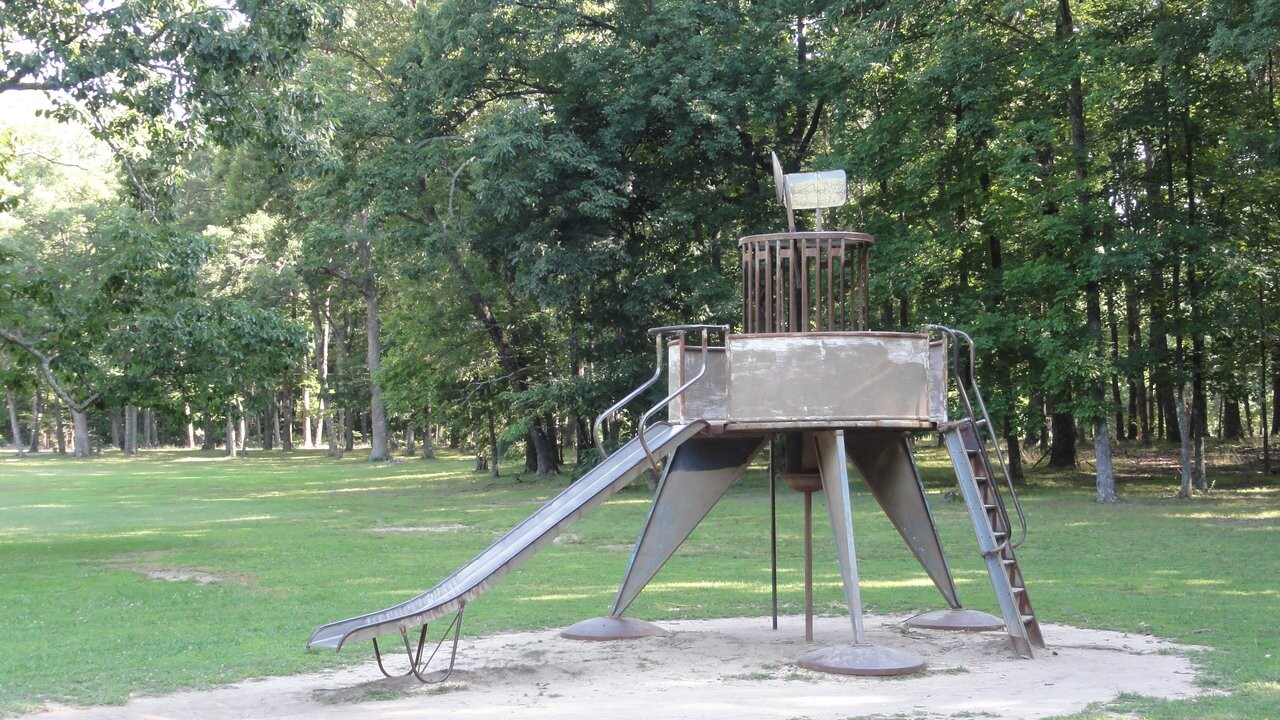
The Radar-Tower Climber
Cold War imagination also produced radar stations, satellites, and other steel climbing sculptures. Their appeal came from height and unusual shapes rather than a single prescribed route. These structures reward a slow visual inspection, from the narrow entrances near the ground to the domes, dishes, and platforms perched overhead.
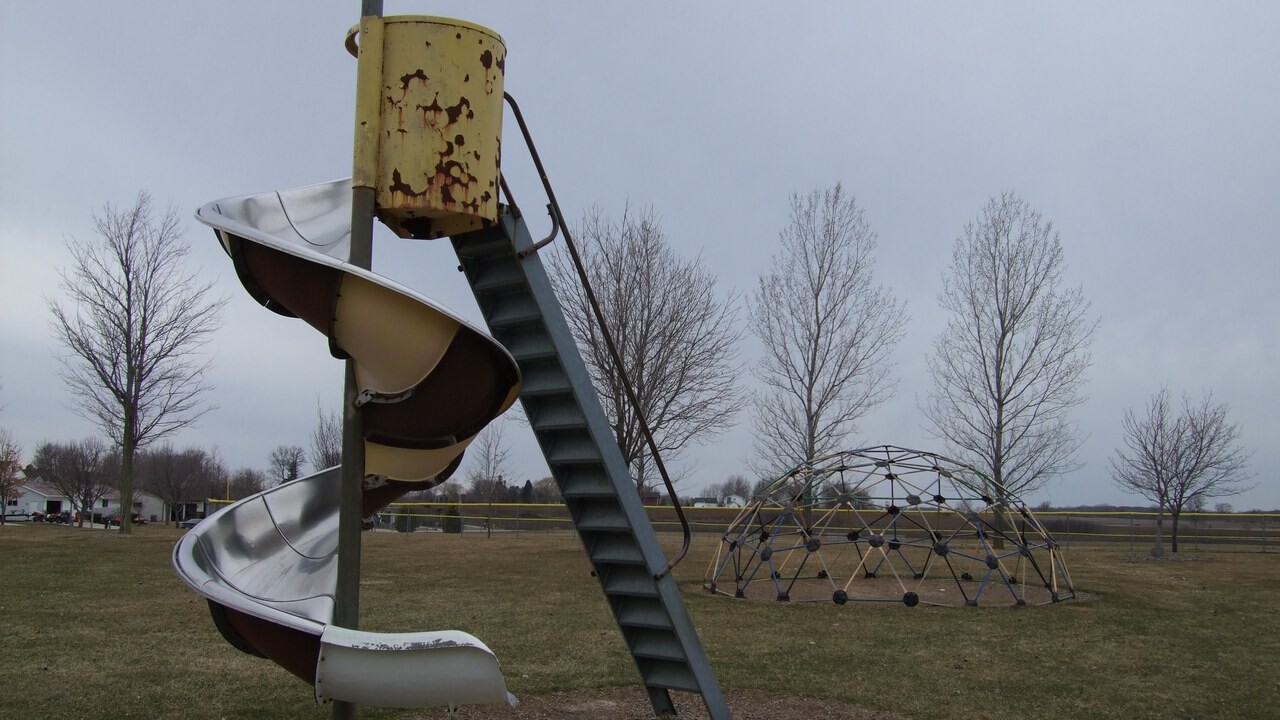
The Metal Spiral Slide
A spiral slide delivered extra suspense because the bottom disappeared from view. The CPSC recommends only short spirals, defined as one complete turn or less, for toddlers and preschool-age children. Vintage versions could wrap around tall supports, turning a simple descent into a winding trip that dominated the entire playground.
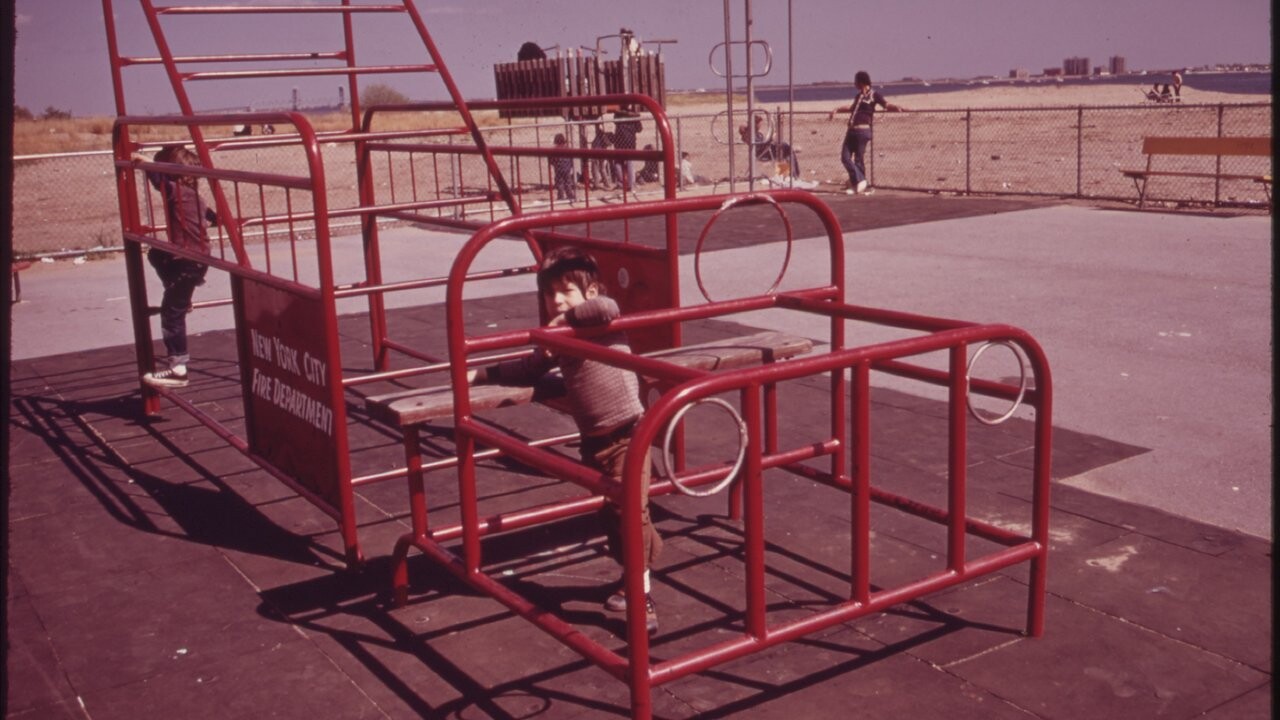
Concrete and Asphalt Landings
Many vintage playgrounds placed steel equipment directly over asphalt, concrete, or hard-packed earth. Those surfaces looked tidy and endured heavy use, but they offered little forgiveness during a fall. The CPSC says older playgrounds that remain on hard surfacing should be modified to provide appropriate material beneath and around the equipment.
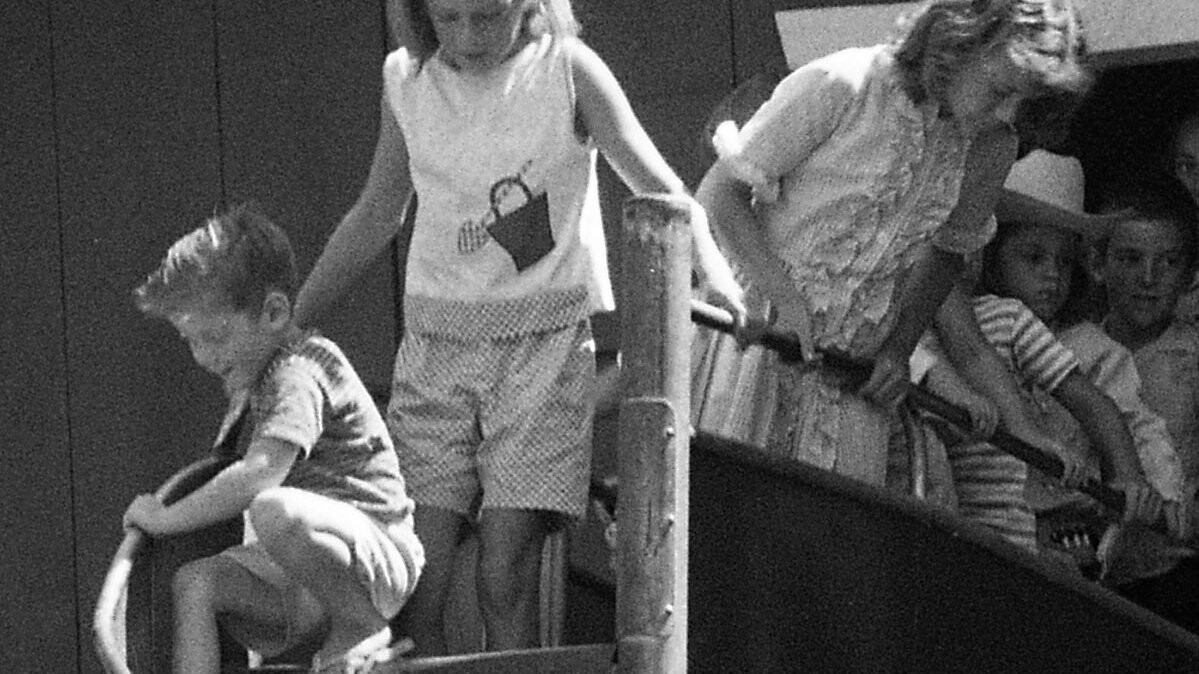
The Summer Metal-Slide Test
Many children remember tapping a slide before committing, then discovering that shorts offered little protection from hot metal. The CPSC warns that bare metal exposed to direct sunlight can cause serious contact burns within seconds. Its handbook recommends shading bare metal slides or choosing materials such as plastic or coated metal to reduce surface temperature.
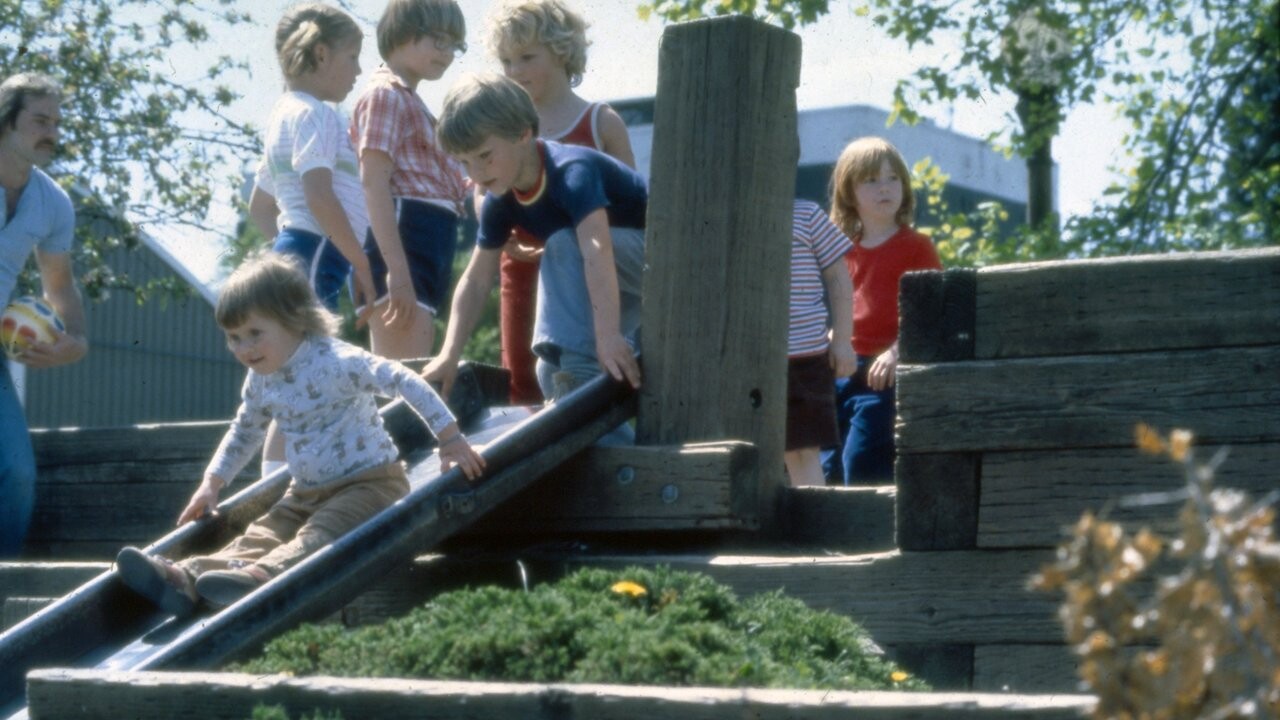
The First Federal Safety Handbook
The change did not happen overnight. According to the current CPSC handbook’s historical timeline, the agency published its first public-playground safety handbook in 1981 as a two-volume set. A single-volume edition replaced it in 1991, marking another step toward the consolidated guidance that communities and playground professionals use today.
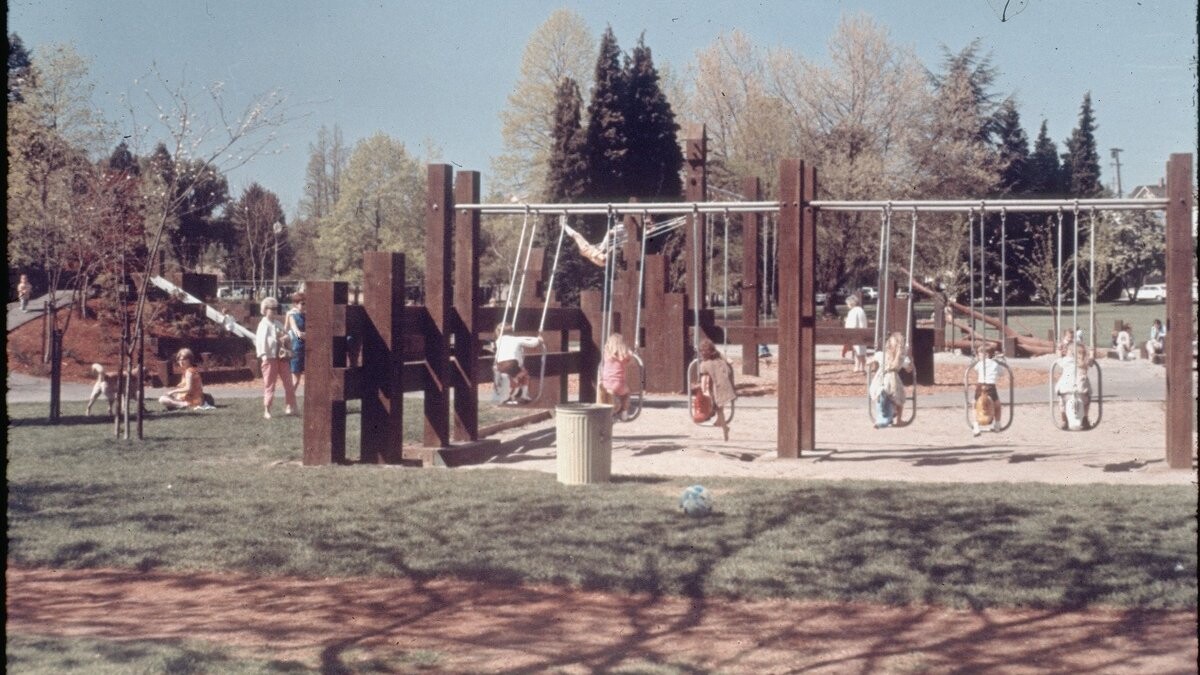
A Common Industry Standard Arrives
In 1993, ASTM published the first version of F1487, its voluntary standard for public playground equipment. The current edition covers safety and performance standards for several types of equipment, along with dimensional requirements for clearance and use zones. That scope shows how much more precisely contemporary public playgrounds are evaluated.
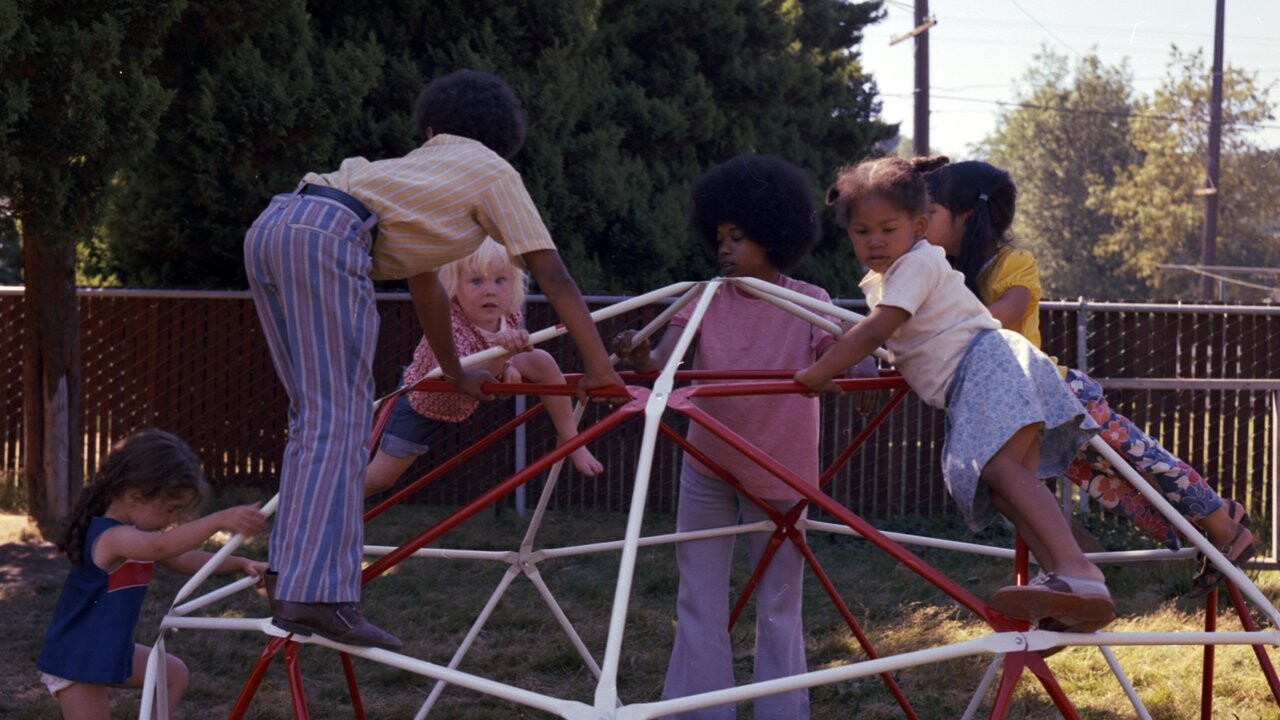
Why the Rules Kept Changing
The memories are cheerful, but playground injuries remain common. The CPSC reports an annual average of more than 190,000 estimated emergency-room-treated injuries associated with playground equipment from 2021 through 2023. The agency’s reporting describes injuries associated with the equipment, which does not necessarily mean the equipment caused every incident.
The Softer Ground Beneath Today’s Playgrounds
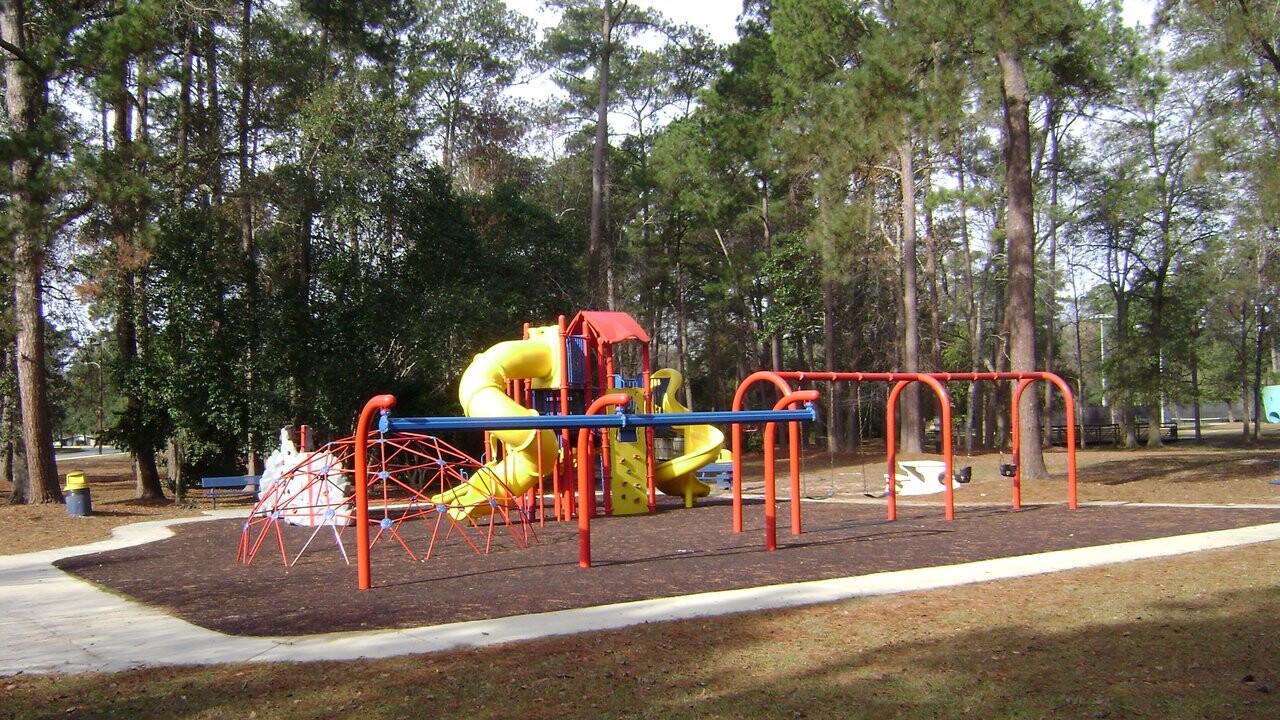
One of the clearest visual changes begins at ground level. Instead of placing equipment directly over pavement or hard earth, modern playgrounds commonly use protective surfacing. The CPSC identifies shock-absorbing material under and around playground equipment as one of the most important factors in reducing life-threatening head injuries resulting from falls.
Not a Nationwide Ban
The title captures how dramatically expectations have changed, but the legal picture is more nuanced. The CPSC handbook provides guidelines rather than mandatory federal rules. States, local jurisdictions, insurers, and site managers may require compliance with the handbook or voluntary ASTM standards, so the treatment of surviving vintage equipment can vary by location.
The old playground offered unforgettable thrills, while today’s designs try to preserve the adventure with a more forgiving margin for error. Which of these playground fixtures do you remember best?
Follow The HyperHive on MSN for more stories like this.
Sources:






