
Have you ever wondered why an older relative or longtime coworker puts two spaces after every period?
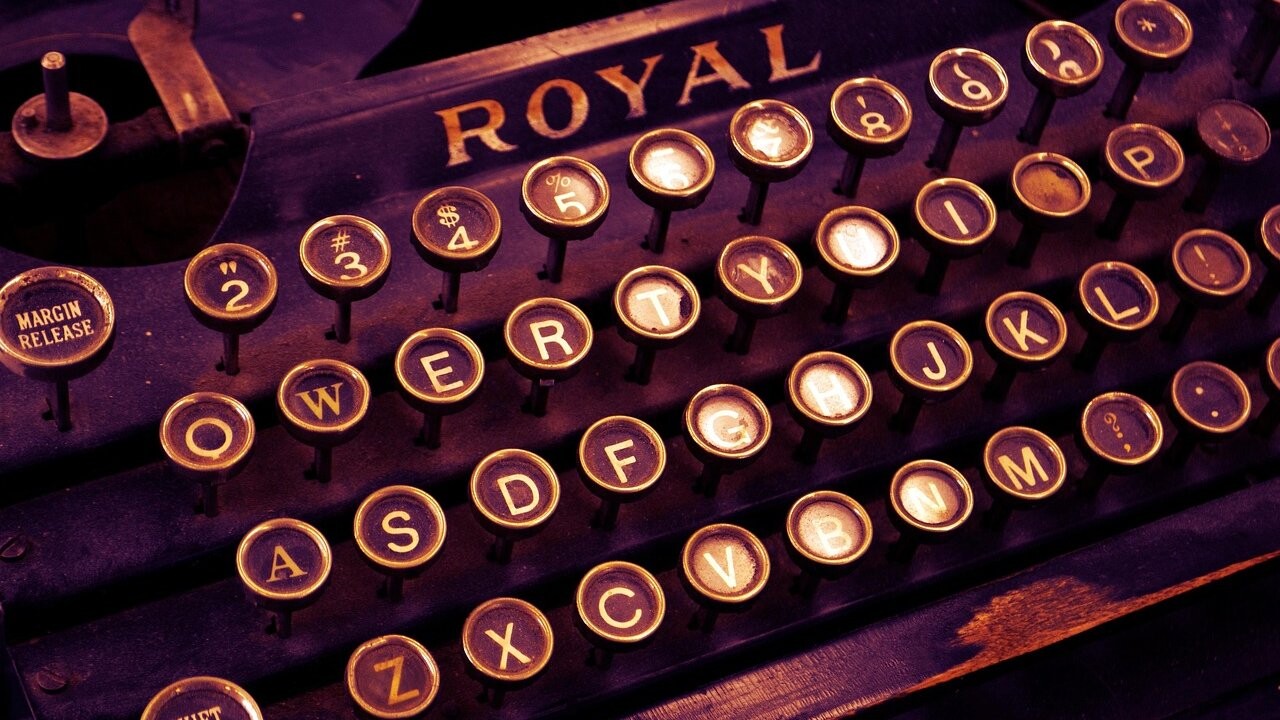
The answer often goes back to typing class. During the typewriter era, many students learned to add extra space after a sentence, and years of repetition turned the lesson into an automatic hand movement.
Today, major style guides prefer one space. Still, the older habit is neither careless nor mysterious. Its history involves printing traditions, competing typing rules, classroom drills, and changing technology.
Where Did the Two-Space Rule Come From?
Typing schools helped spread the two-space rule, but they did not invent extra sentence spacing. Design historian Sue Walker writes that larger spaces at the ends of sentences followed some typesetting practices of the late nineteenth and early twentieth centuries.
Typing manuals adapted such practices to the typewriter, but they did not all teach the same rule. Walker found that early Pitman manuals recommended three spaces after a full stop, while a 1902 manual preferred two. The familiar convention was one choice among several.
A University of Missouri museum-library manual offers a direct example. In its instructions on spacing between items, it told typists, “Leave two spaces after colons or periods.”
Students also learned detailed rules for punctuation, spacing, and page layout. In that setting, an extra press of the space bar was not a personal quirk. It was part of producing work according to the instructions provided.

What Did Monospaced Type Change?
Many typewriter-style fonts were monospaced. IBM explains that in this kind of font, “each character increment is the same width.” A narrow lowercase i or period therefore occupies as much horizontal room as a capital M.
That uniform rhythm gives a typewritten page a different appearance from proportionally spaced text. It also left typists with limited ways to organize information or create visual distinctions on the page.
Walker found that manuals used horizontal spacing to create a hierarchy among parts of a sentence. Different amounts of space could follow commas, semicolons, colons, and full stops, making punctuation pauses visibly distinct.
Within that system, an extra space after a full stop was a simple tool. One more tap of the space bar created a more noticeable break before the next sentence began.
Why Does the Habit Seem Generational?
Two-spacing can look generational because people encountered different rules depending on when and where they learned to type. Walker notes that typewriter composition was prevalent in the printing trade during the 1960s and 1970s.
Her research also describes typing manuals and repeated classroom exercises as the basis of typist training. Repetition mattered: students practiced the same movements until they could produce letters, reports, forms, and other documents efficiently.
Computers eventually replaced typewriters in many homes, schools, and offices, but the familiar keyboard layout preserved the same basic motion. A practiced period-space-space sequence could continue even after the original machine disappeared.
That background is worth remembering before correcting someone. The extra space may reflect a rule that was taught seriously and reinforced through years of everyday writing.
Why Do Style Guides Use One Space Now?
Modern publishing commonly uses proportionally spaced fonts. IBM describes these as fonts in which character width varies from one character to another, allowing a narrow letter and a wide letter to occupy different amounts of horizontal space.
Current style guidance generally does not require a second full space to mark a new sentence. The American Psychological Association says, “Use one space after a period or other punctuation mark at the end of a sentence.”
Chicago guidance is equally direct: “Put one space between sentences, not two.” This establishes one space as the standard choice for work following Chicago style.
The Modern Language Association recommends, “Leave one space after a period or other concluding punctuation mark, unless your instructor prefers two spaces.” The final choice can therefore depend on the rules for a particular class, workplace, or publication.
Is Using Two Spaces Actually Wrong?
In a personal email, family story, or note to a friend, two spaces are unlikely to obscure the meaning. They are better understood as an older writing convention than as a failure of grammar.
For school, professional, or published writing, follow the requested style. If no instructions are given, one space is the safest choice because it matches the guidance from APA, Chicago, and MLA.
If you want to change the habit, there is no need to interrupt every sentence while drafting. Chicago suggests finishing the document and using Find and Replace: “In the Find box, type two spaces, and in the Replace With box, type one space.”
Spacing is a small editorial choice, not a measure of intelligence or manners. One space reflects current style, while two spaces often preserve a lesson learned on an earlier writing technology.
A second space may be tiny, but it can carry the memory of a typing classroom and years of practiced work. Were you taught to use one space or two, and which feels more natural to you?
Follow The HyperHive on MSN for more stories like this.
Sources:



