Things You Probably Remember From a 1950s Kitchen

Seattle Municipal Archives from Seattle, WA / Wikimedia Commons, CC BY 4.0 (cropped)
The 1950s kitchen promised efficiency, abundance, and a little glamour. Its shiny surfaces and new appliances became part of everyday family life, although the polished ideal advertised to Americans did not always reflect the work required to keep the room running.
This gallery moves from room layouts and finishes to appliances, utensils, foods, and personal touches documented in museum, archive, and historic-site collections.
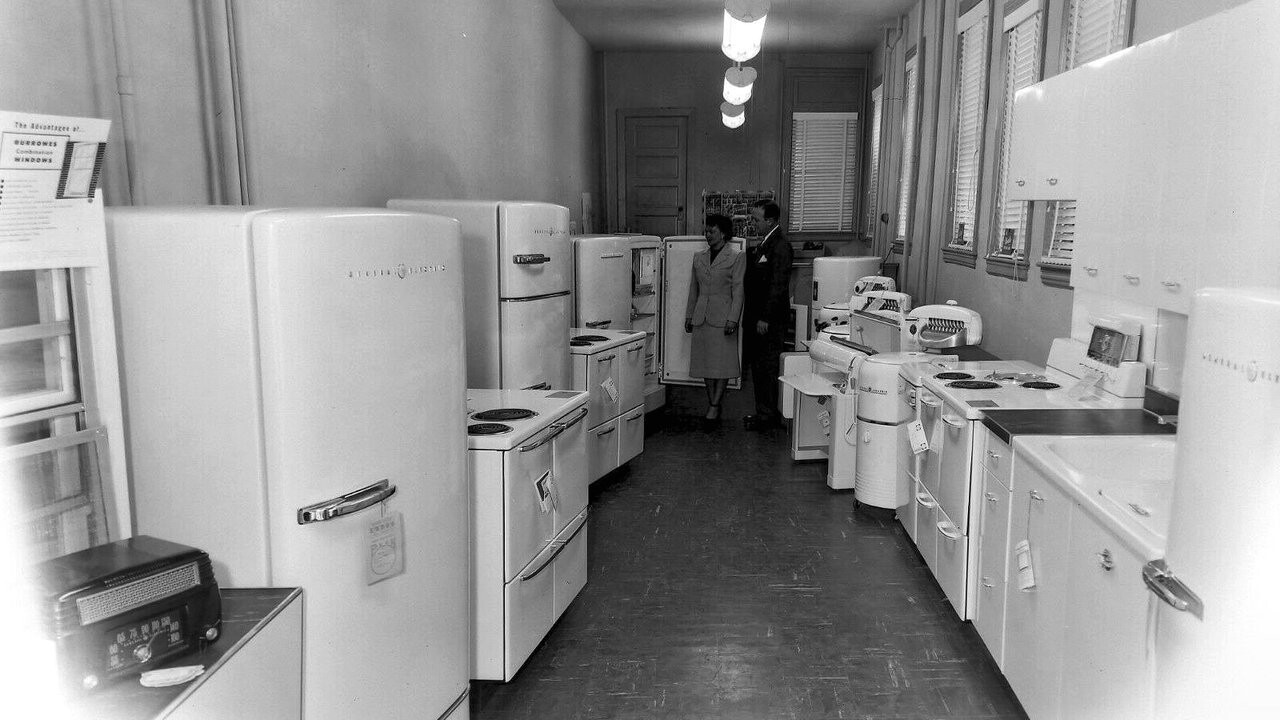
The Modern Kitchen as a Showpiece
In the postwar United States, the kitchen became more than a workroom. The National Museum of American History describes modern kitchens as prominent symbols of an idealized American way of life. That polished promise helps explain why gleaming counters, coordinated appliances, and carefully arranged cupboards remain such powerful memories.
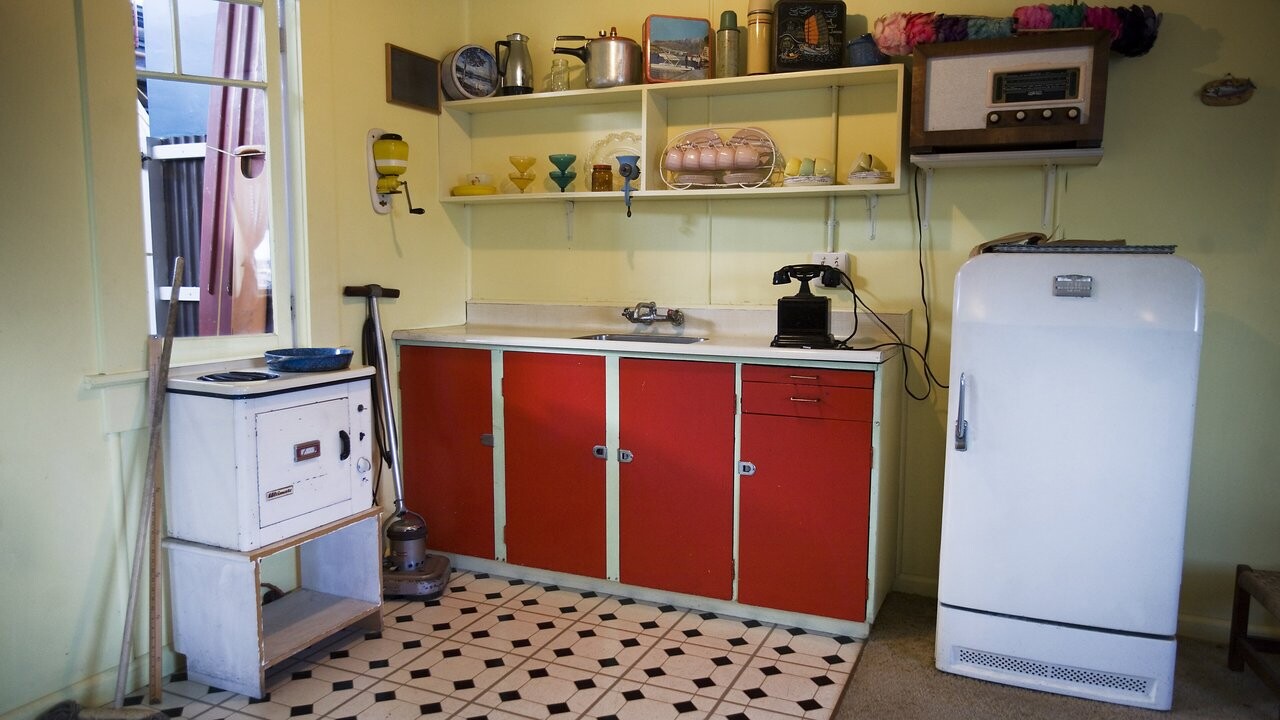
A Room Designed for Family Life
Ranch-house kitchens were increasingly connected to family interaction rather than hidden away. The National Park Service notes that several kitchen arrangements were available during the decade. Whatever the floor plan, the sink, range, refrigerator, cabinets, and counters created a compact workspace that also left room for conversation.
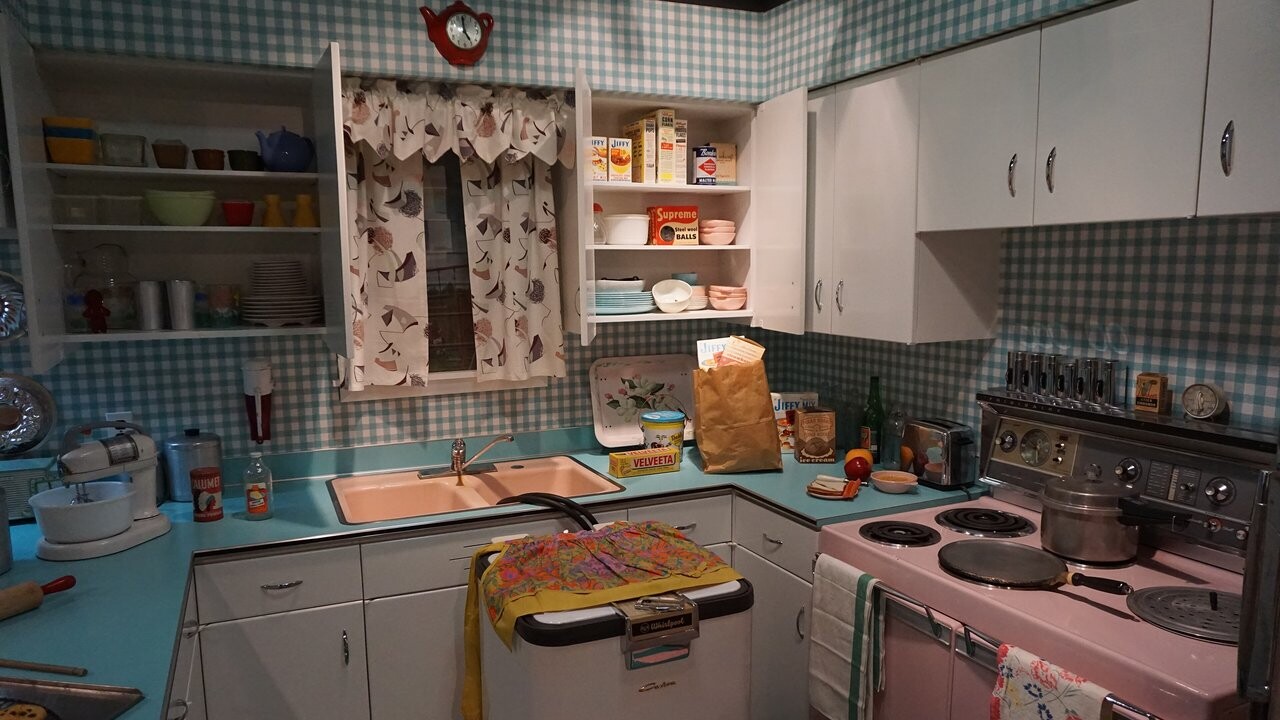
1950: Pastels and Color Accents
Color moved beyond plain white. A 1950 Frigidaire advertisement preserved by the Library of Congress promoted gleaming white, gold, chromium, and ice-blue styling. Those cool accents fit comfortably beside the pastel palette now associated with midcentury kitchens, making a practical appliance part of the decorating plan.
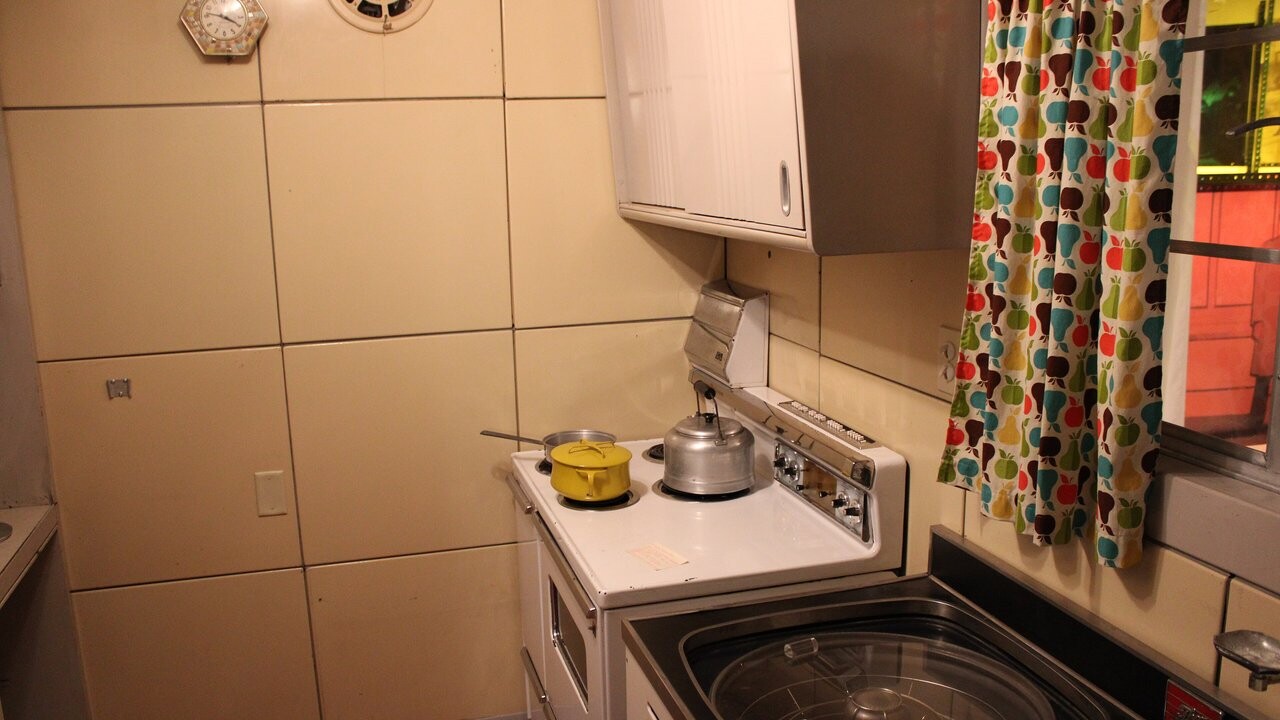
Smooth Metal Cabinets
The Smithsonian identifies stainless-steel kitchens as a standard feature of suburban houses. Firmly closing doors, aligned handles, and long rows of coordinated cabinets made the room feel orderly, streamlined, and engineered for modern efficiency.
Formica Countertops
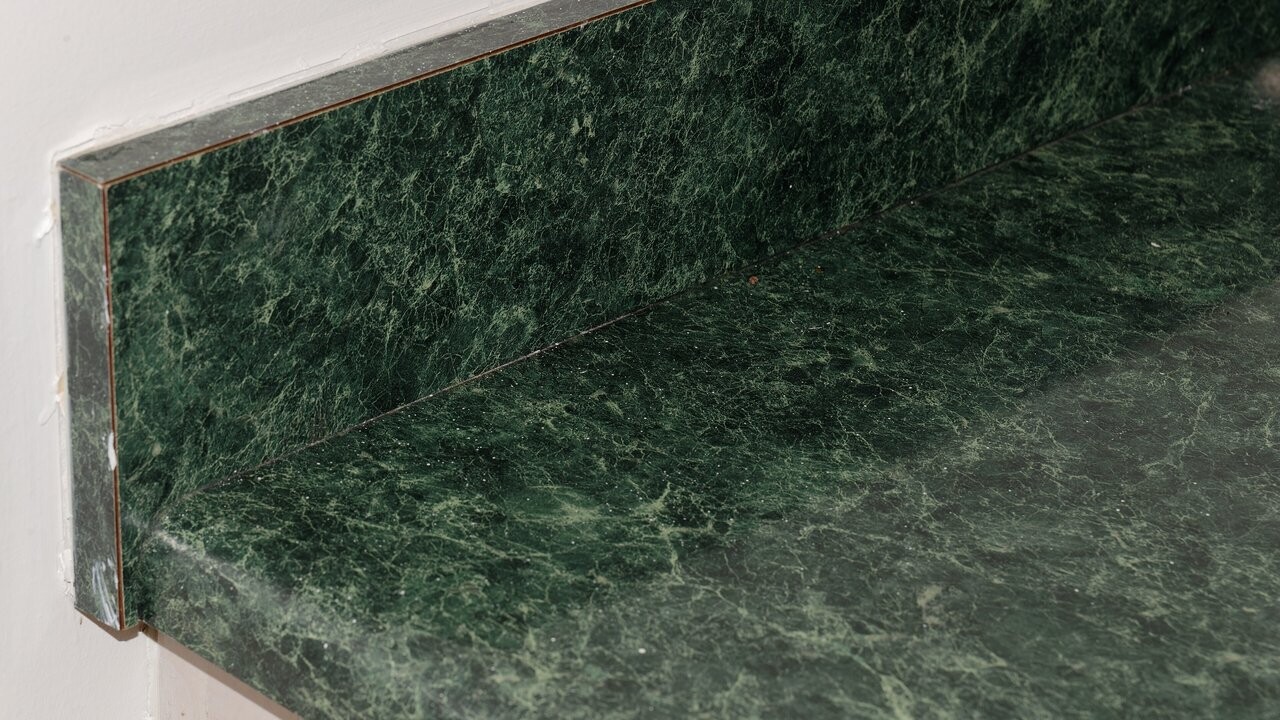
Plastic laminate brought color and pattern to counters that faced constant use. Smithsonian Formica records describe the material as helping to revolutionize kitchens during the 1950s. The glossy surface could coordinate with cabinets, appliances, and dinette furniture, becoming visual shorthand for an up-to-date room.
Chrome Dinette Sets
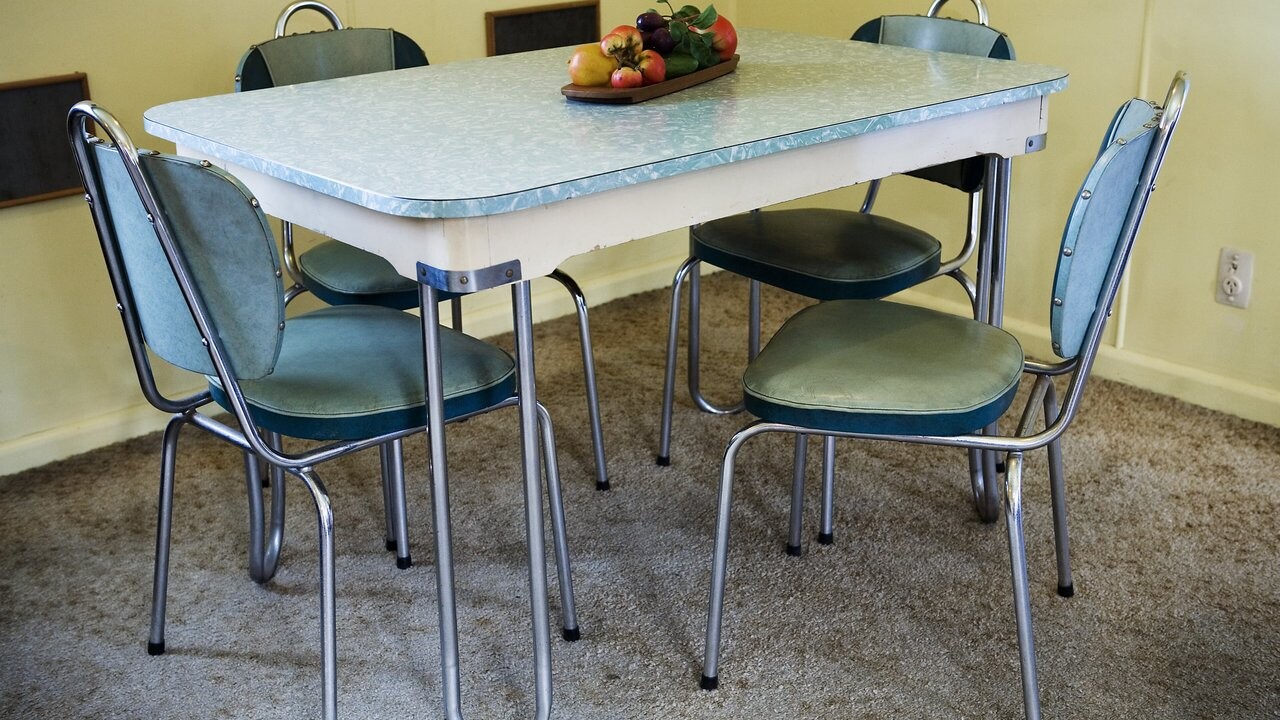
A compact table could turn one corner into a breakfast nook. The Smithsonian preserves Lillian Vernon’s 1950s-era kitchen table, which had tubular chrome legs, a chrome-banded edge, and a pale-yellow laminate top patterned like cracked ice. Its bright style brought a hint of the neighborhood diner home.
Linoleum Underfoot
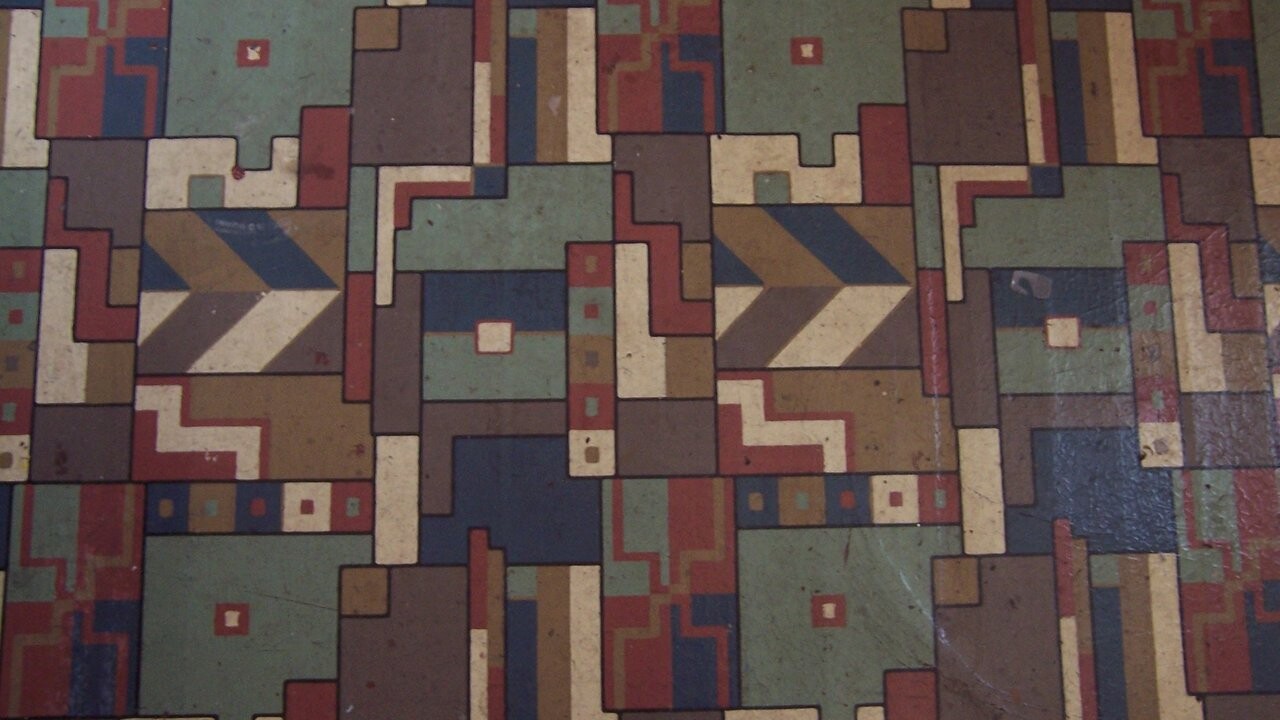
Linoleum appears in records of real midcentury renovations. At Glenmont, Thomas Edison’s historic home, the National Park Service says most original flooring in the first-floor servants’ areas was replaced with plain linoleum during the 1950s. That specific change shows how a smooth new floor could alter an older workspace.
The Refrigerator Takes Center Stage
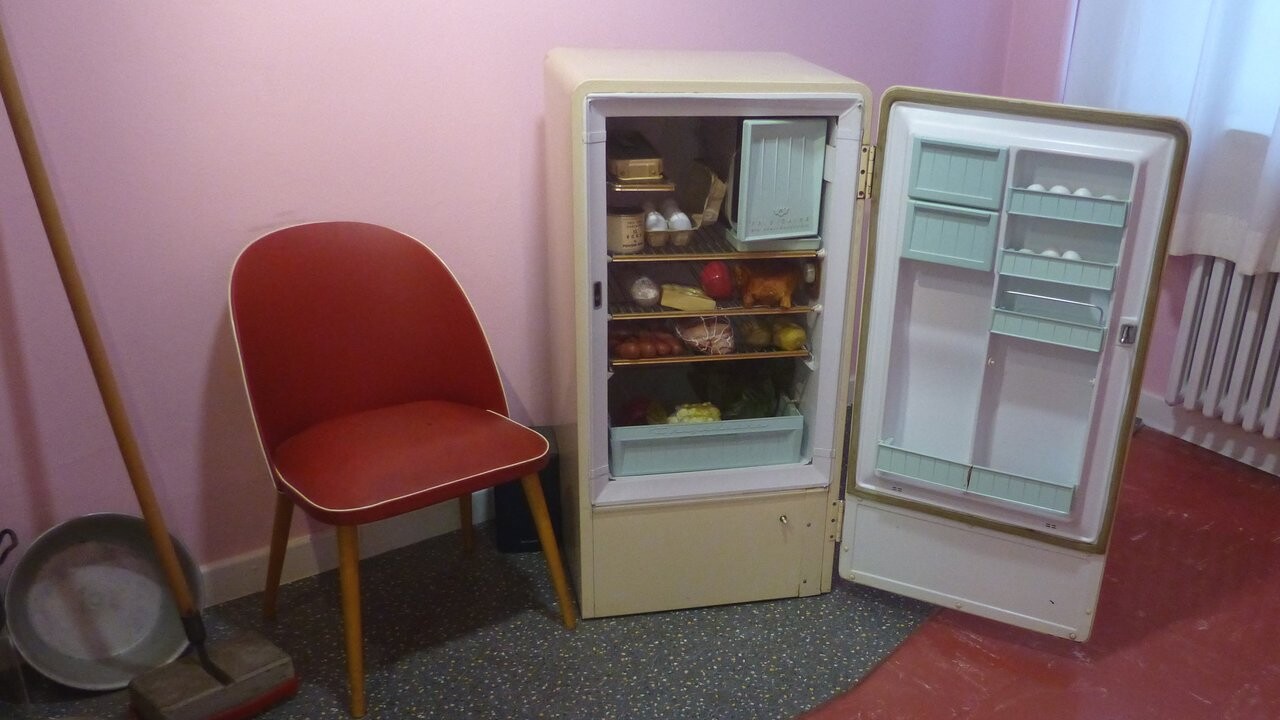
The refrigerator became a visible symbol of postwar abundance. Buyers encountered models in different colors and designs with separate freezer sections. Behind the rounded door were ice trays, leftovers, frozen vegetables, and bottles, all neatly arranged to suggest that convenient modern living had arrived in the family kitchen.
The Kitchen Range
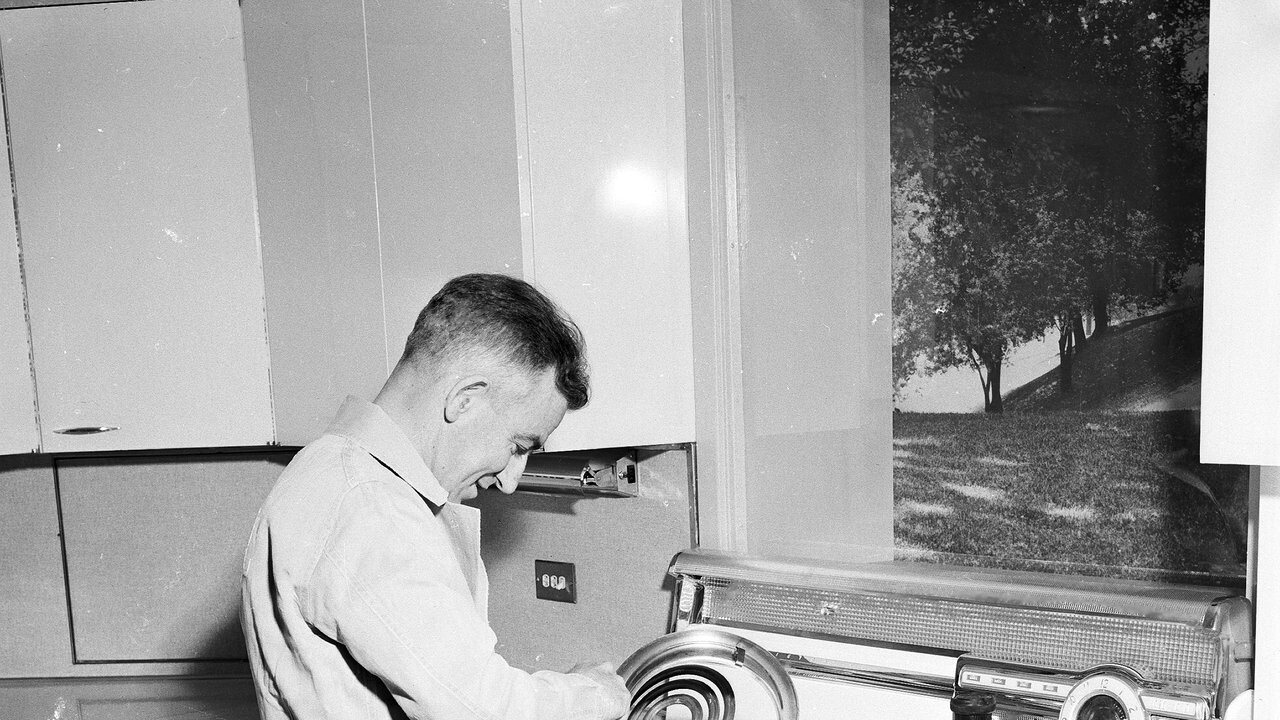
A substantial range anchored the cooking area, often beside a stretch of cabinets and counter. One National Park Service photograph identifies linoleum and a 1950s stove as the features that reveal a room’s purpose. The broad oven door, controls, and raised back panel created an unmistakable silhouette.
1957: The Elevator Toaster
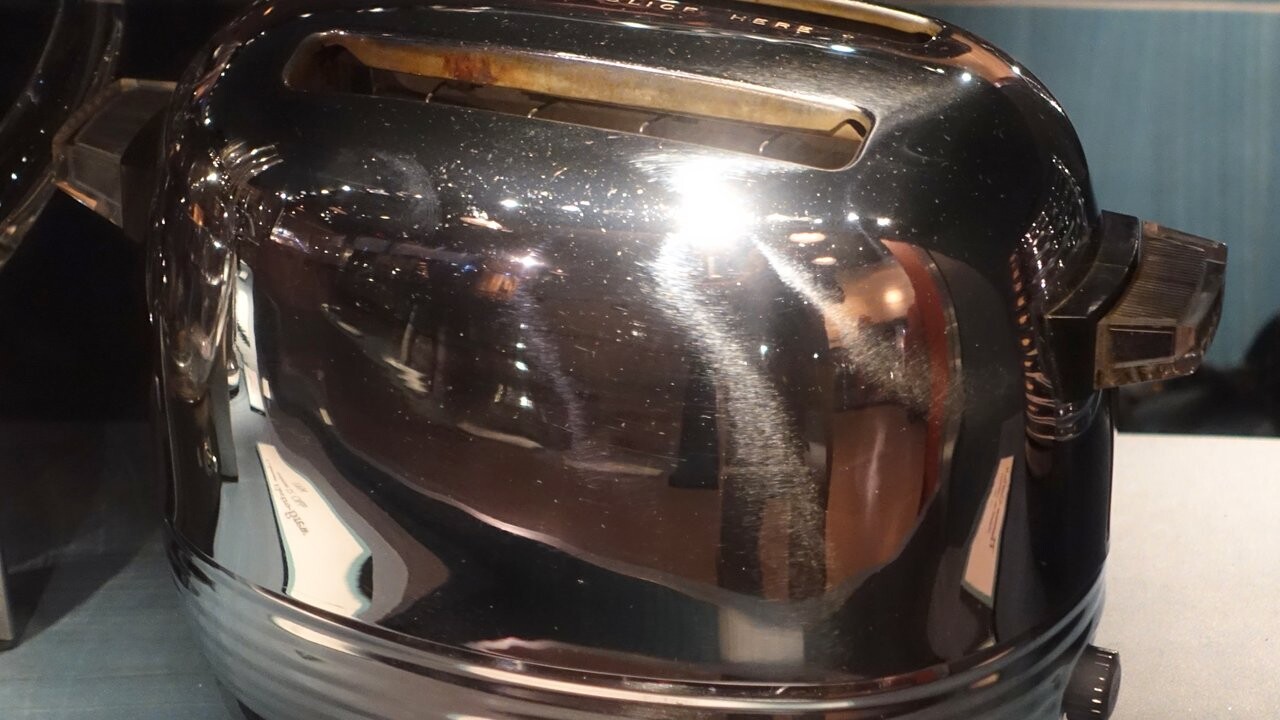
Toasters had existed for decades, but sleek automatic models suited the modern kitchen perfectly. The Smithsonian’s consumer-era display includes a 1957 Kenmore elevator toaster. Its polished case, compact shape, and distinctive name gave an ordinary breakfast appliance a small touch of mechanical theater on the counter.
The Sunbeam Mixmaster
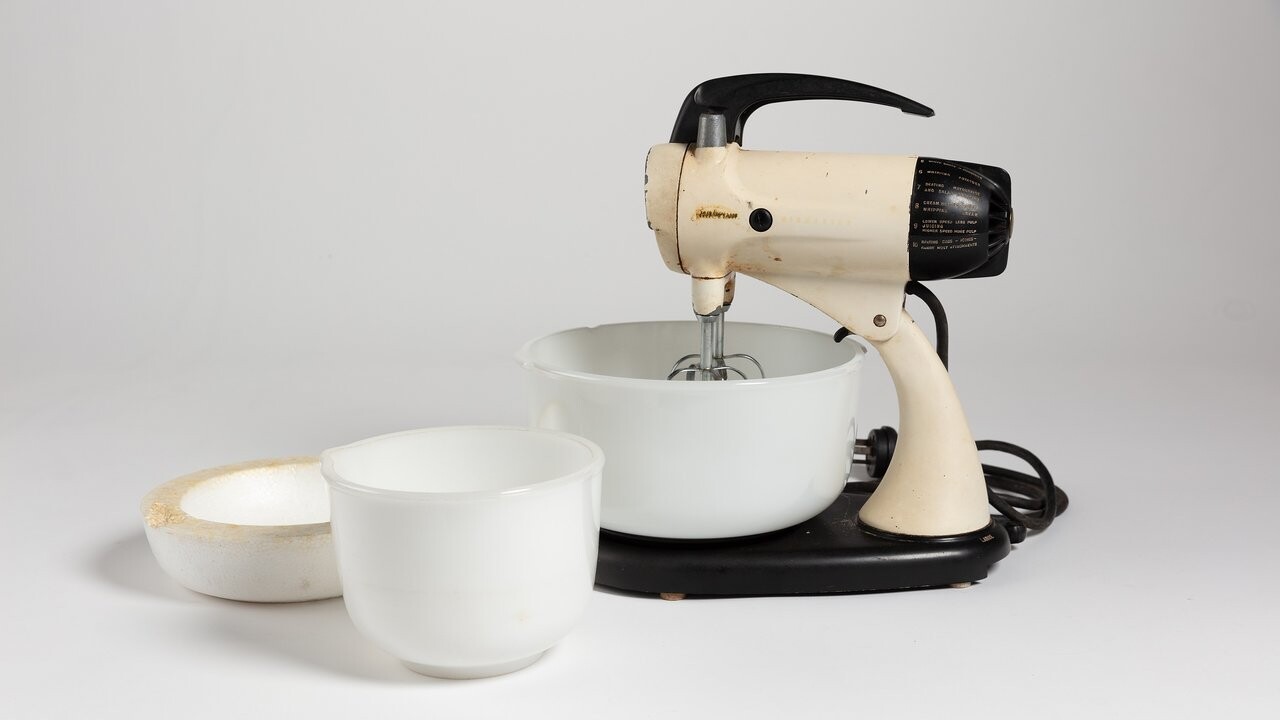
A stand mixer suggested ambitious cakes, whipped potatoes, and bowls of frosting. The Smithsonian displays a Sunbeam Mixmaster dated to about 1955 among the era’s consumer goods.
The Electric Percolator
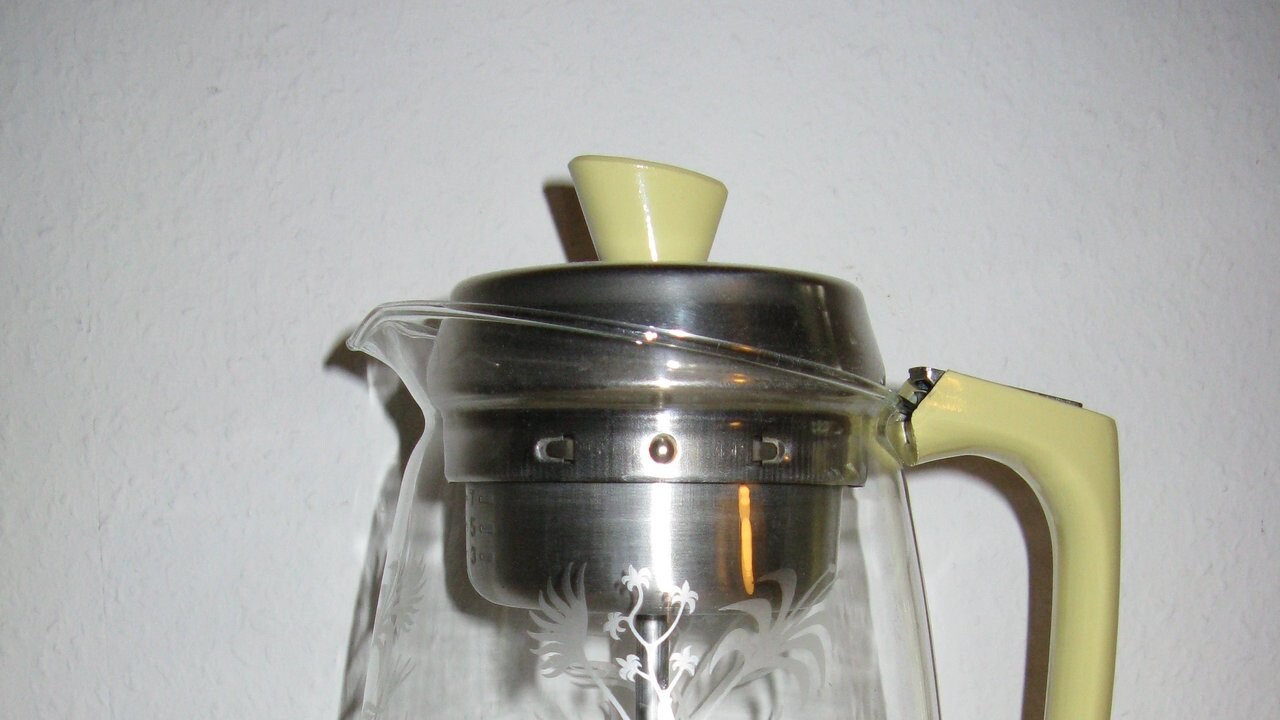
Coffee announced itself through the bubbling sound of a percolator. The Smithsonian says Sunbeam manufactured an automatic electric model during the 1950s. Set on the counter for breakfast or after-dinner coffee, its polished body made a familiar daily ritual look newly streamlined and modern.
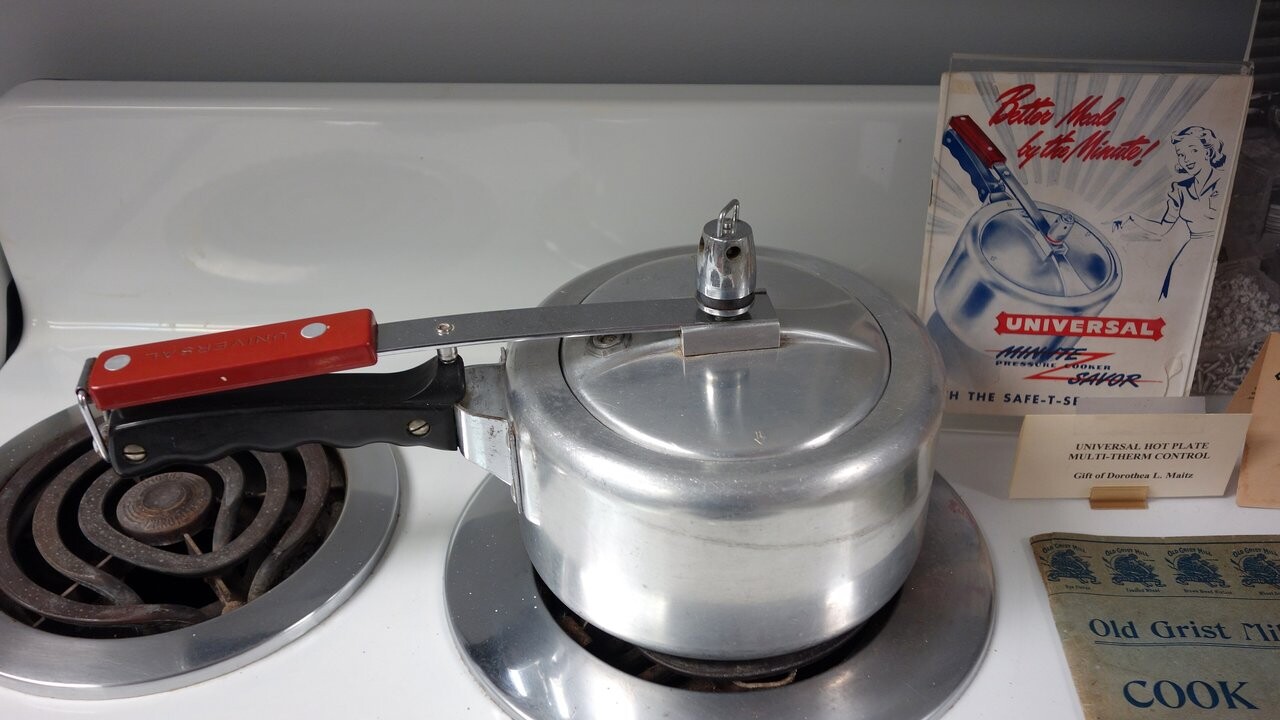
The Heavy Pressure Cooker
The pressure cooker was built for serious work, including cooking and home canning. Smithsonian records preserve a National model associated with a recipe book copyrighted in 1953.
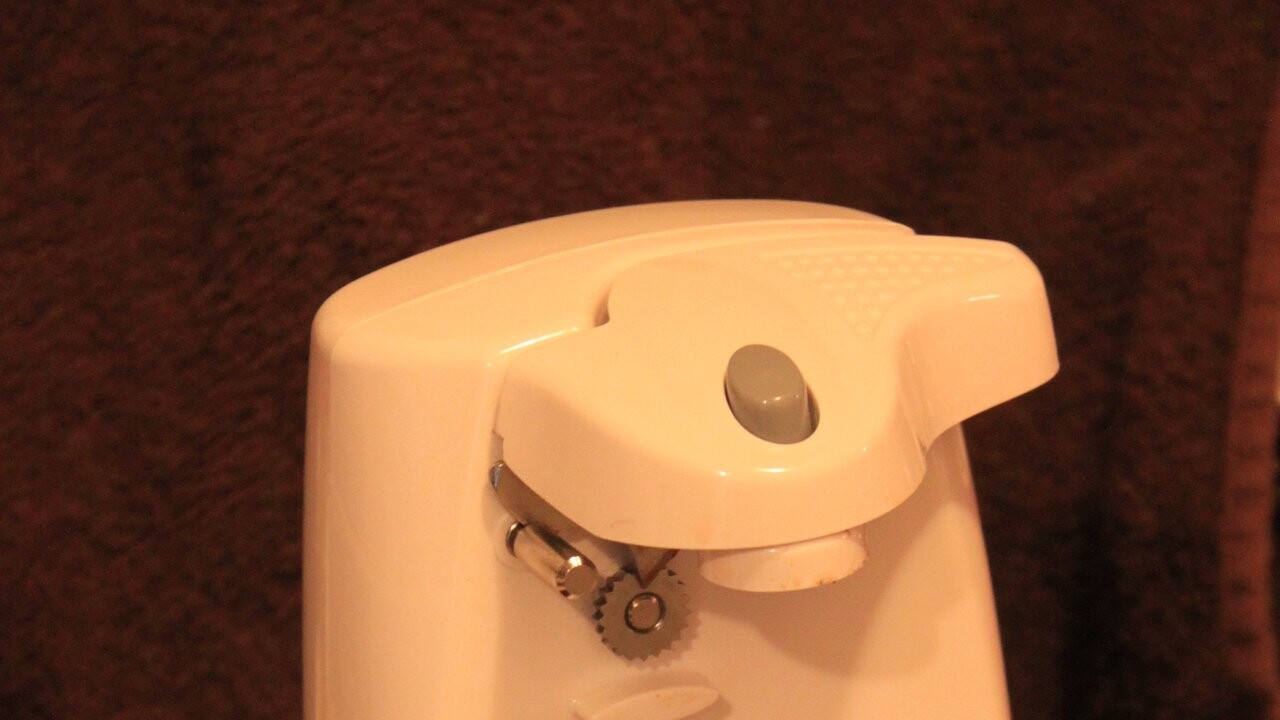
1958: The Electric Can Opener
The automatic electric can opener arrived in 1958 as another promised shortcut. With the press of a lever and the hum of a small motor, it turned a repetitive kitchen task into a quick mechanical routine. Its upright shape also made it easy to recognize among the appliances on a crowded counter.
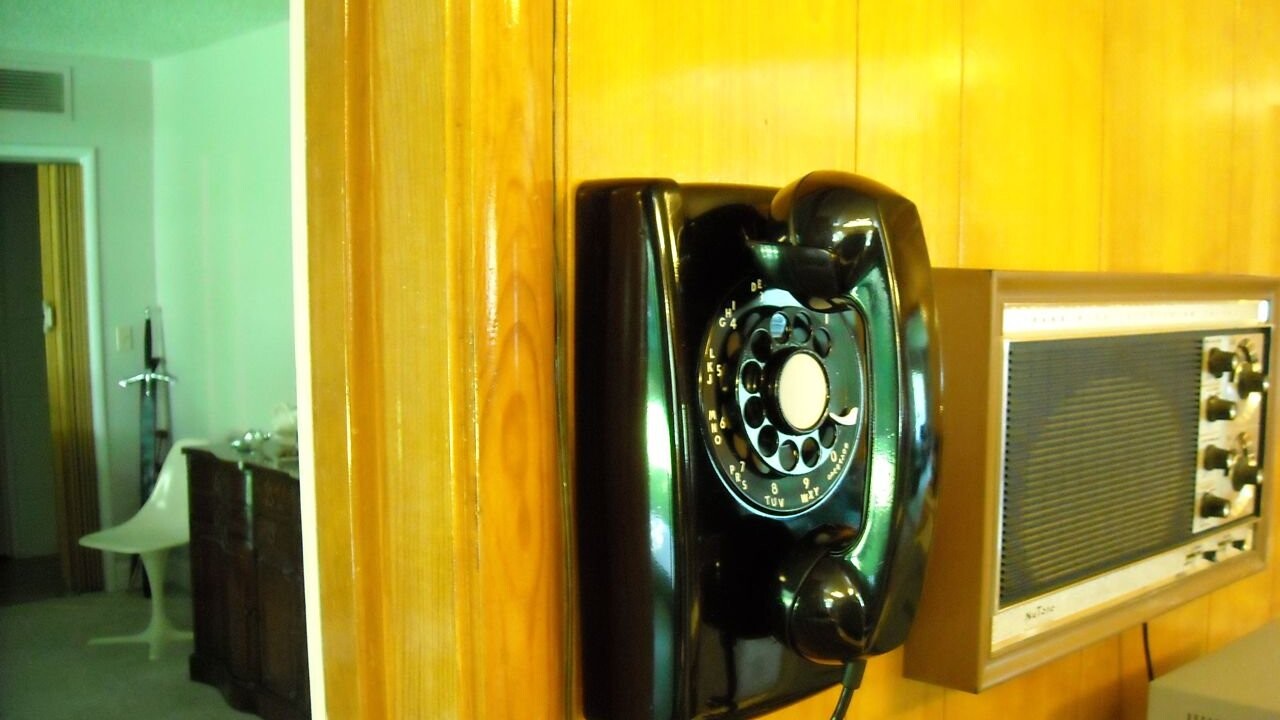
1959: The Kitchen Extension Phone
A telephone in the kitchen meant fewer hurried trips to another room. The Smithsonian preserves a 1959 advertisement showing a woman using a kitchen phone while two children are nearby. The image captures how conversation, childcare, meal preparation, and household planning could meet around one busy counter.
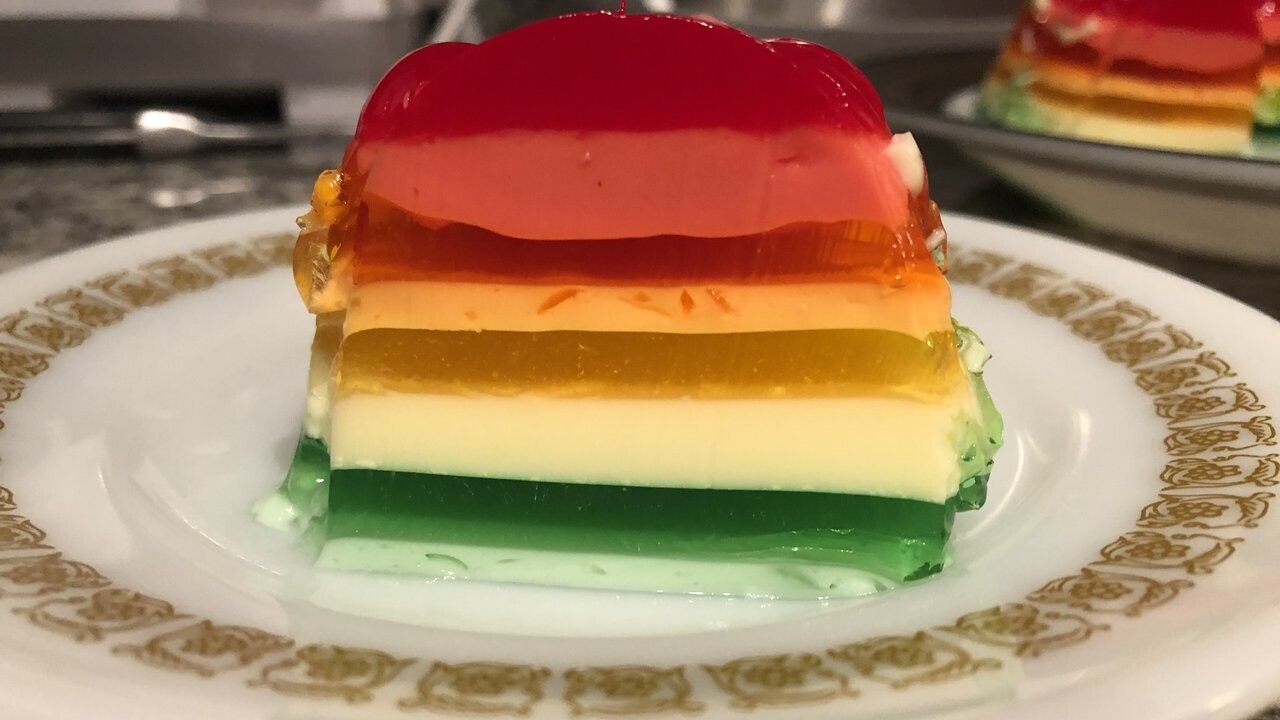
Jell-O Molds
Gelatin could become a dessert, salad, or elaborate centerpiece. Smithsonian Libraries characterizes the 1950s as a high point for Jell-O use, while the National Museum of American History holds a gelatin mold dated to about 1950. Rings, ridges, and carefully arranged ingredients made presentation central to the dish.
Ice Cubes at Home
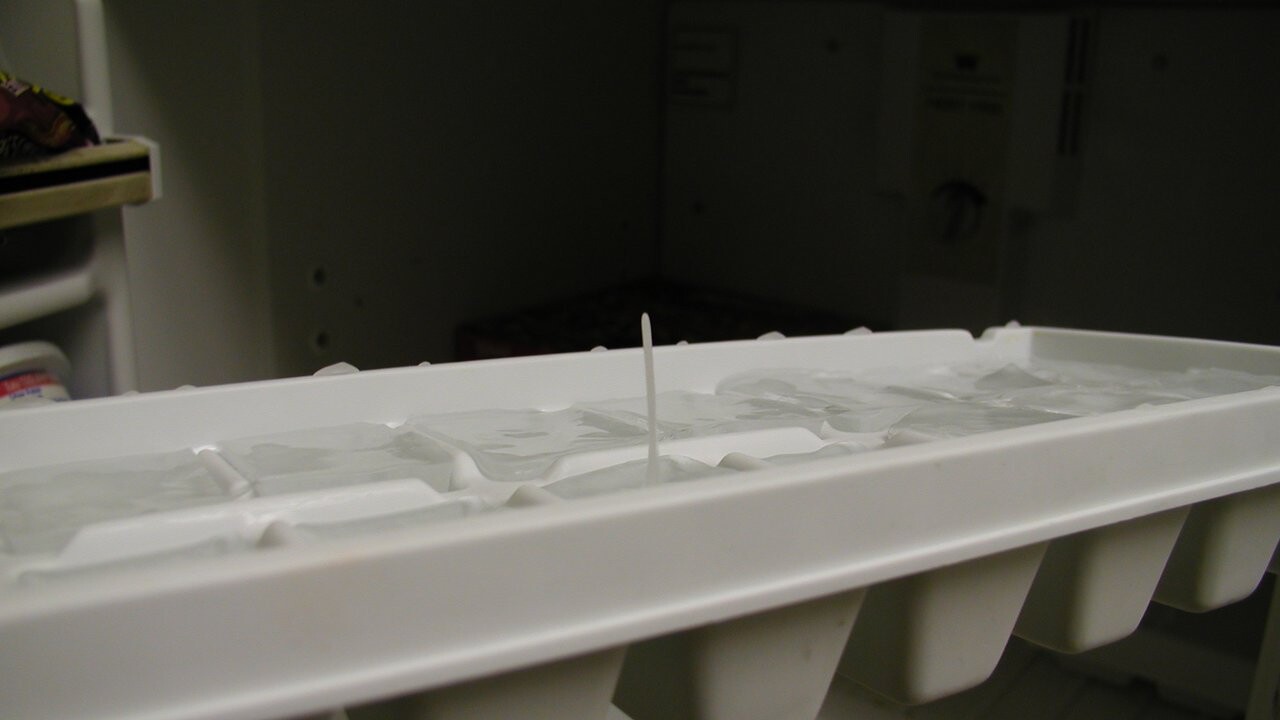
Ice cubes carried a little novelty into the midcentury kitchen. The Smithsonian explains that, as more Americans purchased electric refrigerators during the 1930s and 1940s, ice came to seem delightful and trendy rather than burdensome. A tray of crisp cubes made an everyday glass of water or soda feel newly modern.
1954: The TV Dinner
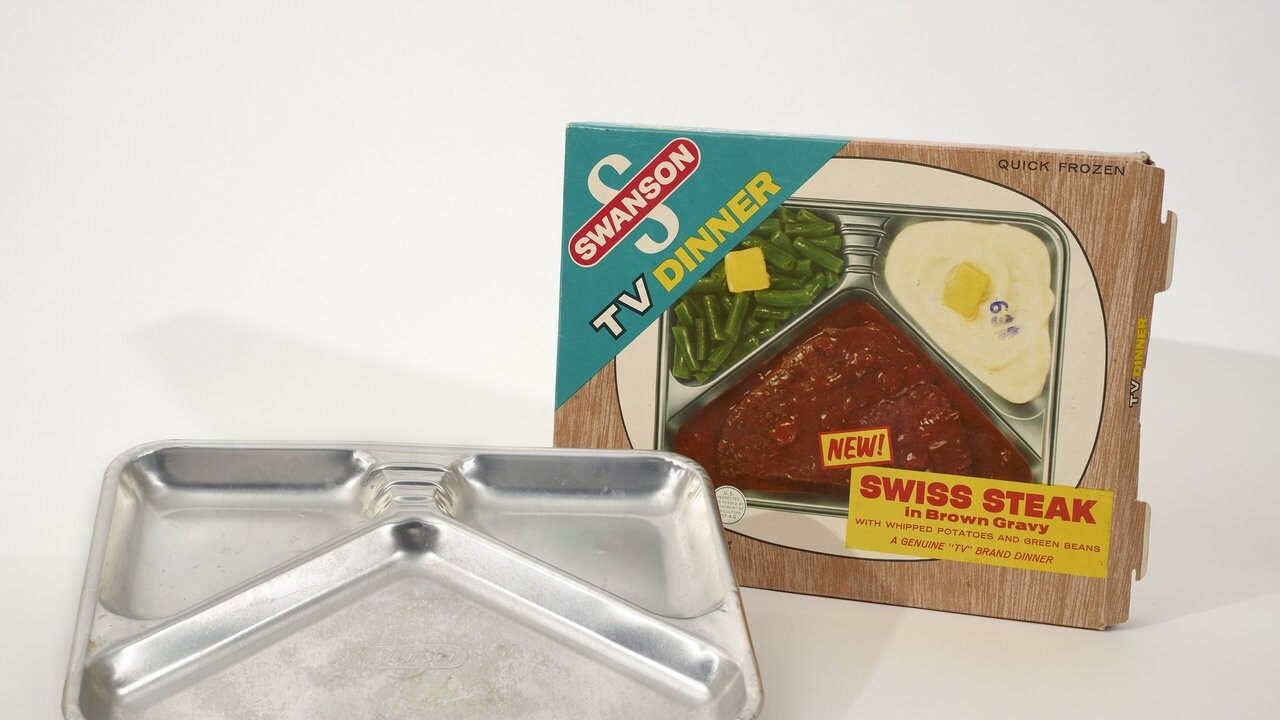
C. A. Swanson & Sons introduced the frozen TV dinner in 1954, linking a convenient meal with Americans’ enthusiasm for television. Its aluminum tray went directly from the freezer to the oven. An aluminum tray with separate compartments held a complete ready-made meal.
Salt and Pepper Shakers
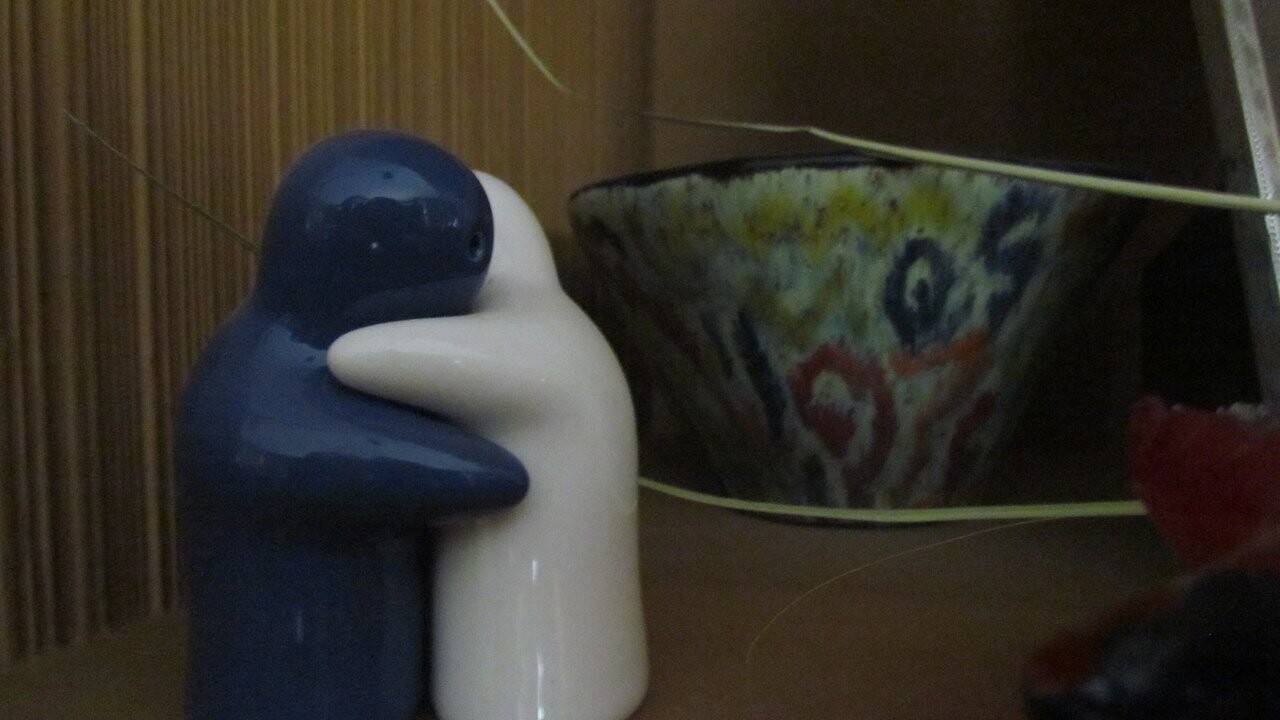
Small decorative shakers gave the table an easy touch of personality. The Smithsonian preserves a salt and pepper set designed by Russel Wright and dated from 1939 to 1959. Whether shaped like animals, fruit, or modern cylinders, paired shakers combined an everyday purpose with inexpensive decoration.
The Printed Cotton Apron
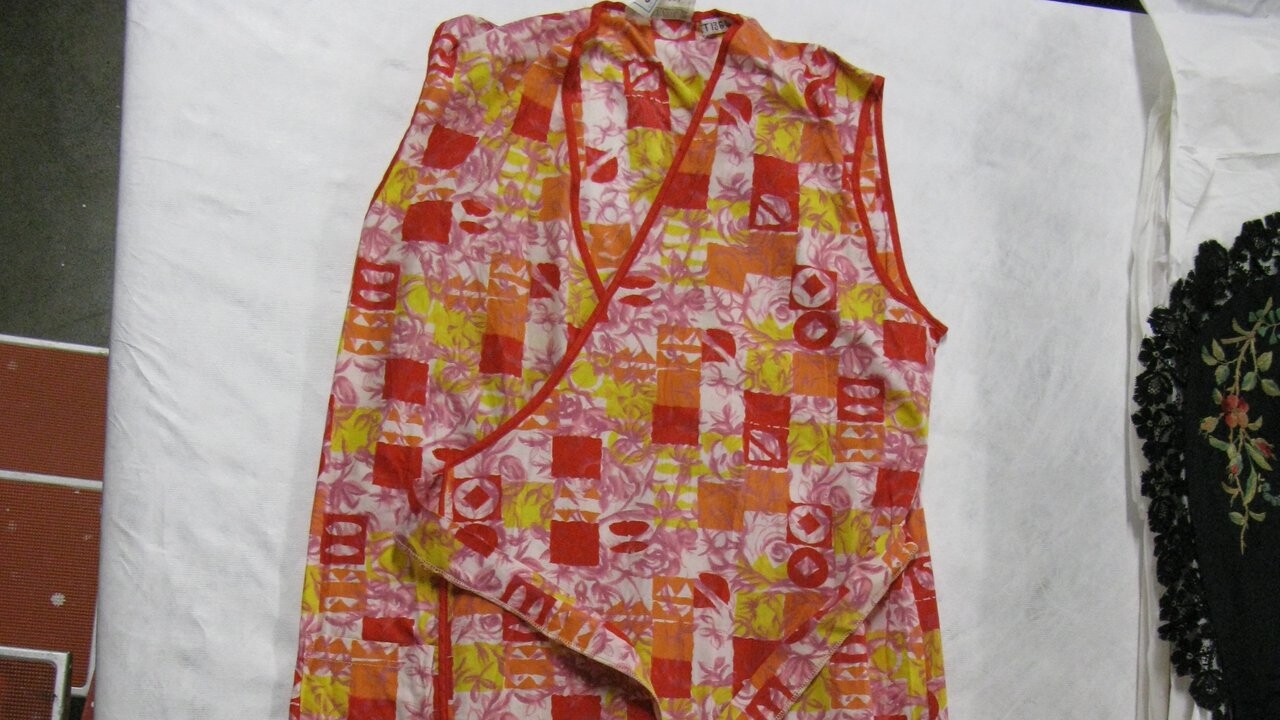
The apron protected clothing and supplied convenient coverage for kitchen work. A 1950s example in the Smithsonian is a cotton-print half apron carrying advice about how a wife should please her husband. Its message reflects the period’s domestic expectations, while its bold colors make the garment an especially revealing household artifact.
The 1950s kitchen mixed genuine convenience with bright styling and powerful ideas about home life. Which of these details do you remember best?
Follow The HyperHive on MSN for more stories like this.
Sources:






