Mount Rushmore’s Secret Room: What the Record Confirms

National Park Service Digital Image Archives / Wikimedia Commons, Public domain (cropped)
Mount Rushmore’s hidden chamber has inspired stories about secret passageways. The documented history is more compelling. This gallery moves chronologically from the mountain’s Lakota heritage through the carving and the later Hall of Records repository.
The facts come chiefly from the National Park Service, the National Archives, and other federal collections.
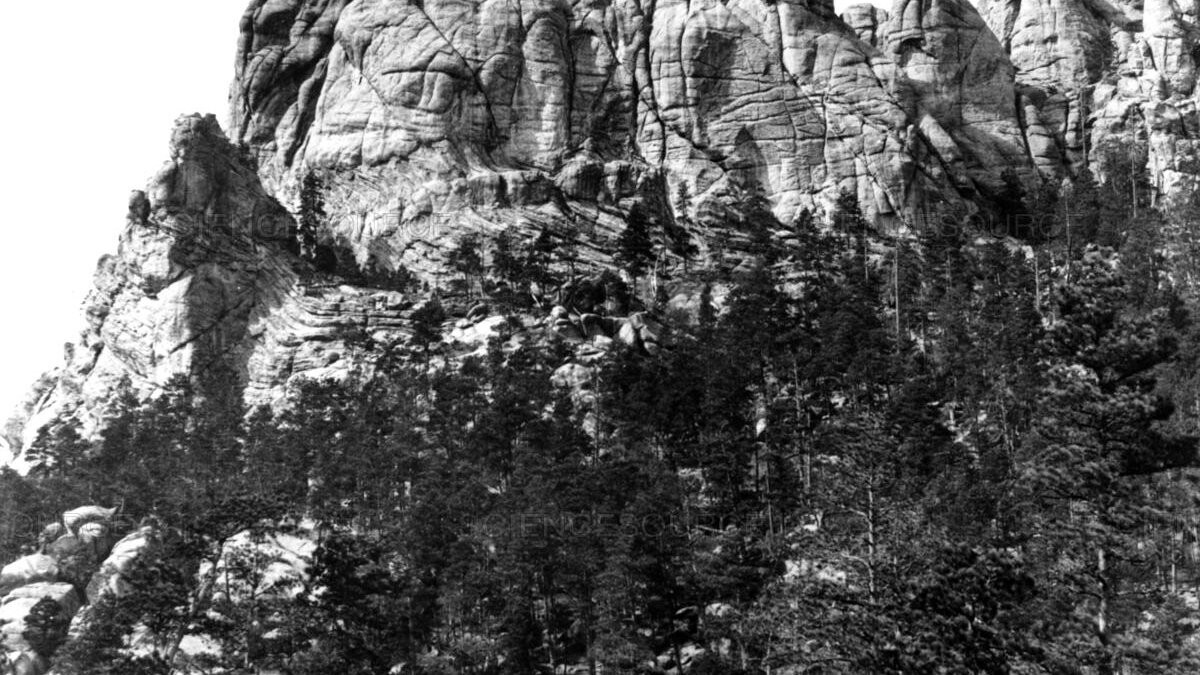
Before the Carving: The Six Grandfathers
Long before any presidential faces appeared, the National Park Service says, the Lakota called this mountain the Six Grandfathers. That history matters because the carving did not begin on an unnamed or culturally empty piece of granite.
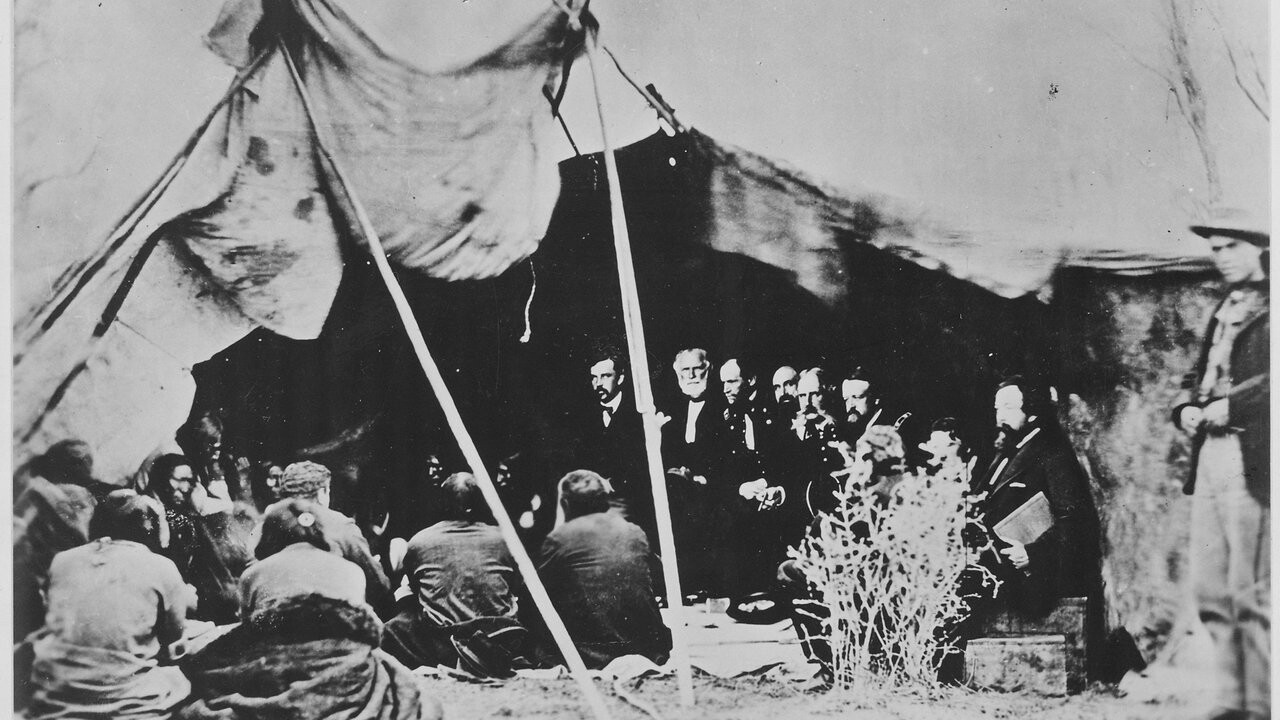
1868: The Black Hills Become Reservation Land
The Treaty of Fort Laramie recognized the Black Hills as part of the Great Sioux Reservation, reserved for the Sioux people. The National Archives explains that the hills are sacred to the Sioux. This agreement remains central to understanding the dispute surrounding Mount Rushmore’s location.
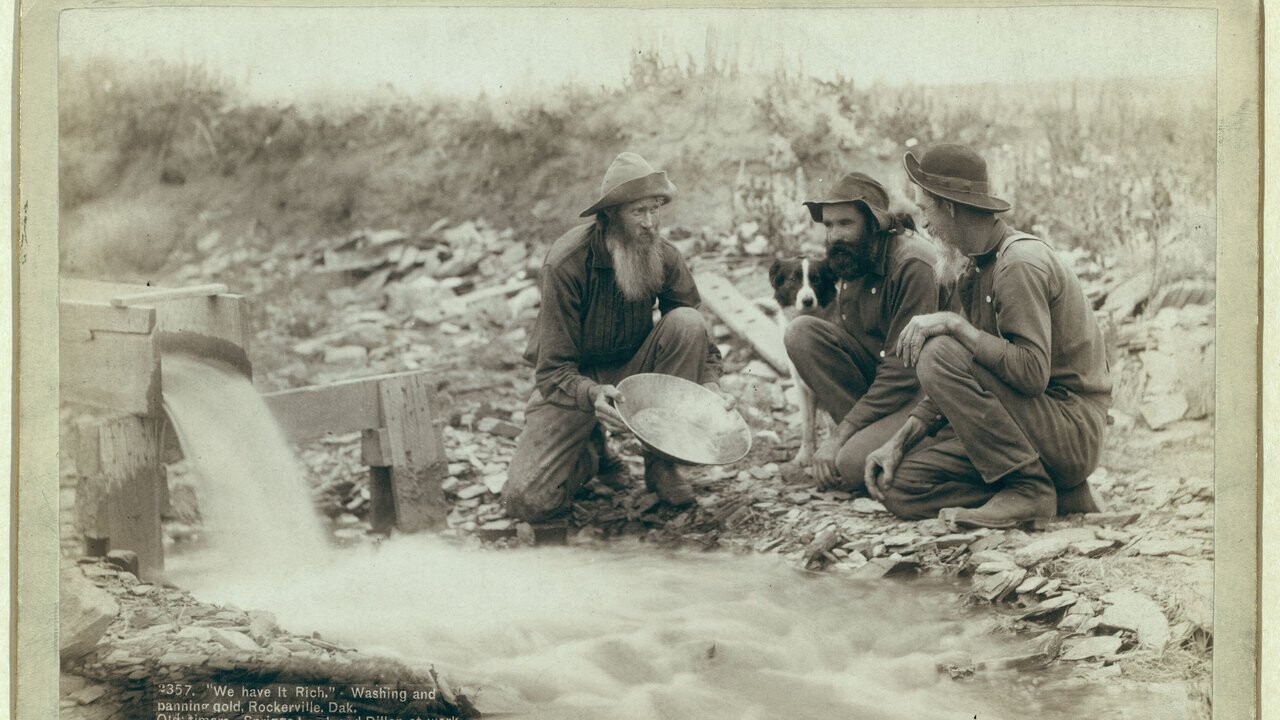
Gold Changes the Black Hills
Gold discoveries brought miners into the Black Hills in violation of the treaty. Conflict followed, and the federal government confiscated the land in 1877. The National Archives notes that ownership remains disputed, giving the memorial’s setting a history far deeper than its familiar patriotic image.
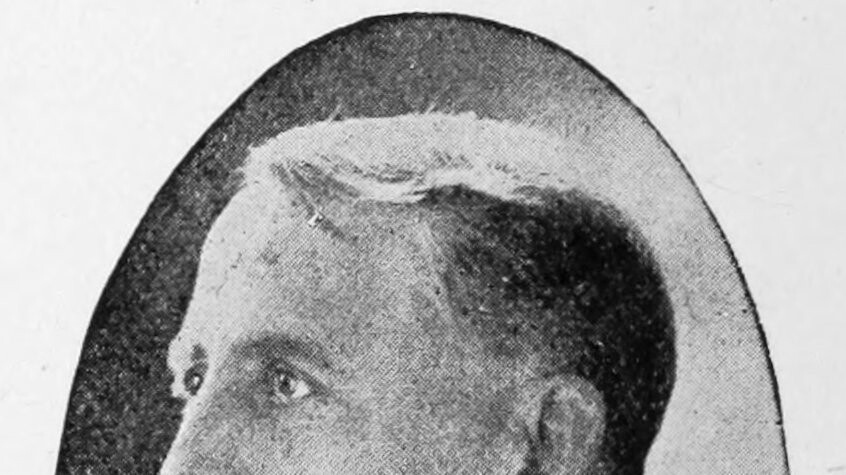
Doane Robinson Imagines a Tourist Attraction
South Dakota historian Doane Robinson proposed enormous carvings as an attraction that could bring visitors to the Black Hills. He contacted sculptor Gutzon Borglum in 1924.
Western Heroes Give Way to Presidents
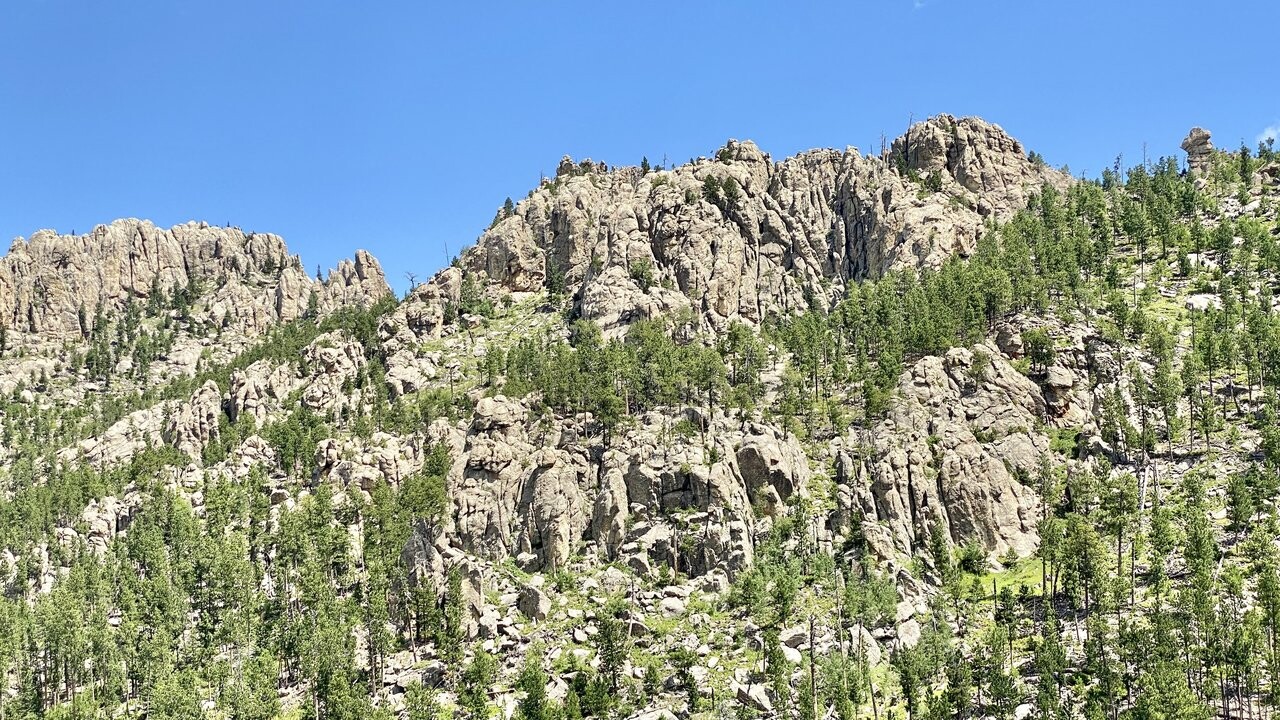
Robinson initially imagined figures associated with the American West on the Needles, a striking group of granite formations. Borglum argued for nationally recognized subjects instead. In the end, the mountain would carry four presidents instead.
Why Borglum Chose This Granite Wall
Borglum selected the mountain partly because its granite was suitable for carving. Its southeast-facing wall also received sunlight through much of the day, making the sculpture easier to see.
The Presidents Were Planned to the Waist
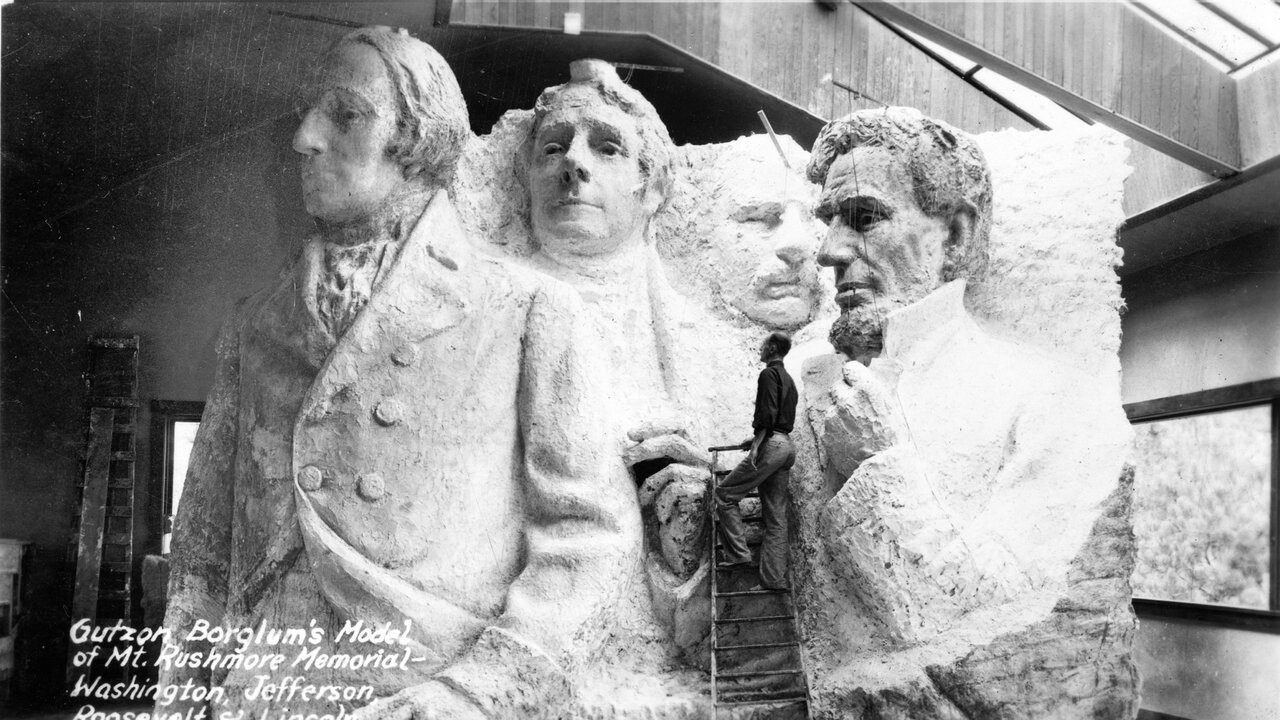
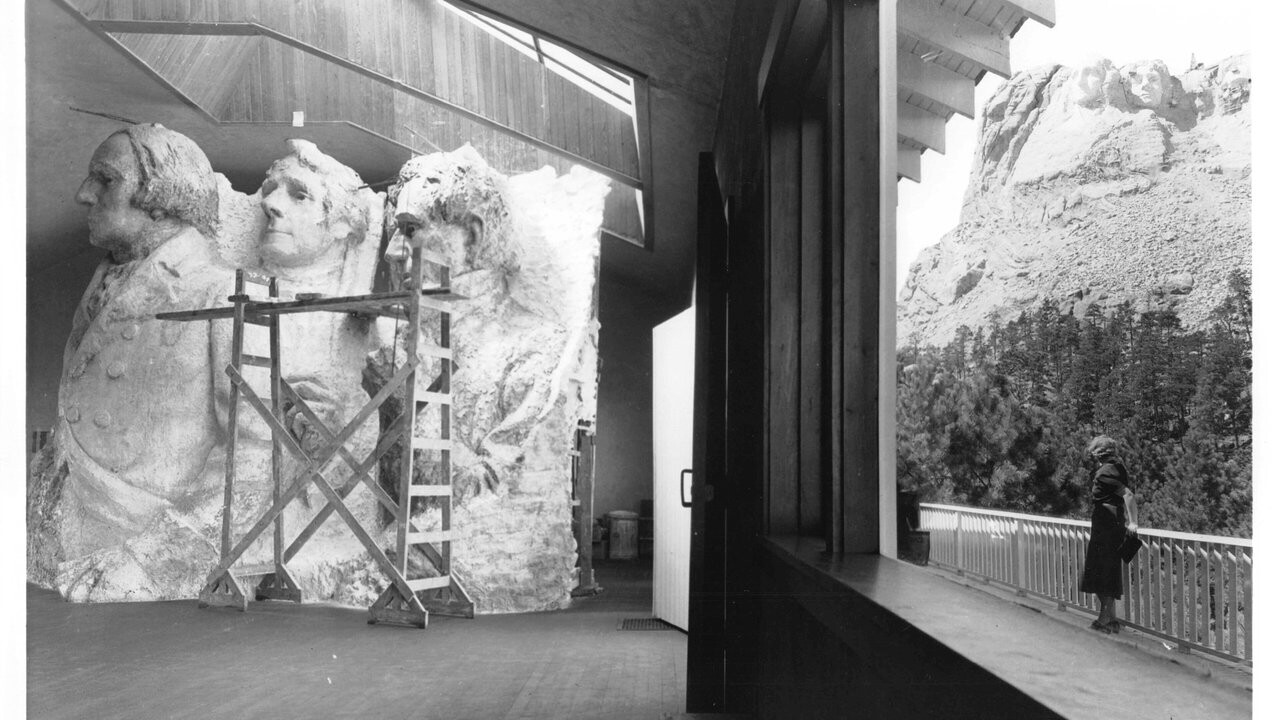
The finished monument shows four enormous heads, but Borglum planned far more. His design extended the presidents to their waists. Surviving models make the intended scale clear. Limited time, uncertain funding, rock problems, and Borglum’s death left that larger composition unfinished.
1927: Actual Carving Begins
After years of promotion, legislation, and fundraising, actual carving began on October 4, 1927. The work would last 14 years.
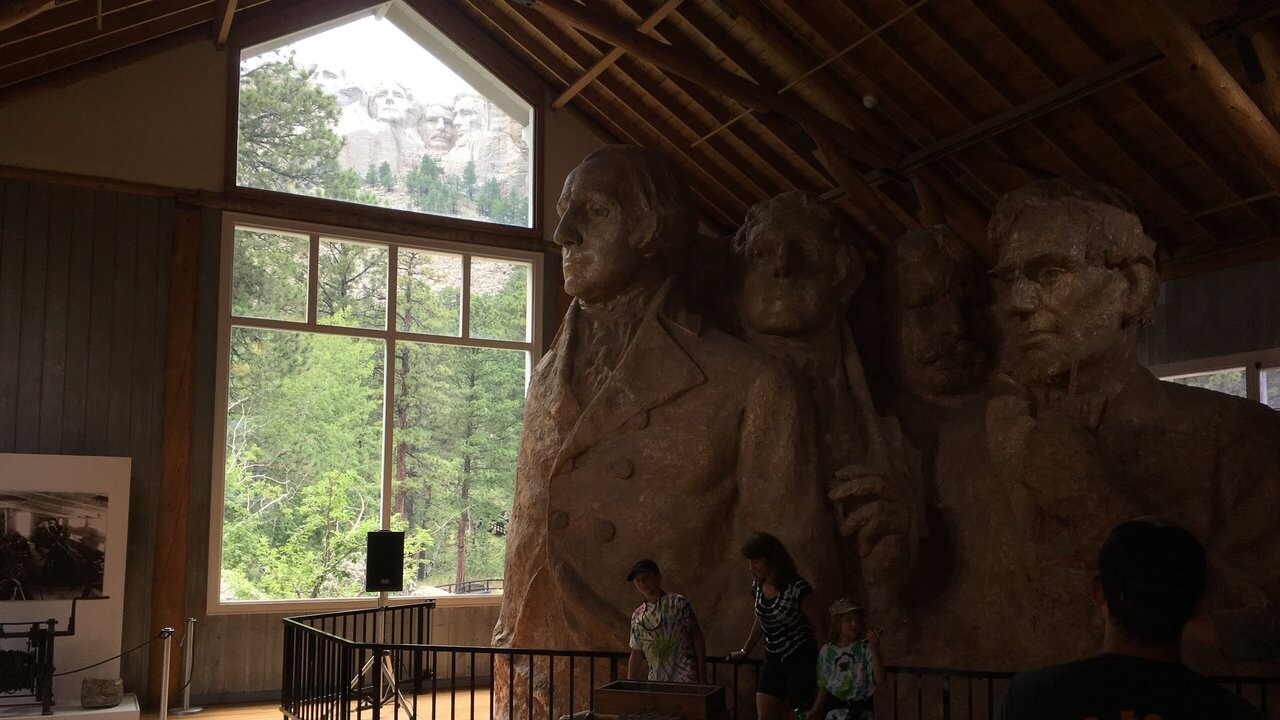
A Scale Model Guided the Carvers
Borglum’s plaster model was one-twelfth the size of the mountain sculpture. Every inch on the model stood for a foot on the mountain. The original model remains in the Sculptor’s Studio, offering a revealing view of the fuller design.
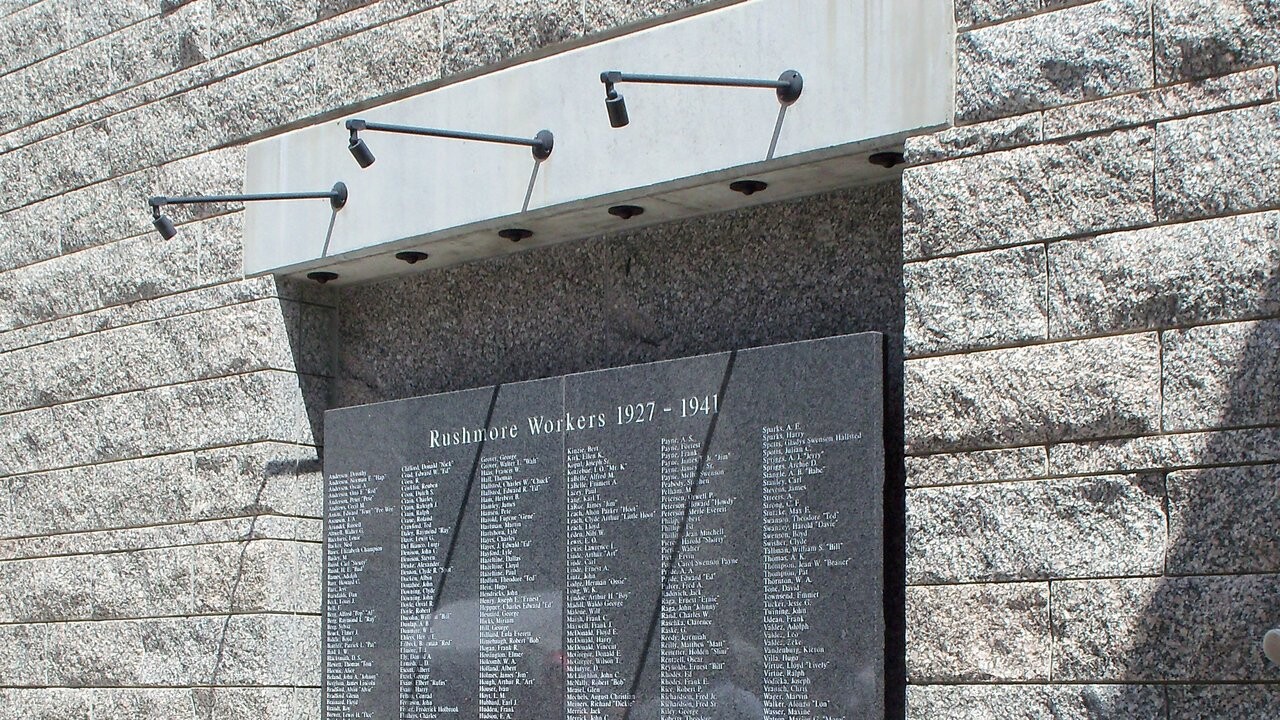
Nearly 400 People Worked on the Memorial
Almost 400 men and women labored on the project. They included drillers, blacksmiths, winch operators, housekeepers, and workers who relayed instructions. Their names, not only Borglum’s, form an important part of the memorial’s documented history.
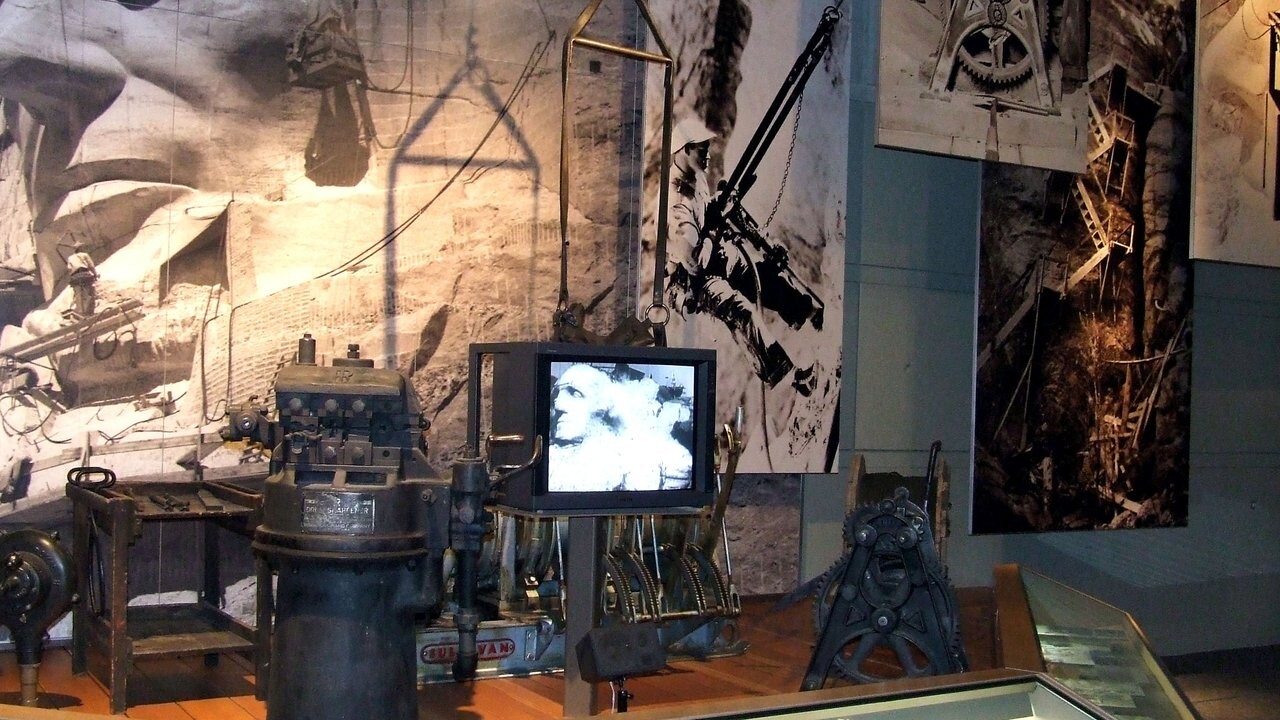
Workers Climbed 700 Stairs Before Carving
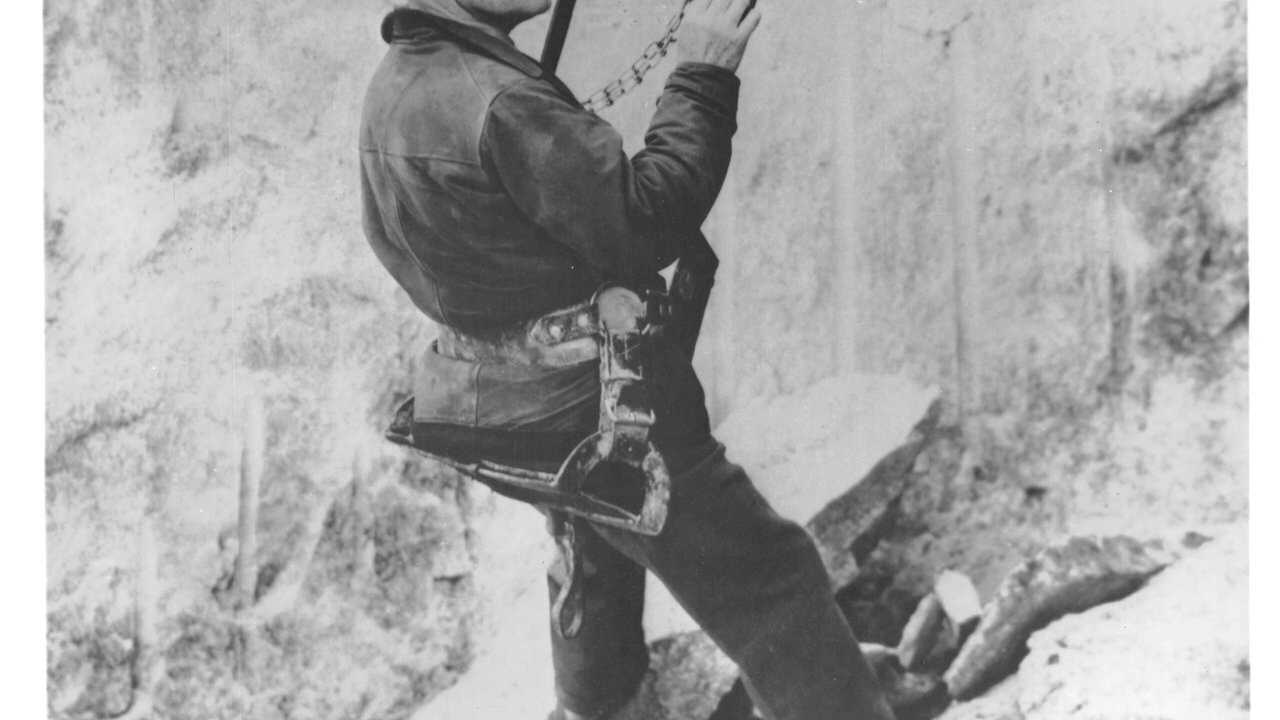
A workday could begin with a climb of 700 stairs to the mountaintop. From there, cables and winches lowered workers toward the granite in suspended seats known as bosun chairs. Historic photographs show how exposed the job was, especially when drills, hoses, and heavy tools were added.
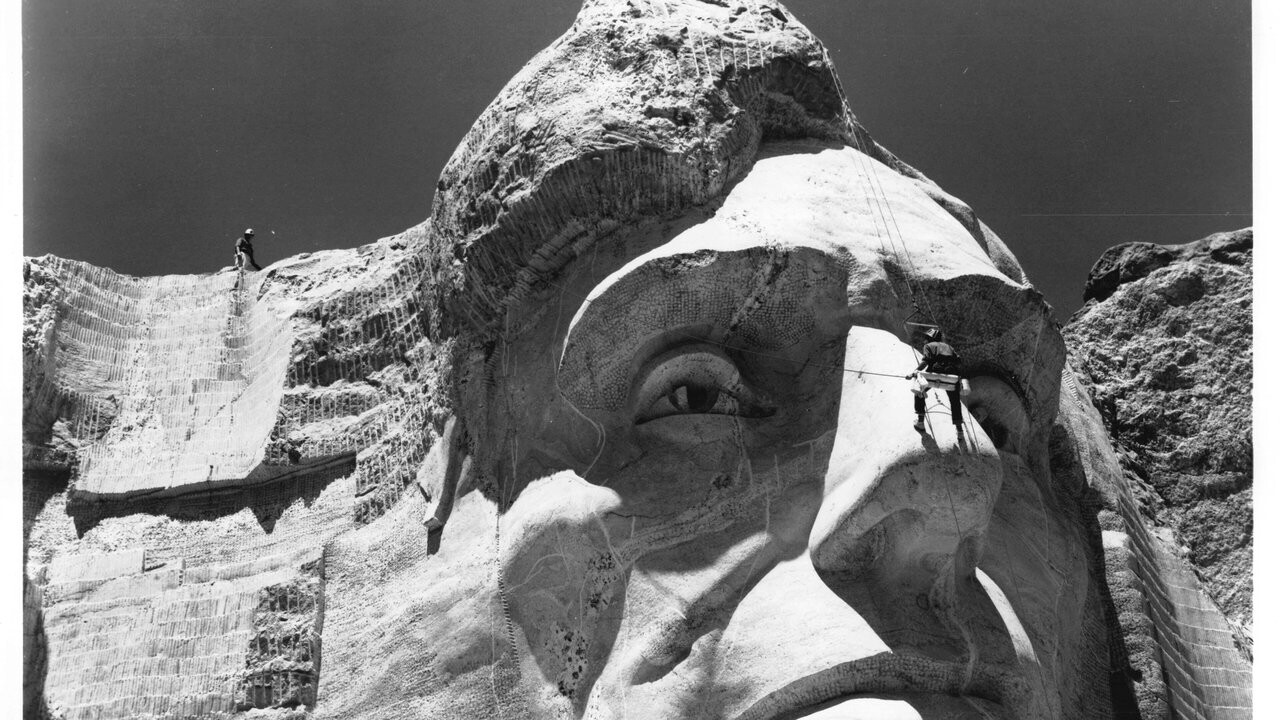
Honeycombing Made Granite Easier to Remove
After blasting, workers drilled many closely spaced holes into the remaining granite. They called this process honeycombing. The weakened rock could then be broken away in smaller pieces. Pneumatic hammers removed the remaining drill marks and helped produce the comparatively smooth surfaces visible on the presidential faces.
The Dangerous Project Had No Fatalities
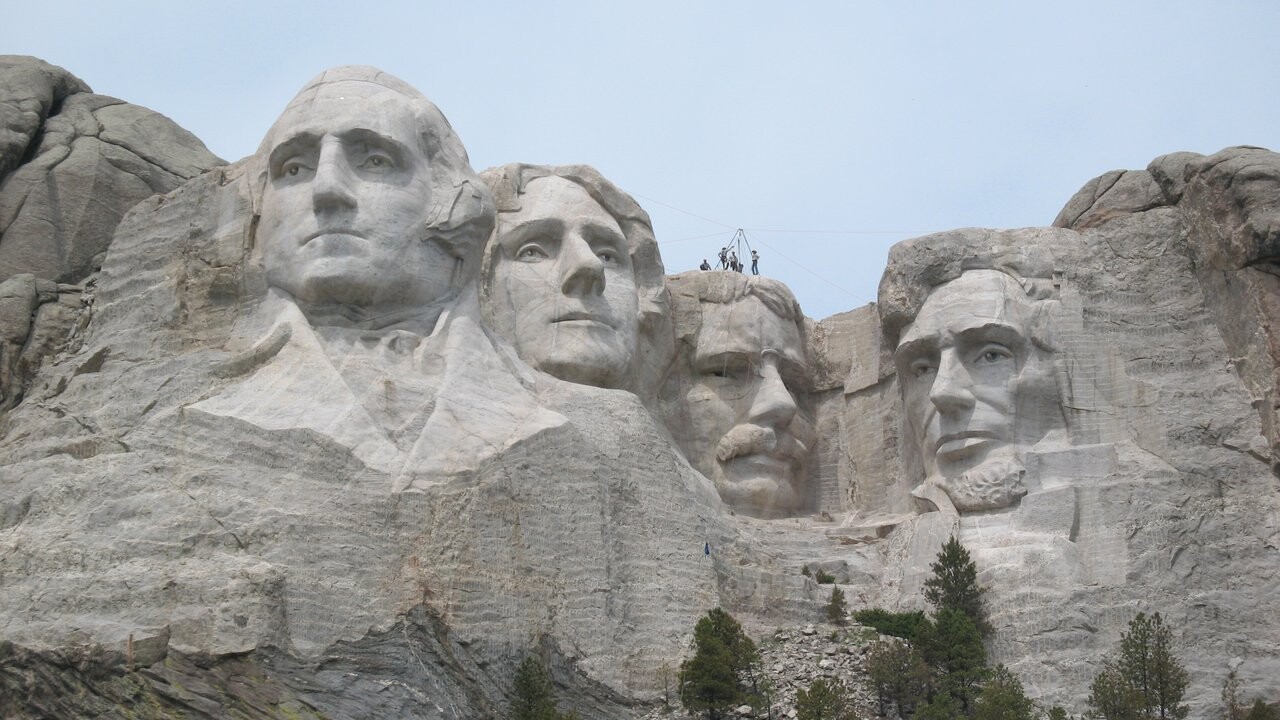
The work involved explosives, heavy machinery, steep drops, and rapidly changing weather. Yet the National Park Service confirms that nobody died during the carving. The absence of fatalities remains one of the most remarkable facts about a project carried out under such exposed conditions.
Jefferson’s First Face Was Blasted Away
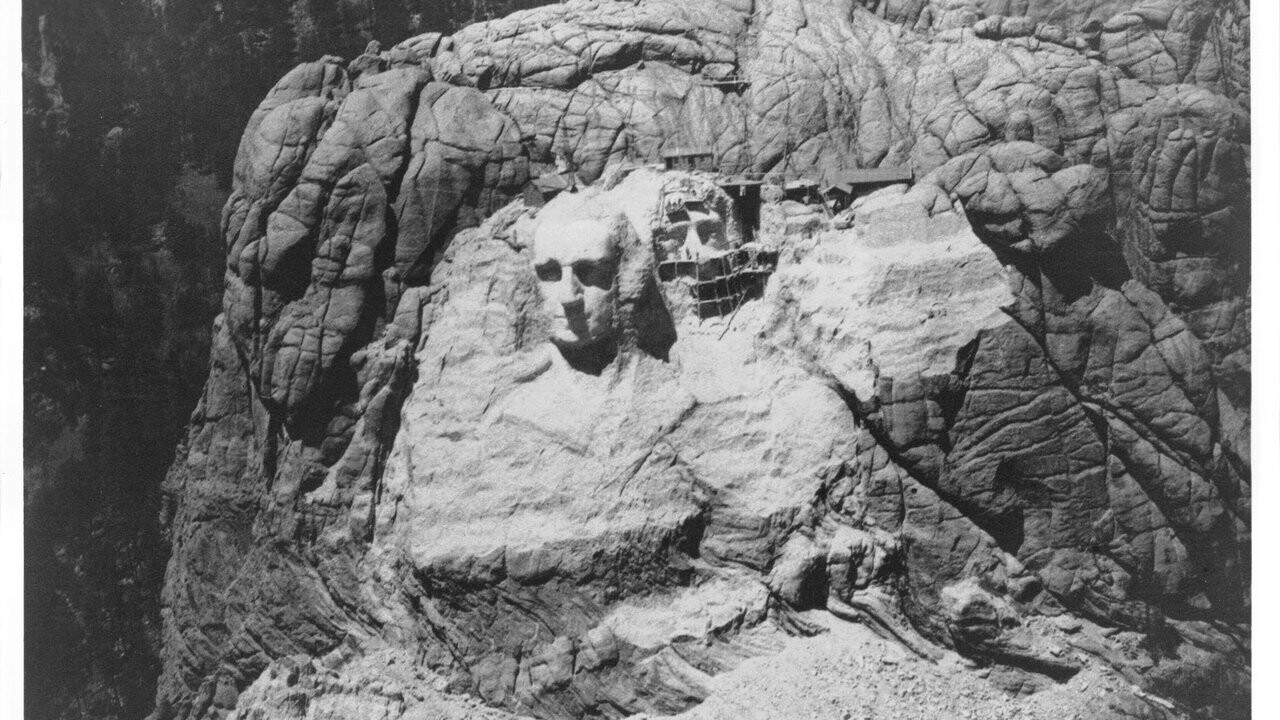
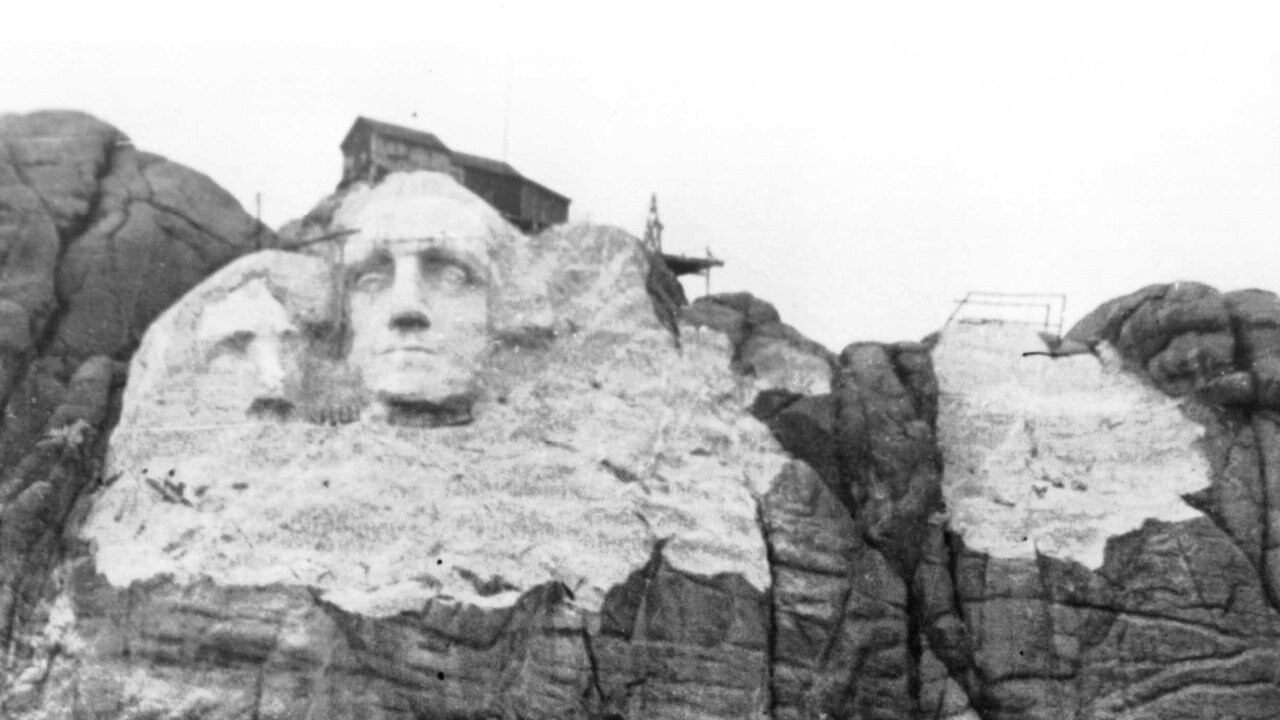
Thomas Jefferson was first started on the opposite side of George Washington from where he appears today. After 18 months of carving, crews dynamited the partial face off the mountain and began again on the other side, a reminder of how much the design changed along the way.
Why Borglum Selected These Four Presidents
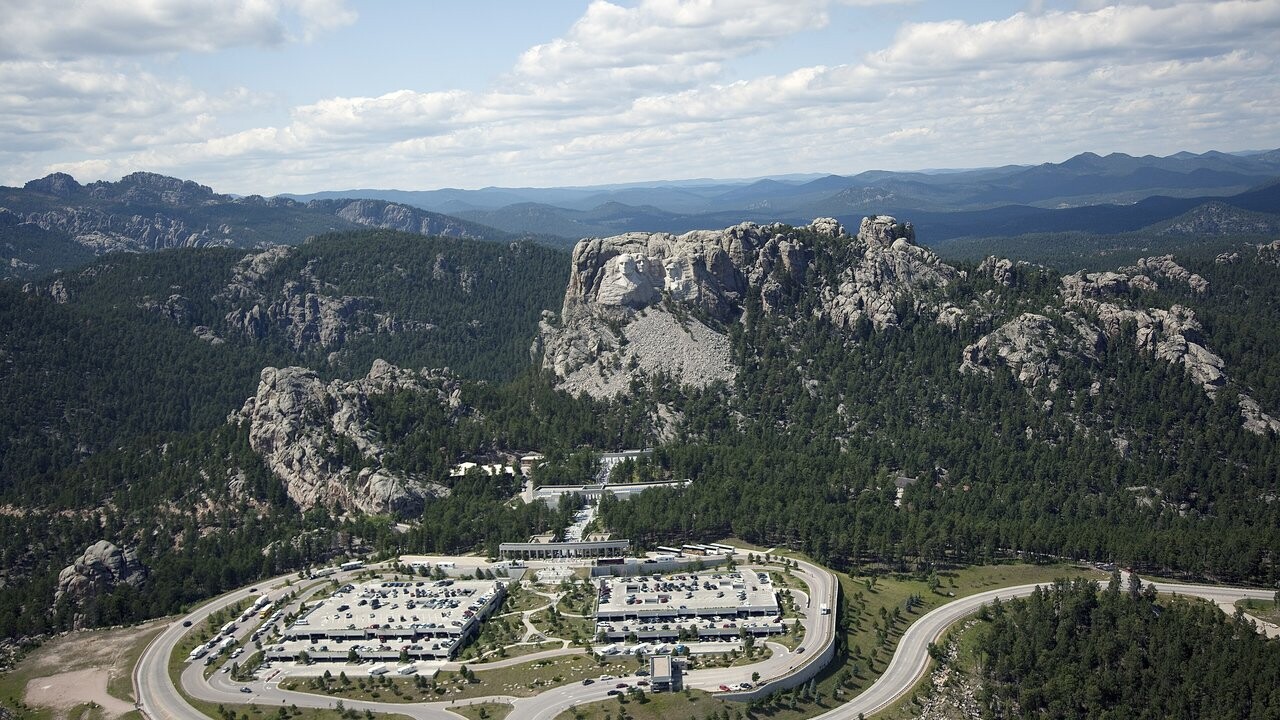
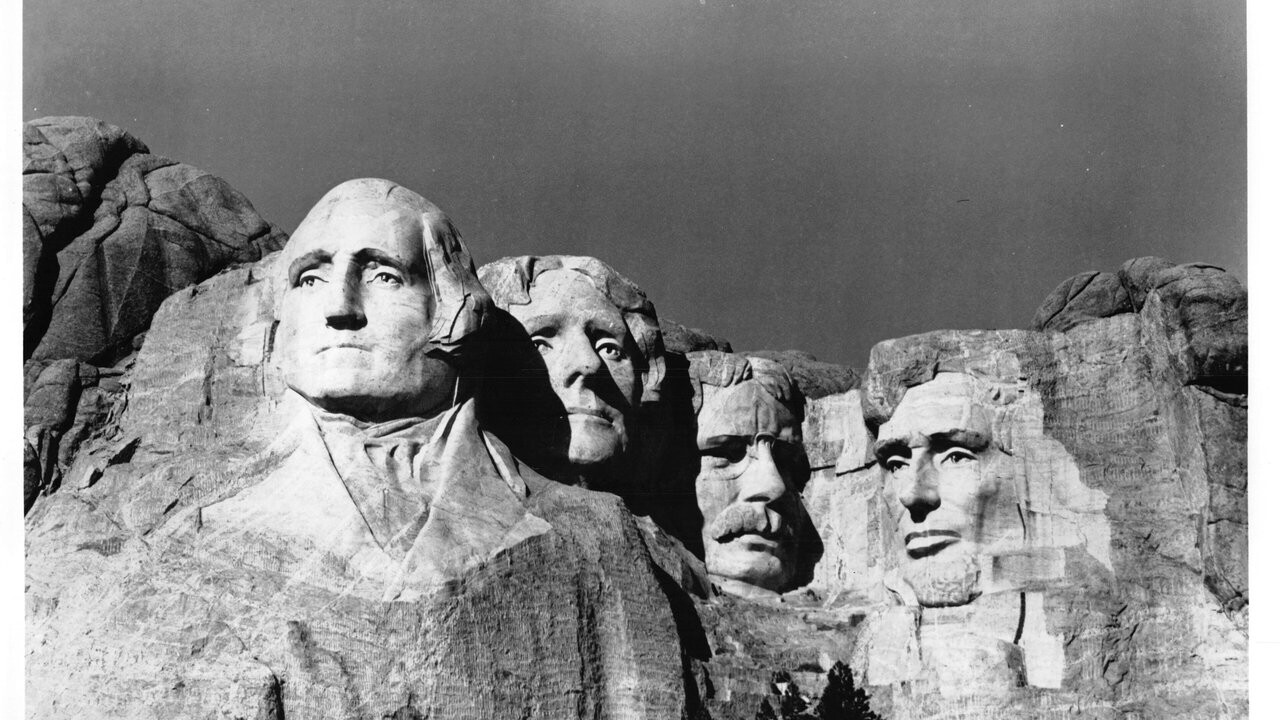
Borglum presented George Washington as representing the nation’s birth, Thomas Jefferson its growth, Abraham Lincoln its preservation, and Theodore Roosevelt its development. These were the sculptor’s interpretations, not a neutral ranking. They reflected his effort to tell a sweeping national story through four recognizable presidential portraits.
The Figures Emerged One at a Time
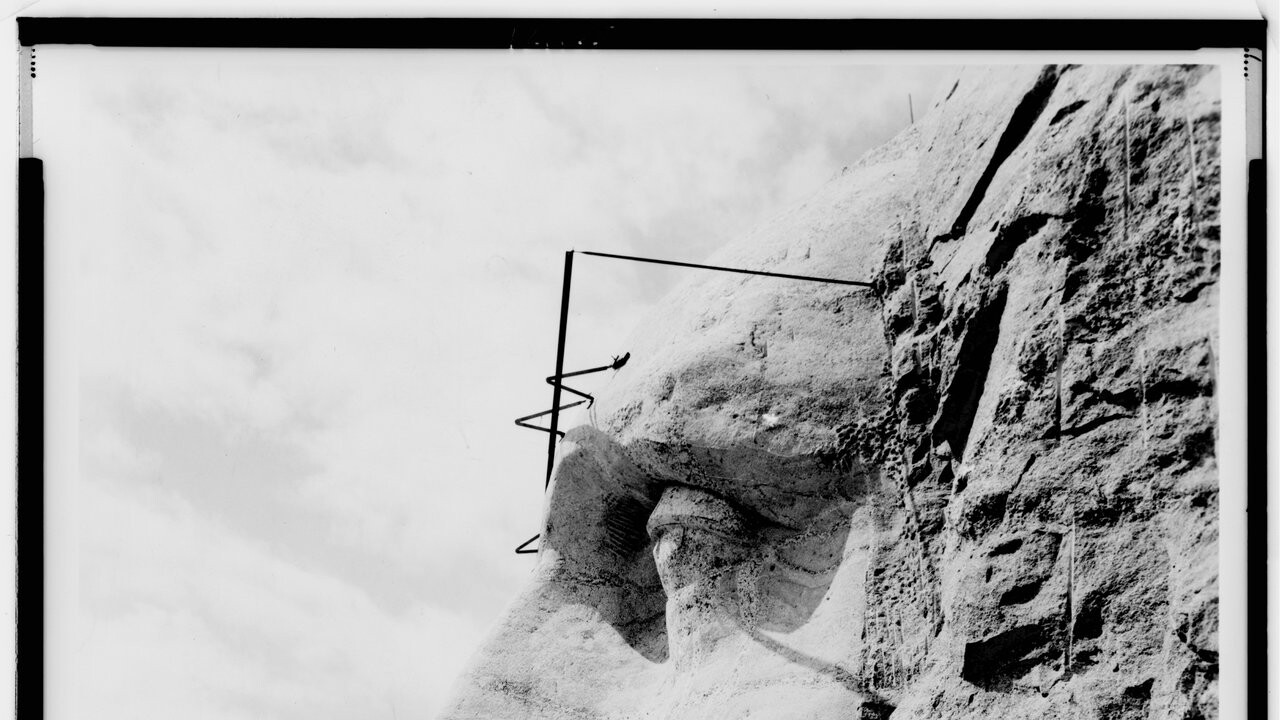
Public dedications marked visible stages of the project while carving continued elsewhere on the mountain. George Washington’s figure was dedicated in 1930, and Theodore Roosevelt’s followed in 1939.
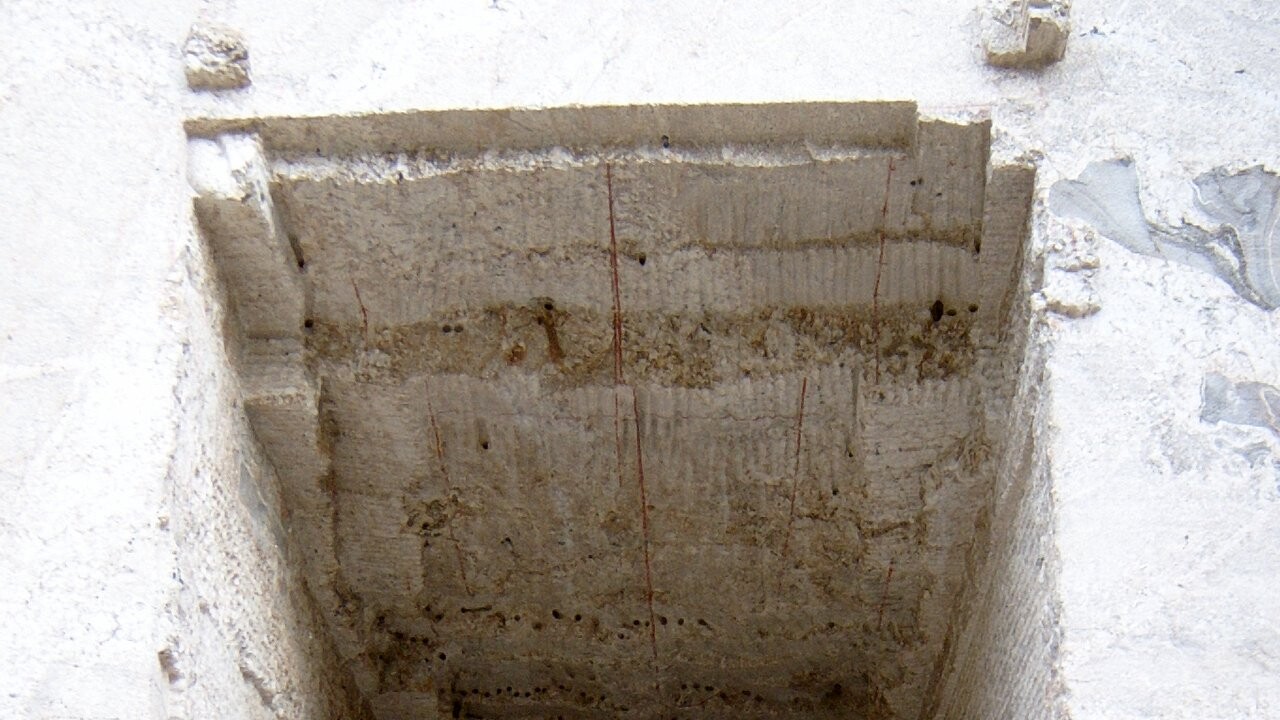
A Real Tunnel Was Blasted Into the Granite
The Hall of Records was not entirely imaginary. Workers blasted a tunnel about 70 feet long into the granite behind the carved faces (one older federal survey gives 80 feet). That unfinished passage is the physical core of the so-called secret room. It never became the polished archive, grand staircase, or monumental interior presented in Borglum’s architectural renderings.
1939: Congress Redirects the Money
Work on the hall stopped after Congress threatened to end funding unless federal money was used specifically to finish the sculpture. Borglum reluctantly turned his attention back to the faces. The decision preserved the passage in its unfinished state and halted his ambitious plans for an interior hall and staircase.
1941: The Carving Is Declared Complete
Congress declared the sculpture complete in October 1941. The designation did not mean that every element of Borglum’s original design had been built. It marked the official end of work on the monument, leaving four presidential faces rather than the larger composition represented in his models.
What the Official Record Shows
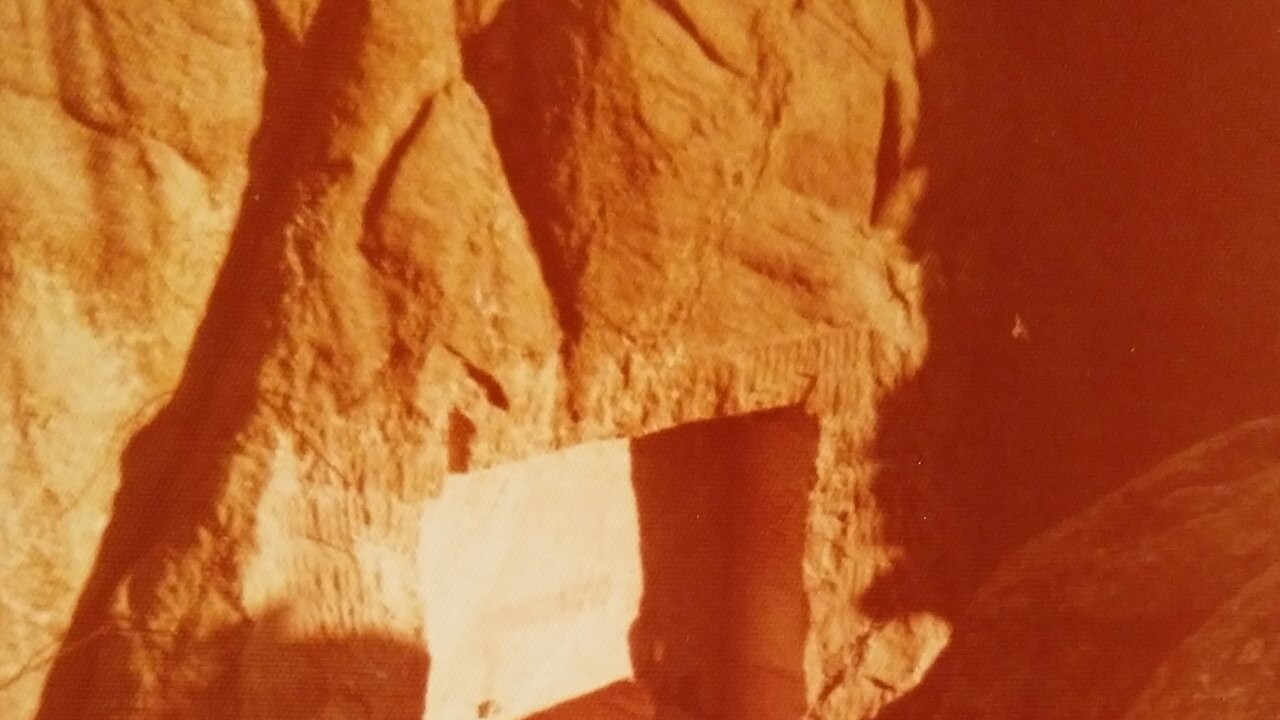
The Hall of Records is closed to the general public. Official documentation describes the known construction and identifies it as the full extent of the work carried out on the hall. That record offers a firmer guide to the site than stories built around its restricted location.
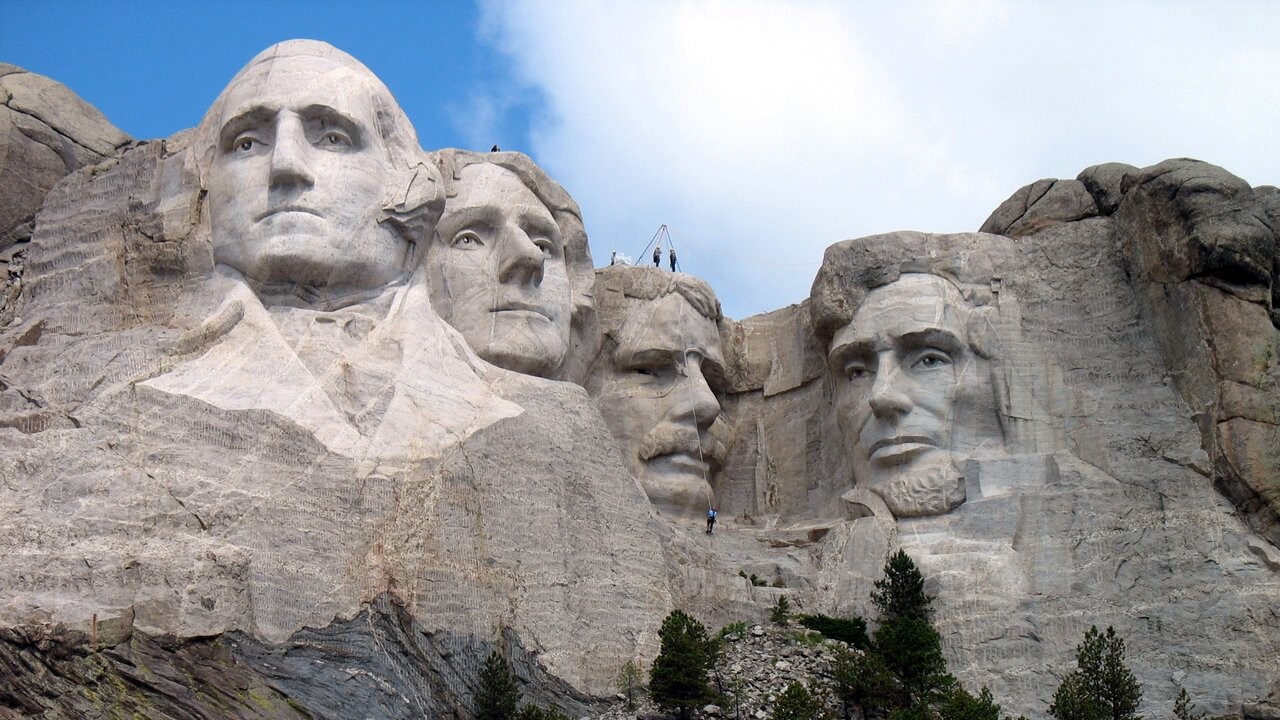
Modern Instruments Watch the Granite
Preserving Mount Rushmore now involves careful monitoring rather than further carving. Electronic instruments track even slight movement along some of the major fractures. These less visible systems help the National Park Service detect potential trouble and protect both the sculpture and its complicated history.
The documented Hall of Records is more revealing than the legends because it shows how ambition, engineering, politics, and memory shaped the mountain. Which confirmed detail surprised you most?
Follow The HyperHive on MSN for more stories like this.
Sources:






