
Have you ever checked your temperature and wondered why the reading was below 98.6°F (37°C)?
A lower number is not automatically a problem. Body temperature varies by person, age, activity, and time of day, and the familiar 98.6°F is an average, not a target everyone must reach.
After 65, temperature regulation can become more difficult, and an infection may not produce a higher temperature. Knowing your usual pattern, watching for changes, and using the thermometer consistently can give you and your healthcare provider better context.
Why Does Body Temperature Drop With Age?
The 98.6°F benchmark came from German physician Carl Wunderlich, who measured armpit temperatures in about 25,000 people in the mid-1800s. More recent research has challenged the idea that one number defines normal for everyone.
A Stanford analysis of historical U.S. data found a population-level decrease equal to 0.05°F per decade. That describes a trend across generations, not how quickly one person’s temperature falls with age. As Stanford physician Julie Parsonnet put it, “Physiologically, we’re just different from what we were in the past.”
Aging itself affects temperature control. MedlinePlus says normal body temperature does not change much with aging, but the body has more difficulty controlling it. Less fat below the skin can make it harder to stay warm, while a reduced ability to sweat raises the risk of overheating.
Some prescription and over-the-counter medicines, including certain cold medicines, may also affect body heat. Ask your healthcare provider or pharmacist whether anything you take changes how you should respond to hot or cold conditions.

What Does the Thermometer Actually Say After 65?
MedlinePlus gives a broad normal range of 97°F to 99°F (36.1°C to 37.2°C). Your own reading can vary with age, activity, and time of day, so a single measurement does not tell the whole story.
Temperature normally changes during the day and is lowest in the early morning for adults. That is why it helps to compare readings taken at roughly the same time under similar conditions.
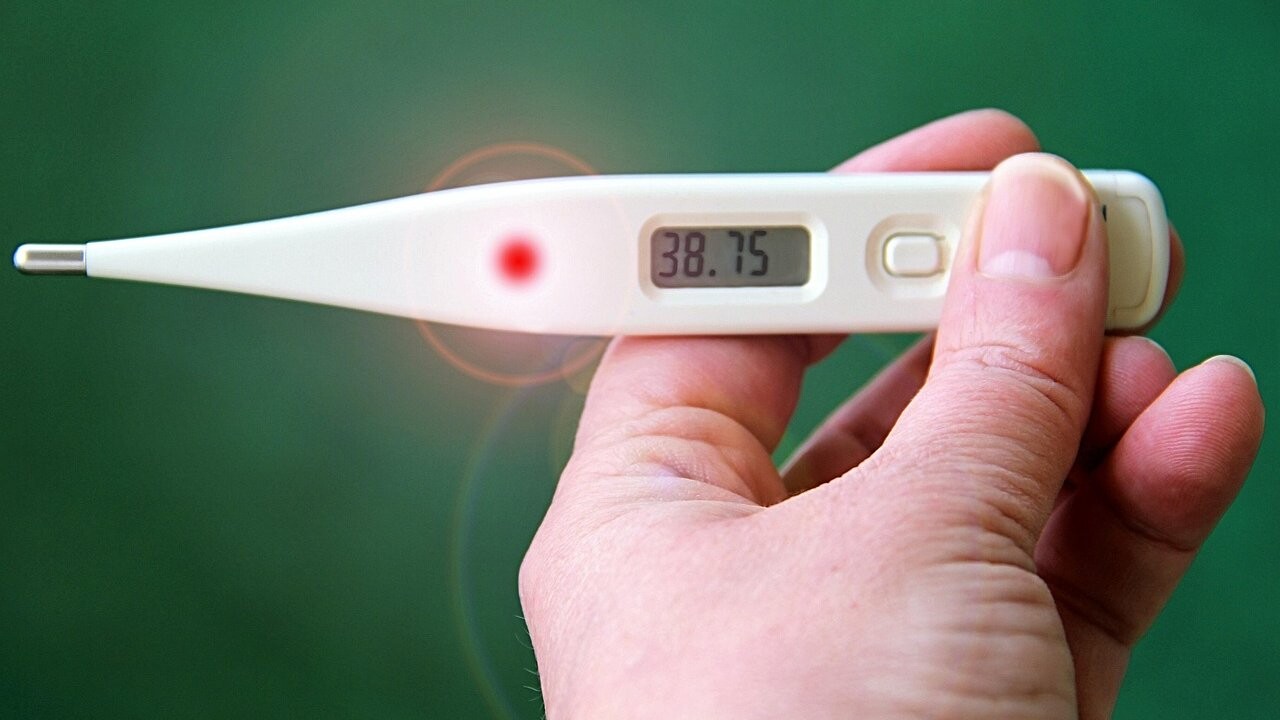
Use the same thermometer and method when possible. If you contact a healthcare provider, share both the reading and the type of thermometer you used. Also mention how you feel and whether the number differs from what you usually see.
How Is a Fever Defined in Older Adults?
MedlinePlus notes that an older person with an infection may not produce a higher temperature. A reading that seems modest can therefore deserve attention when it comes with a clear change from the person’s usual condition.
For residents of long-term care facilities, the Infectious Diseases Society of America defines fever using these criteria:
- Single Reading. A single oral temperature over 100°F (37.8°C).
- Repeated Readings. Repeated oral temperatures over 99°F (37.2°C) or rectal temperatures over 99.5°F (37.5°C).
- Baseline Elevation. An increase of more than 2°F (1.1°C) over the person’s baseline temperature.
These numbers help staff decide when infection should be considered; they do not diagnose the cause. If you live at home and feel unwell or notice a meaningful change from your usual temperature, contact your healthcare provider rather than waiting for a particular number.
What Subtle Changes Deserve Attention?
The same guideline tells long-term-care staff to suspect infection when a resident experiences a decline in functional status. It identifies changes such as new confusion, incontinence, falling, worsening mobility, reduced food intake, or failure to cooperate with staff.
- Confusion. New or increasing confusion.
- Continence. A new episode of incontinence.
- Mobility. A fall or a noticeable decline in mobility.
- Food and Care. Reduced food intake or an unusual unwillingness to cooperate with care.
These changes do not prove that an infection is present, but they are a reason to alert the resident’s nurse or clinician. Outside long-term care, seek medical advice when someone develops a sudden, concerning change in behavior, movement, eating, or alertness.
How Can You Protect Your Temperature and Stay Safe?
The National Institute on Aging says older adults have a higher chance of being affected by cold weather. Age-related changes can also make it harder to notice that the body is becoming too cold.
Hypothermia occurs when core temperature drops below 95°F, and it is a medical emergency. The NIA advises calling 911 when someone shows signs of hypothermia.
- Keep Rooms Warm. Set the heat to at least 68°F during cold weather.
- Dress in Layers. Choose warm, loose layers; the air between them helps hold warmth.
- Know the Warning Signs. Watch for cold hands or feet, shivering, slowed or slurred speech, sleepiness, anger, or confusion.
- Know When to Call. Call your healthcare provider if your temperature reaches 103°F (39.4°C) or higher. For other urgent or worrying symptoms, seek prompt medical help.
Keep a simple note of readings taken when you are well, including the time and thermometer method. That record can make a later change easier to describe without turning one number into a diagnosis.
Your usual temperature is more useful than a textbook number when you pair it with how you feel and what has changed. Have you noticed that your temperature runs differently now than it did when you were younger?
This article is for general information and isn’t a substitute for advice from your doctor.
You might also want to read: How Often Should Adults Over 65 Shower? What Dermatologists and Aging Experts Recommend
Follow The HyperHive on MSN for more stories like this.
Sources:



