
Coney Island turned seaside leisure into a grand public spectacle. This gallery moves chronologically from an elephant-shaped hotel and early bathing scenes to famous rides, boardwalk dining, and postwar beach crowds.
City landmark reports, institutional histories, and digitized archive records reveal how transportation, electric light, inventive architecture, affordable food, and the Atlantic shore shaped a playground shared by generations.
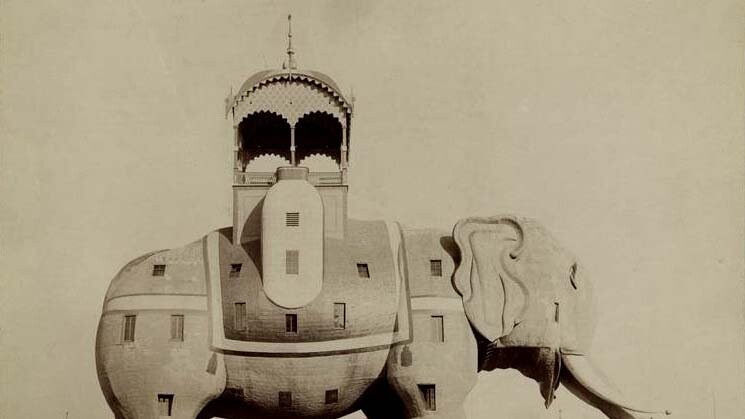
1885: The Elephantine Colossus Arrives
Before Coney Island’s famous amusement parks, visitors encountered the Elephantine Colossus, a giant elephant-shaped hotel. Built in 1885, it announced the resort’s taste for playful, improbable architecture. Fire destroyed the structure in 1896, but surviving images still convey how startling it must have looked beside the shore.
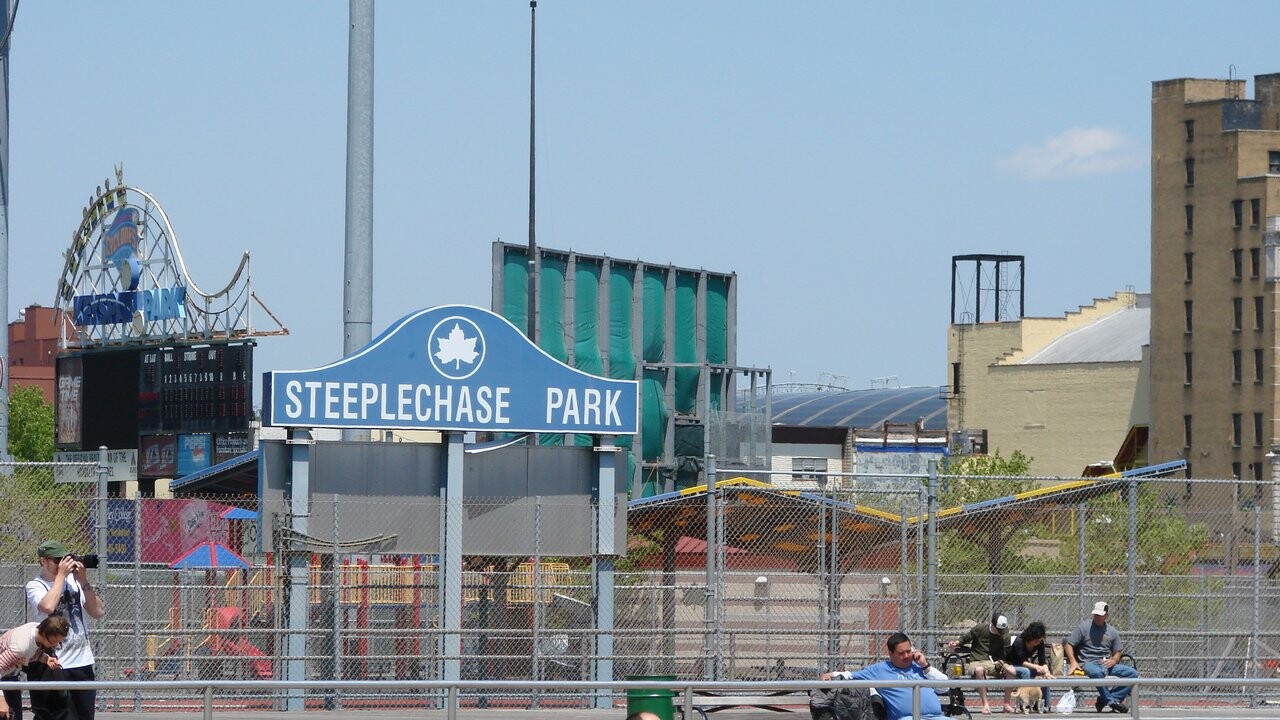
1897: George Tilyou Opens Steeplechase Park
George C. Tilyou opened Steeplechase Park in 1897, establishing one of Coney Island’s defining amusement grounds. Inside, rides and comic attractions turned visitors into active participants. The park’s broadly grinning face became a fitting emblem for an experience built around motion, shared laughter, and a little public embarrassment.
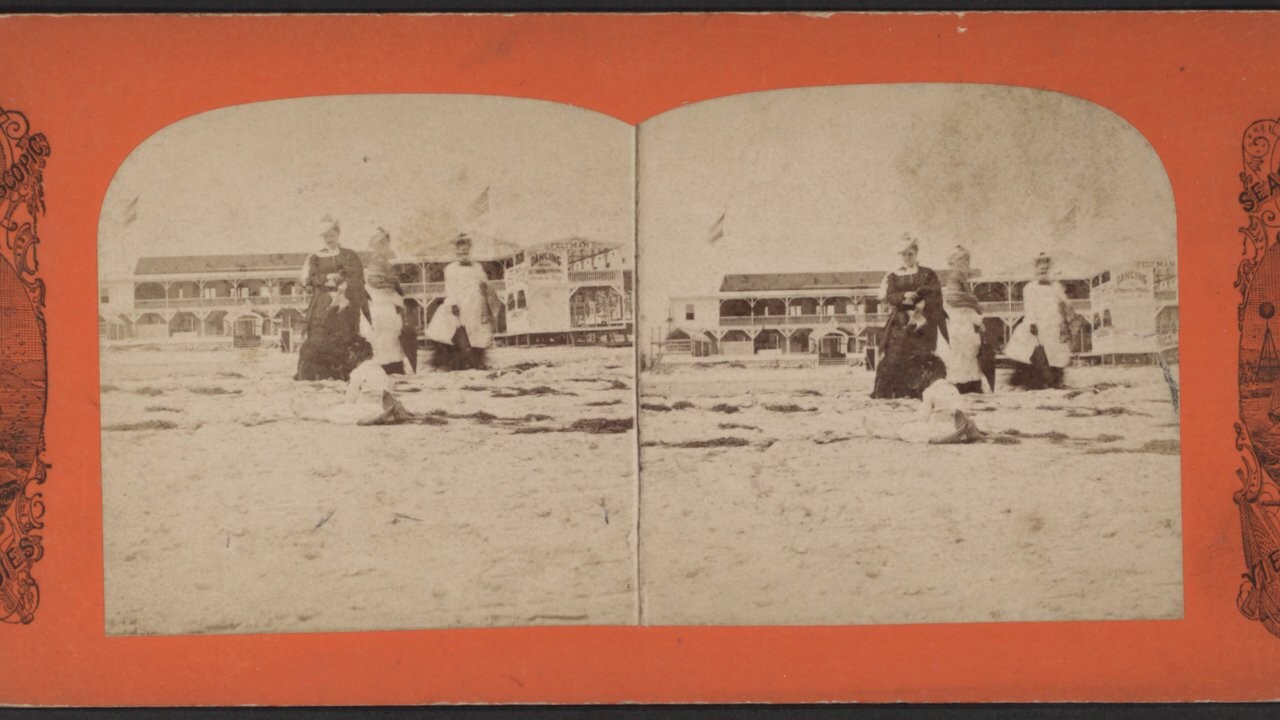
Early 1900s: Feltman’s Becomes an Empire
Feltman’s grew from a beach food business into a sprawling destination that covered a full city block by the early 1900s. Its complex included nine restaurants and numerous entertainment facilities. Visitors could make a meal part of an entire day of dining, dancing, bathing, and amusement beside the Atlantic.
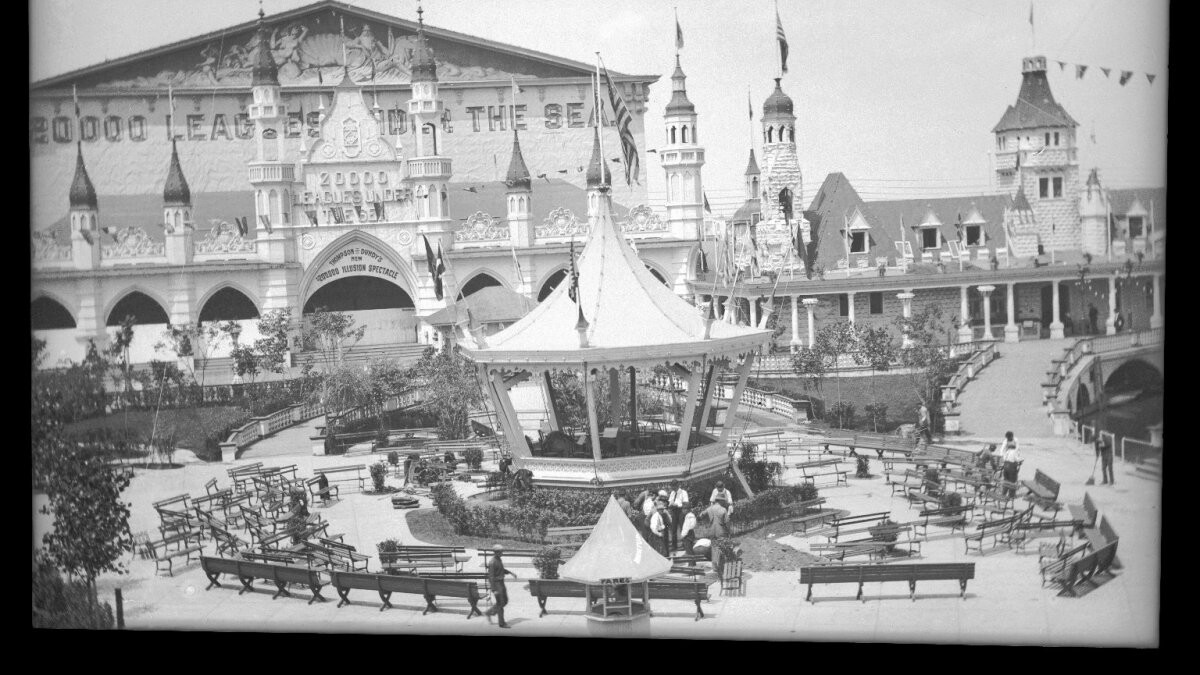
1903: Luna Park Opens
Luna Park opened in 1903 and transformed the amusement district into an architectural fantasy. Towers, domes, rides, performance spaces, and electric lights formed a self-contained dreamscape. The buildings were part of the entertainment, giving visitors an elaborate visual experience before they entered a show or boarded a ride.
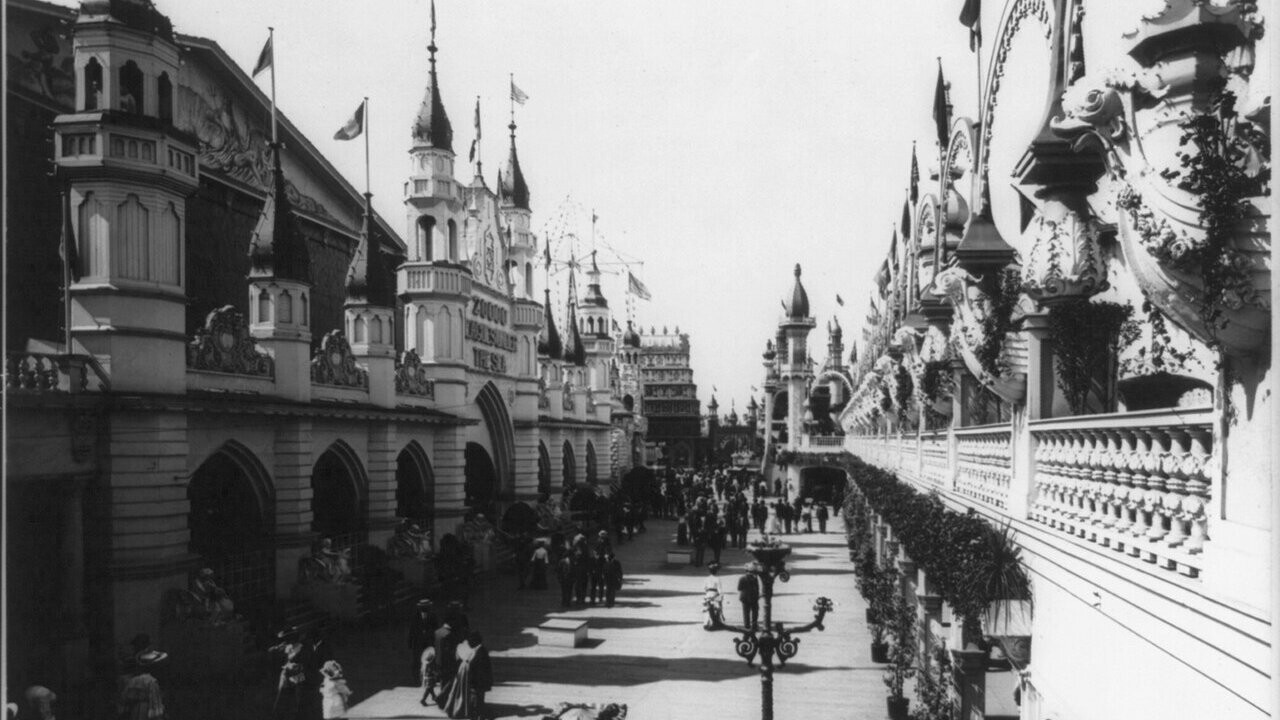
Luna Park by Day
In daylight, Luna Park’s promenade revealed a dense composition of towers, arches, flags, and fanciful roofs. An archive photograph preserves the busy walkway and its theatrical surroundings. Nearly every structure advertised another diversion, making a simple stroll through the park feel like a journey through an invented city.
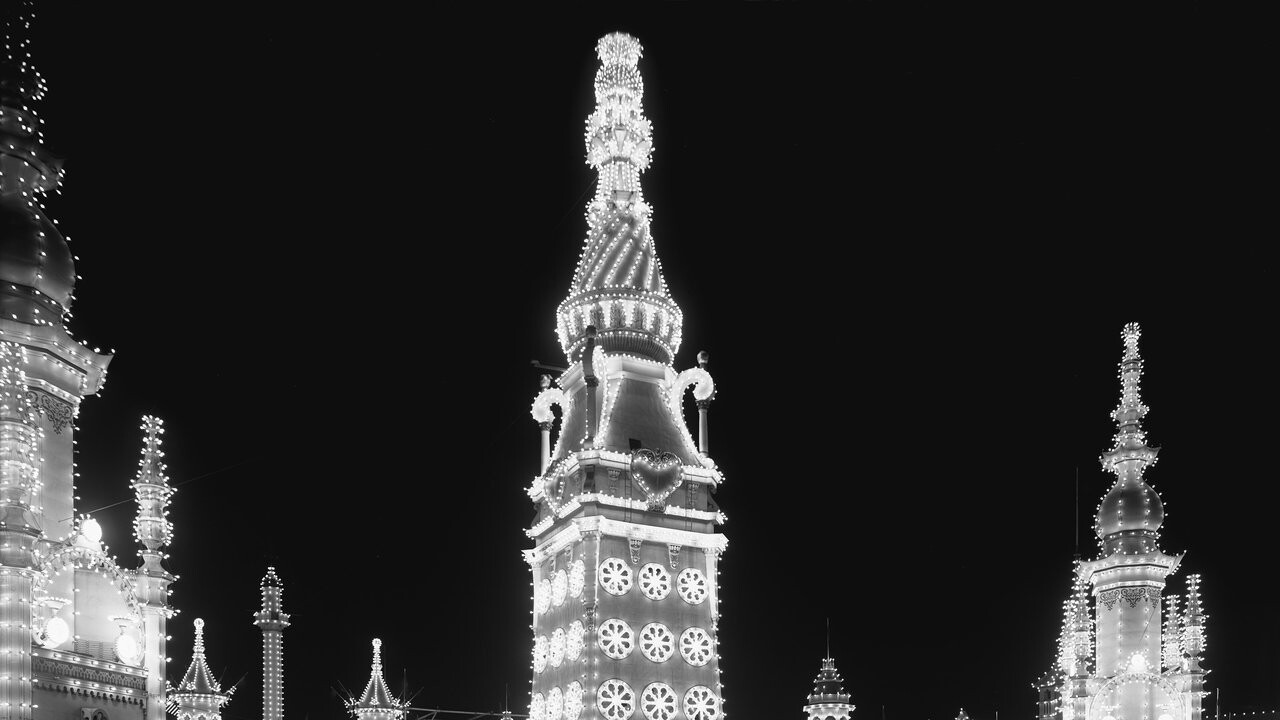
Luna Park After Dark
After sunset, Luna Park took on a new identity. A surviving film shows the amusement concessions illuminated at night, their lights defining the grounds against the darkness. Motion, crowds, and glowing architecture made the nighttime park a spectacle distinct from its daytime appearance, with electric light serving as part of the show.
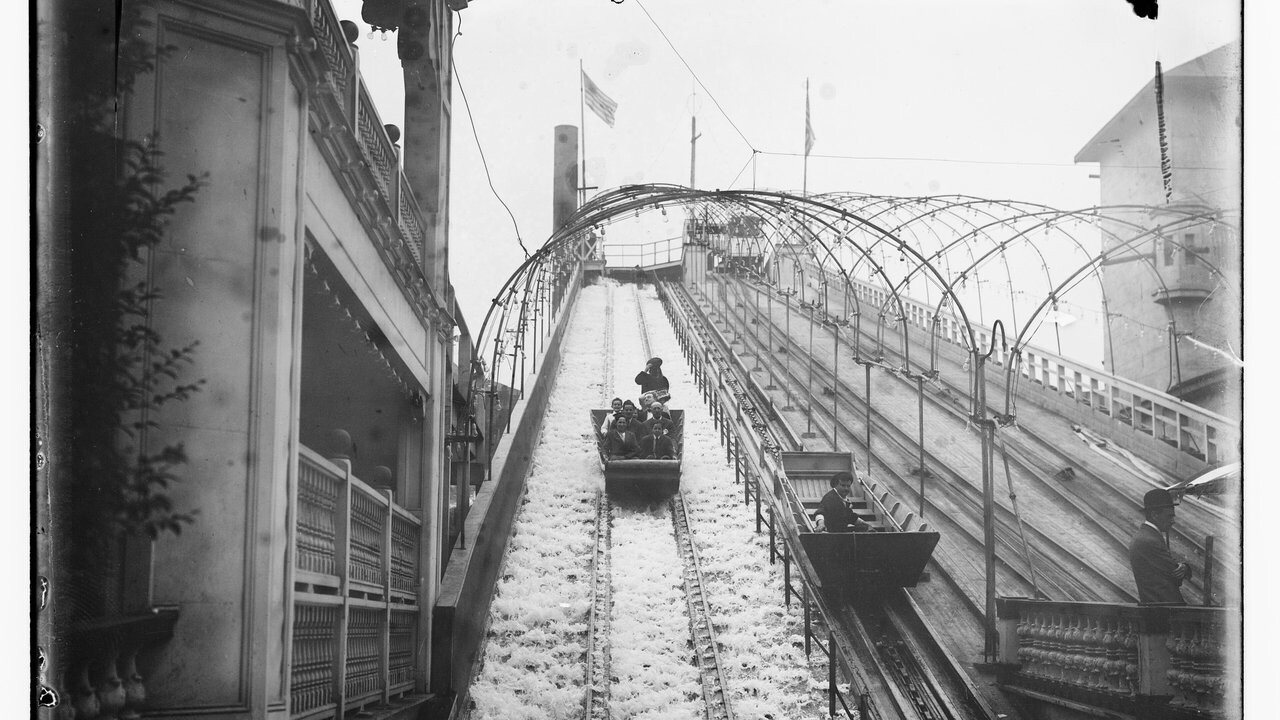
1903: Shooting the Chutes
A 1903 film preserved Luna Park’s Shoot-the-Chutes attraction in motion. The brief recording shows how naturally amusement parks suited the new medium of film: both offered movement, novelty, and a changing visual spectacle. More than a century later, the footage still gives viewers a direct glimpse of the park’s earliest season.
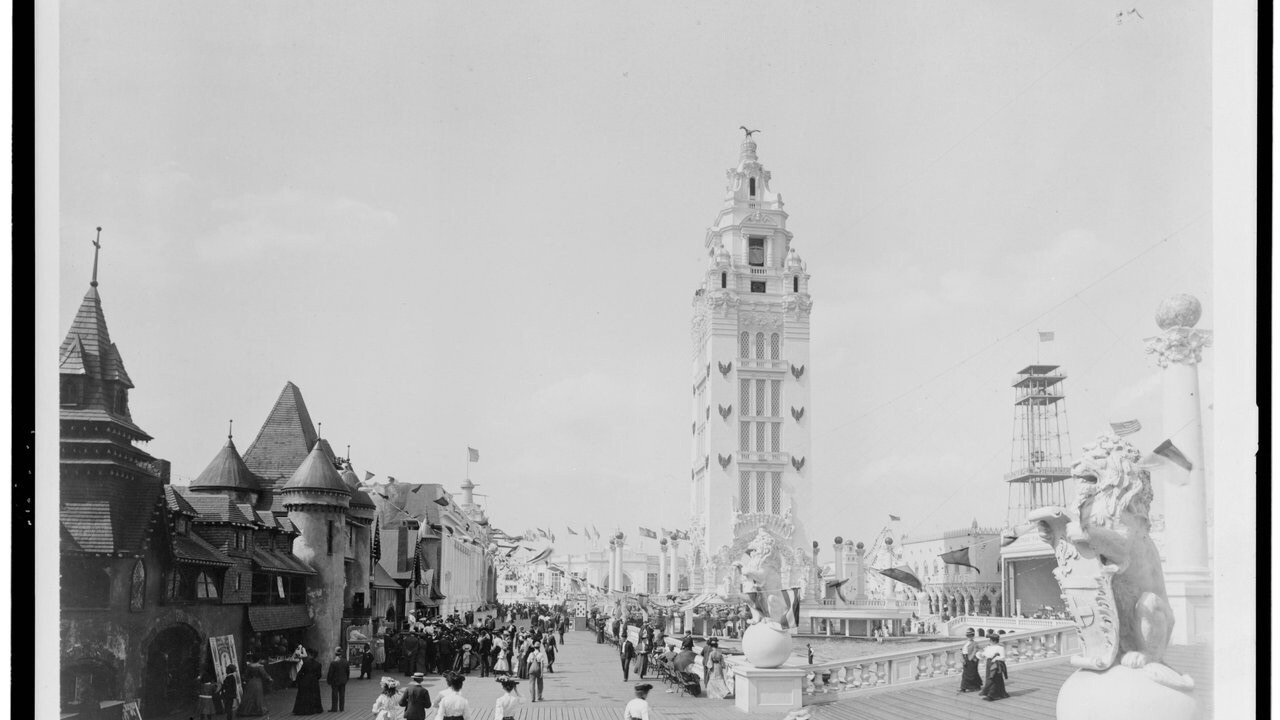
1904: Dreamland Joins the Skyline
Spurred by Luna Park’s success, Dreamland opened in 1904. Its monumental buildings added another fantasy world to Coney Island’s shoreline, giving the resort an even more theatrical skyline. Historic images emphasize the park’s scale, symmetry, and bright surfaces, which distinguished it from the dense attractions surrounding it.
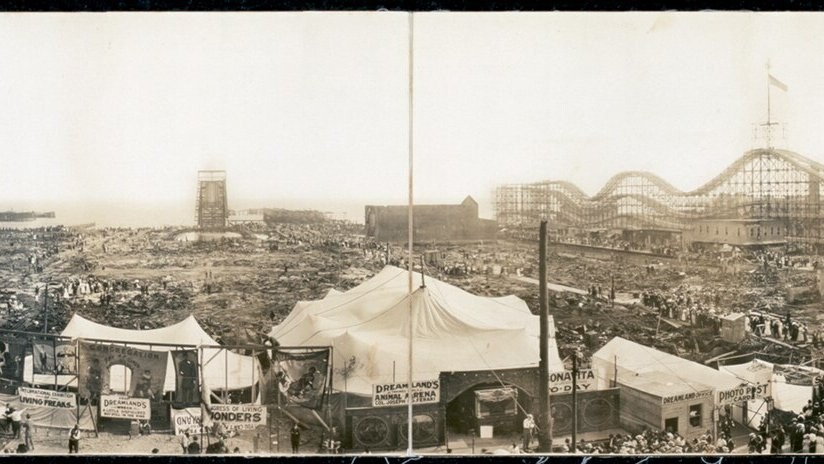
1911: Dreamland Is Left in Ruins
Fire destroyed Dreamland in 1911, and the park was never rebuilt. Panoramic photographs of the aftermath show empty ground and damaged structures where an illuminated fantasy had stood. The ruins marked an abrupt change in Coney Island’s skyline and the loss of one of its three celebrated amusement parks.
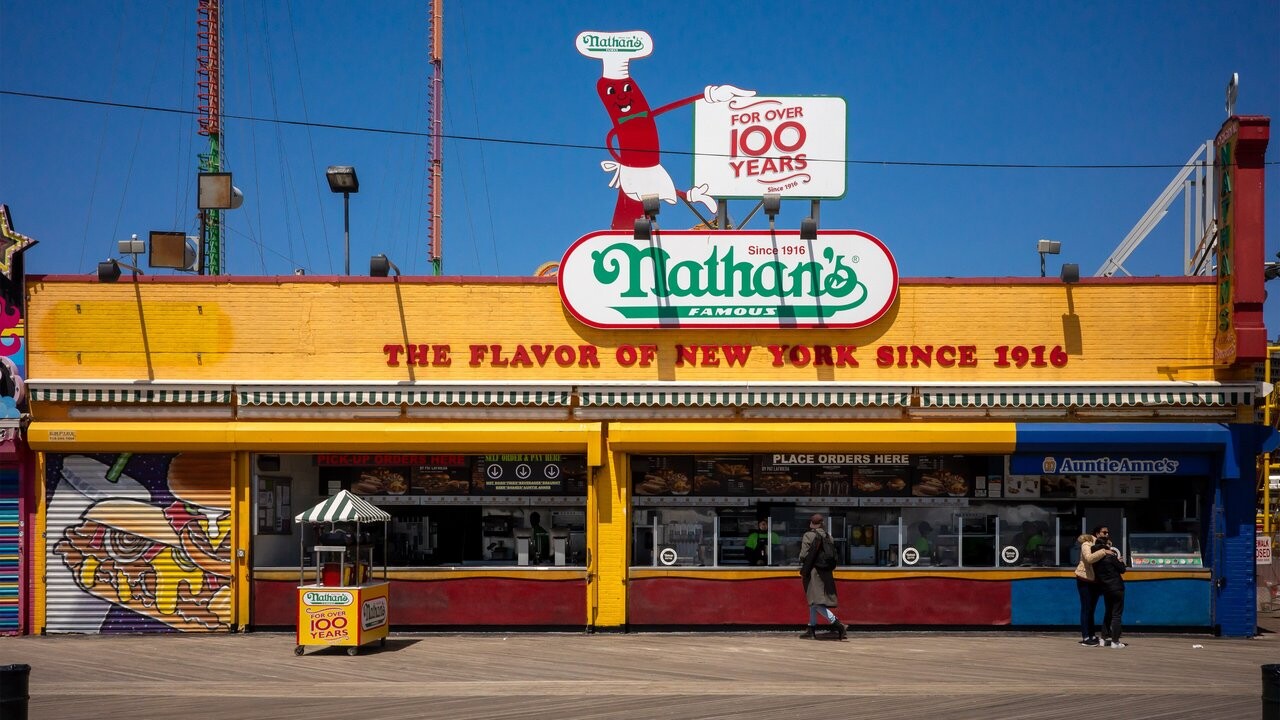
1916: Nathan’s Famous Opens
Nathan Handwerker opened a nickel hot dog stand at Coney Island in 1916. Its low price suited a resort built around accessible pleasures, and the business eventually became one of the neighborhood’s most recognizable names. Later photographs preserve its crowded counters, bold signs, and steady stream of hungry beachgoers.
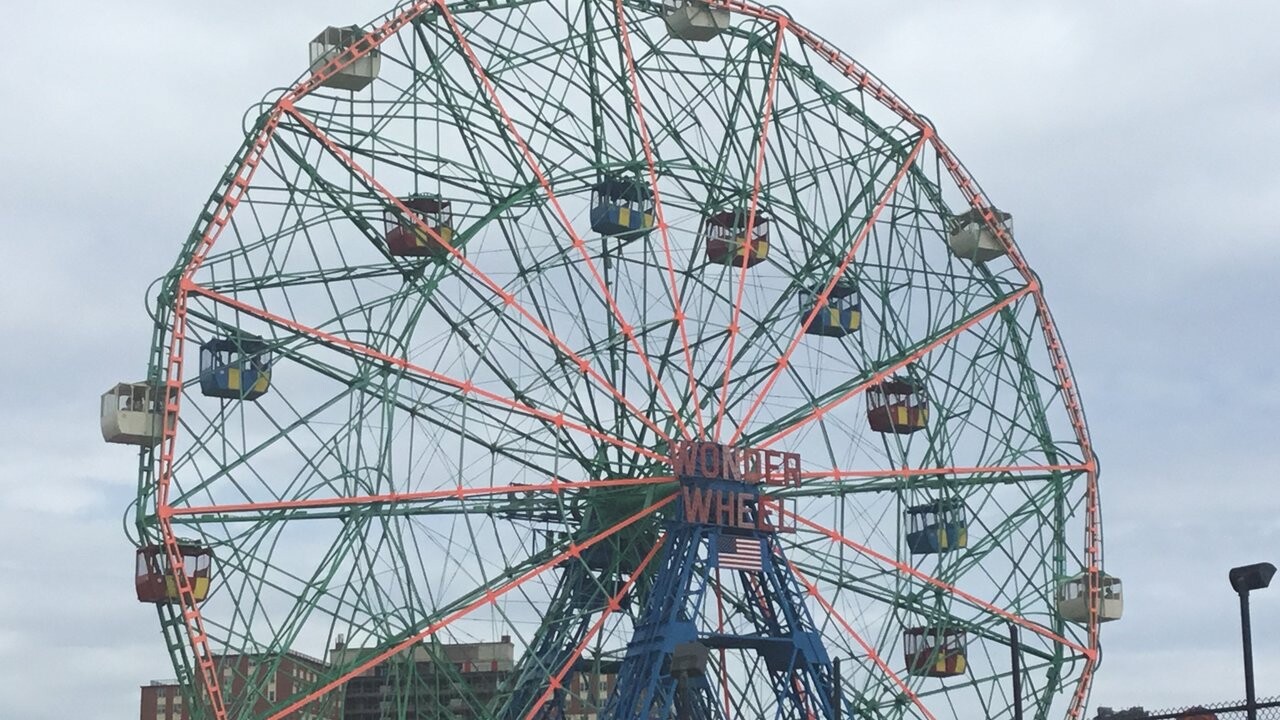
1920: The Wonder Wheel Rises
The Wonder Wheel opened at Coney Island in 1920. Invented by Charles Herman and built between 1918 and 1920, the 150-foot structure offered a distinctive variation on the Ferris wheel. Its vast frame and elevated passenger cars made it both an amusement ride and a commanding part of the shoreline.
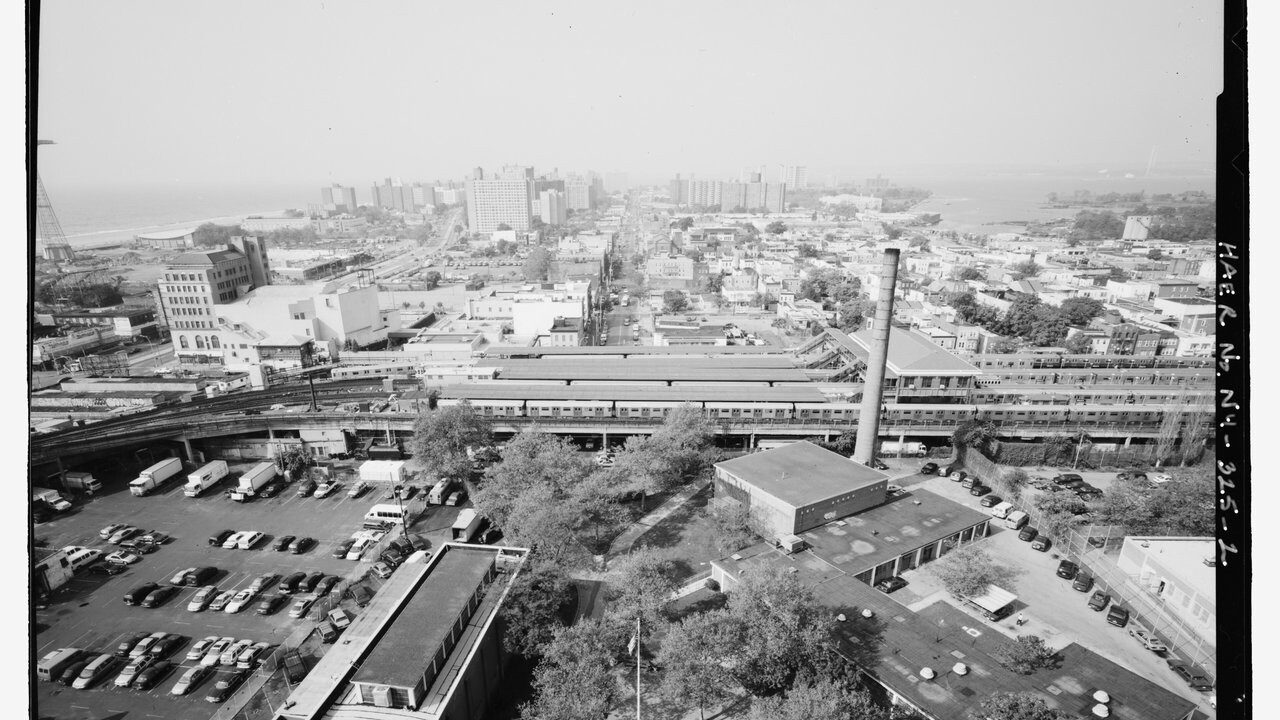
1920: The Subway Reaches Coney Island
A subway line running from Manhattan to Coney Island was completed in 1920. The direct connection placed the seaside resort within the city’s expanding rapid-transit network. Period images of the terminal and elevated tracks show how transportation infrastructure became part of the landscape surrounding the beach and amusement district.
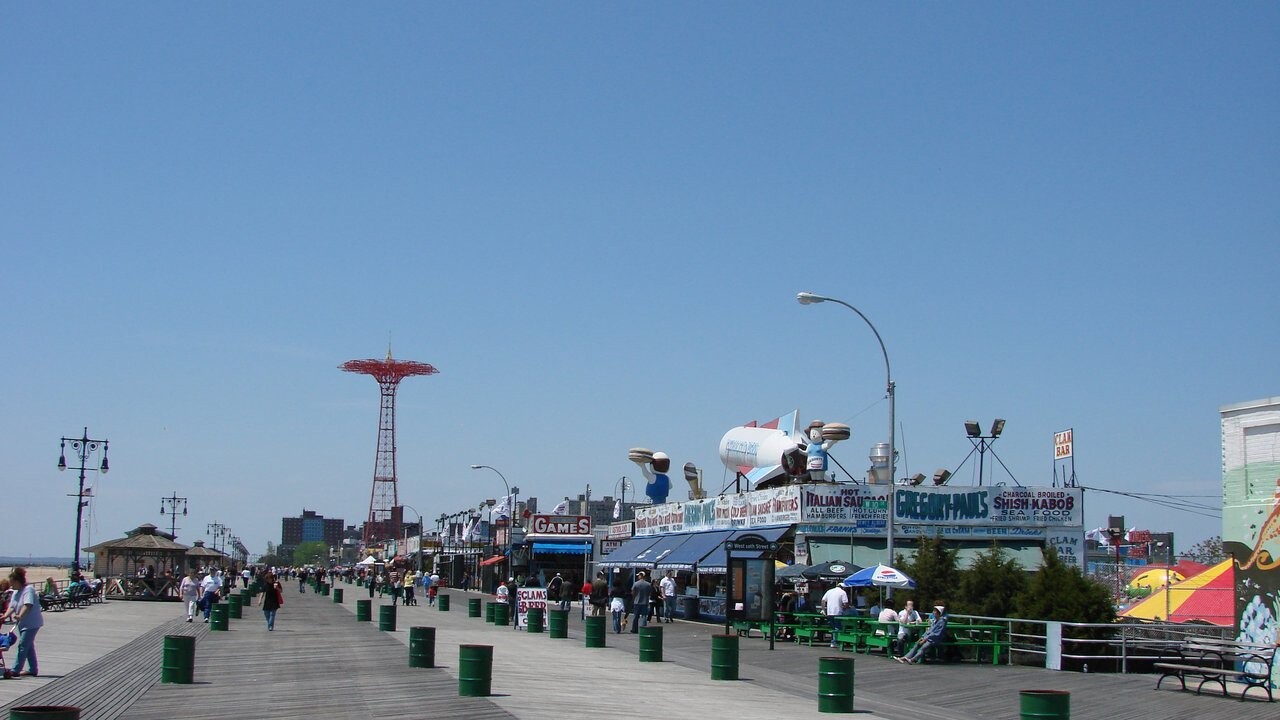
1923: The Riegelmann Boardwalk Opens
The Coney Island boardwalk formally opened on May 15, 1923, creating a broad promenade beside the beach. It gave visitors a continuous place to walk between the waterfront and nearby attractions. Photographs soon made the boardwalk’s long perspective, railings, benches, and moving crowds essential parts of Coney Island’s visual identity.
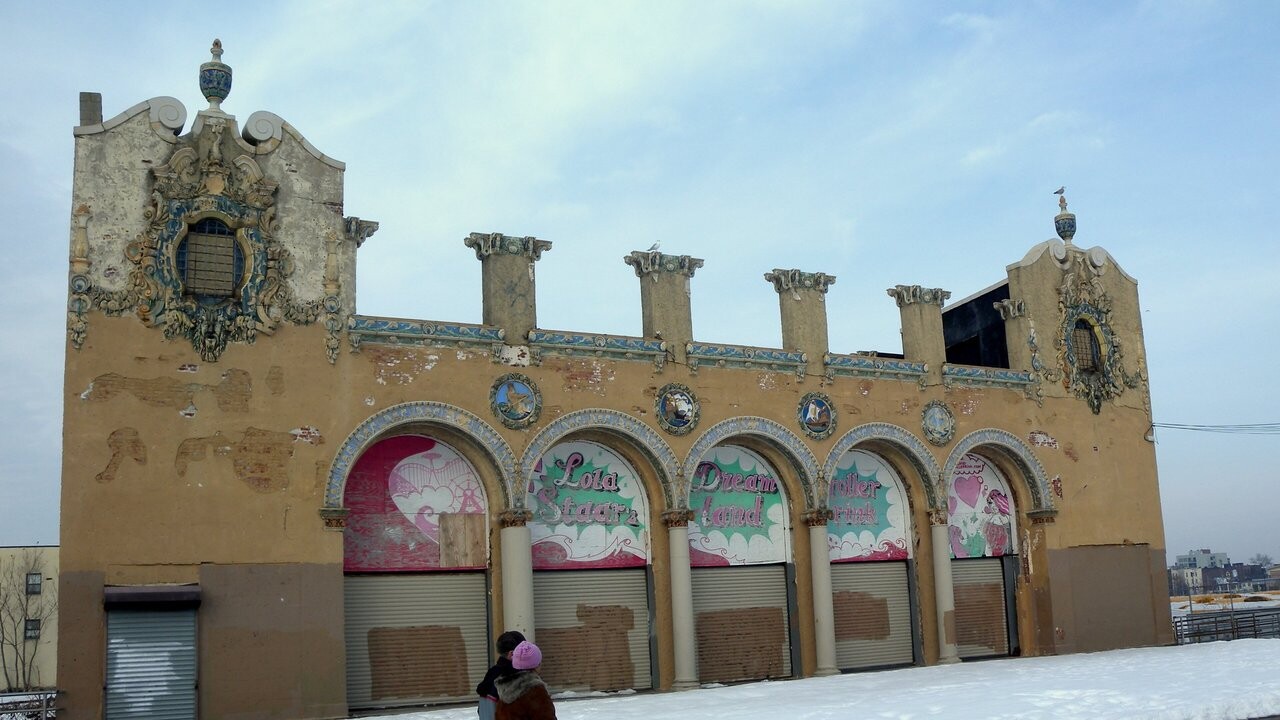
1923: Childs Restaurant Opens on the Boardwalk
Childs opened its restaurant at West 19th Street on the boardwalk in 1923. Seaside ornament and large openings connected the dining room with the waterfront setting. The substantial building represented a more permanent phase of development, replacing some of Coney Island’s temporary wooden character with carefully designed architecture.
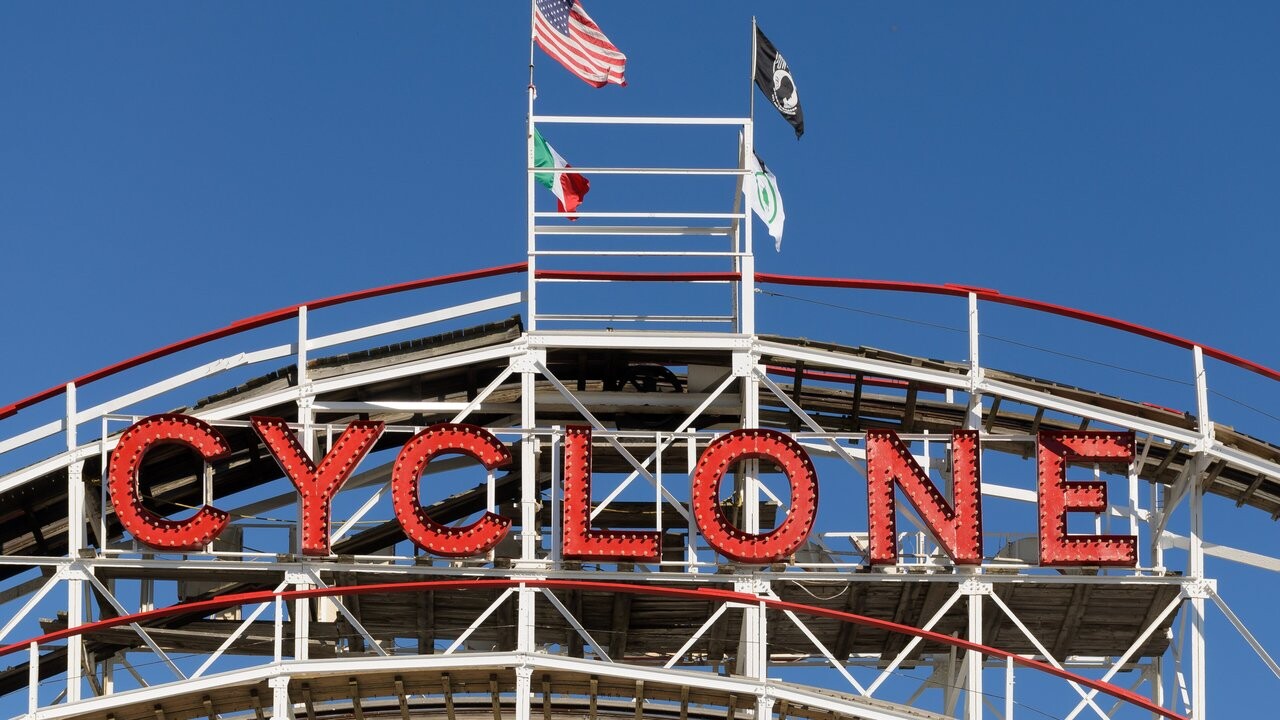
1927: The Cyclone Begins Its Run
The Cyclone was built in 1927, at the height of Coney Island’s popularity. Its wooden framework, steep track, and compact curves created a dramatic profile near the beach. In photographs, the dense structure appears almost sculptural, while its position beside the amusement district made it an enduring symbol of the neighborhood.
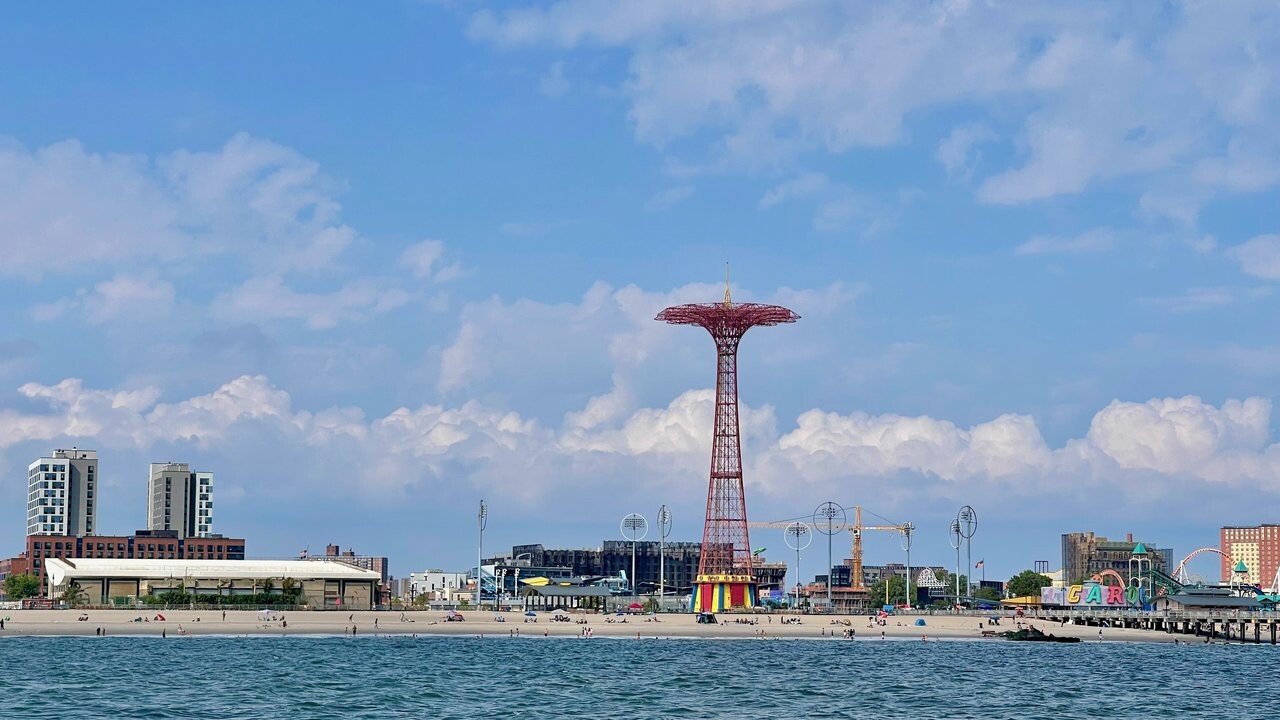
1941: The Parachute Jump Reaches Coney Island
The Parachute Jump came to Steeplechase Park in 1941 after appearing at the 1939–40 New York World’s Fair. Its towering steel frame introduced another unmistakable landmark to Coney Island’s shoreline. Visible from far beyond the park, it became a defining element of the wartime and postwar skyline.
These images preserve a seaside world shaped by shared thrills, accessible escape, and the pleasure of gathering beside the ocean. Which part of golden-age Coney Island would you most like to have experienced?
Follow The HyperHive on MSN for more stories like this.
Sources:






