How the Empire State Building Was Built, in Photos

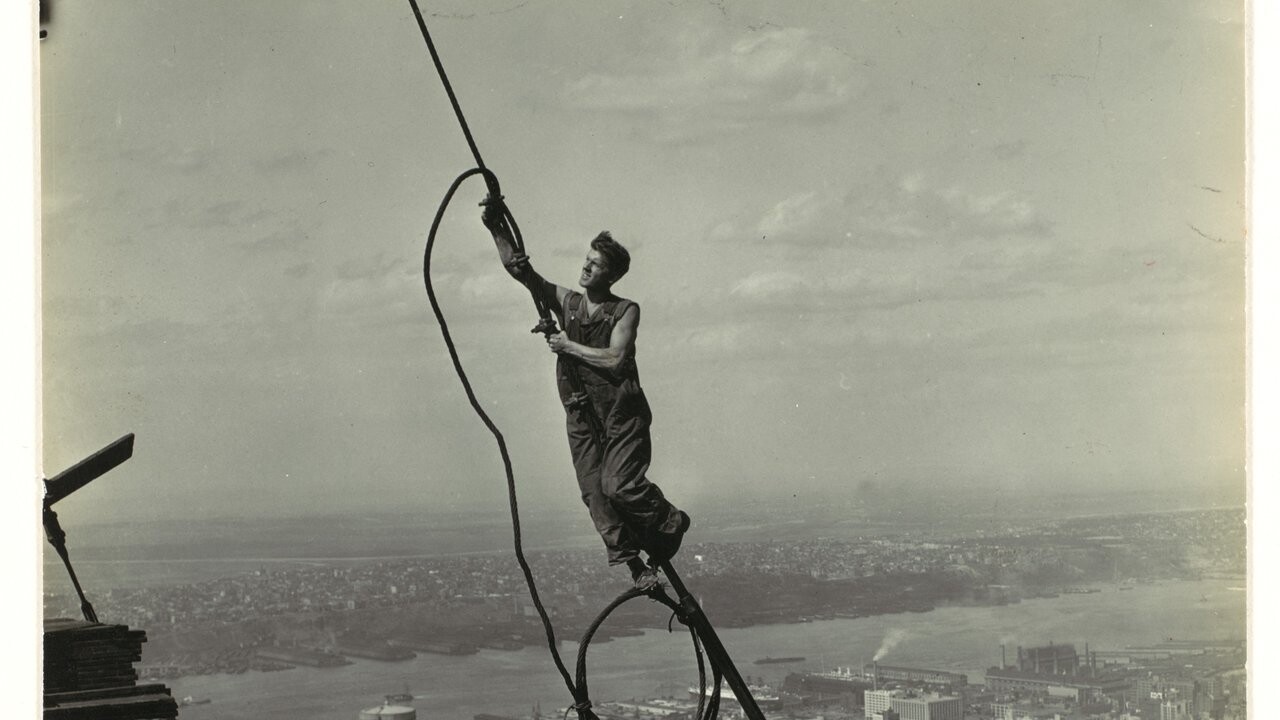
Lewis Hine / Wikimedia Commons, Public domain (cropped)
The Empire State Building rose at remarkable speed, but its story began with a famous hotel coming down. This gallery follows the work chronologically, from clearing the Midtown site to opening the tower and its observatory.
Official records, public archives, museum collections, and a contractor’s album preserve the project in remarkable detail. Together, these sources document both the engineering achievement and the people who made it possible.
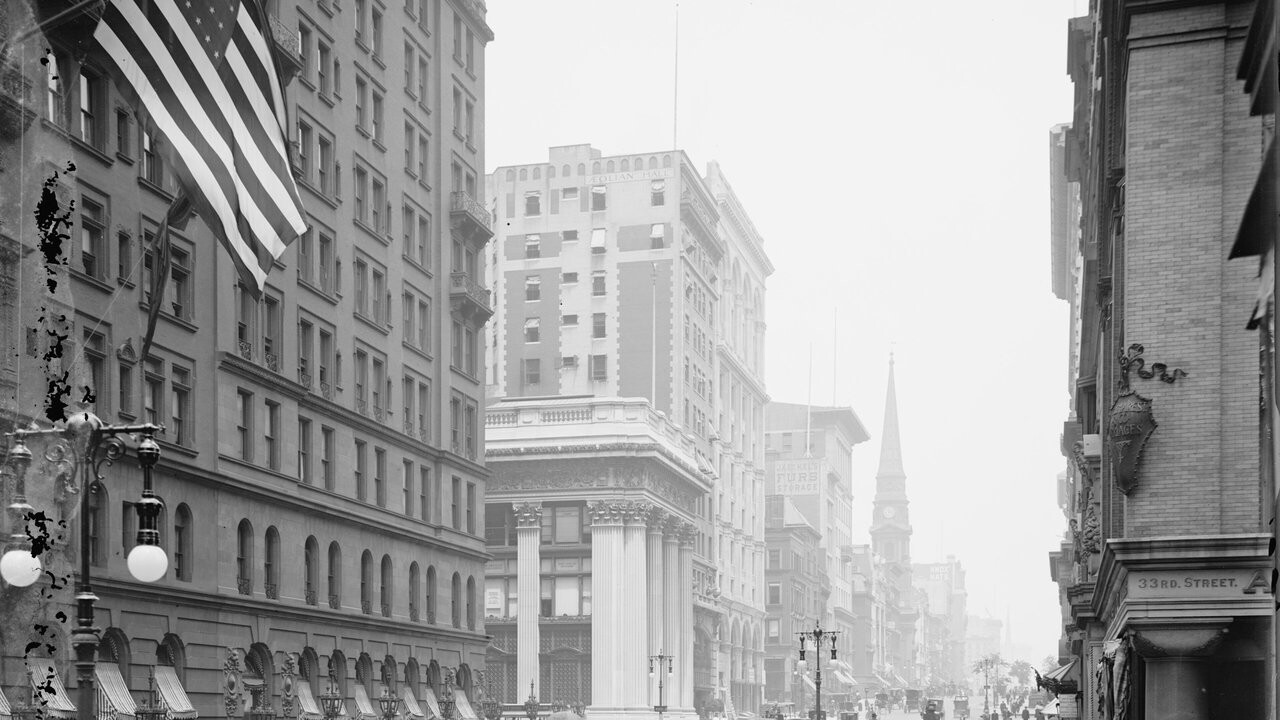
1929: The Old Waldorf-Astoria Gives Way
Before the first steel column rose, the original Waldorf-Astoria occupied the Fifth Avenue site. The celebrated hotel was sold to developers, demolished, and replaced by the Empire State Building in 1929. Removing the large structure cleared the way for Midtown’s new record-breaking office tower.
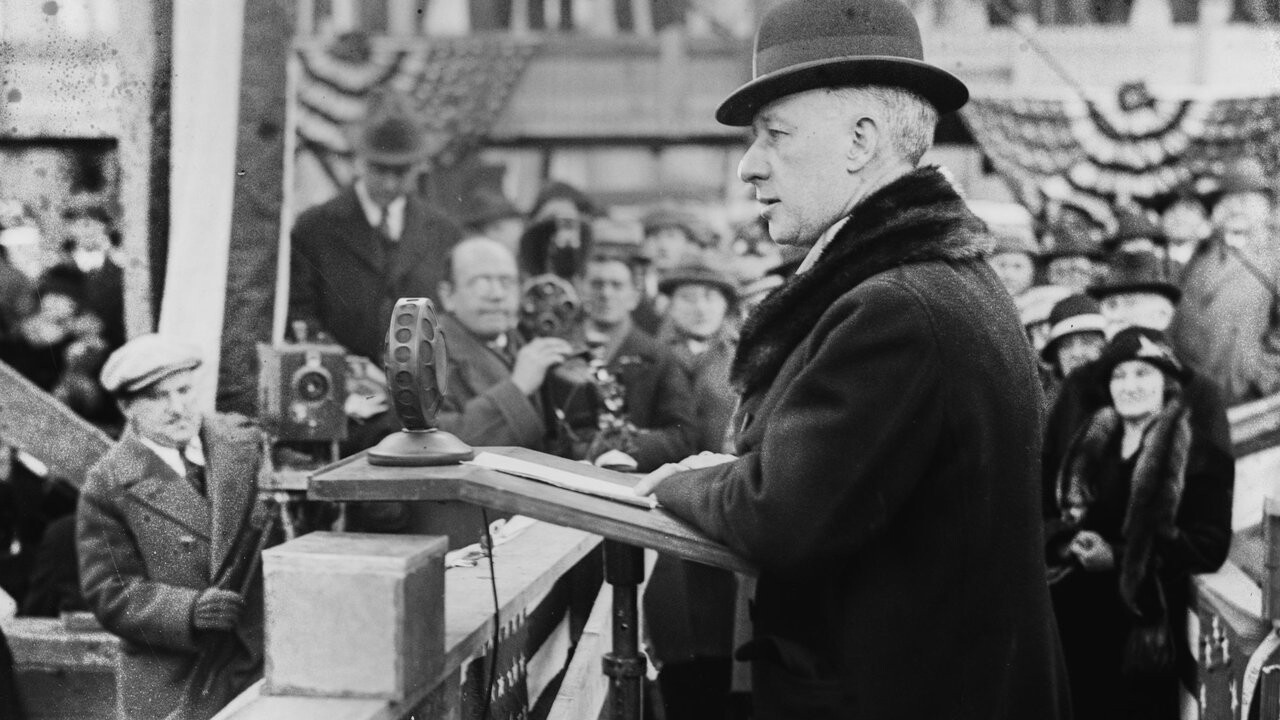
1929: Raskob and Smith Form the Venture
A corporation that included businessman John Jacob Raskob and former New York Governor Alfred E. Smith formed in 1929 to develop the project. The Empire State Building was conceived as a speculative office tower, and its extraordinary height helped distinguish the property in a competitive commercial market.
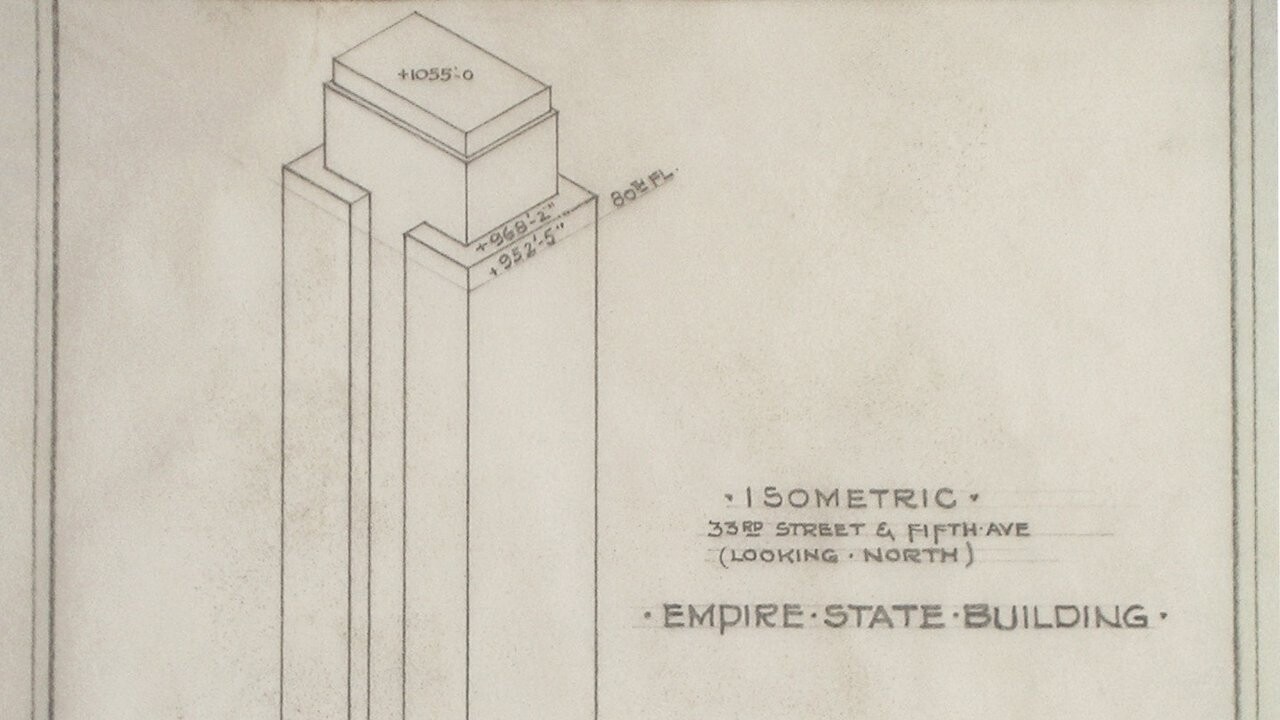
A Practical Design for an Enormous Building
Shreve, Lamb & Harmon designed the skyscraper under demanding constraints involving time, cost, and structure. The architects created an economical office building that could be constructed quickly. Its strong vertical lines and tiered setbacks gave those practical decisions a monumental architectural presence.
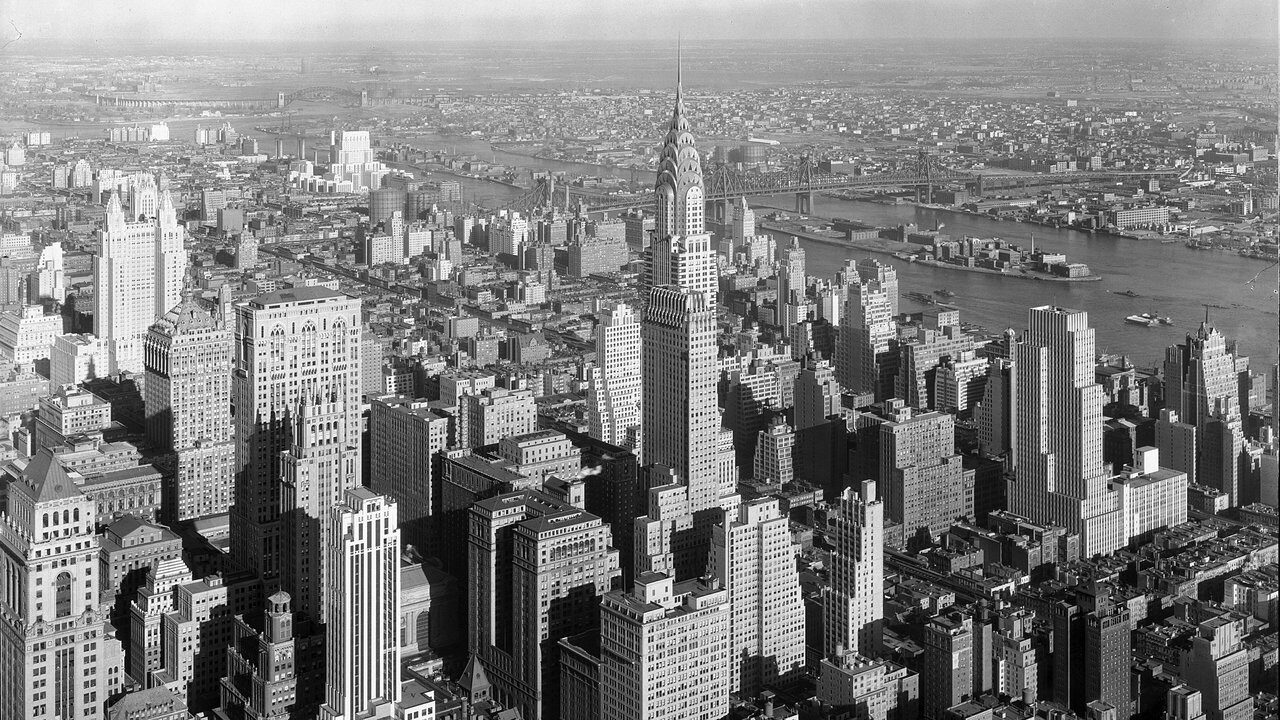
1930: The Race With the Chrysler Building
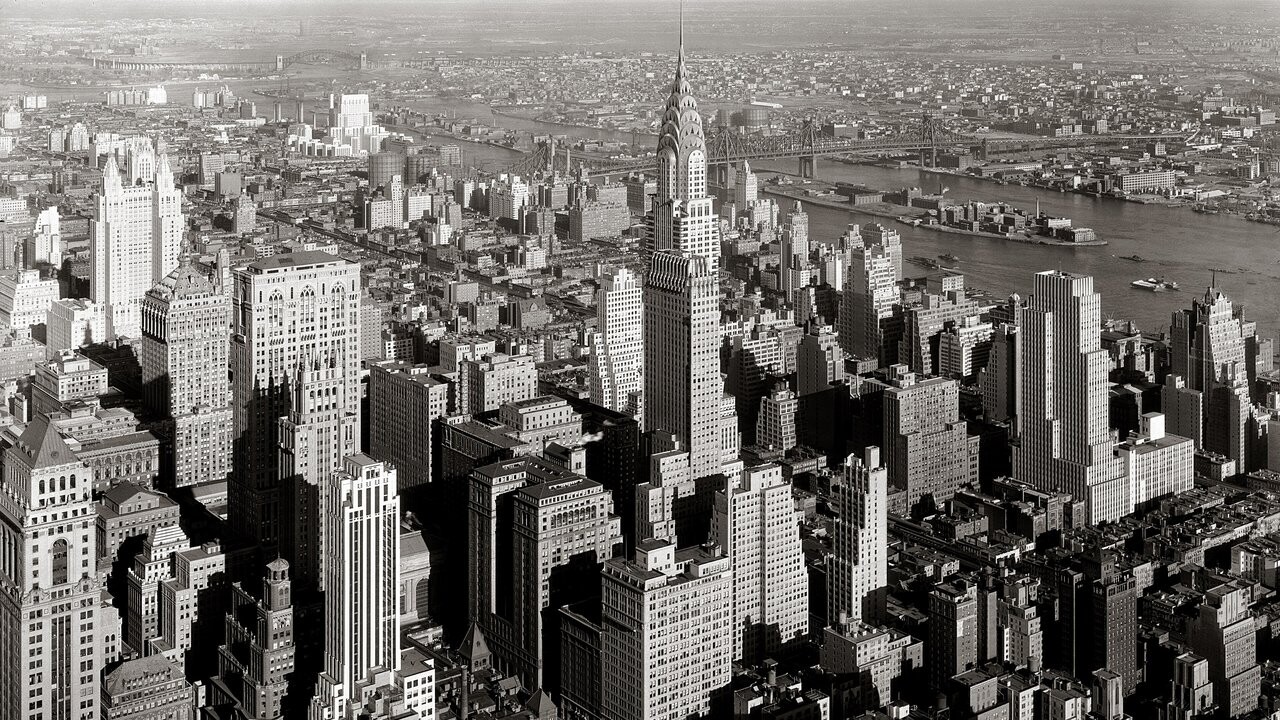
The Chrysler Building briefly claimed the world height title when it opened in 1930 at 1,046 feet. The Empire State Building ultimately surpassed it, turning the two projects into enduring symbols of New York’s skyscraper race and the intense architectural ambition of the era.
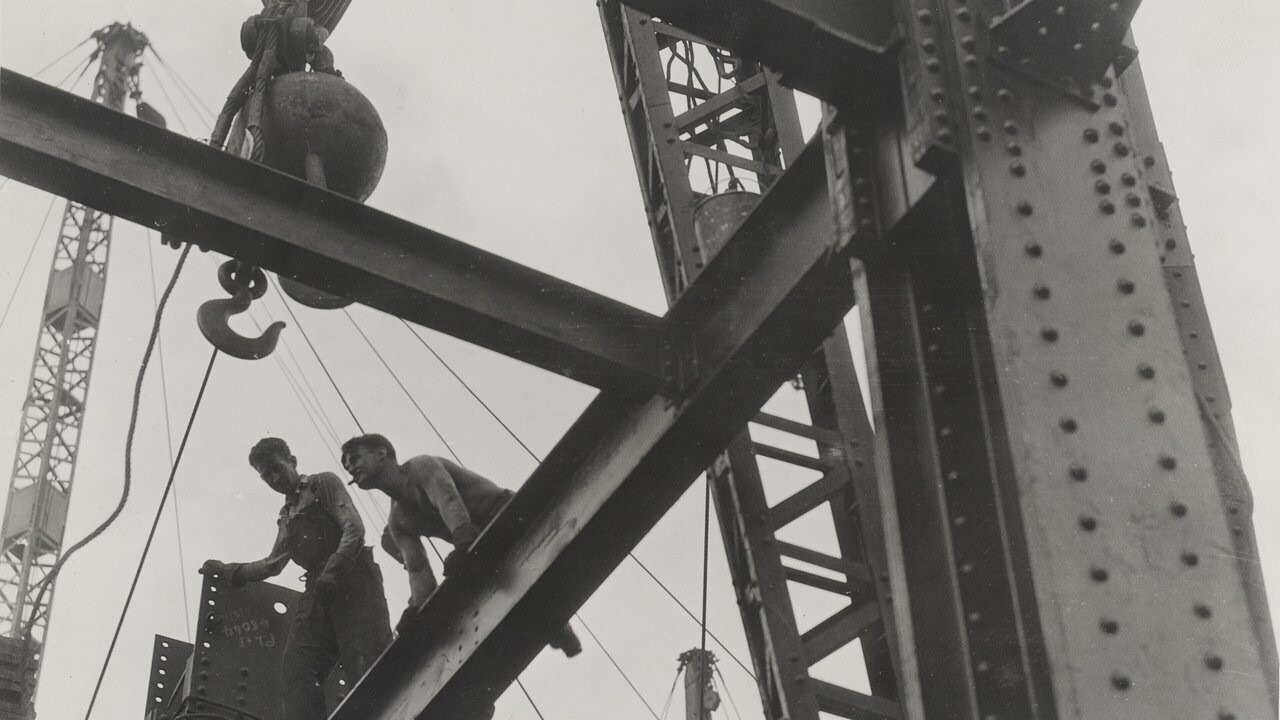
March 17, 1930: The First Steel Columns
Workers set the first steel columns on March 17, 1930, beginning the tower’s dramatic climb above Fifth Avenue. The steel skeleton carried the building’s weight, allowing crews to enclose it with a comparatively light exterior rather than the thick, load-bearing masonry used in many earlier structures.
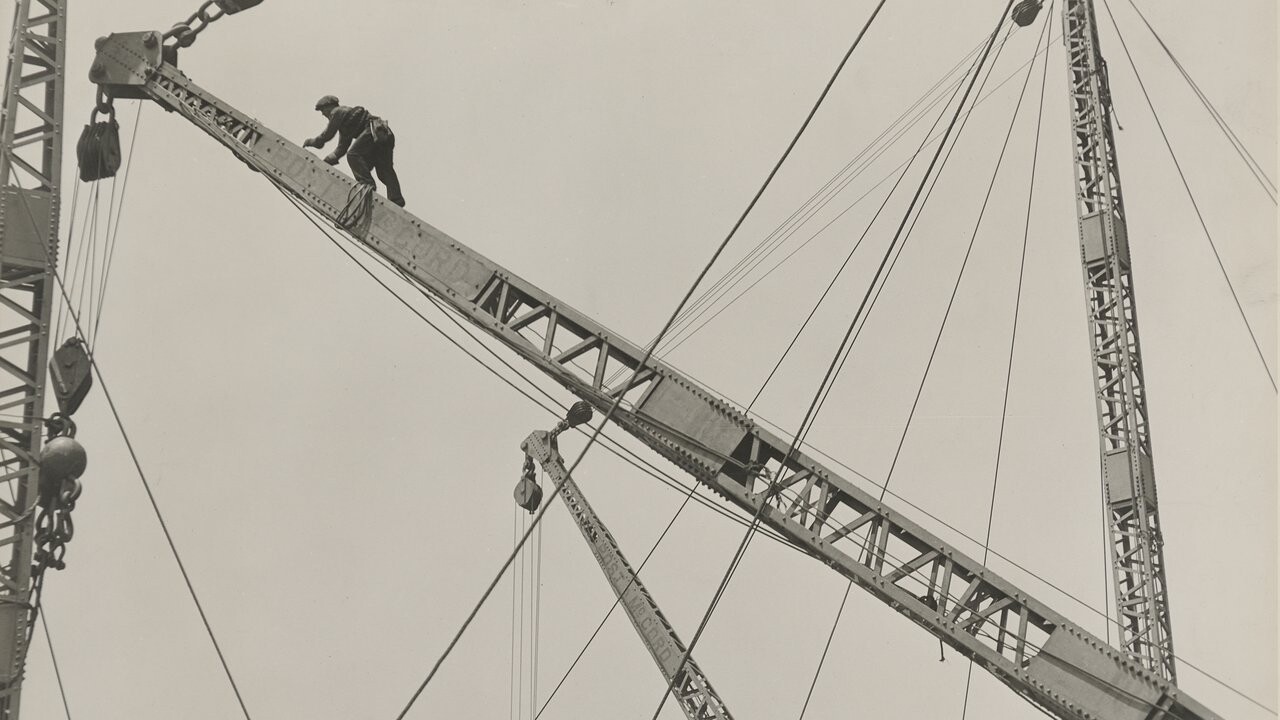
Derricks Take Over the Skyline
The contractor’s photographic inventory documents derricks and hoisting equipment throughout the project. These systems moved steel and supplies through a site where storage space was scarce. As the frame advanced, lifting equipment followed the working levels and kept materials flowing toward crews above.
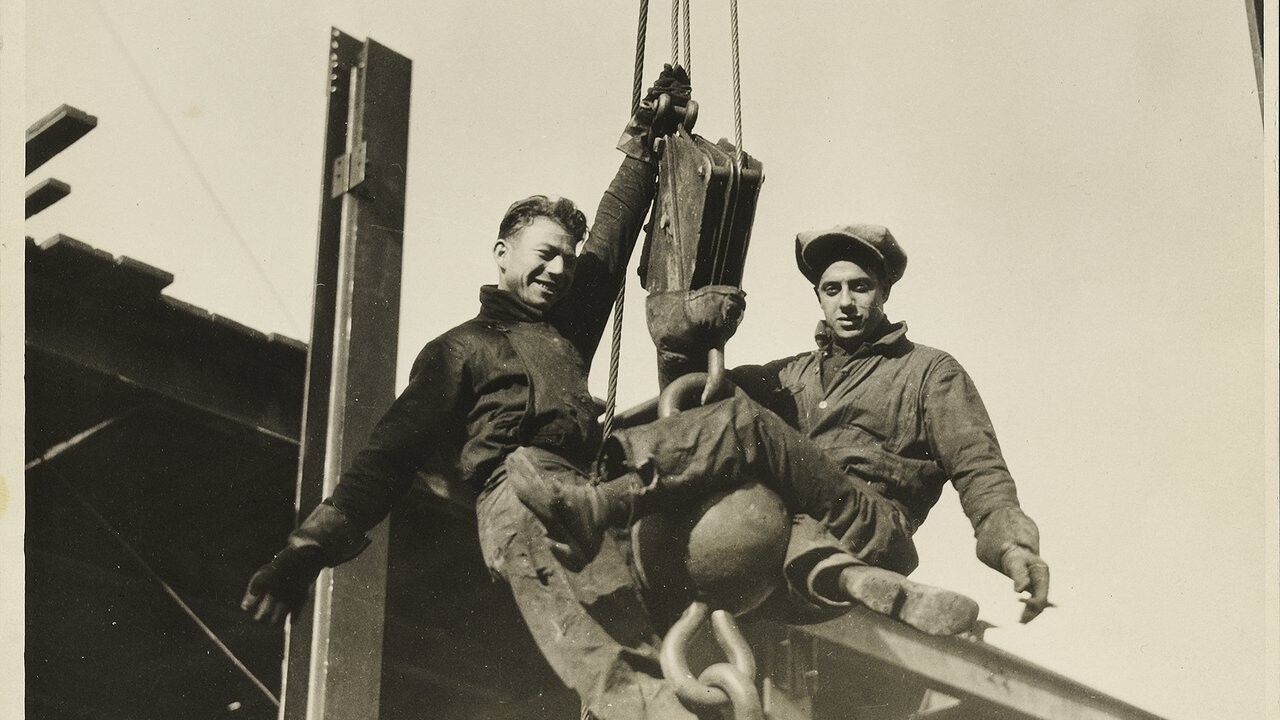
Thousands of Workers Build the Tower
At peak activity, approximately 3,500 people worked on the site. The workforce included Mohawk steelworkers, whose experience was valuable high above the streets. Construction photographs preserve individual faces amid the project’s enormous scale, showing that its celebrated speed depended on coordinated human labor.
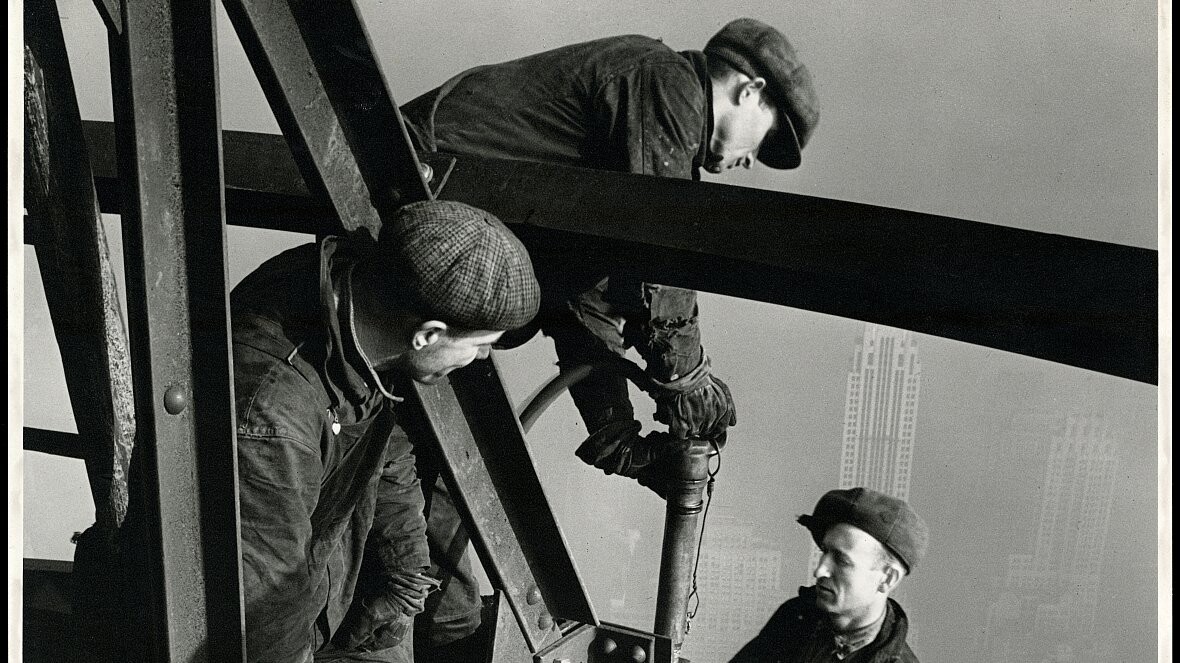
Rivet Crews Join the Steel Skeleton
The contractor’s album includes detailed images of riveting, bricklaying, and limestone installation. Rivet crews fastened steel members into a rigid frame while other work continued nearby. Their photographs turned an essential structural connection into one of the most recognizable visual symbols of early skyscraper construction.
1930: Hine Creates “Icarus”
One of Hine’s best-known construction photographs is “Icarus, Empire State Building,” made in 1930. The image demonstrates how his work could be both documentary and expressive. A lone laborer becomes an enduring figure of skill, concentration, and ambition against the unfinished skyscraper.
Floors Planned Around the Elevators
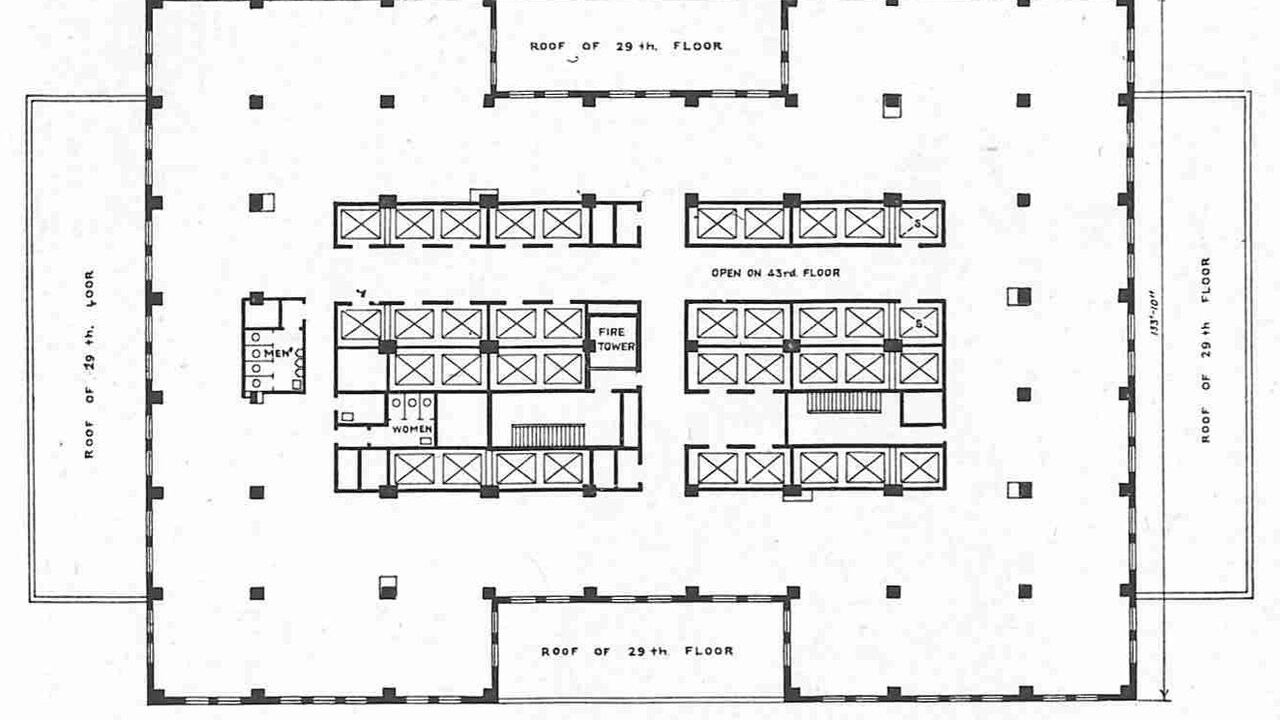
Elevators, corridors, restrooms, and service shafts occupied the middle of each floor, with office space arranged around them. As elevator banks ended at different heights, the upper portions of the tower could narrow while retaining efficient floor plans.
Limestone, Brick, and Metal Form the Skin
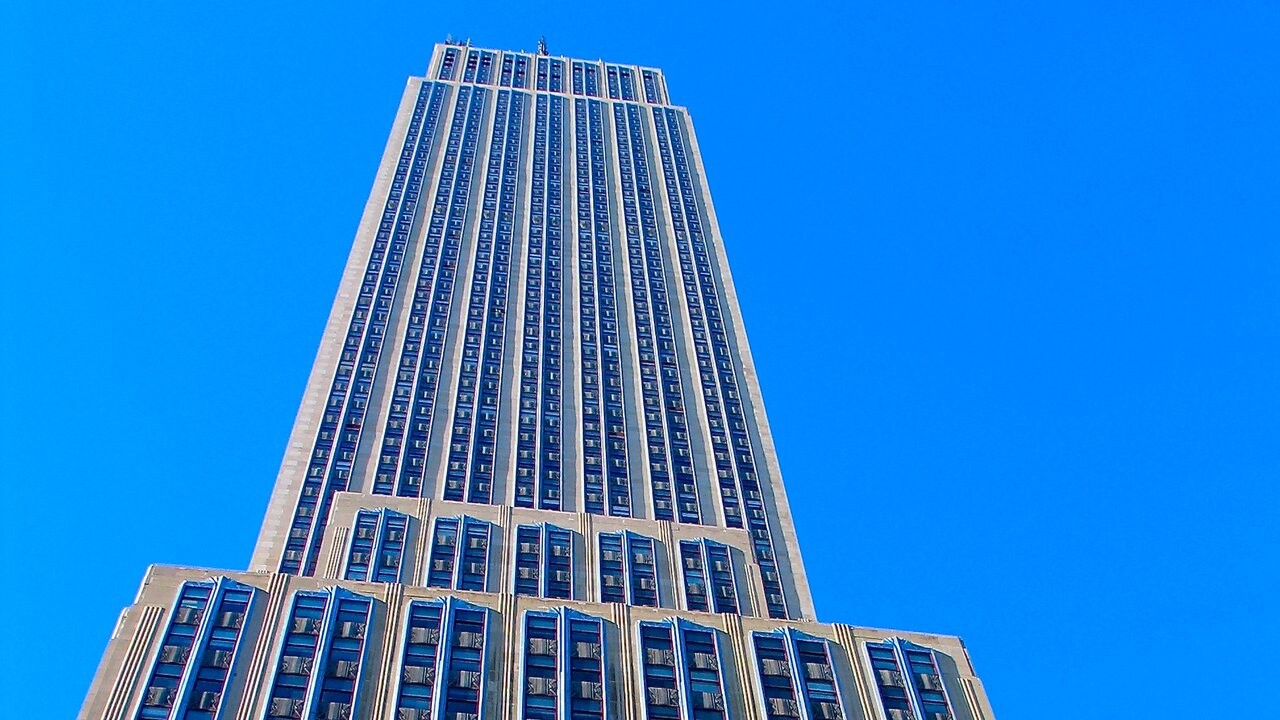
The exterior incorporates Indiana limestone, granite, brick, aluminum, and stainless steel. Approximately 10 million bricks were used during construction. Standardized components helped crews enclose the vast structure efficiently while the building’s setbacks, windows, and pale stone facing established its distinctive Art Deco appearance.
The Steel Frame Reaches the 86th Floor
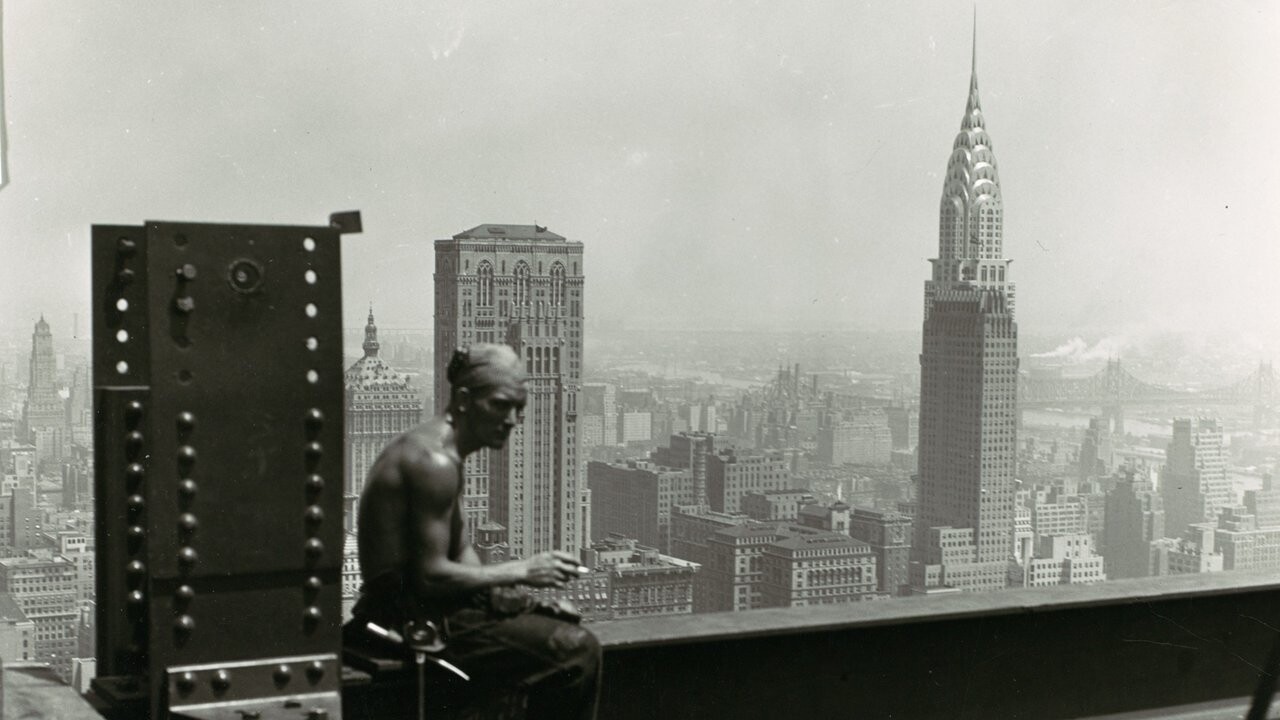
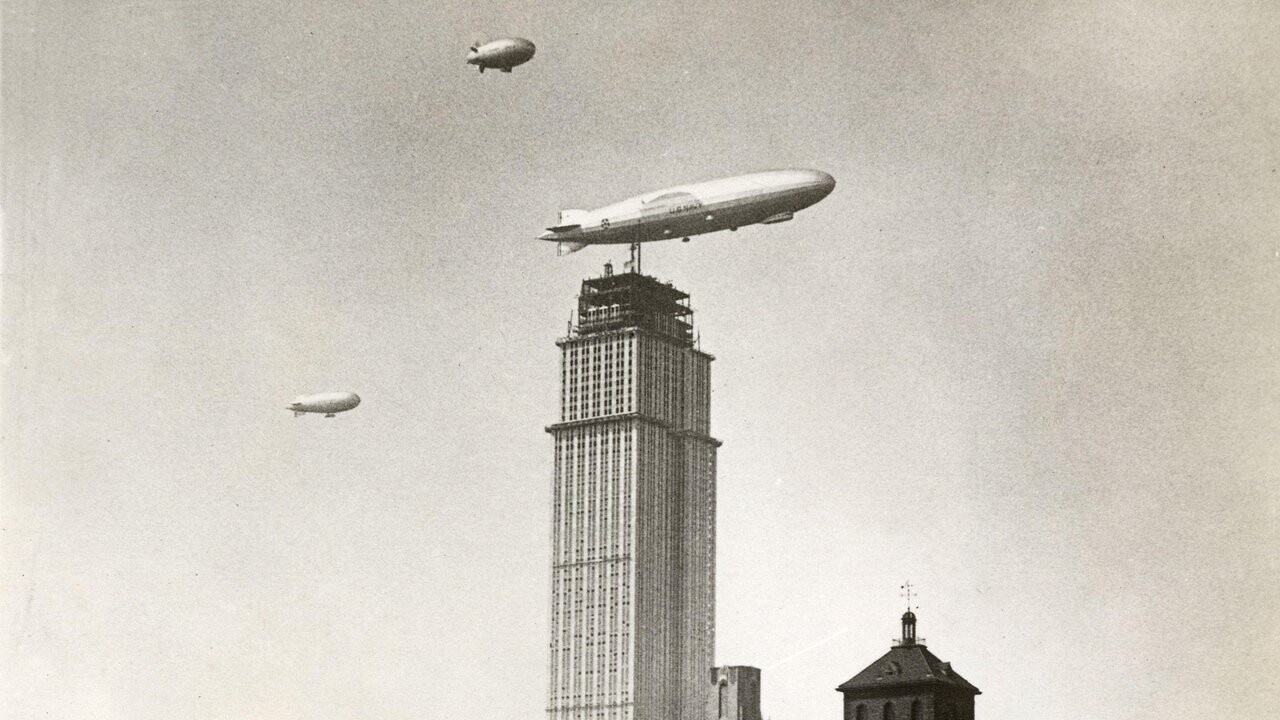
The main steel frame topped out at the 86th floor, the level of the open-air observatory. By then, the tower had transformed the Midtown skyline. Far below, other crews continued enclosing and finishing floors, so reaching the top of the frame did not end the work.
The Mooring Mast Raises the Building Higher
Above the office floors, workers assembled a mast originally designed for mooring dirigibles. It brought the building’s original architectural height to 1,250 feet and gave the tower its defining silhouette. The dramatic structure remained even though the planned airship operations proved impractical.
The Art Deco Lobby Takes Shape
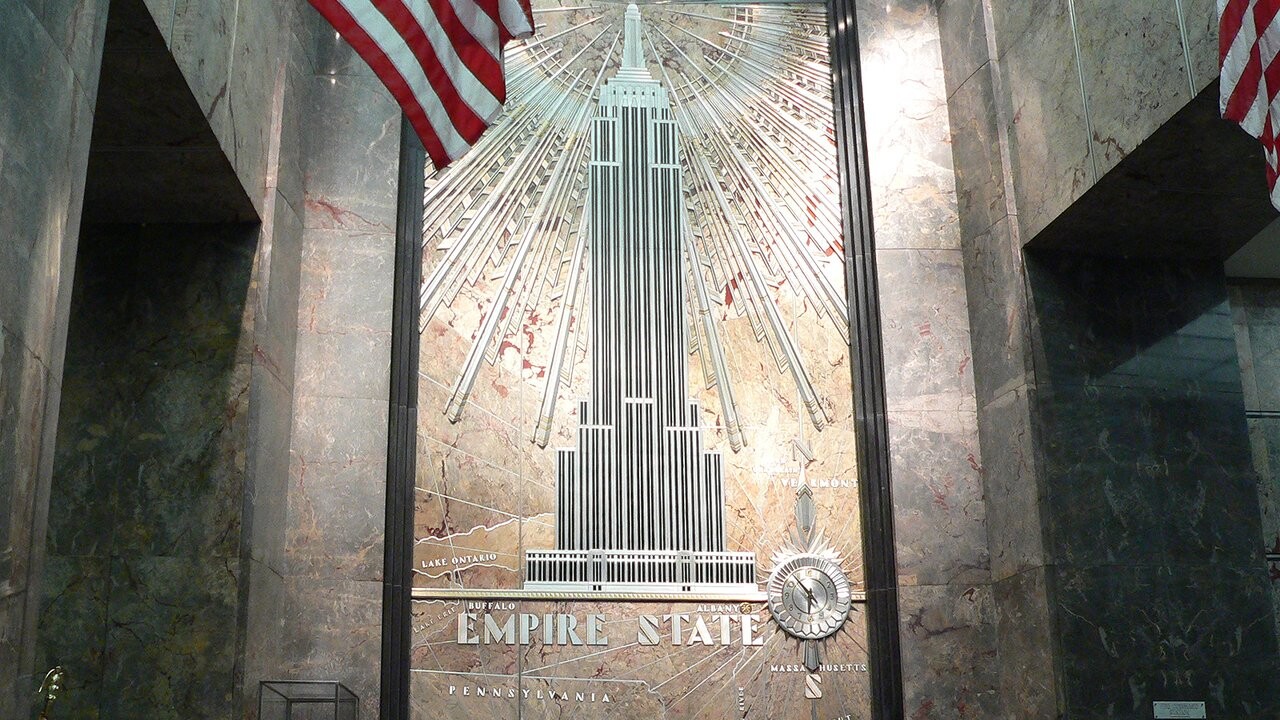
Inside, the Fifth Avenue lobby gave the new office tower a ceremonial entrance. Its Art Deco design included a celestial ceiling mural worked with 23-karat gold stars, sunbursts, and gears. The polished interior created a glamorous counterpart to the steel, masonry, and machinery surrounding it.
April 11, 1931: Construction Is Complete
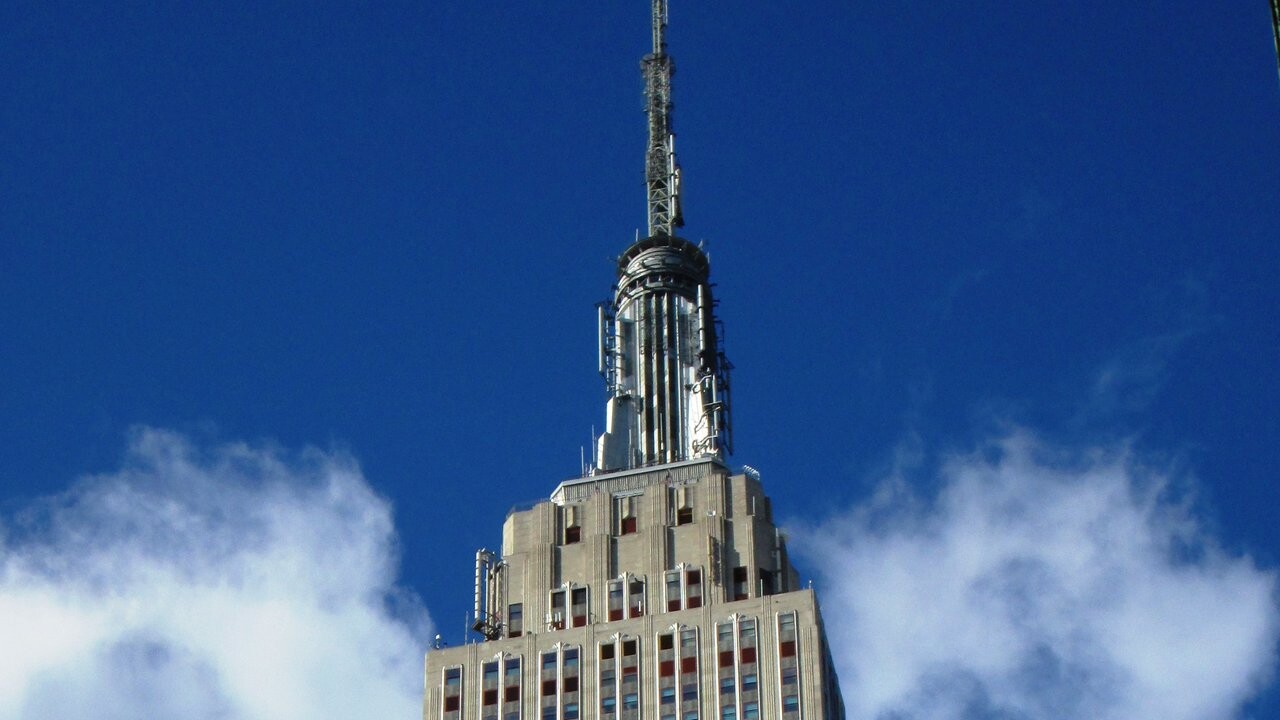
Construction was completed on April 11, 1931, after 410 days. That remarkable schedule covered much more than erecting the steel frame. Crews enclosed the exterior, installed elevators and utilities, completed interior spaces, and prepared the enormous building to receive tenants and visitors.
May 1, 1931: Opening Day and the View From Above
The official opening took place on May 1, 1931. President Herbert Hoover touched a golden telegraph key at the White House to turn on the building’s lights, sending a message to corporation president Alfred E. Smith. Early observatory visitors could pay 10 cents to look through a telescope at New York City.
The photographs make the tower’s speed feel astonishing, but they also return the achievement to the planners and workers behind it. Which image from the Empire State Building’s construction stays with you most?
Follow The HyperHive on MSN for more stories like this.
Sources:






![nationaalarchief.nl]Nationaal Archief](https://commons.wikimedia.org/wiki/File:Zeppelin_bij_Empire_State_Building_in_aanbouw_-_Zeppelin_near_the_Empire_State_Building_under_construction_(6943970242).jpg)


