Famous Photos From History and the Stories Behind Them

NASA Goddard Space Flight Center from Greenbelt, MD, USA / Wikimedia Commons, Public domain (cropped)
A great photograph can preserve a fleeting moment, reveal motion, or change how people picture their world. This gallery moves chronologically from photography’s experimental beginnings to images created with spacecraft and networks of telescopes.
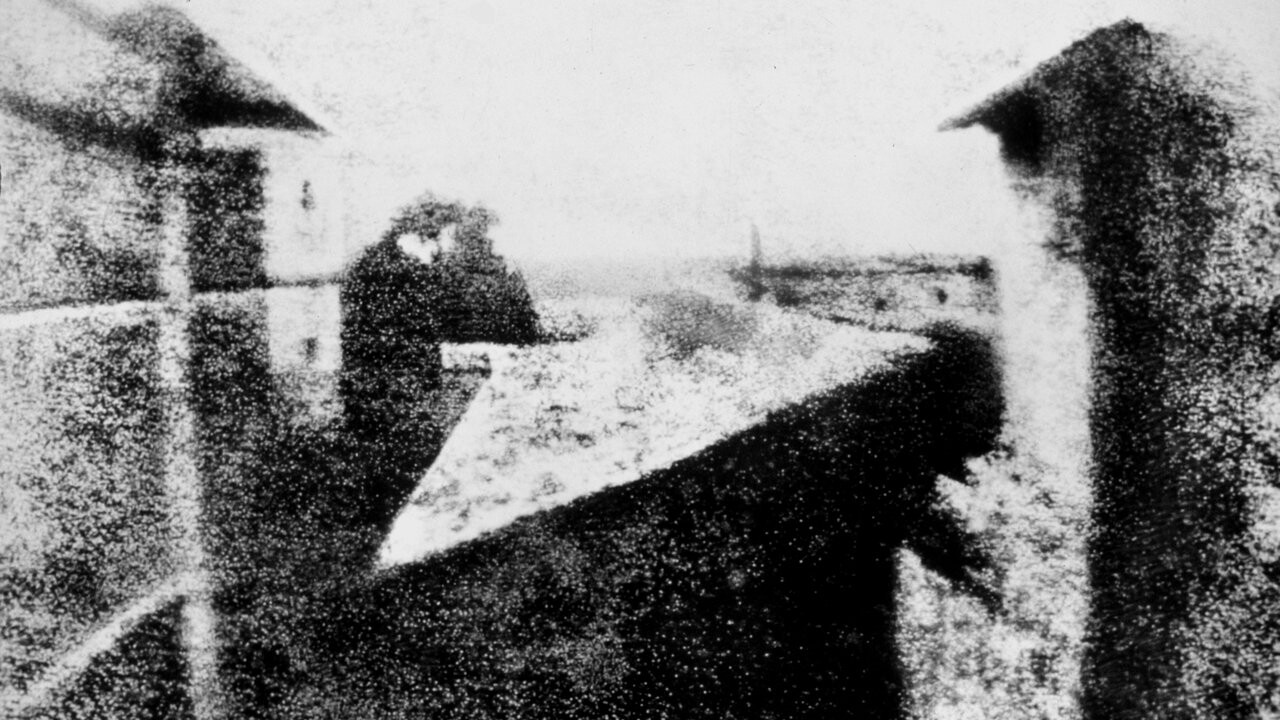
Circa 1826–27: View From the Window at Le Gras
Around 1826 or 1827, Joseph Nicéphore Niépce photographed the view from an upstairs window at Le Gras in Burgundy, France. The image is faint, but its survival is extraordinary. The Harry Ransom Center identifies it as the earliest surviving photograph produced with the aid of a camera obscura.
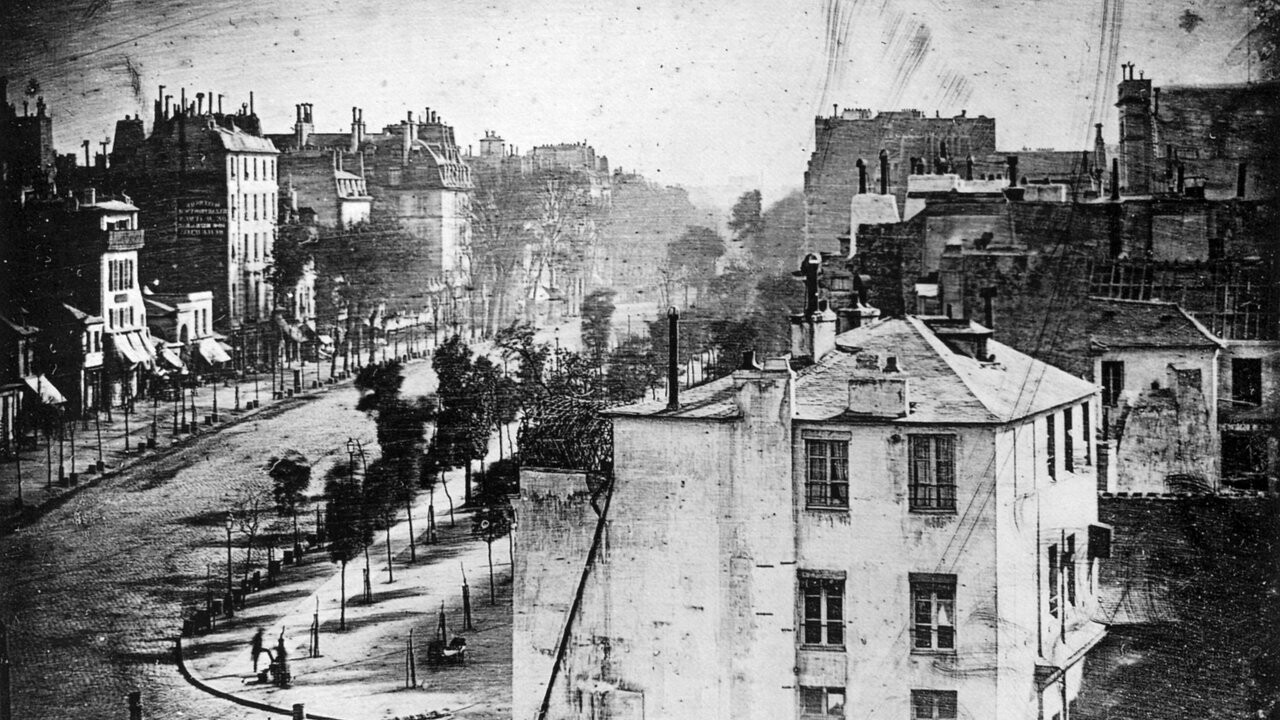
Circa 1838: Boulevard du Temple
Louis Daguerre made this Paris street view around 1838. According to Le Monde, a shoe shiner and his customer stayed still long enough during the exposure to appear near the boulevard’s edge. The work preserves both a city scene and an incidental human moment. Daguerre introduced his daguerreotype process in 1839.
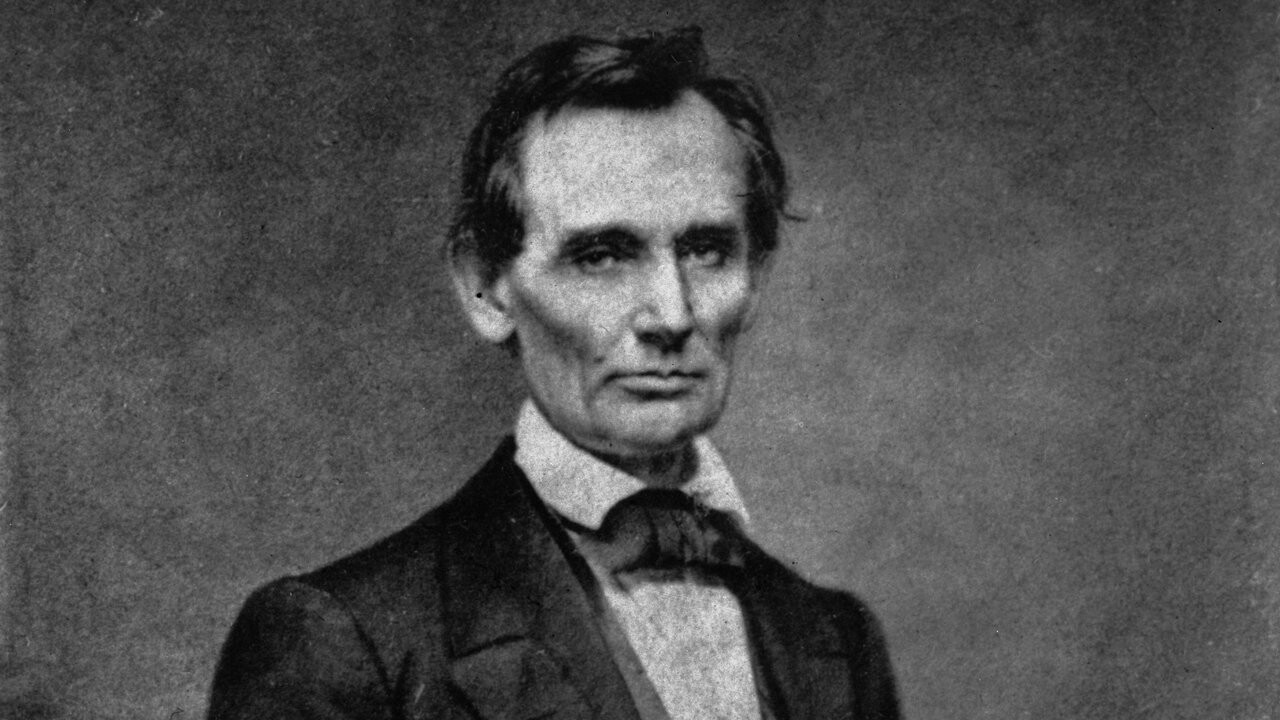
1860: Lincoln’s Cooper Union Portrait
At his New York studio, Mathew Brady made this portrait of Abraham Lincoln in 1860. Brady retouched the photograph, giving the carefully posed image a polished finish. Its steady gaze, dark suit, and plain backdrop keep attention on Lincoln as he emerged as a presidential candidate.
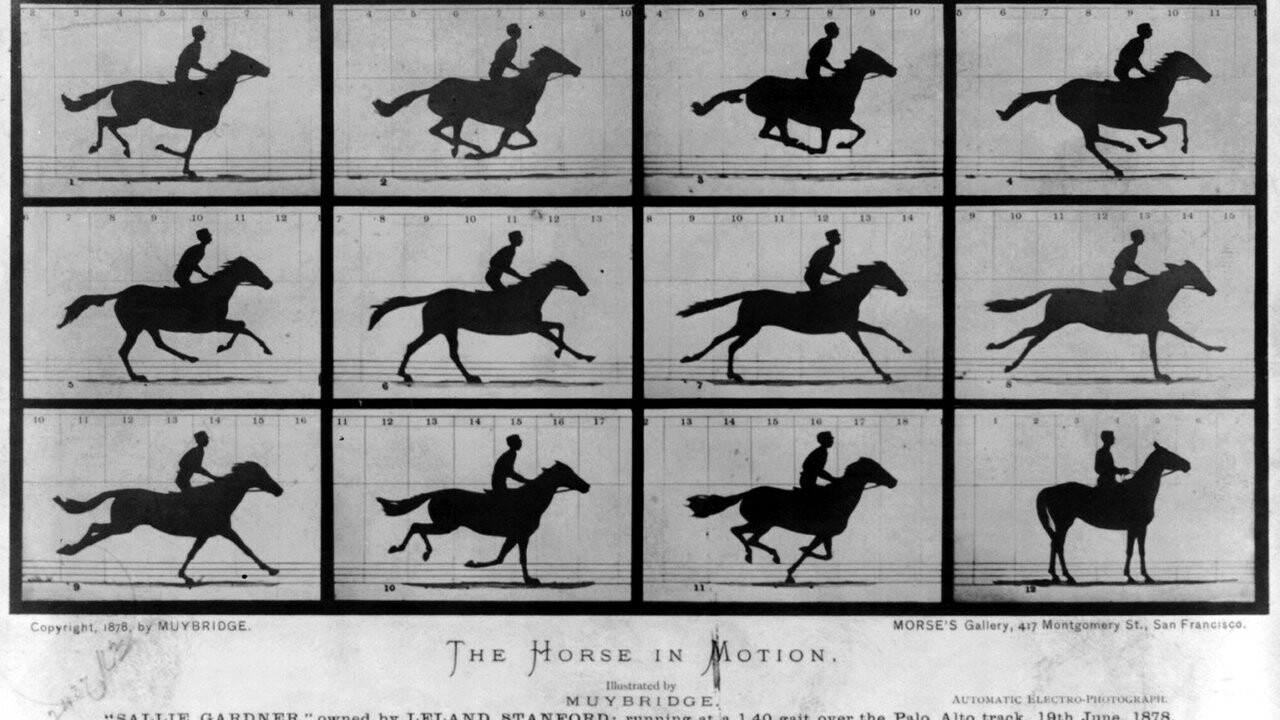
1878: The Horse in Motion
At Palo Alto on June 19, 1878, the horse Sallie Gardner became the subject of Eadweard Muybridge’s motion study. A sequence made with 12 cameras captured the moment when her hooves tucked beneath her body and left the ground. The separated frames allowed viewers to examine a gallop one fraction at a time.
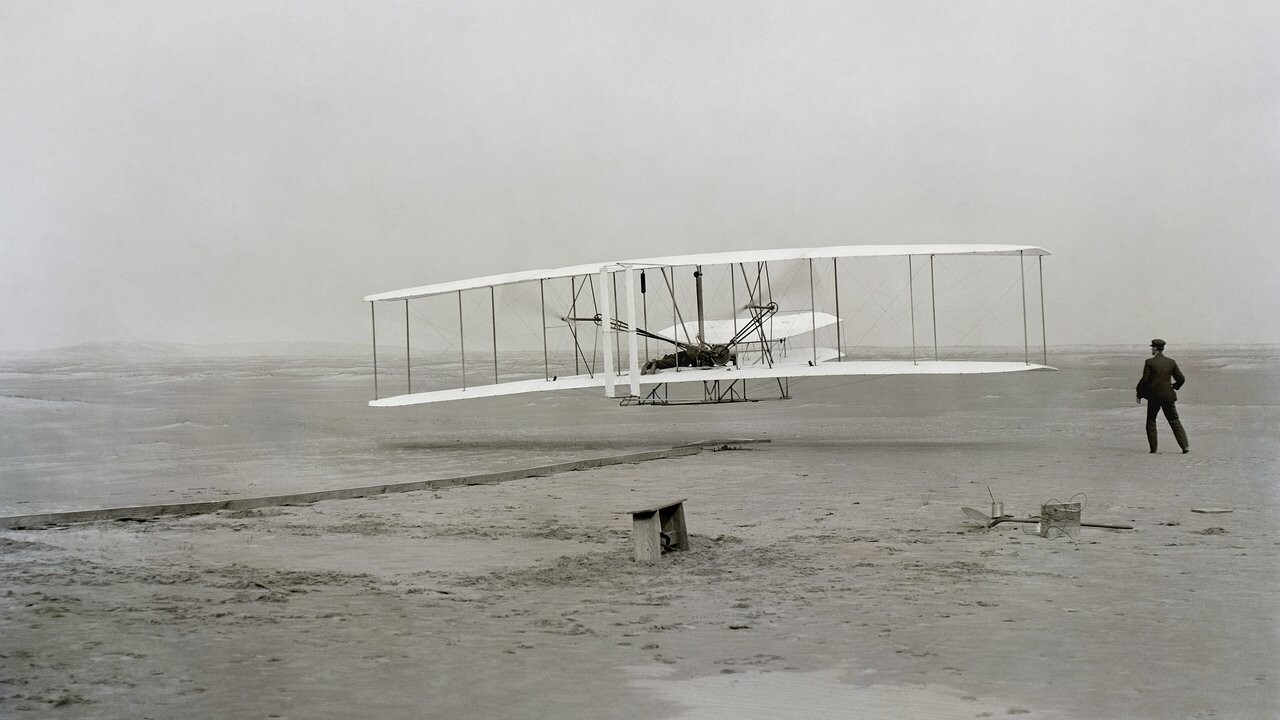
1903: The Wright Brothers’ First Flight
John T. Daniels, a surfman at the Kill Devil Hills Life-Saving Station, photographed the Wright brothers’ successful first flight. Orville Wright remained airborne for 12 seconds and traveled 120 feet. Three more flights followed that day, leaving Daniels’s photograph as the defining visual record of the opening attempt.
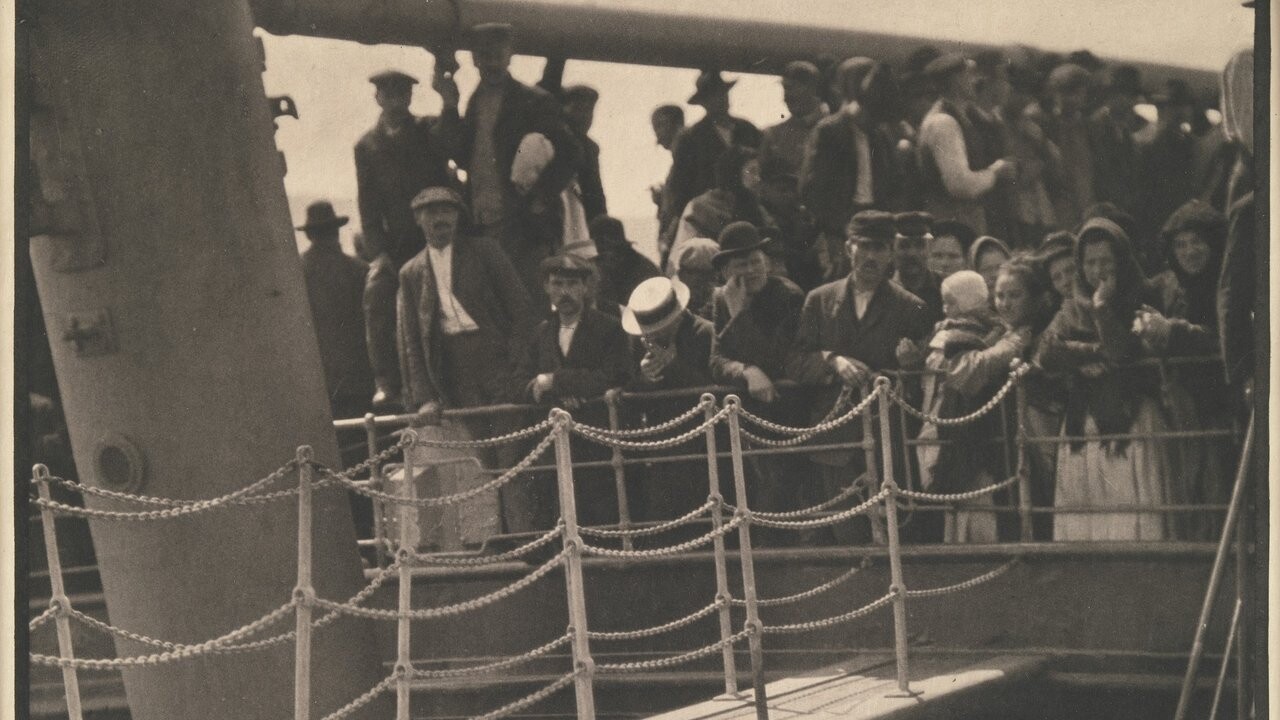
1907: The Steerage
Alfred Stieglitz made The Steerage during a 1907 voyage aboard the Kaiser Wilhelm II, probably while the ship was moored in Plymouth, England. Railings, stairs, hats, and decks divide the crowded scene into strong geometric forms. Stieglitz published the photograph in Camera Work in 1911, four years after taking it.
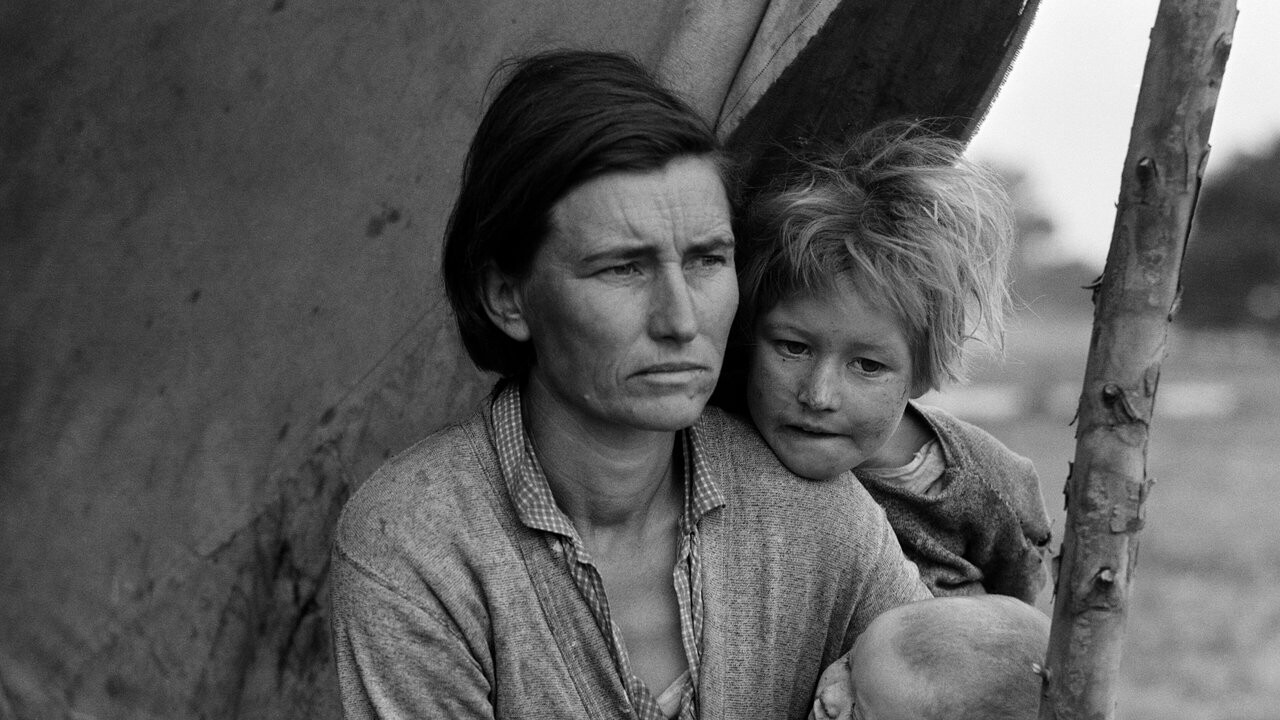
1936: Migrant Mother
Dorothea Lange photographed Florence Owens Thompson and her children in Nipomo, California, in March 1936. Lange took six exposures during the encounter. The close framing of the best-known image centers Thompson’s worried expression while two children turn away from the camera, making the family’s uncertainty immediately visible.
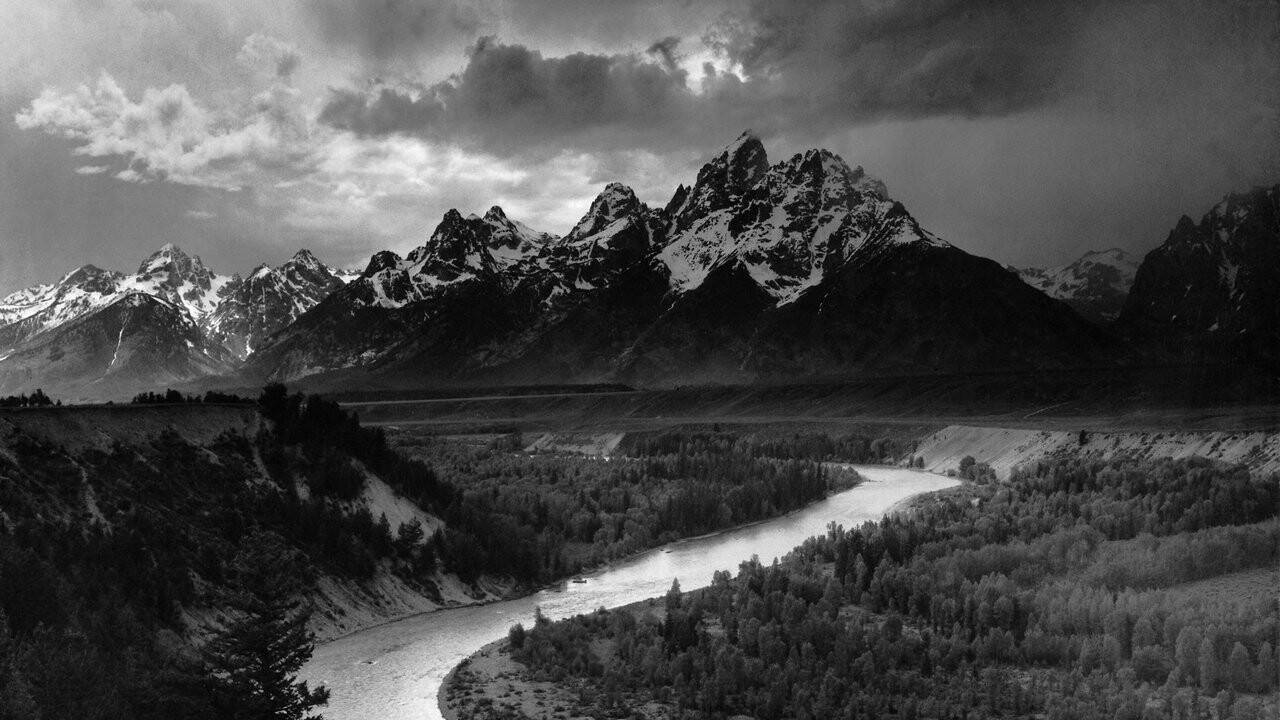
1942: The Tetons and Snake River
Ansel Adams photographed the Snake River beneath Wyoming’s Teton Range in 1942 while creating pictures for an Interior Department mural project. World War II halted the project, and it never resumed, but the photographs remained. The river’s bright curve leads through the dark foreground toward the distant mountains.
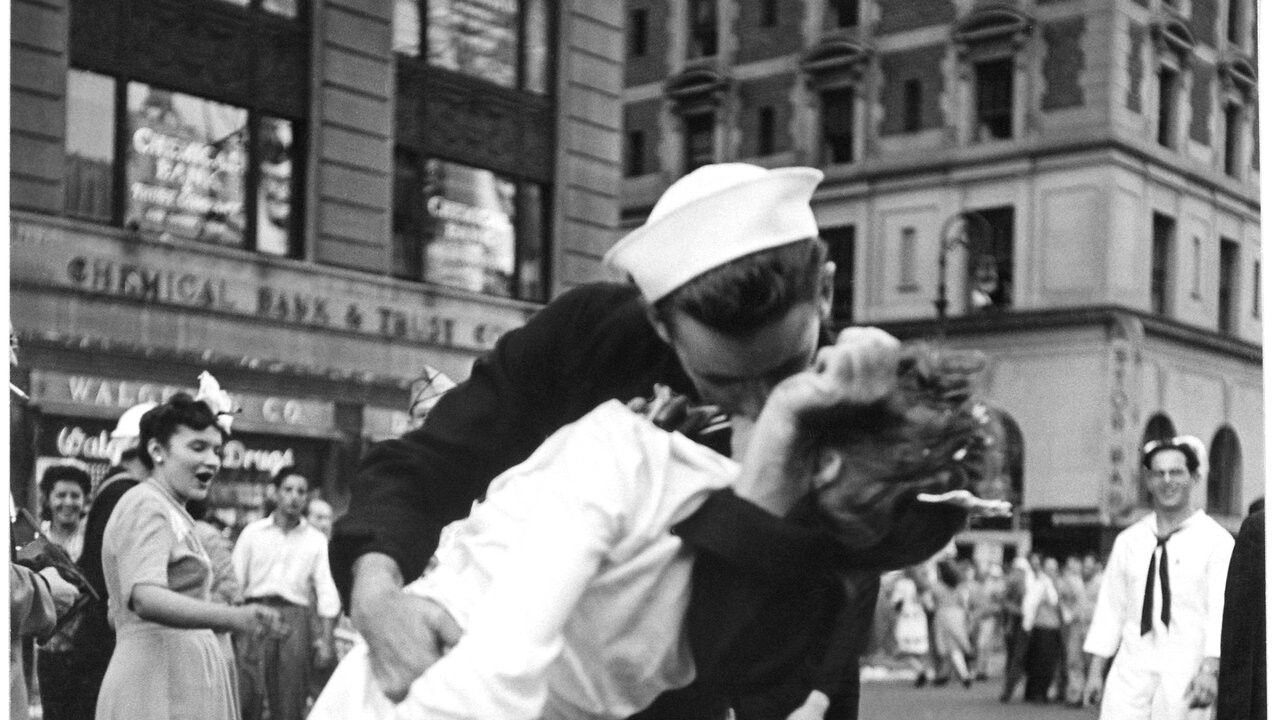
1945: Kissing the War Goodbye
Navy Lieutenant Victor Jorgensen photographed a sailor kissing a woman in New York City’s Times Square on August 15, 1945. Made amid the celebration of Japan’s surrender announcement, the picture surrounds the pair with smiling faces, uniforms, and raised arms. Its crowded frame conveys the intensity of the public moment.
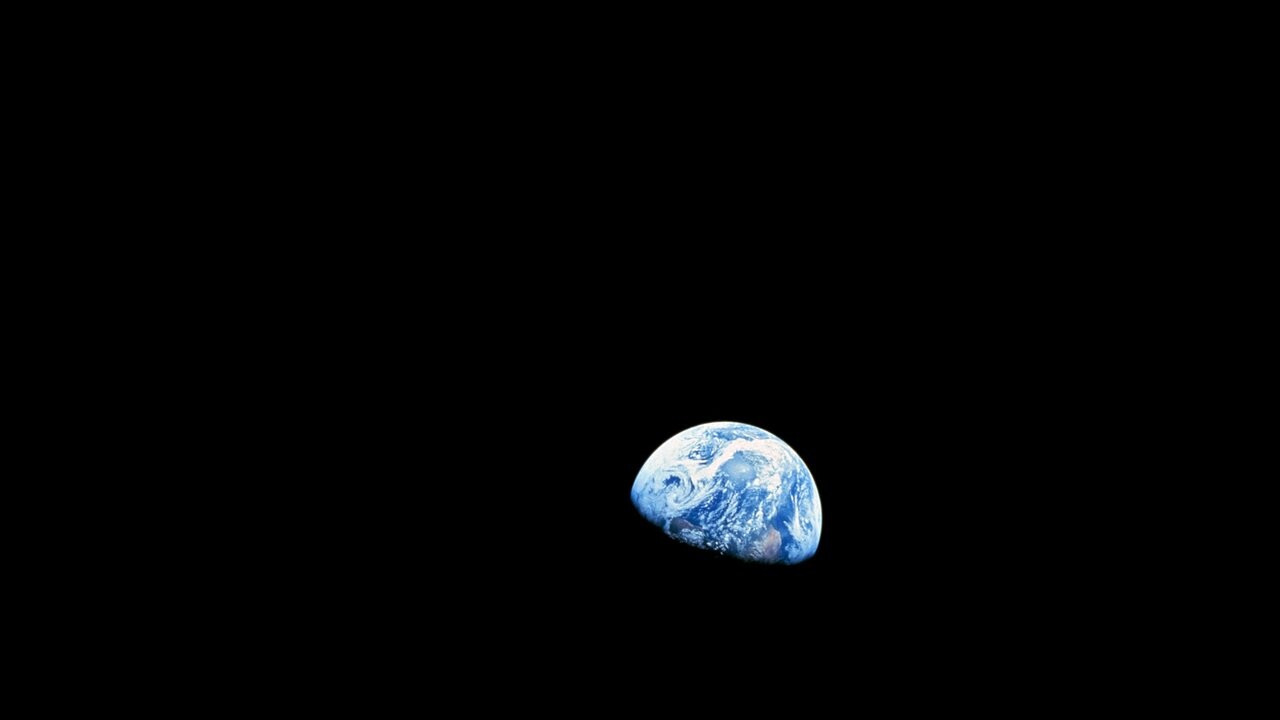
1968: Earthrise
Apollo 8 astronaut William Anders took Earthrise from lunar orbit on December 24, 1968. The color photograph places the blue-and-white Earth above the Moon’s gray horizon. Anders, Frank Borman, and Jim Lovell were the first humans to orbit the Moon, giving them a view no previous crew had experienced.
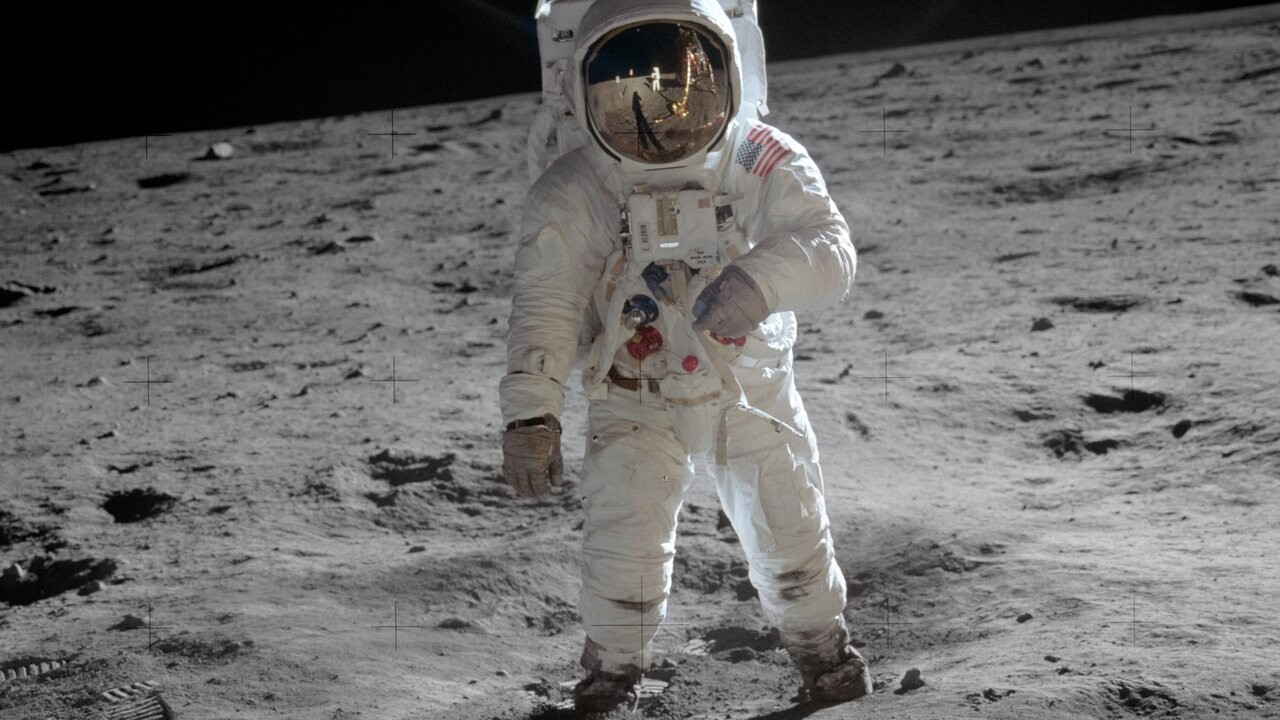
1969: Buzz Aldrin on the Moon
Neil Armstrong photographed lunar module pilot Edwin “Buzz” Aldrin during the Apollo 11 moonwalk. Aldrin stands against a dark sky in his white spacesuit, while Armstrong and part of the lunar module appear in the reflection on his visor. The curved reflection places the photographer inside the portrait he was making.
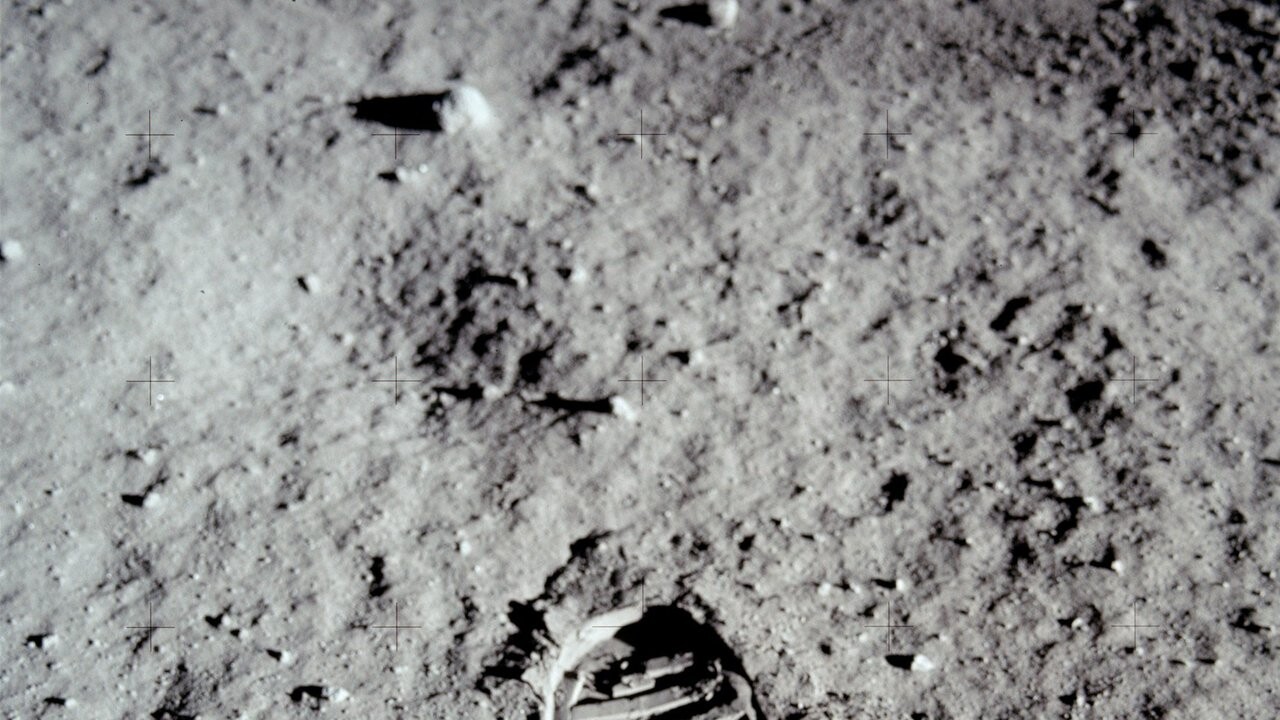
1969: The Apollo 11 Bootprint
Buzz Aldrin photographed this bootprint during the Apollo 11 moonwalk on July 20, 1969. The close-up isolates a sharp tread pattern in the lunar surface, turning a small physical impression into a memorable record of human presence. Its simplicity helps distinguish it from the mission’s wider landscapes and equipment photographs.
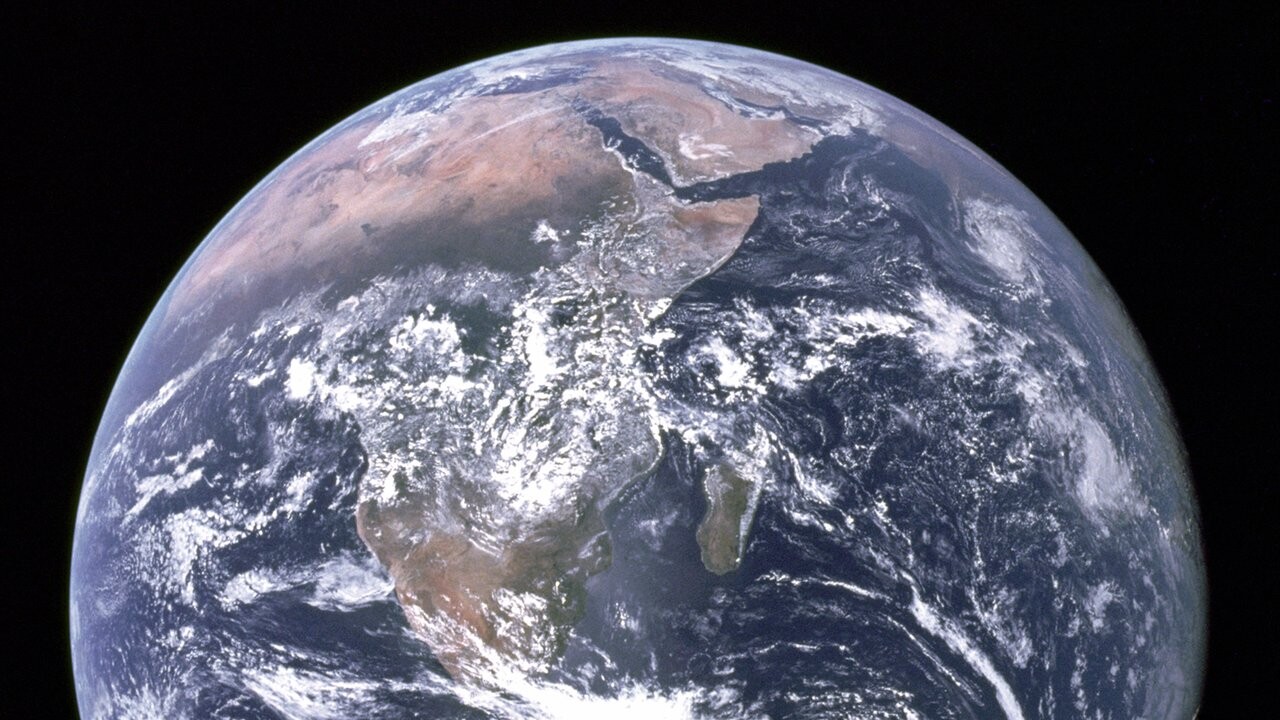
1972: The Blue Marble
The Apollo 17 crew photographed Earth while traveling toward the Moon in December 1972. Africa and Antarctica are clearly visible in the nearly full view, along with broad bands of cloud. The Blue Marble became an iconic Apollo image, presenting Earth as a single, luminous sphere surrounded by the darkness of space.
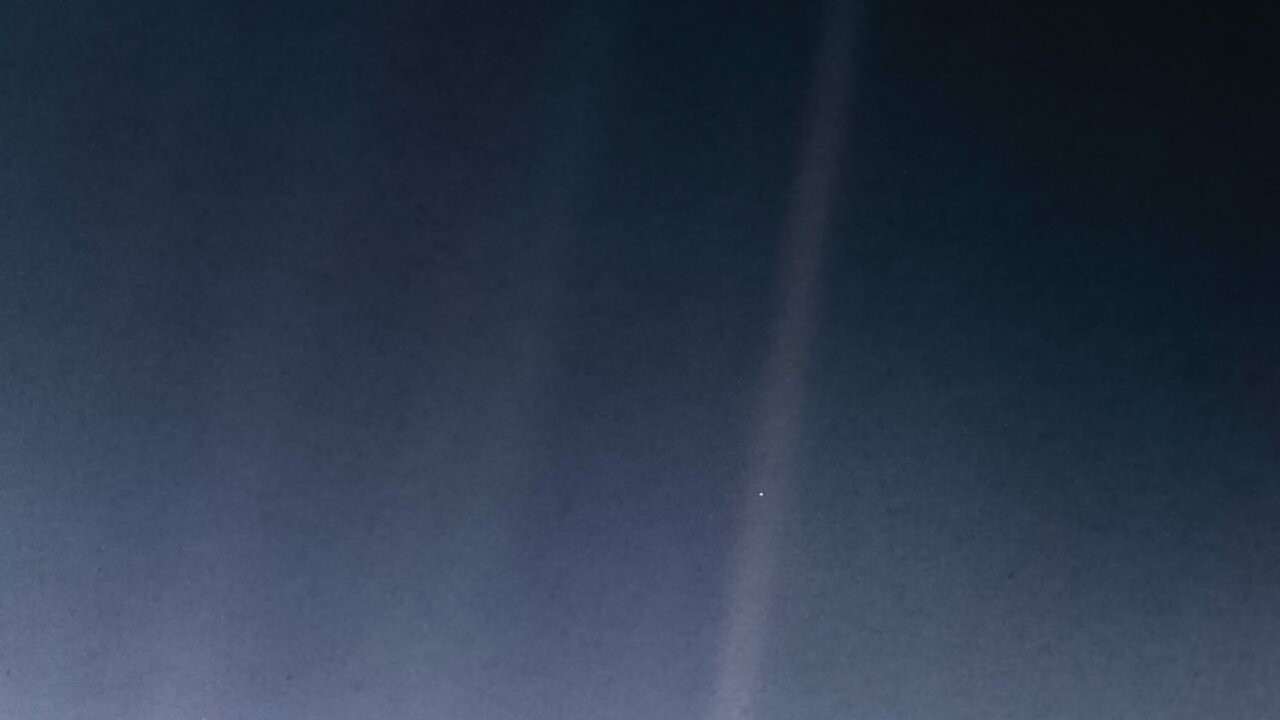
1990: Pale Blue Dot
Voyager 1 photographed Earth on February 14, 1990. In the resulting frame, the planet appears as a tiny speck inside a scattered ray of sunlight. Just 34 minutes after the Earth images were taken, the spacecraft permanently powered off its cameras, bringing its imaging mission to a striking conclusion.
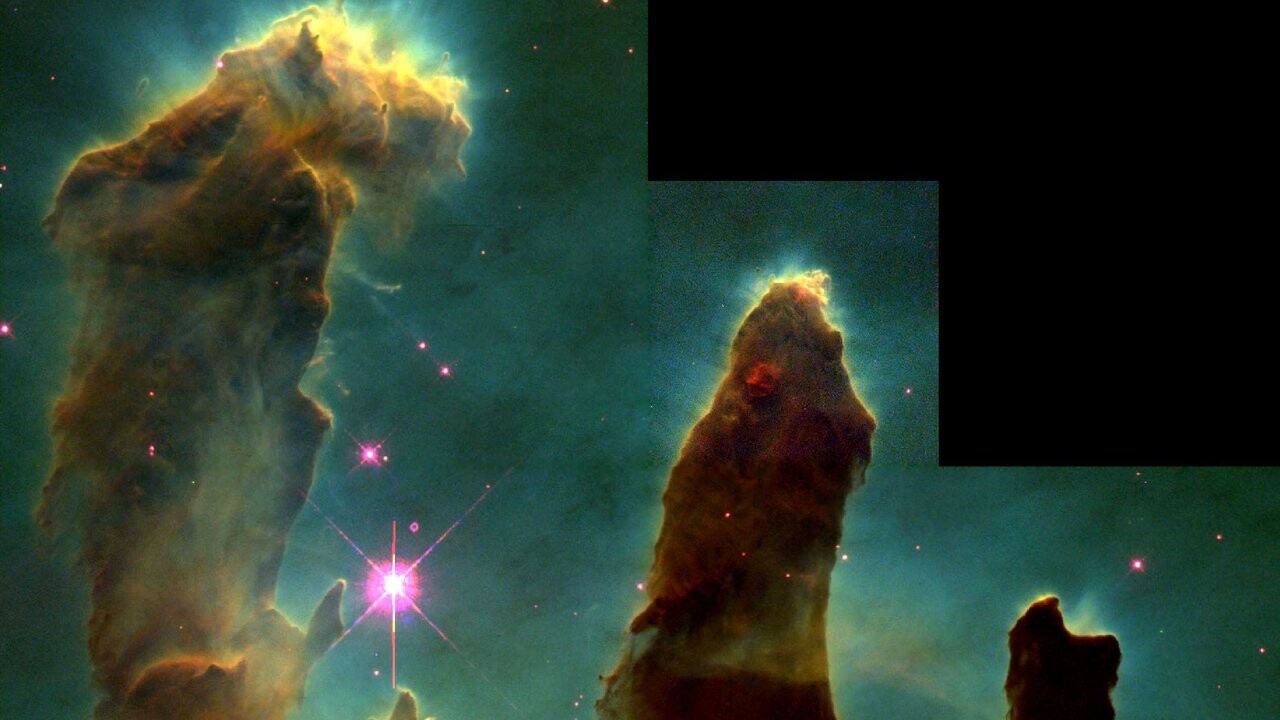
1995: Pillars of Creation
The Hubble Space Telescope photographed immense columns in the Eagle Nebula for the image known as Pillars of Creation. Dense gaseous globules near the tips contain stars being born. Against the glowing background, the dark columns resemble towering fingers, giving a distant region of star formation an unusually tangible shape.
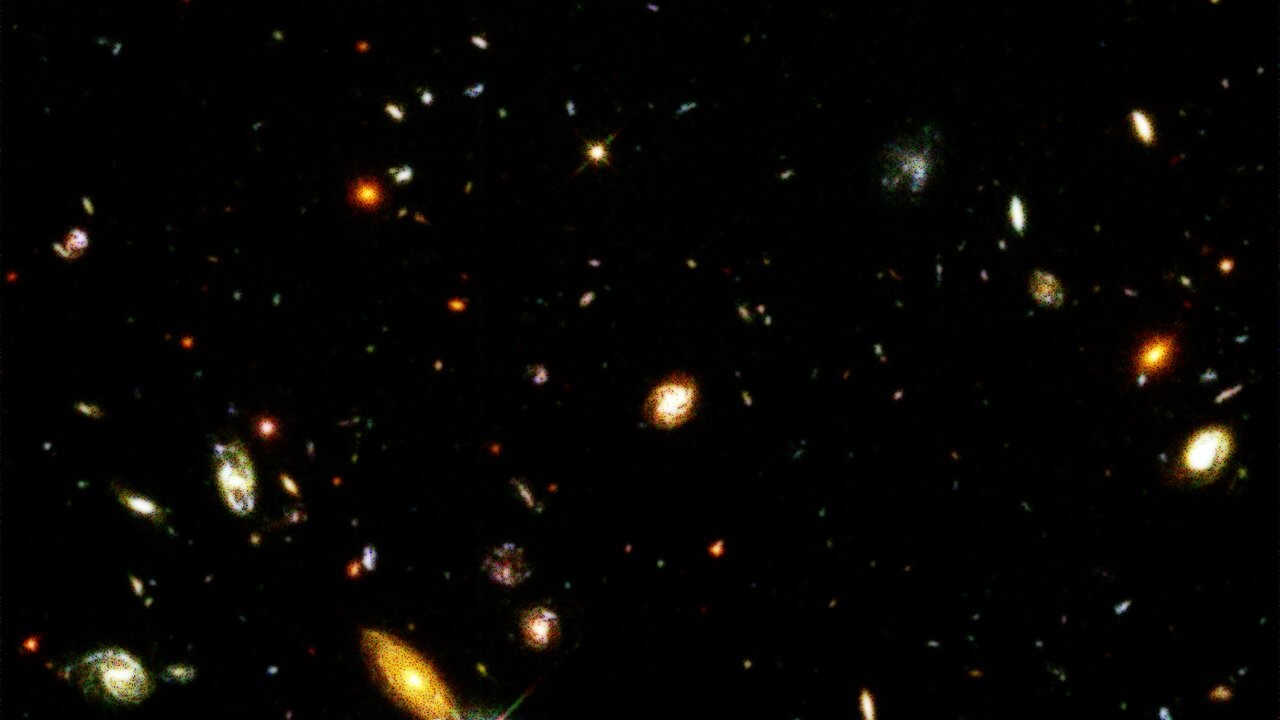
1996: The Hubble Deep Field
Robert Williams and the Hubble Deep Field team observed a narrow area of sky for 10 consecutive days in December 1995. The finished composite revealed thousands of galaxies at different stages of development. Instead of highlighting one nearby object, the image filled an apparently modest field with layers of distant cosmic history.
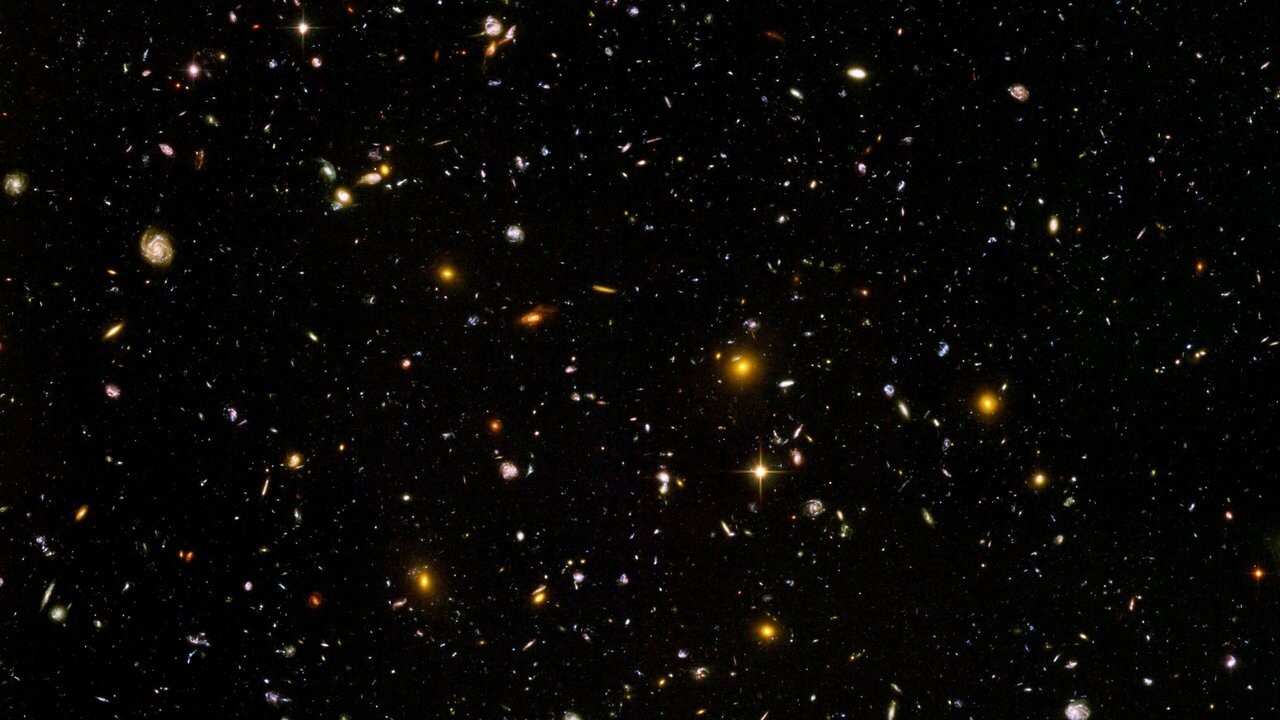
2004: The Hubble Ultra Deep Field
The Hubble Ultra Deep Field pushed the earlier experiment further, presenting a view of nearly 10,000 galaxies. Its total exposure time reached 11.3 days, and NASA credits Steven Beckwith and the HUDF team among the image’s creators. Tiny galaxies of different colors, shapes, and ages crowd nearly every part of the frame.
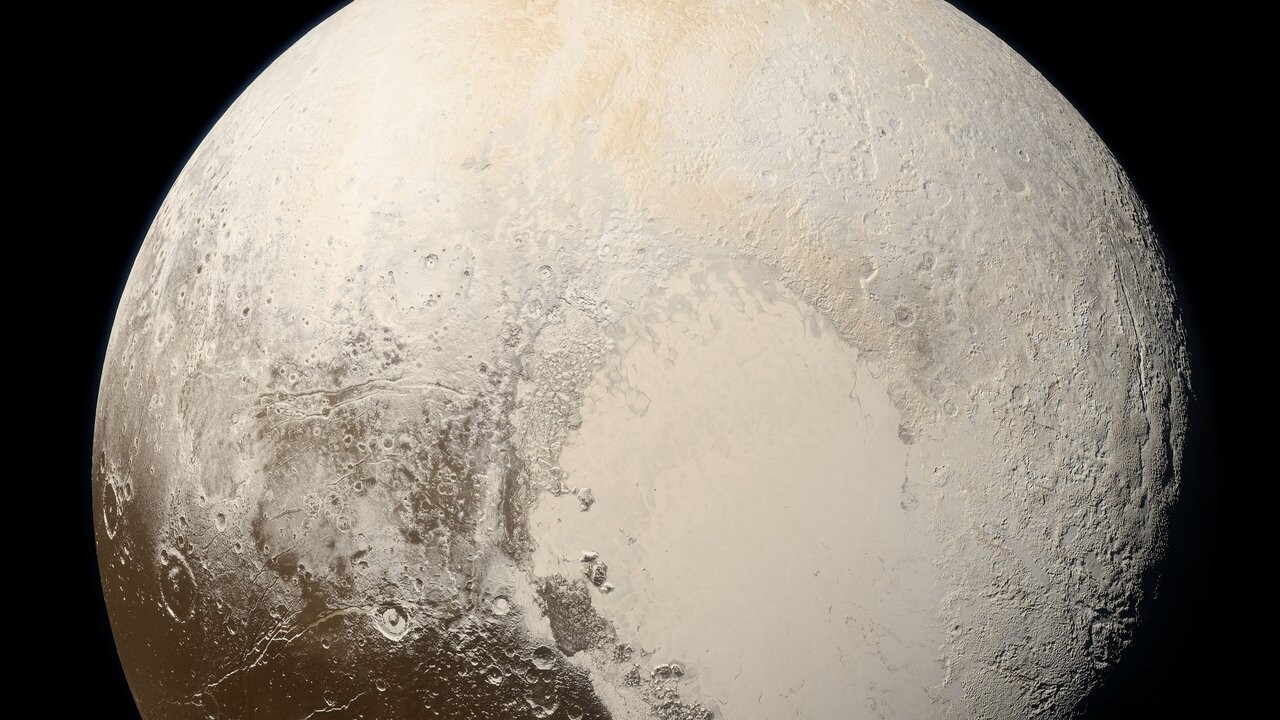
2015: Pluto’s Heart Comes Into View
NASA’s New Horizons spacecraft photographed Pluto on July 13, 2015. The image is dominated by a bright, heart-shaped feature measuring about 1,000 miles across. Pluto nearly fills the frame, and the contrast between the pale heart and darker surrounding terrain replaced the dwarf planet’s familiar blur with a detailed surface view.
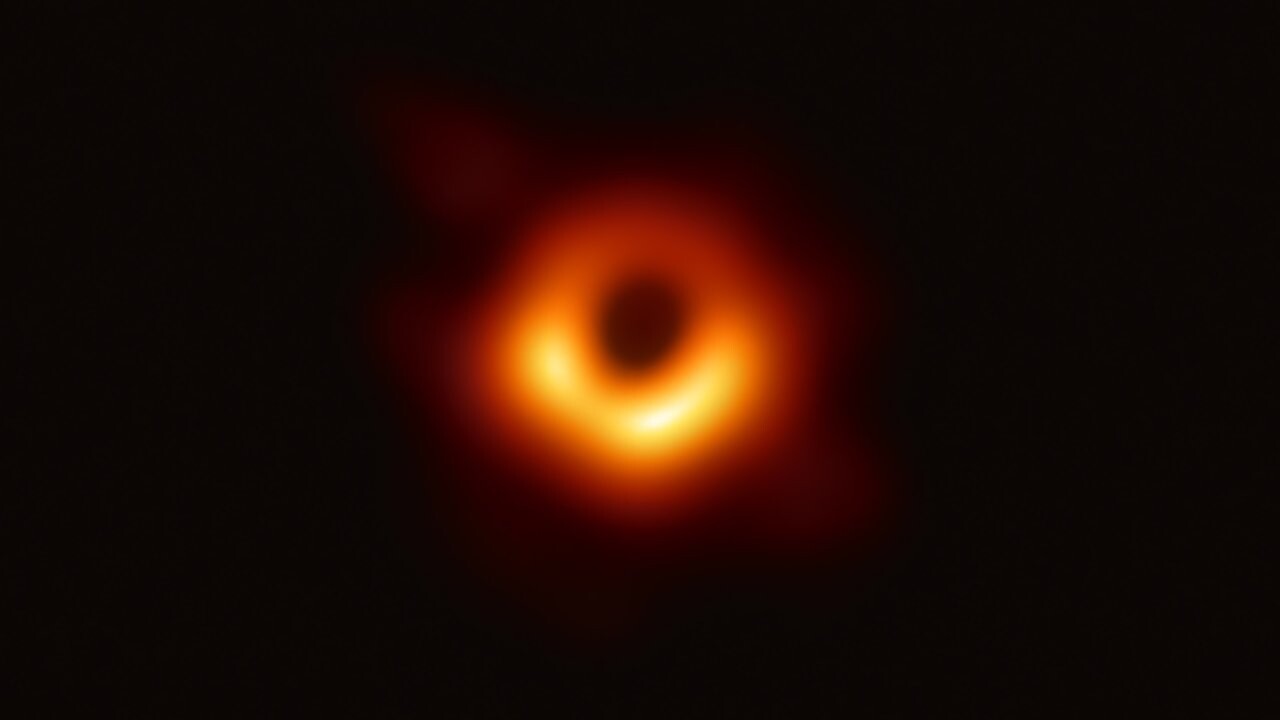
2019: The First Image of a Black Hole
In 2019, an international Event Horizon Telescope team unveiled the first image of a black hole at the center of the galaxy M87. The finished picture appears as a glowing orange ring around a dark center. It turned observations gathered by a global scientific collaboration into a direct visual encounter with an otherwise invisible object.
Together, these photographs show how cameras have expanded human memory and vision across nearly two centuries. Which image has stayed with you most strongly?
Follow The HyperHive on MSN for more stories like this.
Sources:






