
Between the world wars, airships were photographed above cities, across continents, near the North Pole, and beside hangars built on an equally imposing scale.
Arranged from oldest to newest, this gallery follows the machines, buildings, journeys, and experiments that made lighter-than-air flight one of the era’s most arresting visions of the future.
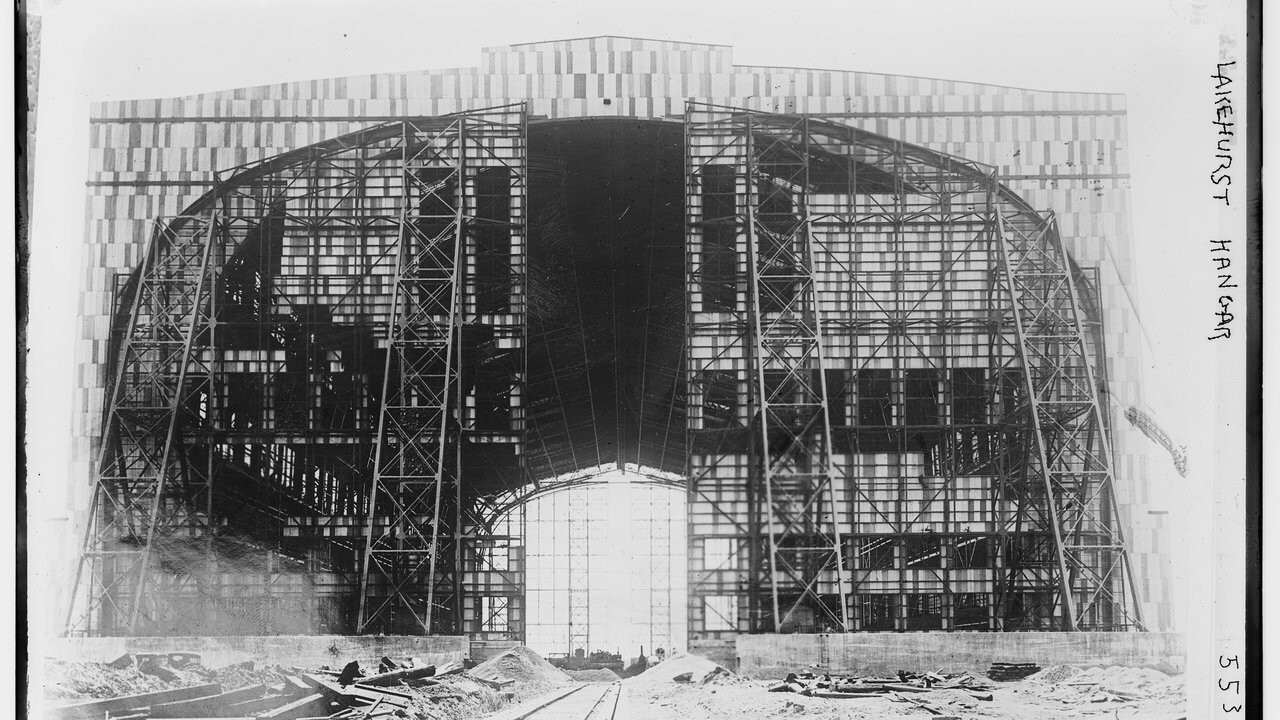
1921: Lakehurst Becomes an Airship Center
Lakehurst Naval Air Station became the Navy’s headquarters for lighter-than-air flight in 1921. In archive views, Hangar No. 1 dominates the field, framing the immense craft and the crews around them. The image introduces an era when airships demanded buildings nearly as memorable as the machines themselves.
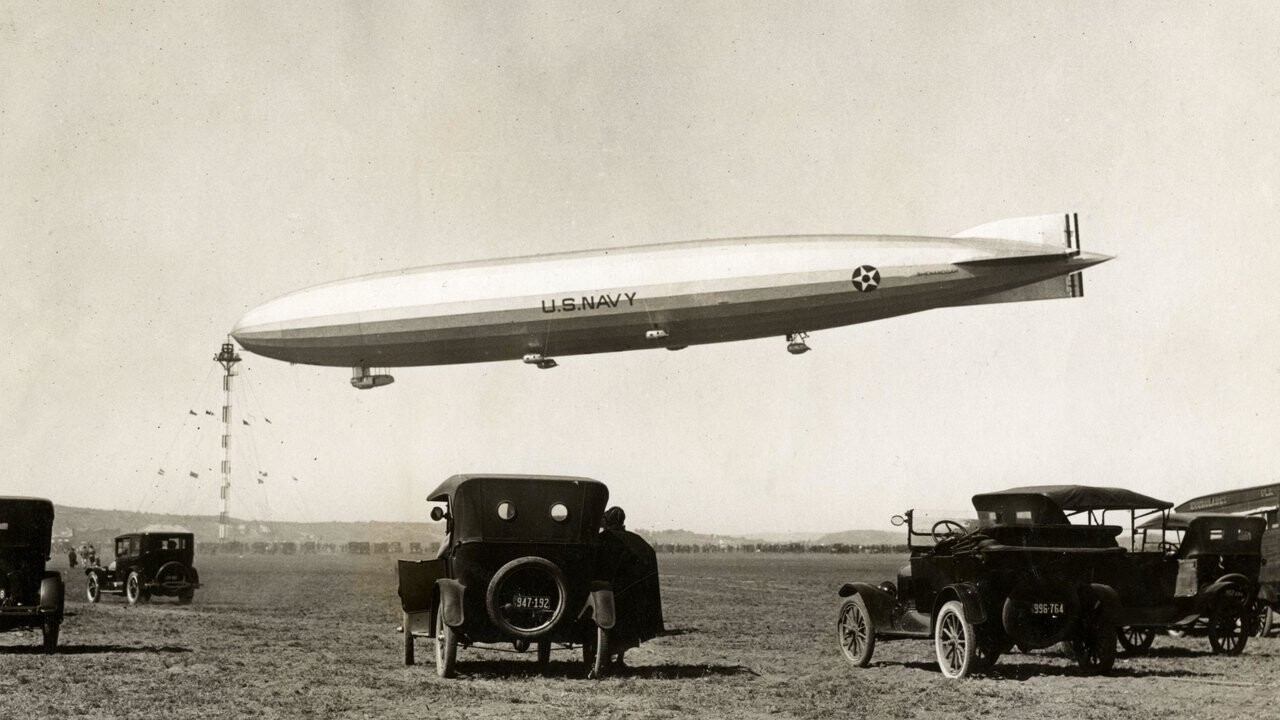
1923: USS Shenandoah Takes Flight
USS Shenandoah made its maiden flight from Lakehurst on September 4, 1923. It was the first rigid airship built in the United States and the first in the world inflated with helium. Seen emerging into open air, its long hull makes the achievement feel both mechanical and monumental.
1924: Shenandoah Crosses North America
In October 1924, Shenandoah became the first rigid airship to cross North America. Photographs from the journey turn the silver hull into a traveling landmark suspended above changing terrain. The crossing expanded the visual story of airships beyond their enormous hangars to the width of a continent.
1924: USS Los Angeles Enters Service
USS Los Angeles was christened by Grace Coolidge and commissioned on November 25, 1924. Archive photographs show the rigid airship surrounded by the careful choreography of ground crews. Against the open field, its polished hull captures the mixture of precision, scale, and ceremony that accompanied these machines.
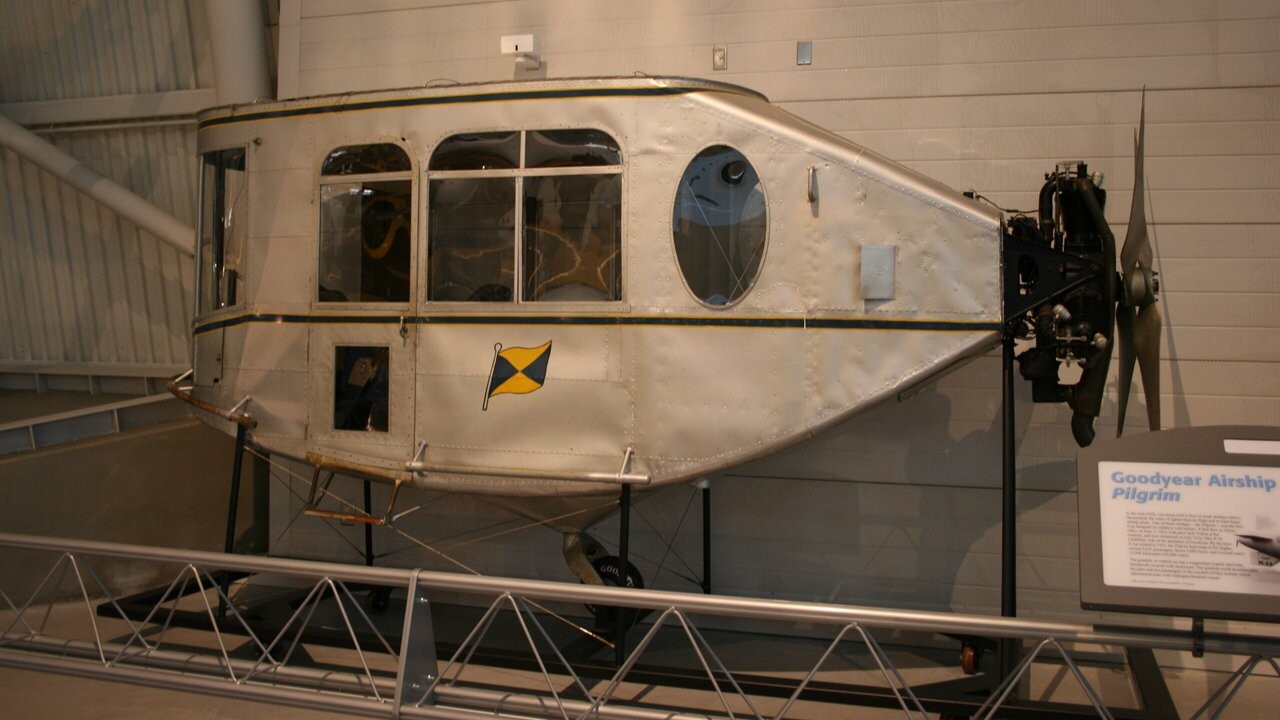
1925: Goodyear Introduces Pilgrim
Built in 1925, Goodyear’s Pilgrim was the first commercial non-rigid airship flown with helium. In photographs, its compact gondola and rounded envelope offer a striking contrast to the long, framed bodies of rigid airships. Pilgrim gives this gallery a change of scale without losing the distinctive presence of lighter-than-air flight.
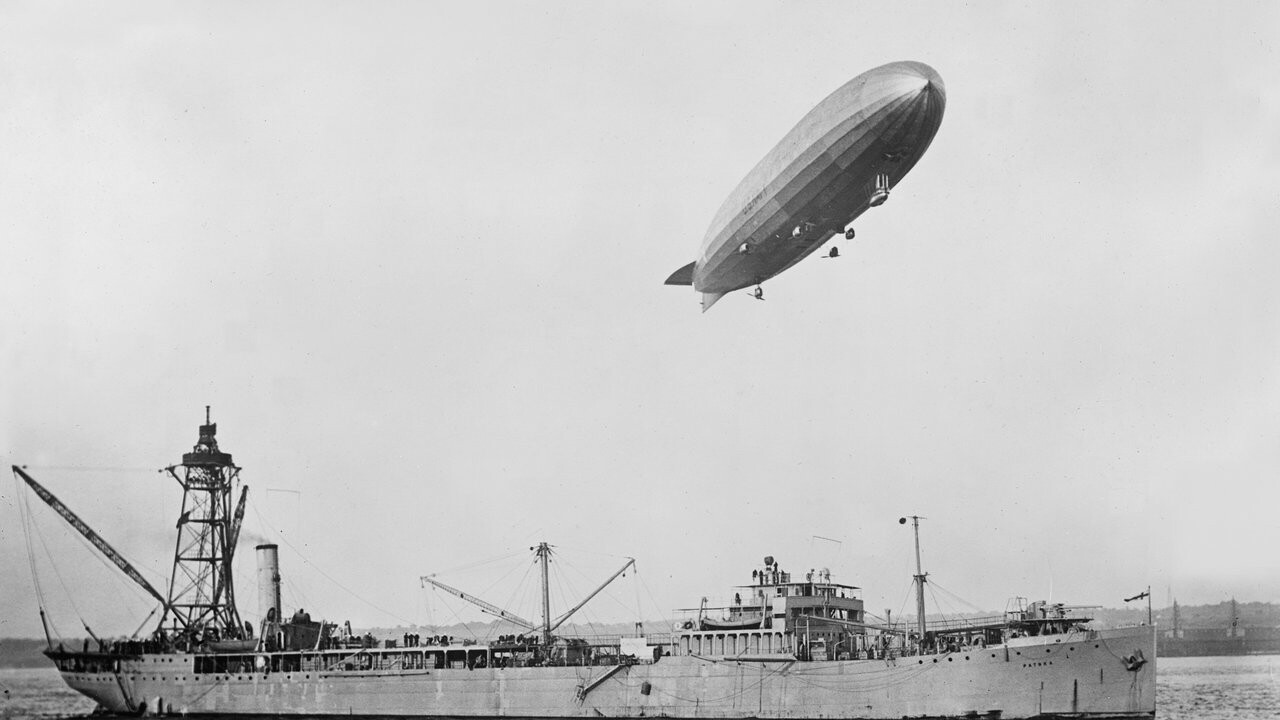
1925: Shenandoah’s Final Flight
On September 3, 1925, Shenandoah encountered a severe storm over Ohio and broke in two. The photograph chosen for this slide shows the airship before that loss, still whole and aloft. It preserves the poised image that had accompanied the ship’s earlier milestones.
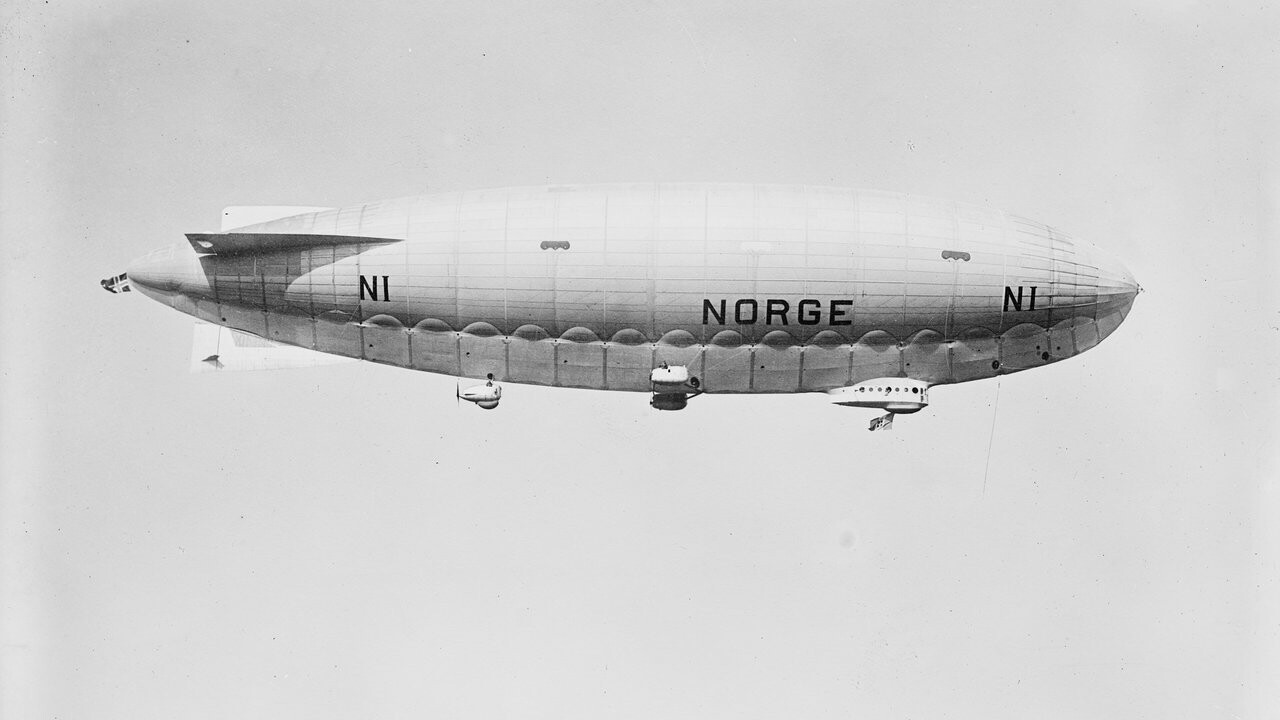
1926: Norge Flies Over the North Pole
Norge completed the first confirmed flight over the North Pole in May 1926. The expedition was commanded by Umberto Nobile and led by Lincoln Ellsworth and Roald Amundsen. In photographs, the semi-rigid airship appears lean and purposeful, carrying explorers toward a defining geographic milestone.
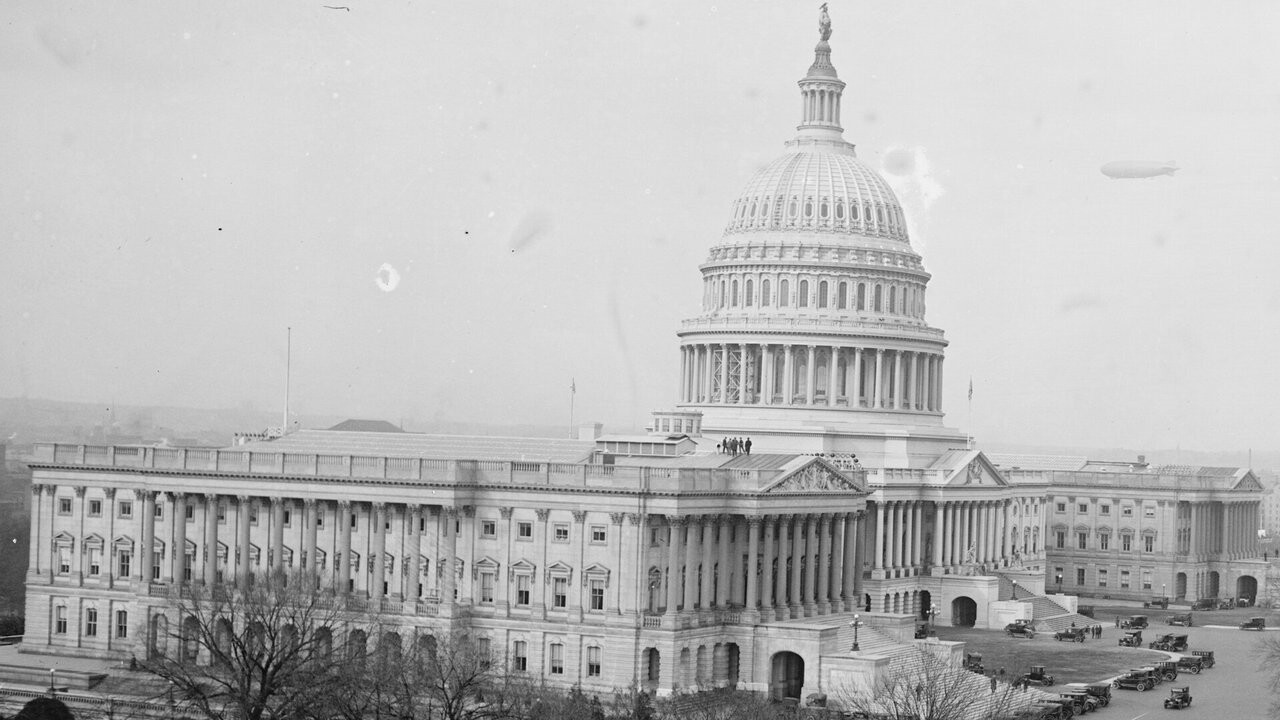
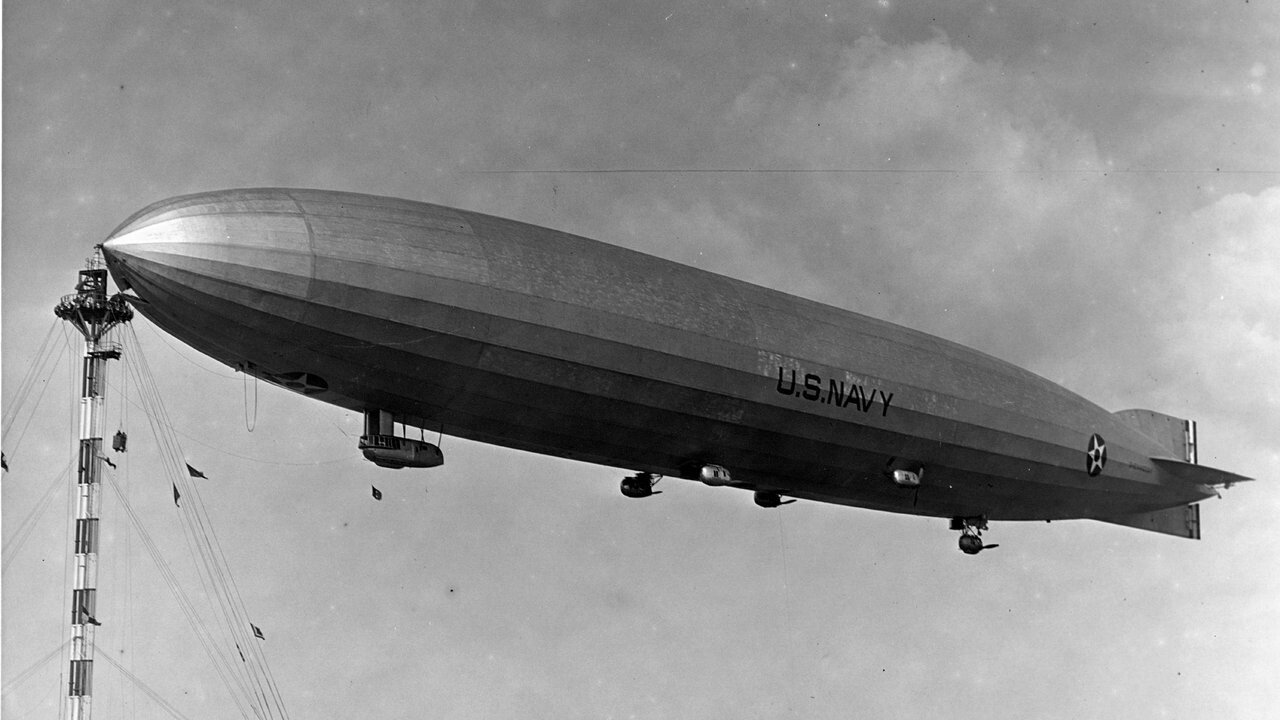
1927: Los Angeles Stands on Its Nose
On August 25, 1927, USS Los Angeles rose to a near-vertical position while moored at Lakehurst’s high mast. The famous photograph is startling because the airship looks less like a vessel than a tower balanced on its nose. Few images show the awkward forces involved in handling such a large craft so clearly.
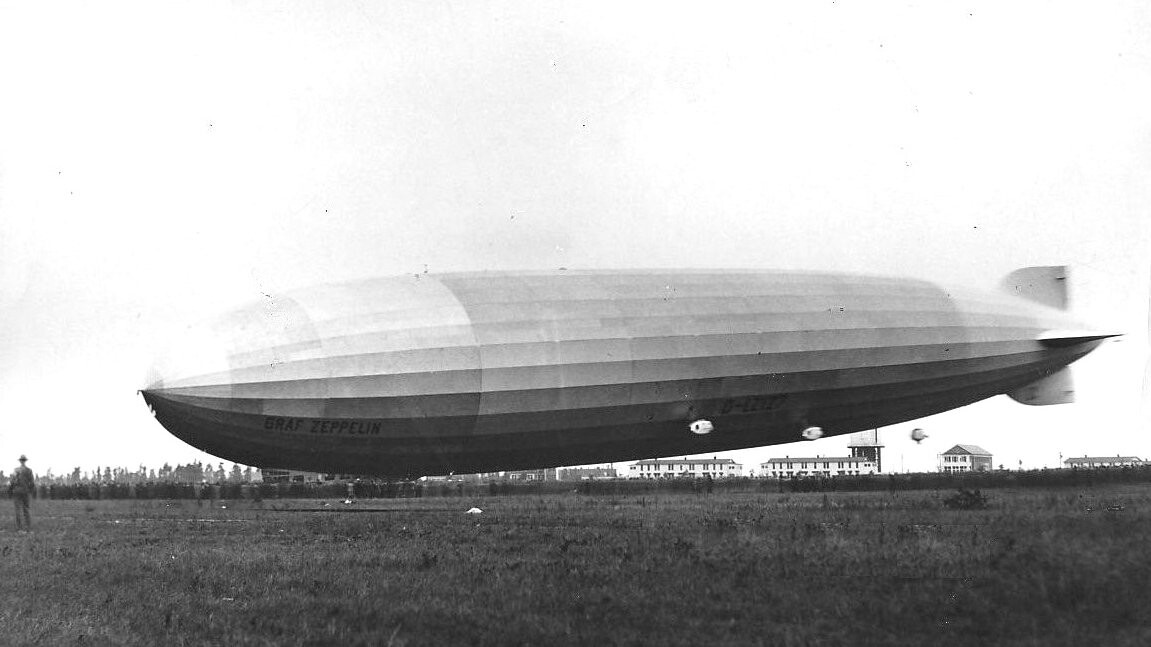
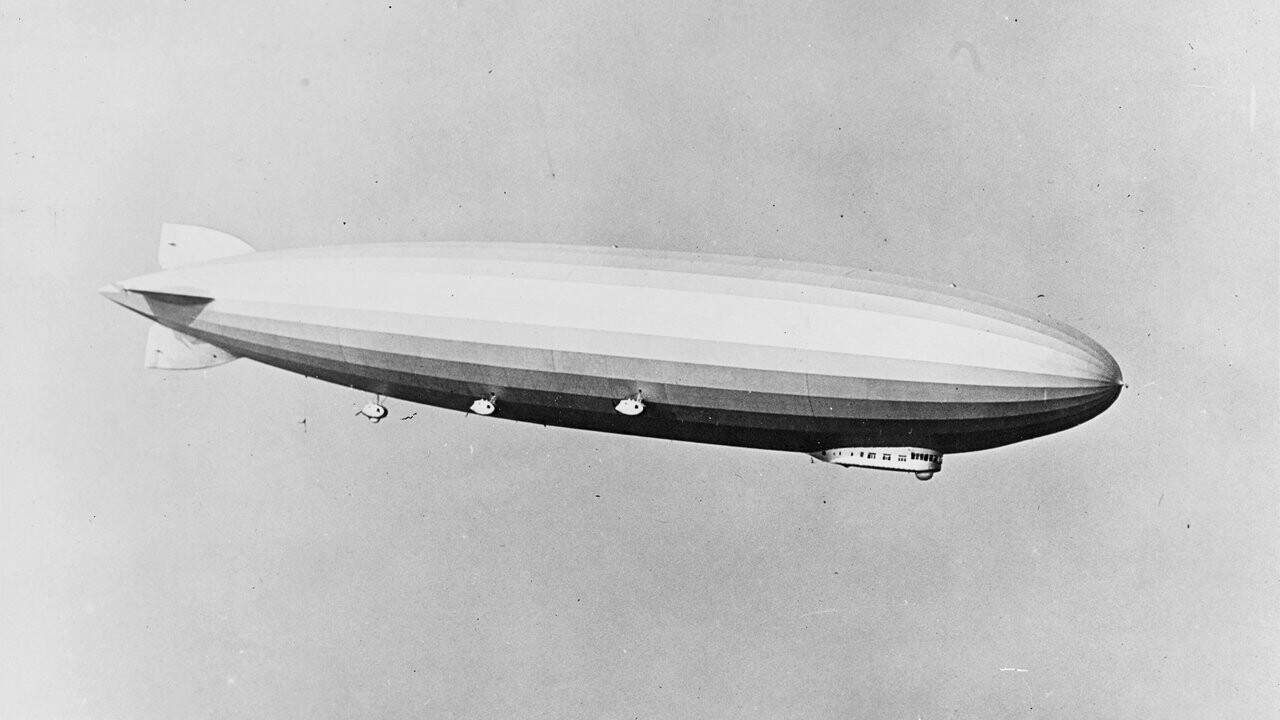
1928: Graf Zeppelin Crosses the Atlantic
On October 11, 1928, Graf Zeppelin made the first commercial transatlantic flight under Hugo Eckener’s command. The event gave photographers a new image of long-distance travel: a vast German dirigible captured as a working vehicle rather than merely an experiment. Its smooth profile became a signature sight of the period.
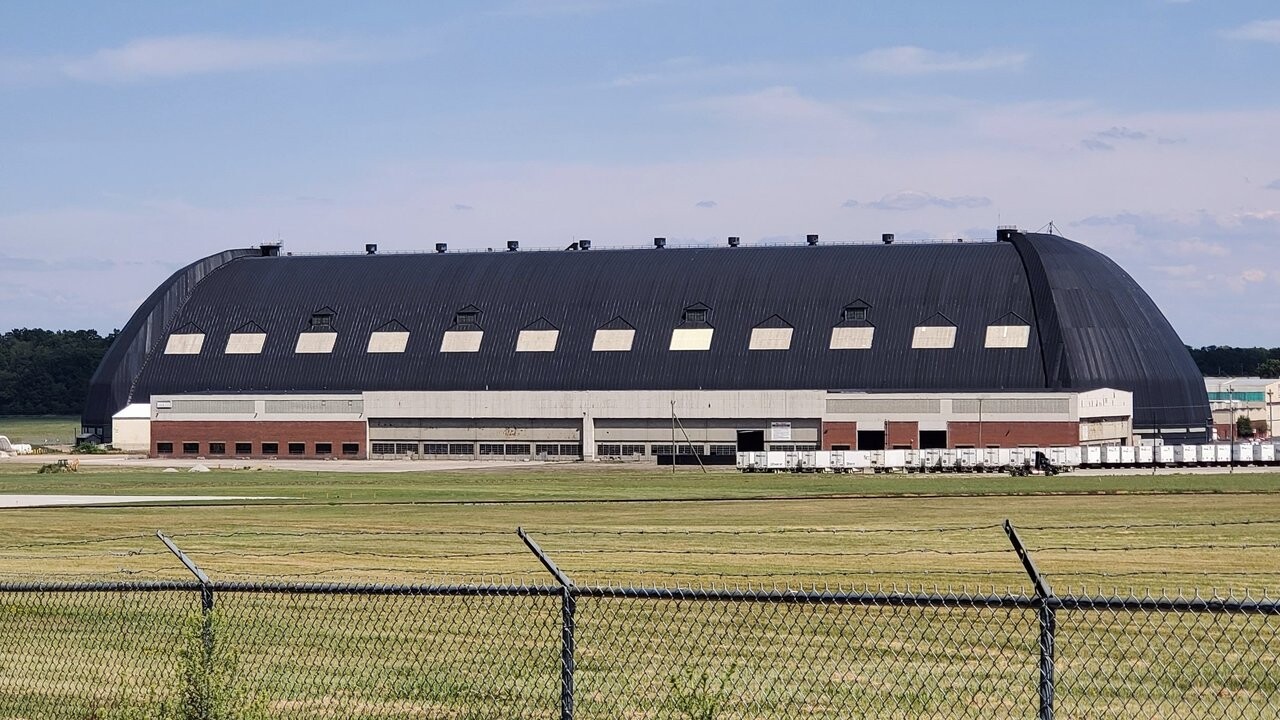
1929: The Goodyear Airdock Rises
The Goodyear Airdock was constructed in Akron, Ohio, in 1929. Its curved shell fills the frame like a manufactured horizon, while the doors and surrounding landscape provide a measure of its scale. The building belongs in the gallery because the airship age reshaped architecture on the ground as well as silhouettes in the sky.
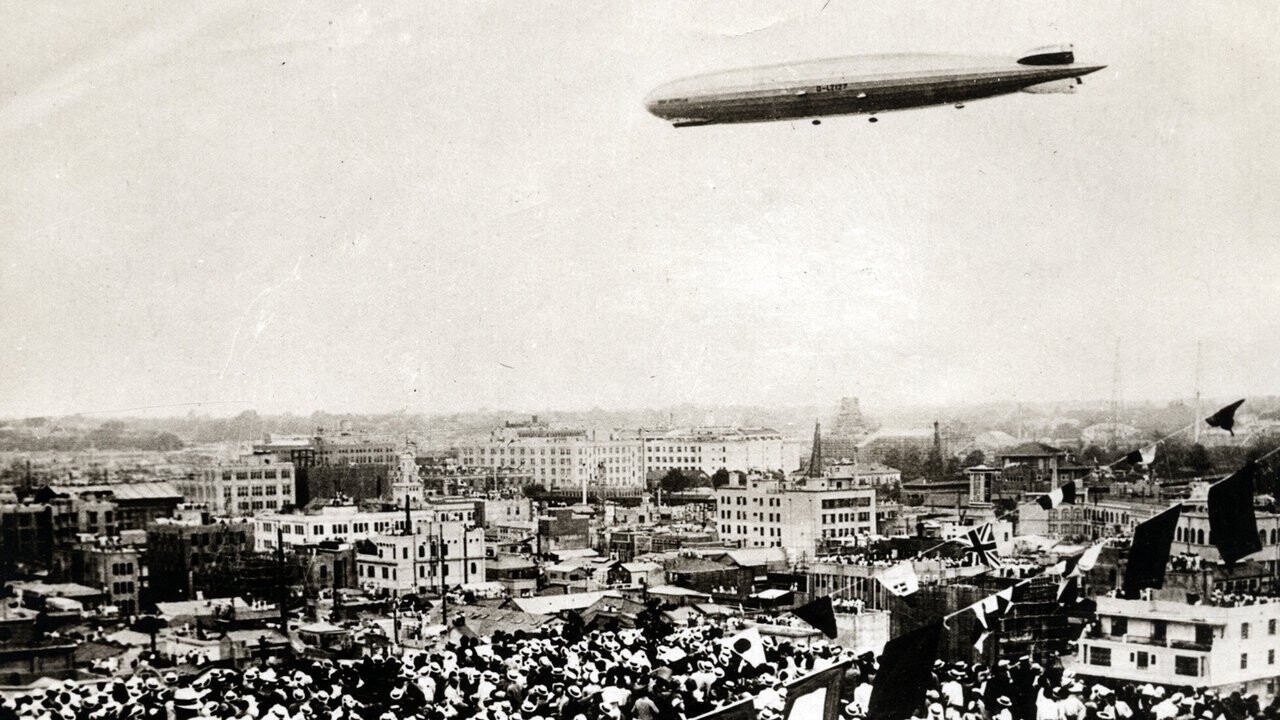
1929: Graf Zeppelin Circles the World
In 1929, Graf Zeppelin circled the world with stops at Friedrichshafen, Tokyo, and Los Angeles. The journey took 21 days, 7 hours, and 34 minutes, setting a new record for round-the-world travel by any means. Surviving photographs place its international itinerary against a sequence of airfields, crowds, and cityscapes.
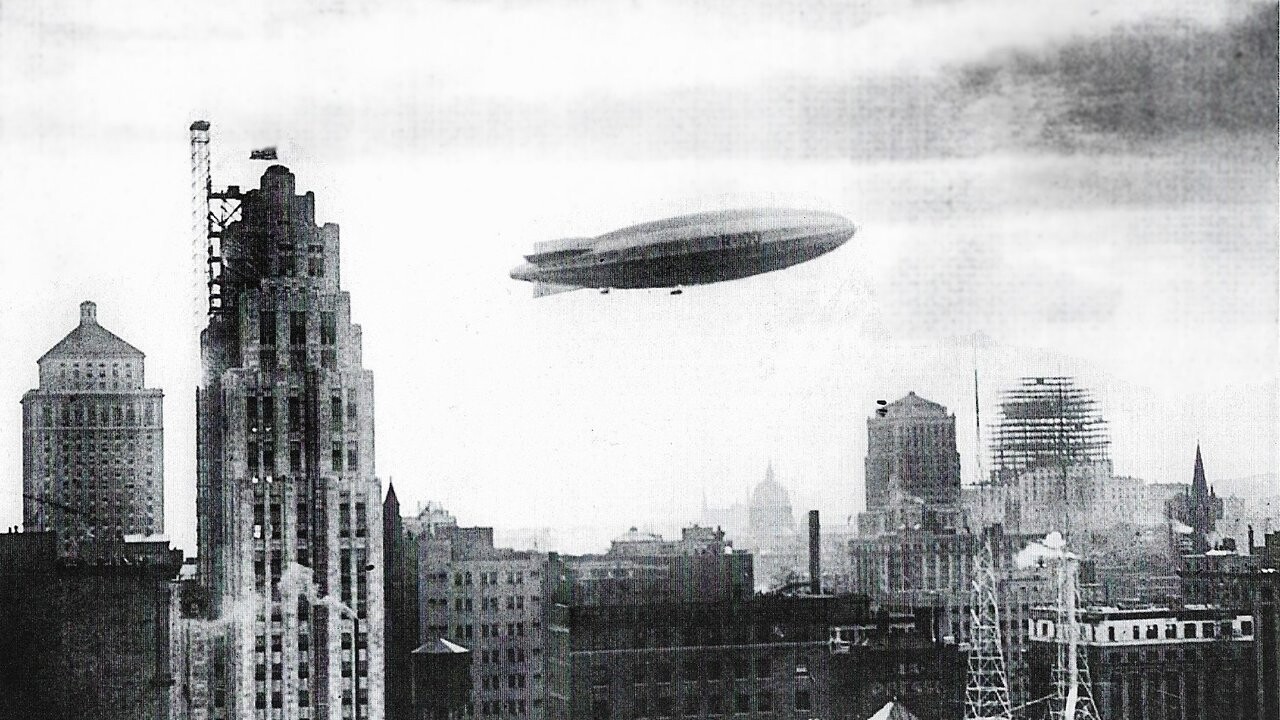
1930: R100 Reaches Canada
R100 arrived near Montreal from Cardington, England, on August 1, 1930, and moored at a special tower at Saint-Hubert, Quebec. The photograph brings airship infrastructure into a Canadian landscape, with the vessel held above the field. Its size turns a technical arrival into a scene that feels almost architectural.

1931: The Empire State Building’s Airship Mast
The Empire State Building opened in 1931 with a mast originally designed for mooring dirigibles. The feature placed airship ambition at the summit of Manhattan’s newest landmark. Even in a still photograph, the mast reads as a compact monument to the period’s enthusiasm for joining skyscrapers and aerial travel.
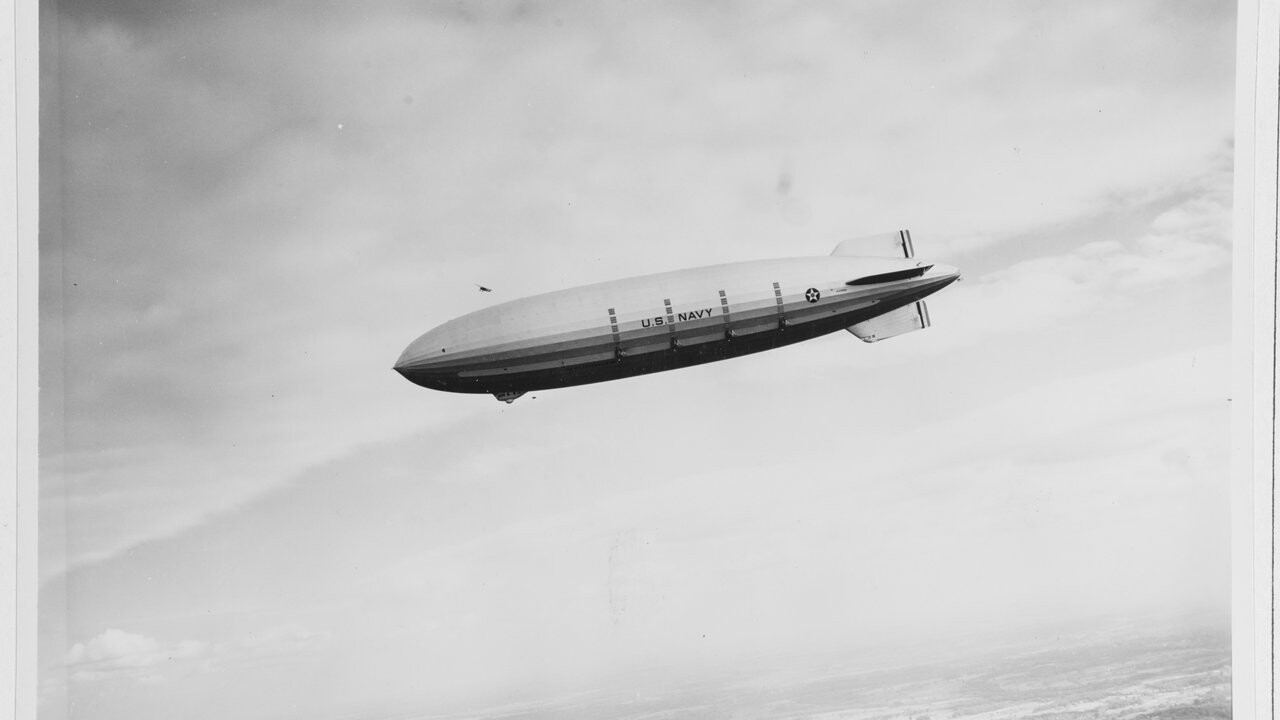
1931: USS Akron Appears Over America
A Navy photograph dated November 2, 1931, shows USS Akron in flight over Maryland’s Eastern Shore. The fields and waterways below give the enormous hull a clear geographic setting and a useful sense of scale. The view places the airship within an otherwise familiar American landscape.
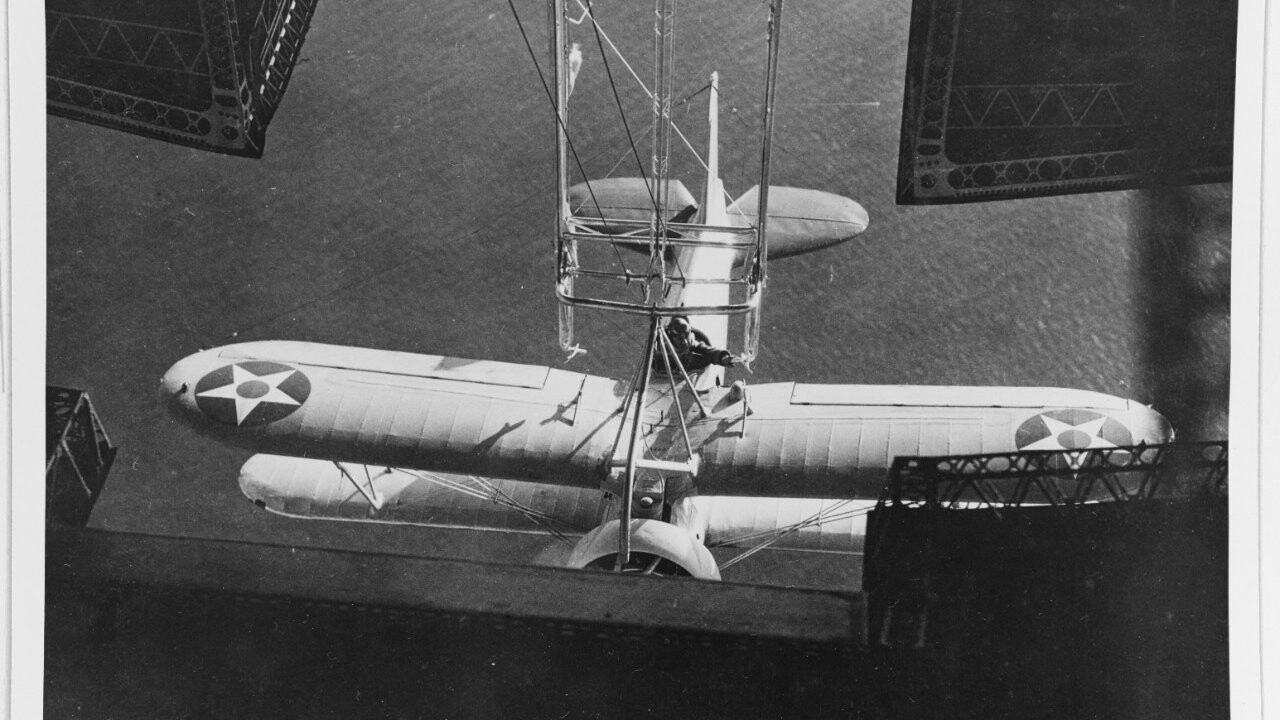
1932: Akron Tests Its Trapeze
On May 3, 1932, Akron cruised above the New Jersey coast and tested its trapeze installation for the first time. Navy pilots used skyhooks to practice launching from and returning to airships. The photograph freezes the delicate moment when a small aircraft meets the much larger ship overhead.
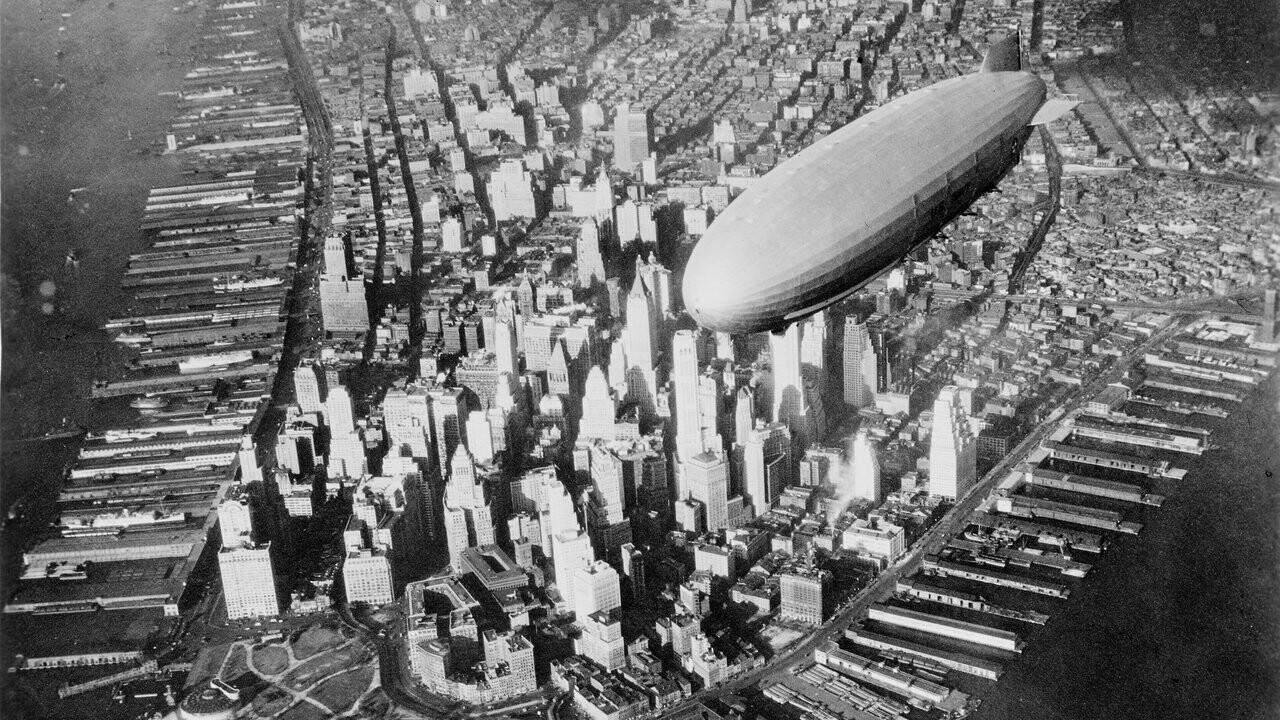
1933: Akron Is Lost at Sea
USS Akron crashed tail-first and sank in a violent storm off New Jersey on April 4, 1933. This slide uses an earlier image of the airship aloft, keeping the focus on the machine whose career ended that night. Its immense, streamlined form makes the sudden loss especially stark.
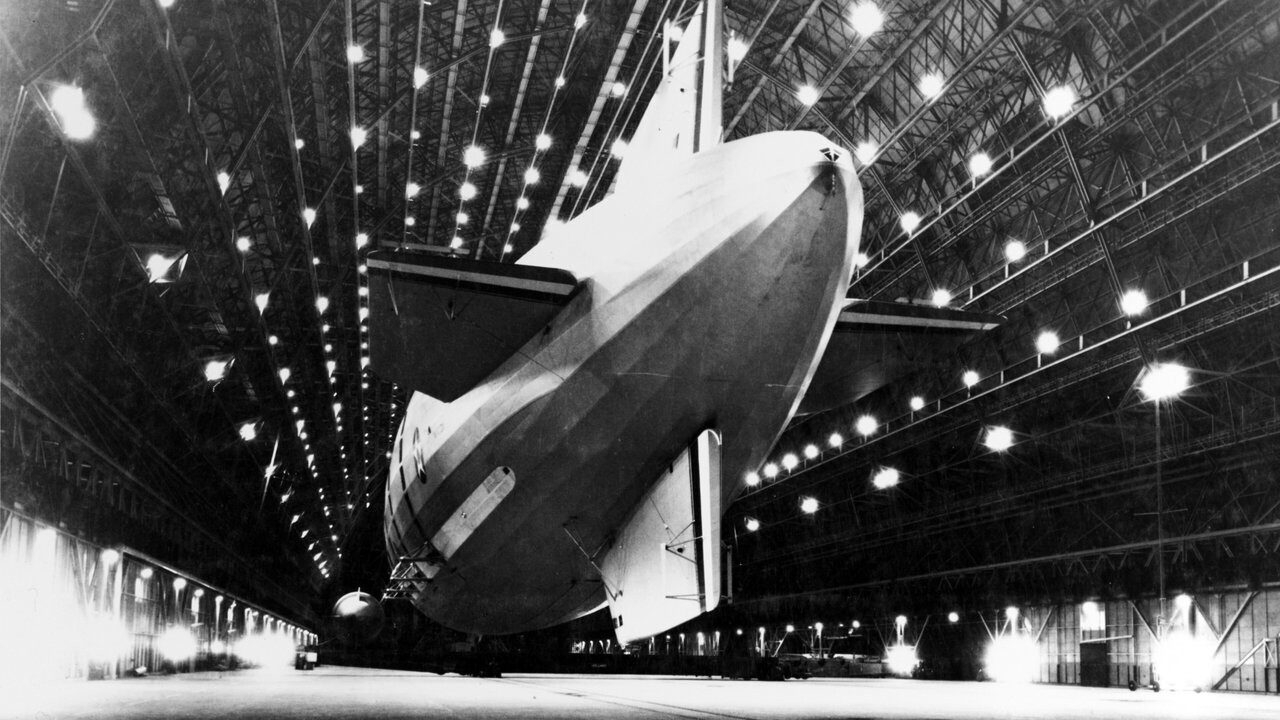
1933: Moffett Field Opens Hangar One
Constructed in 1933 to house USS Macon, Hangar One became the defining structure at the naval air station in Sunnyvale. Its curved steel shell dominates photographs of the field, turning the practical need to shelter one airship into a building with the visual presence of a landmark.
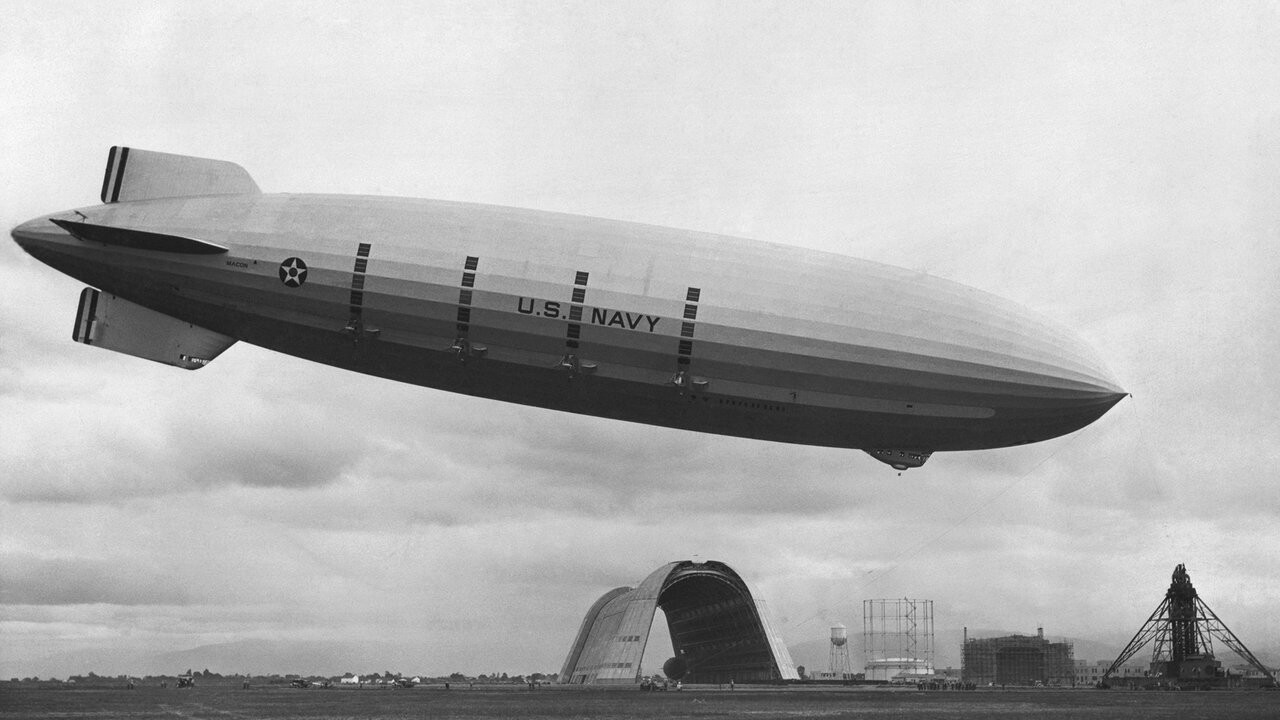
1933: USS Macon Begins Its Pacific Career
USS Macon made Sunnyvale its home field in October 1933. The airship carried four small scout or fighter aircraft that could be brought aboard by retractable trapeze. When Macon was lost, 81 of its 83 crew members survived, aided in part by issued life jackets and life rafts.
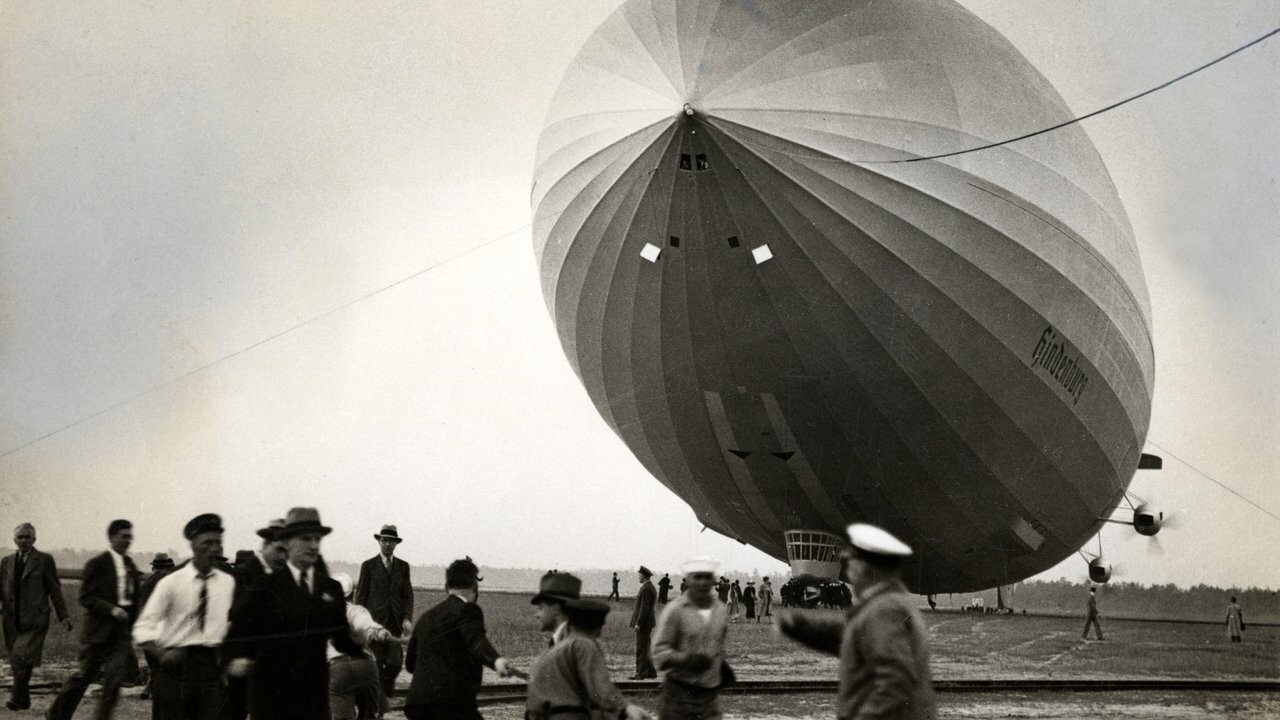
1936: Hindenburg Over New York
A Smithsonian archive record preserves views of Hindenburg over New York City and at Lakehurst on May 17, 1936. The ship made ten North American round trips that year. On May 6, 1937, it caught fire while approaching Lakehurst, closing this gallery with a sharp contrast between confident travel and sudden catastrophe.
These photographs preserve a brief moment when enormous ships in the sky seemed to promise a new kind of world travel. Which of these airships or hangars would you most like to have seen in person?
Follow The HyperHive on MSN for more stories like this.
Sources:






