When Steamboats Ruled the Mississippi, in Photos

Unknown / Wikimedia Commons, Public domain (cropped)
Steamboats turned the Mississippi and its tributaries into a moving highway of people, freight, entertainment, and ambition. Their tall stacks, broad decks, and paddle wheels still evoke an era when steam power was reshaping travel across the continent.
Moving chronologically from 1811 into the 20th century, this gallery draws on photographs, prints, museum records, and historic-register documents.
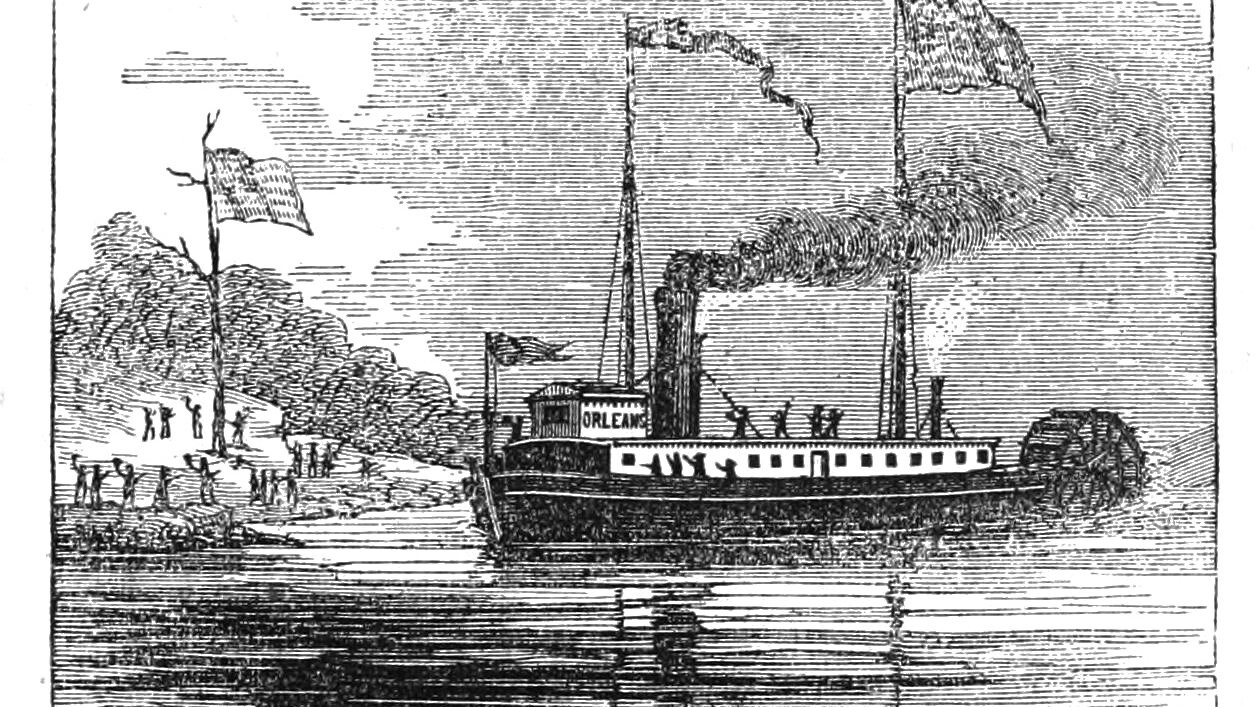
1811: New Orleans Opens a New Era
In 1811, the sidewheeler New Orleans traveled from Pittsburgh to New Orleans. The following year, it entered fairly regular service between New Orleans and Natchez. The voyage and route helped establish steam travel as a practical force on the lower river.
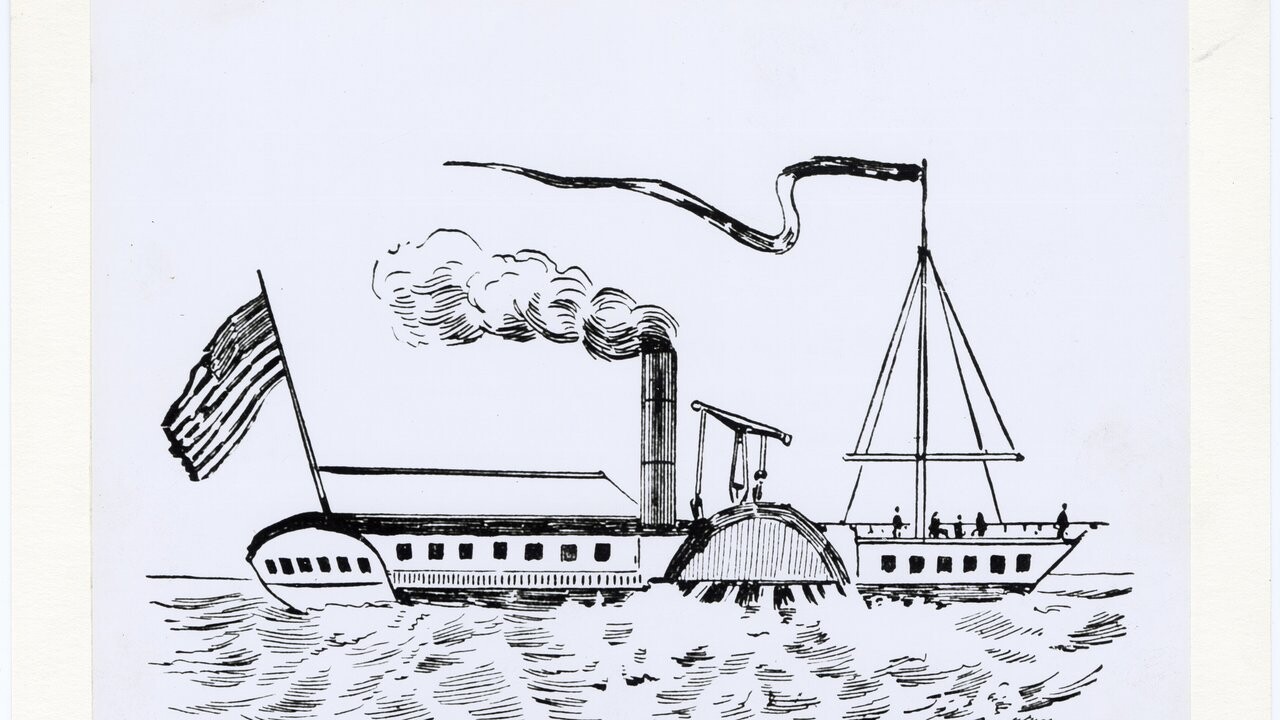
1816: Henry Shreve Refines the Riverboat
In 1816, Henry Shreve put boilers on deck and designed an engine that spread machinery weight across more of the hull. Broad, shallow-draft hulls emerged over time as builders replaced heavier construction and adapted vessels to western rivers.

The Natchez Trace Loses Its Travelers
Before steamboats, northbound travelers often walked or rode home along the Natchez Trace after floating goods downstream. By the mid-1820s, steamboats offered a far quicker upriver journey. The old trail soon lost its importance as travelers traded a long overland return for a river passage.
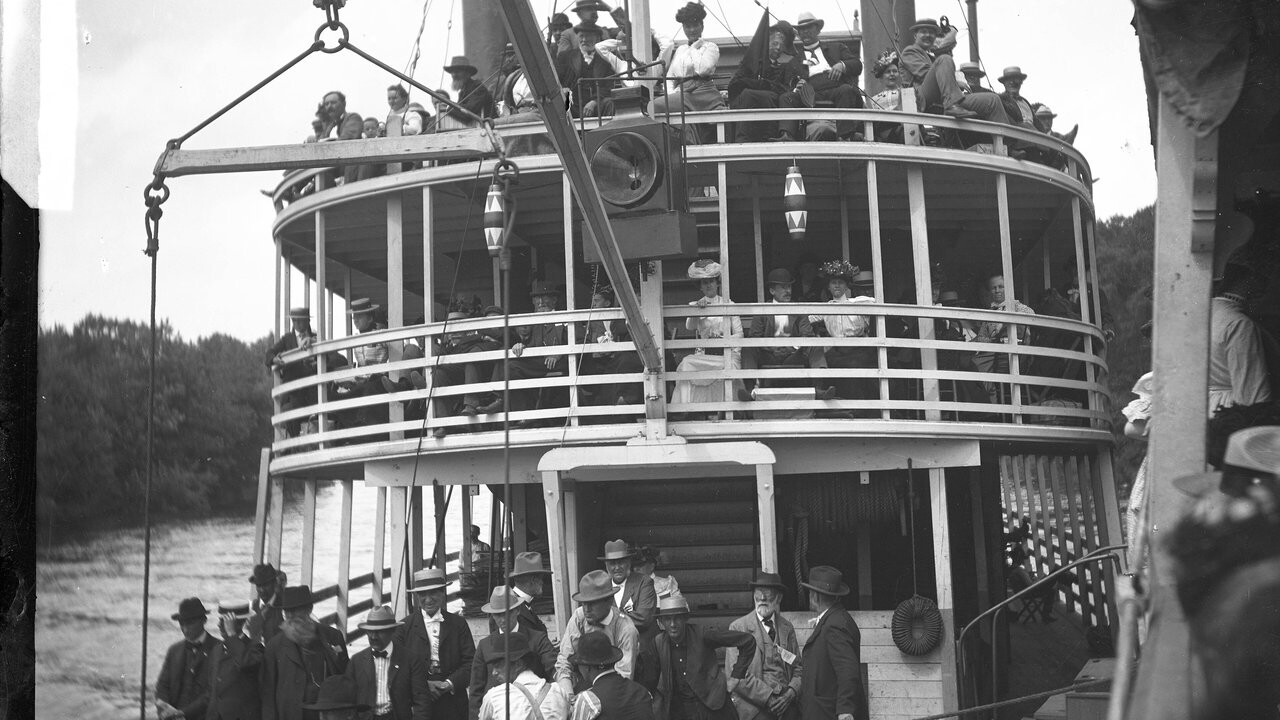
1850: Passenger Traffic Takes Center Stage
By 1850, passenger receipts exceeded freight receipts in the upper Mississippi steamboat trade. Packets connected river towns with growing settlements and distant markets. Their decks carried immigrants, families, workers, and other travelers, making steamboat arrivals a familiar part of life along the river.
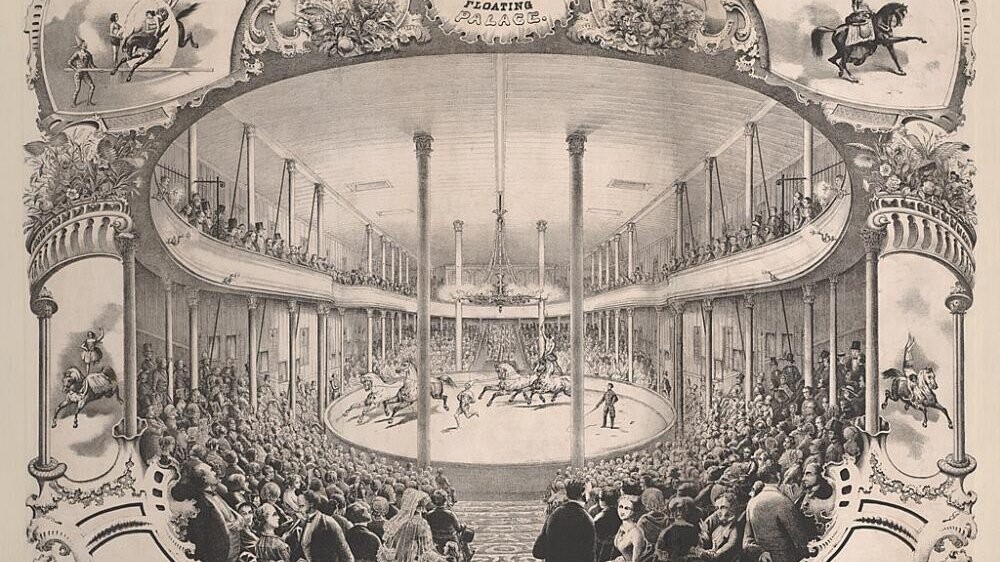
Showboats Add a New Kind of Cargo
Showboats carried popular entertainment to communities along inland waterways. The Floating Palace combined a showboat with a museum of oddities, a menagerie, and an aquarium. Its mixture of spectacle and performance illustrates how river travel could serve recreation as well as transportation and trade.
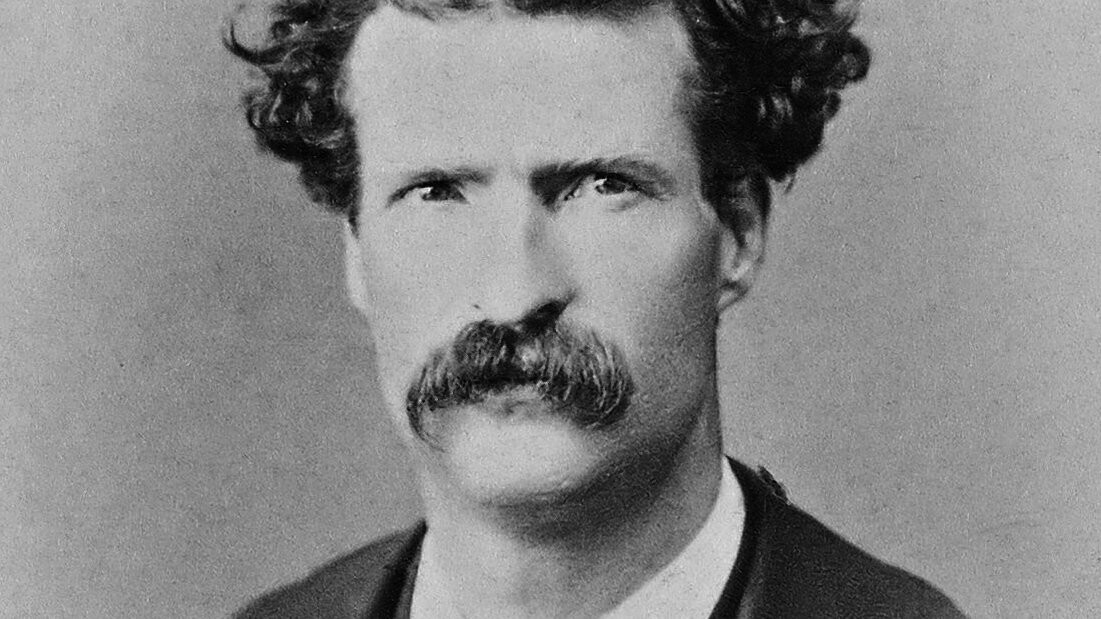
1857: Mark Twain Enters the Pilothouse
By 1857, Mark Twain had returned home to begin a career as a Mississippi riverboat pilot. The work placed him inside one of the river era’s most demanding professions, where every journey required close attention to the channel, the current, the weather, and the boat.
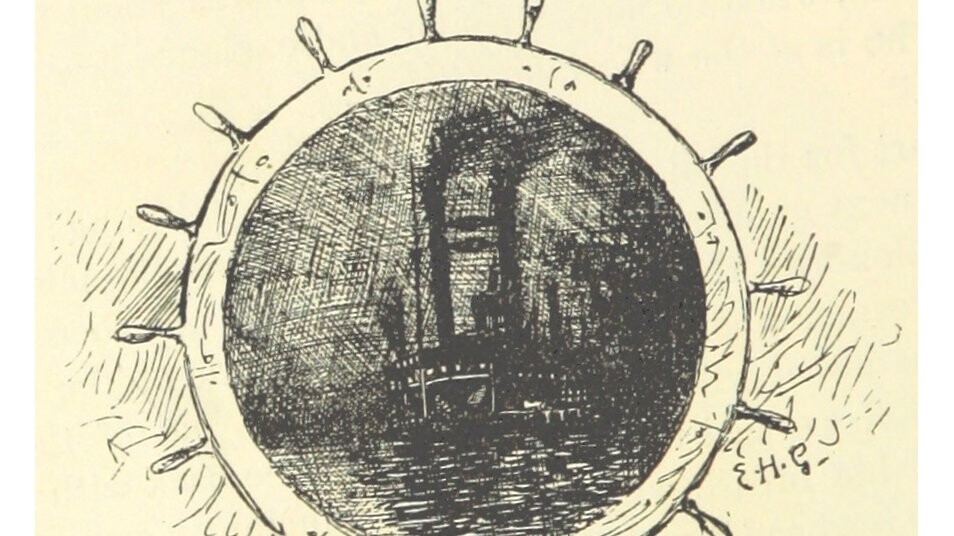
Reading the River From the Pilothouse
Pilots needed detailed knowledge of snags, rocks, sandbars, landmarks, water depth, and current strength. They watched the river’s surface for signs of hidden conditions and relied on memory when darkness concealed familiar reference points. Safe passage depended on choices made high above the deck.
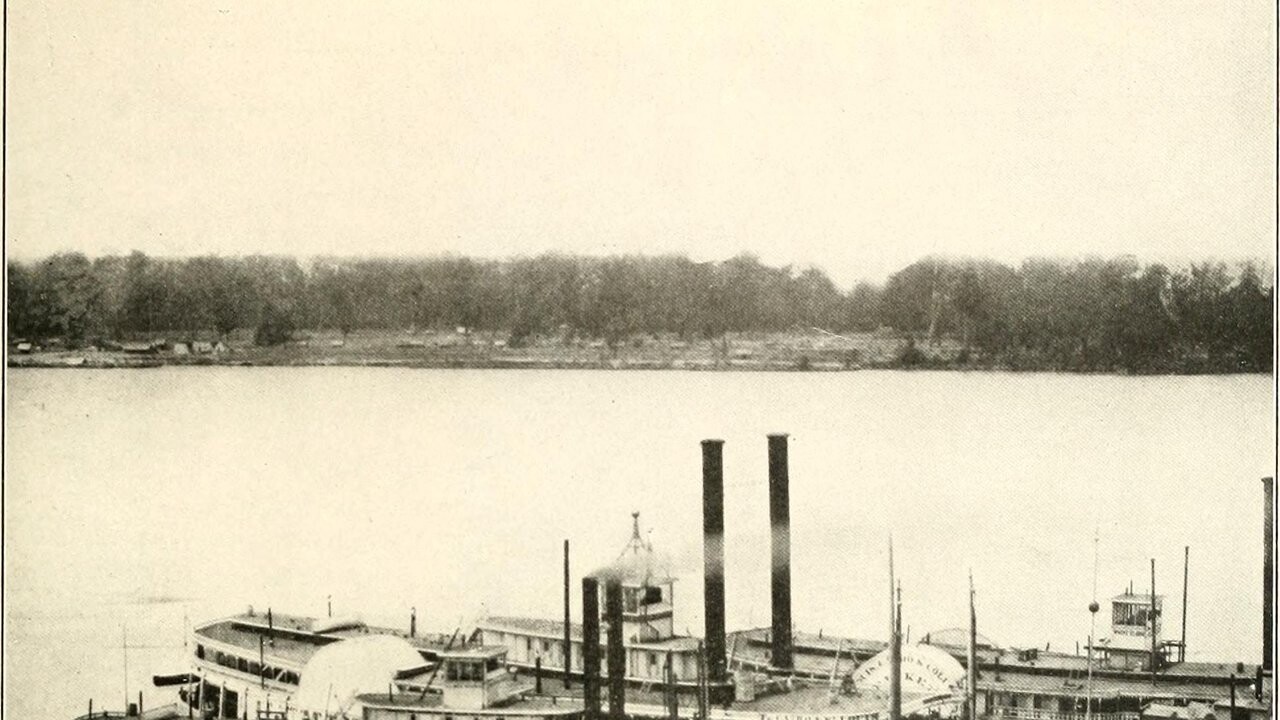
1864: Vicksburg’s Working Levee
A February 1864 photograph shows steamboats at the Vicksburg dock with the Mississippi in the background. The scene places vessels directly beside the city’s working riverfront, where hulls, gangways, buildings, and the broad waterway shared a narrow strip of busy ground.
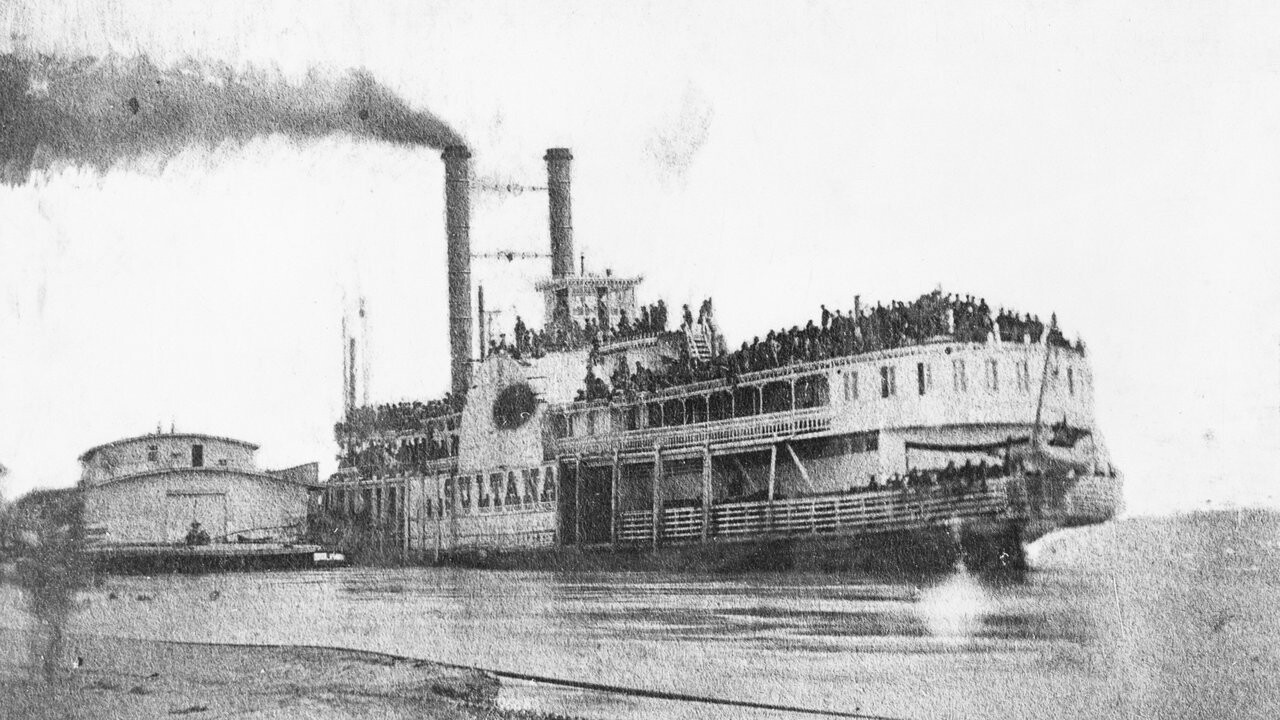
1852–1865: Progress and Peril
The Steamboat Inspection Act of 1852 established standards for boats and operators and created a federal inspection system. Yet navigation remained dangerous. In 1865, the overloaded Sultana was steaming up the Mississippi with returning Civil War soldiers when a boiler exploded, killing an estimated 1,169 passengers.
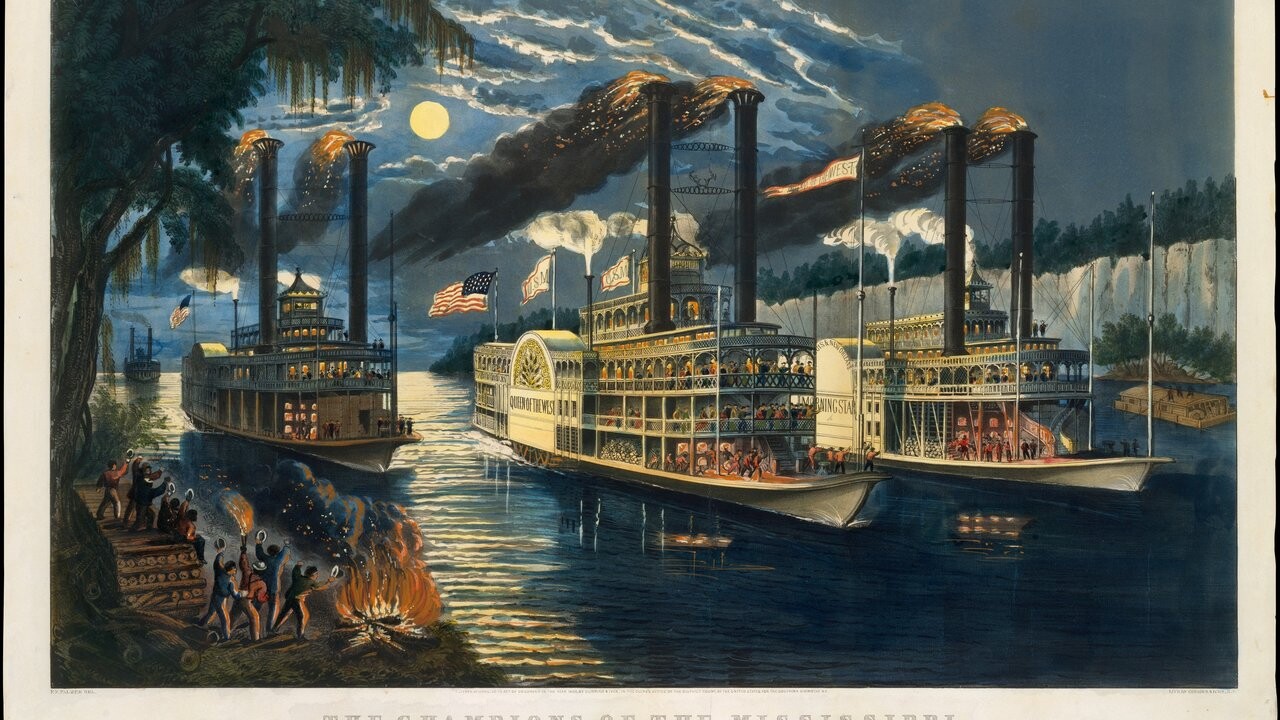
Circa 1866: Racing Becomes Popular Art
Currier & Ives published The Champions of the Mississippi around 1866. The lithograph shows steamboats racing on the river, their long hulls, twin stacks, smoke, and flags arranged for maximum drama. It preserved the spectacle of a contest in a form that could circulate far beyond the waterfront.
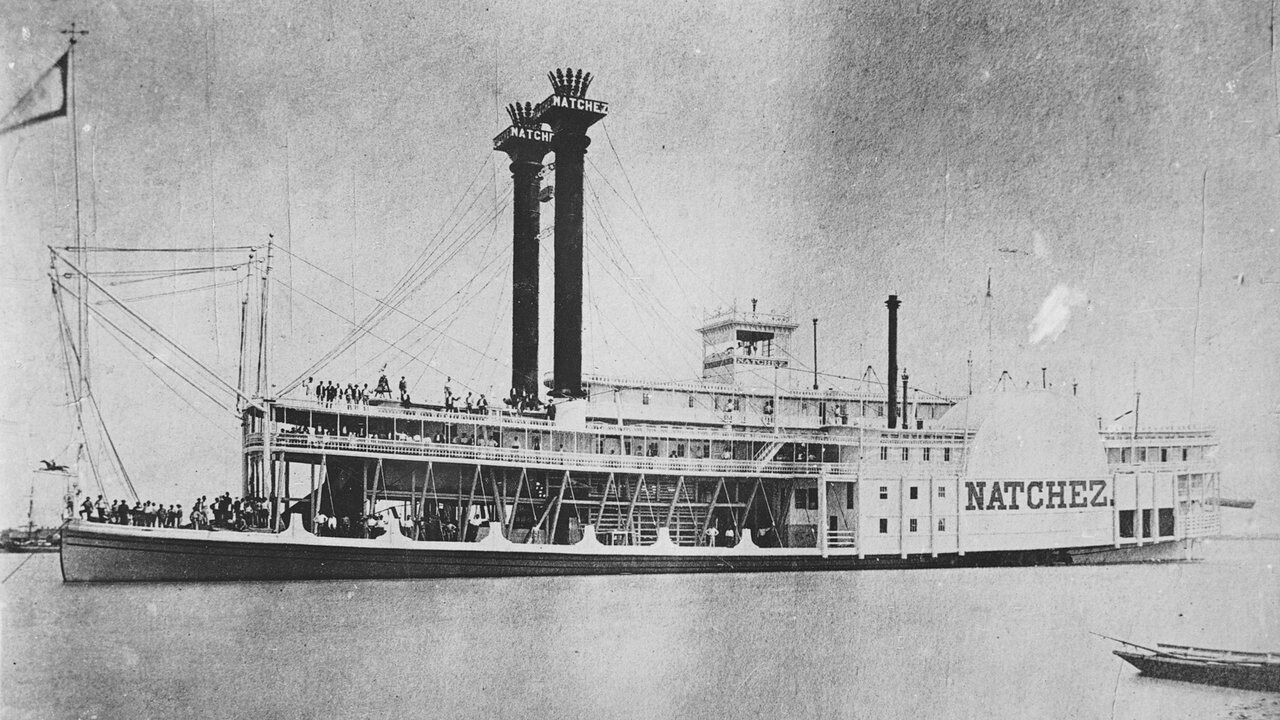
June 1870: Natchez VI Sets a Record
In June 1870, Natchez VI completed a record-breaking trip from New Orleans to St. Louis in three days, 21 hours, and 58 minutes. That achievement immediately preceded its celebrated race against Robert E. Lee, giving the coming contest a clear benchmark and a formidable rival.
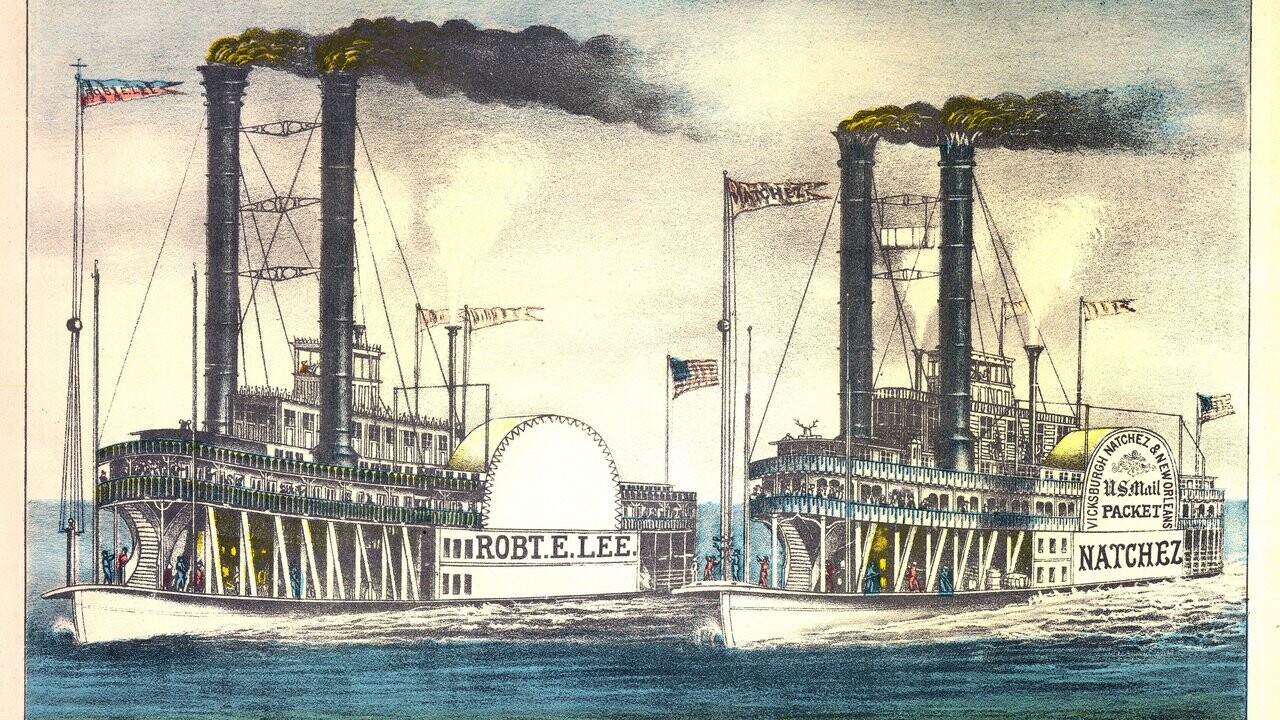
1870: Robert E. Lee Races Natchez
The rivals left New Orleans in June 1870. Robert E. Lee entered without passengers or cargo, while Natchez captain T. P. Leathers refused to lighten his burden. Lee’s captain also arranged faster refueling from barges. Robert E. Lee won in three days, 18 hours, and 30 minutes.
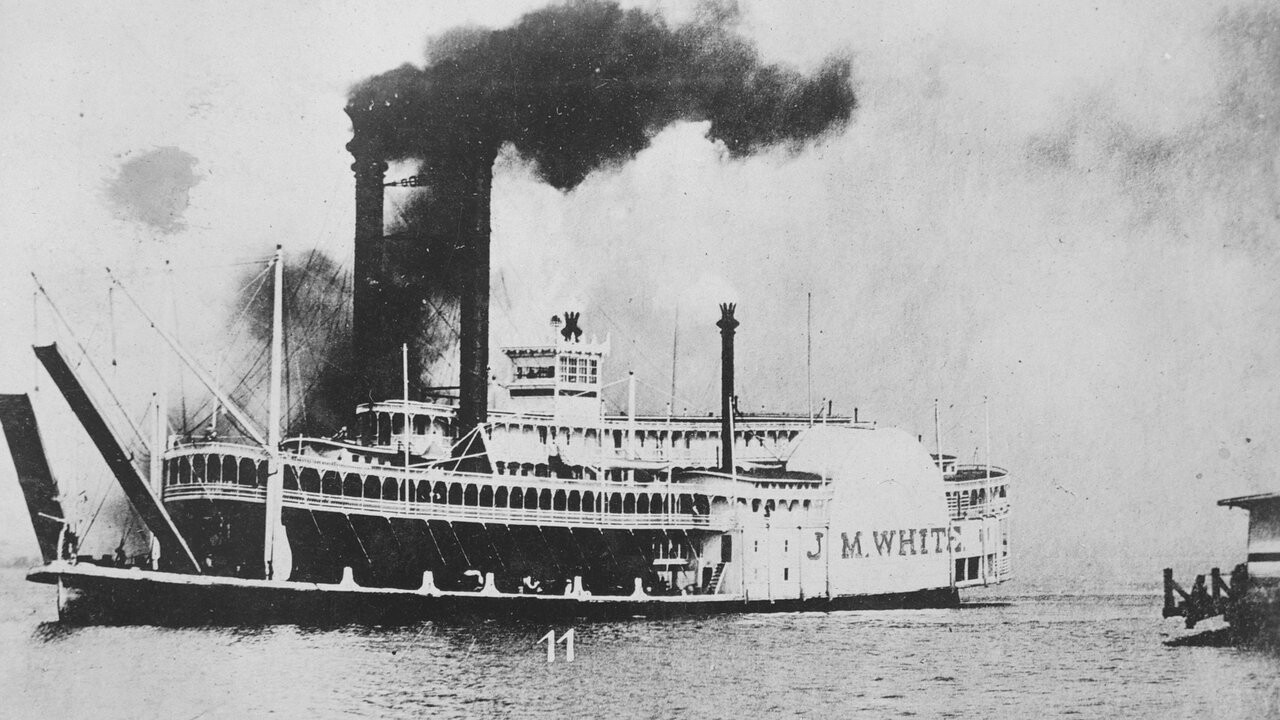
1878: J. M. White Raises the Standard
Built in 1878, the sidewheeler J. M. White was designed for passenger service between New Orleans and Greenville, Mississippi. It could accommodate 250 first-class passengers and carry 10,000 bales of cotton. Its elaborate ornament made the vessel a striking example of the decorative style called Steamboat Gothic.
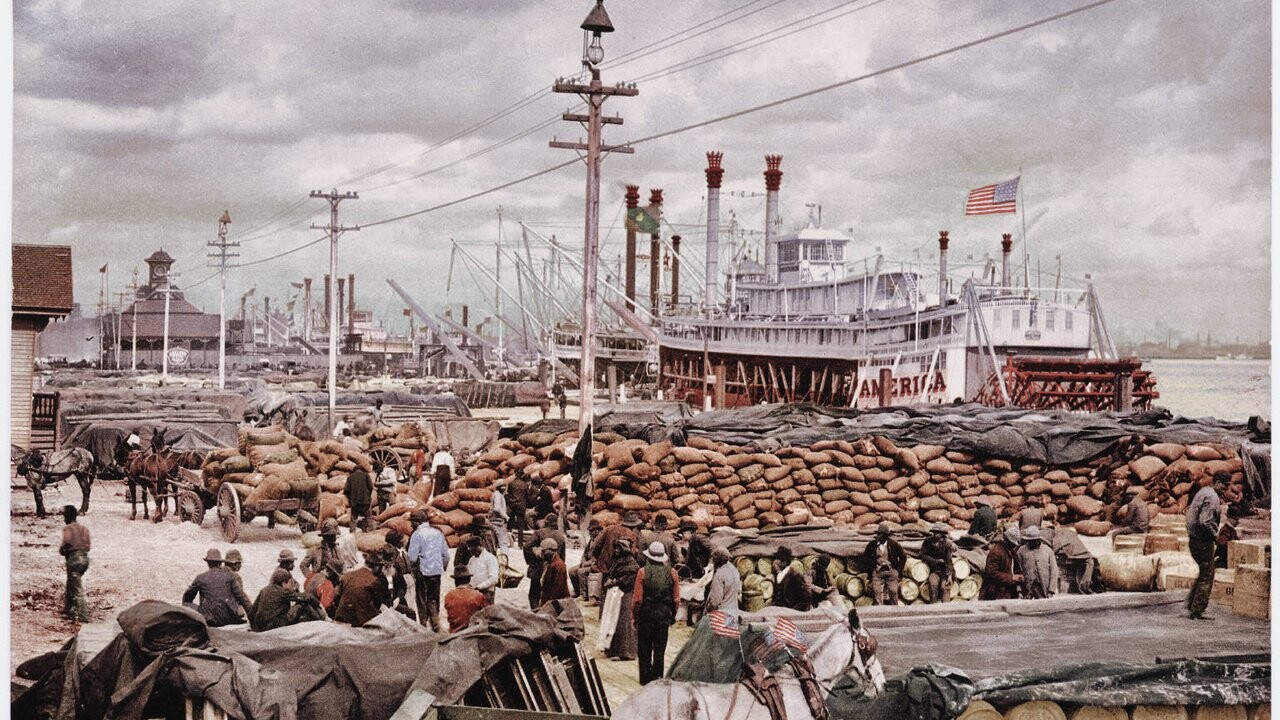
1890–1901: Steamboats Line the New Orleans Levee
A photograph dated between 1890 and 1901 records steamboats along the New Orleans levee. Multiple vessels, layered decks, and tall stacks fill the waterfront view. The image captures how closely river traffic and the city met at the landing, with little separation between transportation and urban life.
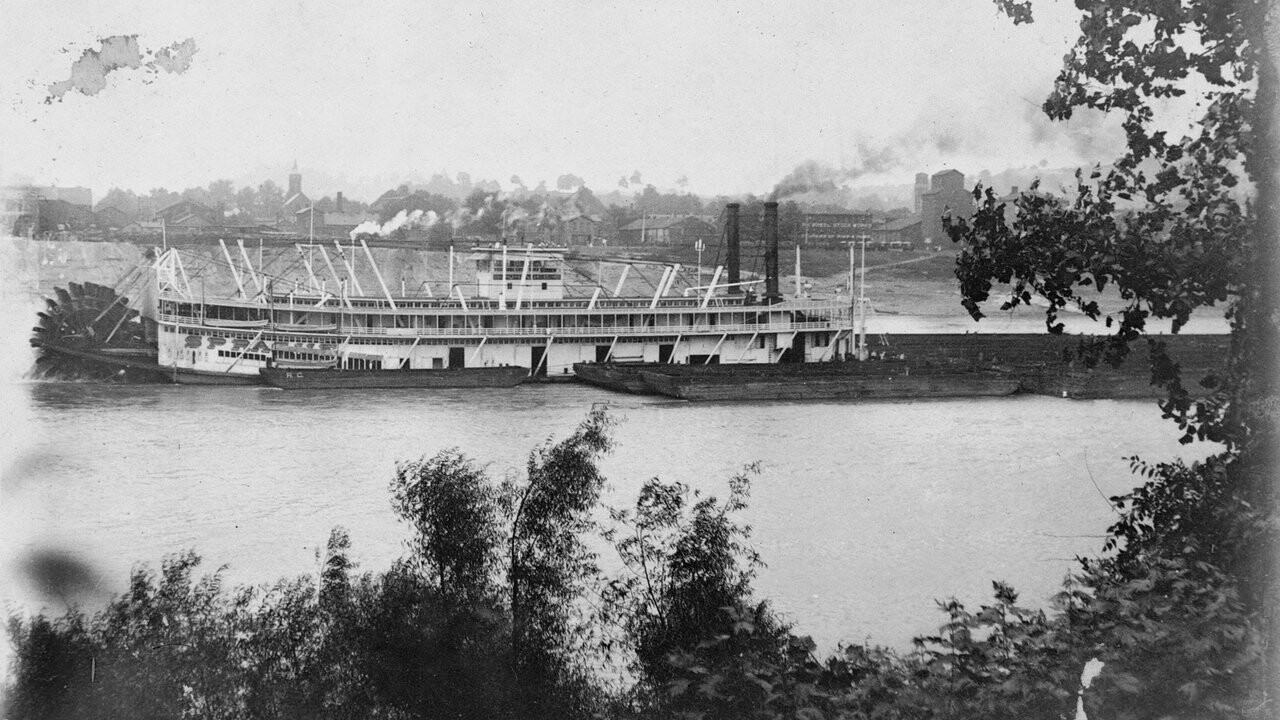
Sprague: Giant of the Towboat Age
Sprague was described in its historic-register nomination as the largest and most powerful steam towboat ever constructed. Built for moving barge tows, it represented a new scale of river work. During the Mississippi flood of 1927, it transported about 20,000 refugees on empty barges from Greenville to Vicksburg.
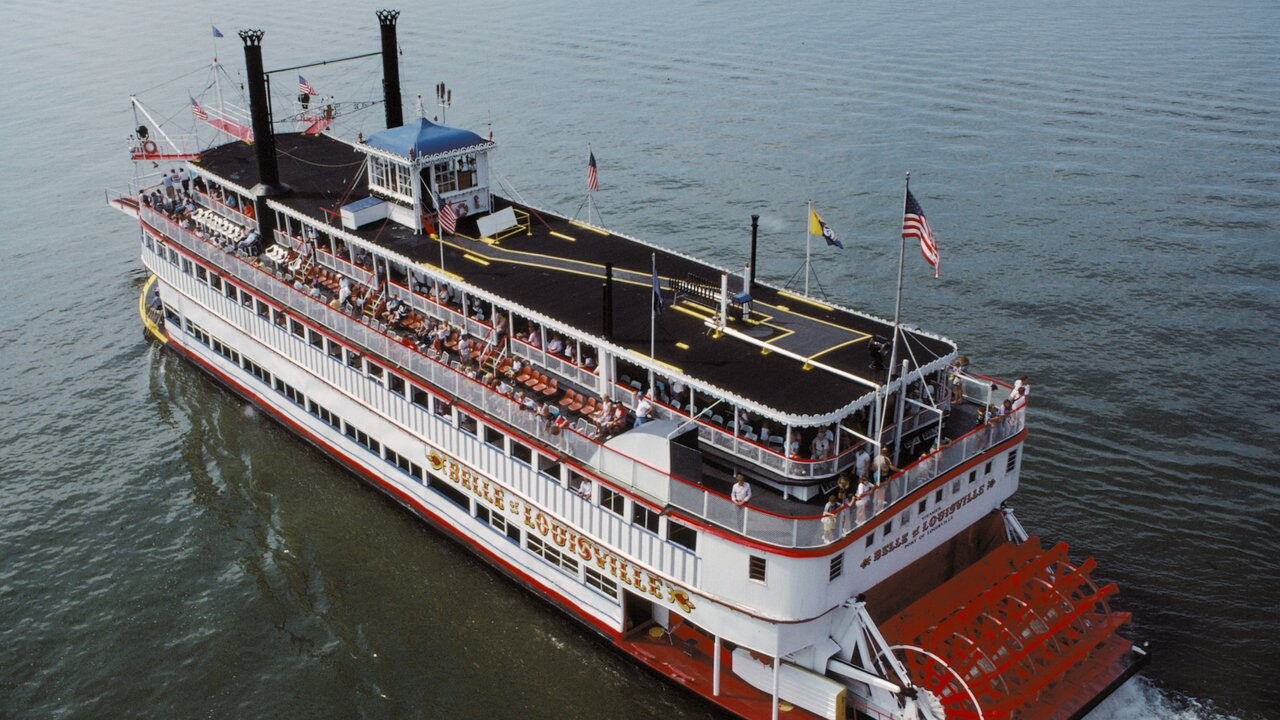
1914: Idlewild Becomes a Living Landmark
Built in Pittsburgh as Idlewild in 1914, the vessel later became Belle of Louisville. It began life as a ferry, day packet, and occasional excursion boat. Its riveted-steel hull, wooden superstructure, steam power, and sternwheel preserve the characteristic construction of a Western Rivers day packet.
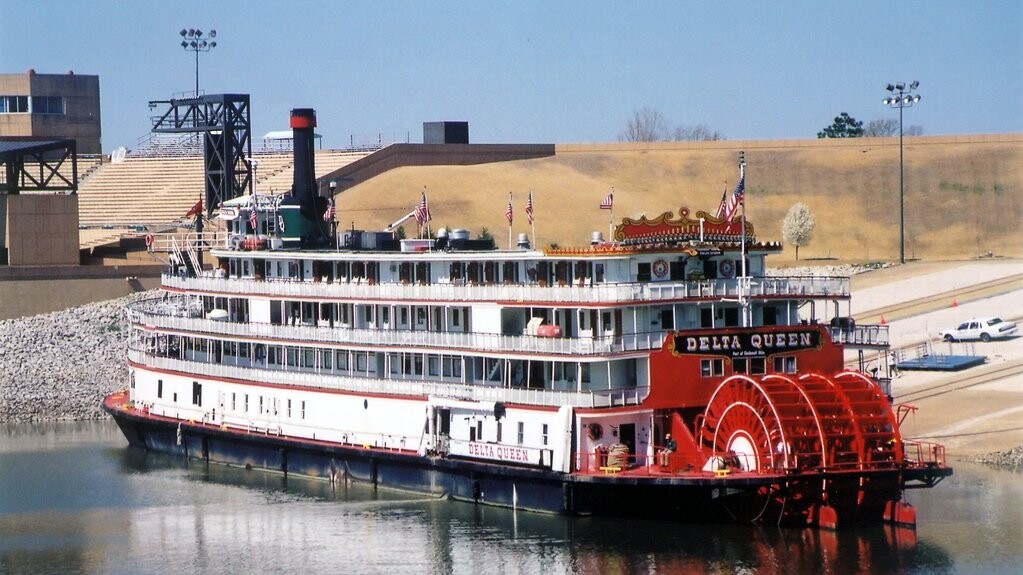
1924–1946: Delta Queen Comes East
Delta Queen was designed and fabricated on Scotland’s River Clyde in 1924, then shipped in pieces to California for assembly and Sacramento River service. In 1946, it moved to the Ohio-Mississippi river system, carrying the steamboat story into a new region and a later generation of river travel.
The steamboat era survives in archival images, museum collections, and historic vessels whose silhouettes still command attention along America’s rivers. Which of these boats or riverfront scenes would you most like to have witnessed?
Follow The HyperHive on MSN for more stories like this.
Sources:






