
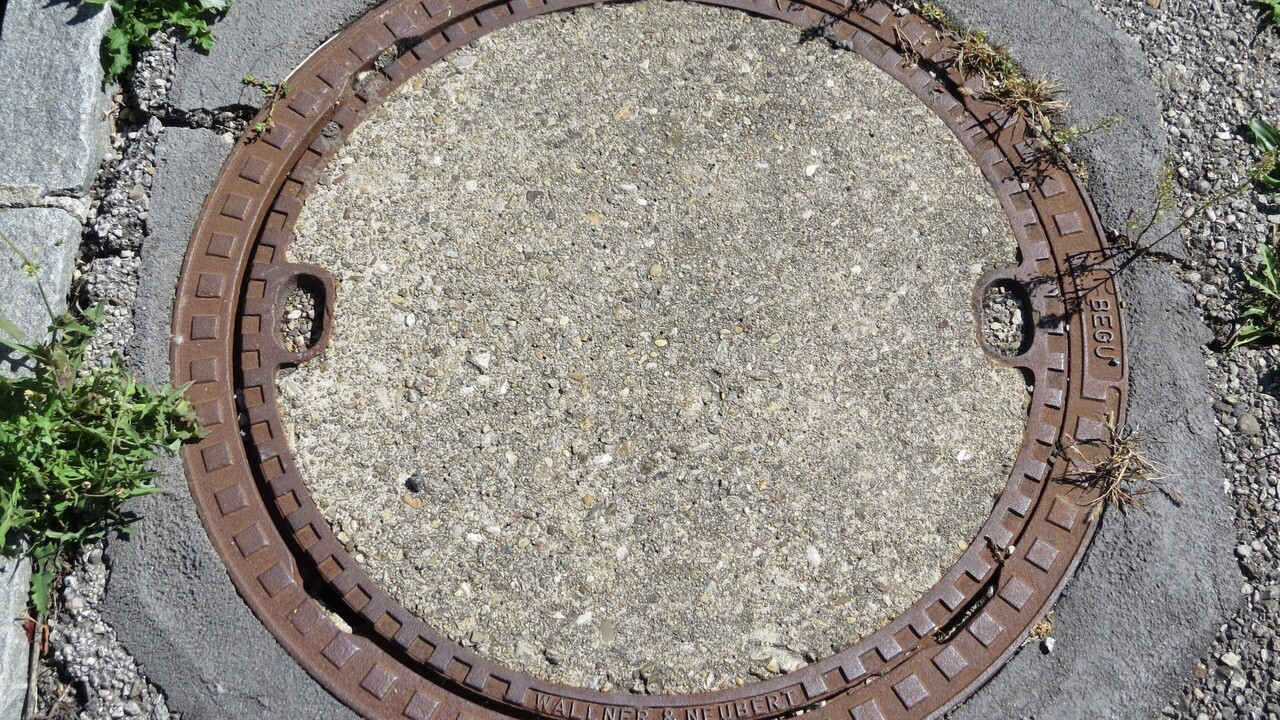
Many manhole covers are round because a circle has constant width: turn it in the plane and its span does not change. A properly sized circular cover therefore cannot find a narrower orientation that lets it slip through its matching circular opening. The shape is practical, too. Workers can roll it on its edge and return it to the frame without lining up corners.
That is the direct answer, but not the whole story. Covers are working pieces of infrastructure, and cities choose shapes that suit their openings, tools, and maintenance routines. Some covers are square or divided into sections. The familiar circle is a strong all-around solution, not a universal rule.
The Useful Meaning of Constant Width
Picture a circle resting between two parallel rulers. Turn the circle while keeping the rulers against opposite sides, and the gap stays the same. That unchanging measurement is the circle’s diameter. In geometry, the broader idea is called constant width.
A University of Liverpool mathematics paper describes the condition in terms of equal distances between parallel tangent lines, lines that just touch opposite sides of a closed shape. The paper identifies the circle as the obvious example. The name may sound abstract, but the street-level benefit is easy to see.
Why the Cover Does Not Drop Through
A square does not behave the same way. Its distance from side to side is shorter than its distance from corner to corner. Turn a square cover over a matching square opening, and an edge may line up with the opening’s wider diagonal. That creates the possibility of the cover passing through.
A circle has no equivalent narrow angle. Its width stays equal to its diameter at every rotation, so a circular cover that overlaps its circular frame keeps that overlap as it turns. TED-Ed puts the result plainly: a curve of constant width will not fall through its corresponding opening merely because its orientation changes.
This is the central geometric reason, but it is best understood as one part of a practical design. A real cover also has to be opened, moved, and put back by the people maintaining what lies below.
Round Is Convenient to Move and Replace
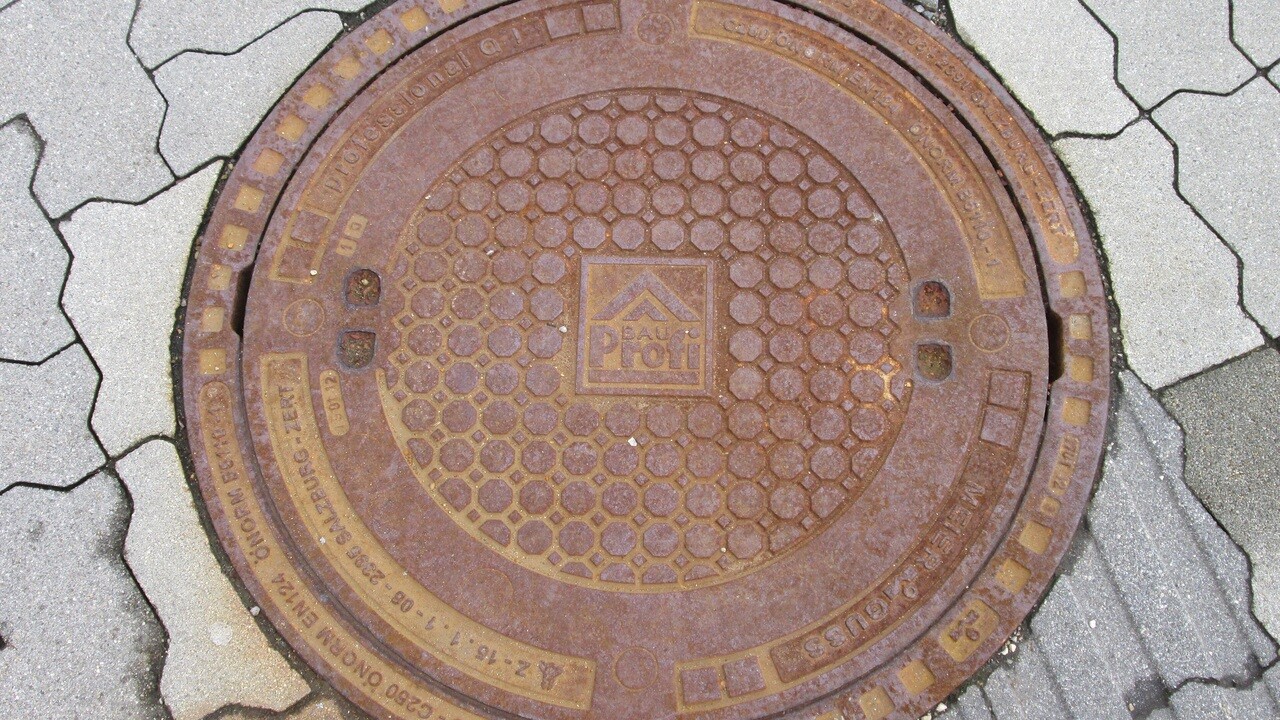
A round cover can be tipped onto its edge and rolled for a short move. That does not make it light, but it can reduce how far workers must carry the whole piece. When the cover comes back, any rotational position fits the circular seat.
With a square or rectangular cover, the sides and corners must match the frame’s orientation. A circle has no front, back, or corner to find. TED-Ed highlights both everyday advantages: round covers are easy to roll and can slide into place in any alignment.
These handling benefits reinforce the geometry. The same continuous outline that prevents a narrower turning position also removes the need to rotate the cover until particular corners meet.
Design History Is Local, Not Universal
Manhole-cover history is not one straight march toward the circle. An official account from Hong Kong’s Development Bureau describes a change in the other direction: later covers were redesigned as square forms made from two triangular pieces. It says the arrangement made it easier for drainage workers to use a crowbar.
That example matters because it shows how work practices can outweigh the neatest general explanation. A divided cover lets a crew deal with sections rather than one complete lid. A particular access point may also be designed around a non-circular frame. The best choice depends on the whole system, not geometry alone.
Why So Many, Rather Than All
The circle remains common because it bundles several useful qualities together. Constant width protects against a dangerous orientation change. The rim seats without corner alignment. The cover can be rolled instead of carried for every small movement. Each advantage is simple; together they make a persuasive design.
But none of that proves every manhole cover should be round. The Hong Kong example documents square, two-piece covers chosen for easier operation with local tools. Other installations may use different outlines or sections for similarly practical reasons.
So the familiar round cover is not merely the answer to a clever geometry question. It is a compact compromise between shape and daily maintenance, one that became widespread because it solves several ordinary problems at the same time.
The round cover endures because one simple shape solves several street-level problems at once. What kinds of unusual manhole covers have you noticed where you live or travel?
Follow The HyperHive on MSN for more stories like this.
Sources:






