Which of Baba Vanga’s 2026 Predictions Came True?

In-cognito at Bulgarian Wikipedia / Wikimedia Commons, CC BY-SA 3.0 (cropped)
Did any of Baba Vanga’s predictions for 2026 actually come true?
The short answer is no. Several claims attached to her name resembled real events, but none qualifies as a verified prediction because no authenticated record shows that she made them.
Here is an item-by-item review based on information available through November 18, 2026.
Was There a Verifiable 2026 Prediction List?
No. Baba Vanga lived from 1911 to 1996, but she left no written record of annual predictions. The Guardian also reported that nobody recorded her while she was alive.
A scholarly study found that belief in her prophecies spread through witnesses, newspapers, books, television, and the internet. That chain of retelling matters because wording, dates, and details can change as a story passes from one source to another.
The Guardian reported that purported predictions for 2026 included the start of World War III and humanity’s first contact with aliens. Those were later claims attributed to Vanga, not documented forecasts preserved in her own words.
Other roundups attached additional themes to her name, but their varying details cannot be checked against an original list. Without that starting point, apparent matches must be treated cautiously.

Did Alien Contact or Disaster Headlines Validate a Forecast?
Neither alien contact nor reports of natural disasters produced a verifiable hit by the cutoff date.
- Alien Contact. NASA says it “has not found any credible evidence of extraterrestrial life,” and no authoritative announcement established contact with an alien civilization. That does not support the purported prediction reported by The Guardian.
- Disaster Headlines. Serious disasters certainly occurred. The Associated Press reported massive August floods along the Nepal-China border after a glacial collapse. However, finding a broad resemblance after an event is not the same as matching a dated, precise forecast.
A successful prediction should be preserved before the event and specific enough to evaluate afterward. It should identify a clear outcome, useful conditions, or a defined place and period. Otherwise, almost any storm, flood, earthquake, or eruption can be presented as a match after it happens.
Did World War III Begin?
No. Serious wars and dangerous escalation continued, but the cited reporting described separate conflicts rather than the beginning of one worldwide war.
The United Nations reported an escalation that included United States strikes on Iran and Iranian strikes on neighboring countries. The war in Ukraine also continued after Russia’s 2022 invasion, according to the Associated Press.
Those events can make a general warning about war look accurate. Yet escalating conflicts are not proof that World War III began. A testable forecast would need details such as the countries involved, the triggering event, and a clear definition of what would count as a world war.
What Happened With AI and the Economy?
Artificial intelligence investment expanded, while the global economy continued growing. Neither development establishes that Baba Vanga accurately predicted the year.
- AI Activity. The International Monetary Fund said the AI-related boom in investment and trade was a key driver of global growth. That confirms strong activity around AI, but rapid investment is not evidence that a decades-old prediction anticipated it.
- Economic Conditions. The economy faced inflation, conflict, and uneven growth. Even so, the IMF projected global growth of 3.1 percent in 2026 and 3.4 percent in 2027. It described the global economy as resilient while warning that resilience was becoming increasingly uneven and costly.
Economic strain can be painful without amounting to a worldwide breakdown. Likewise, strong investment in a technology does not prove a prediction unless the original forecast defined what would happen and when. No authenticated wording provides that test here.
Why Do Vague Predictions Seem Accurate?
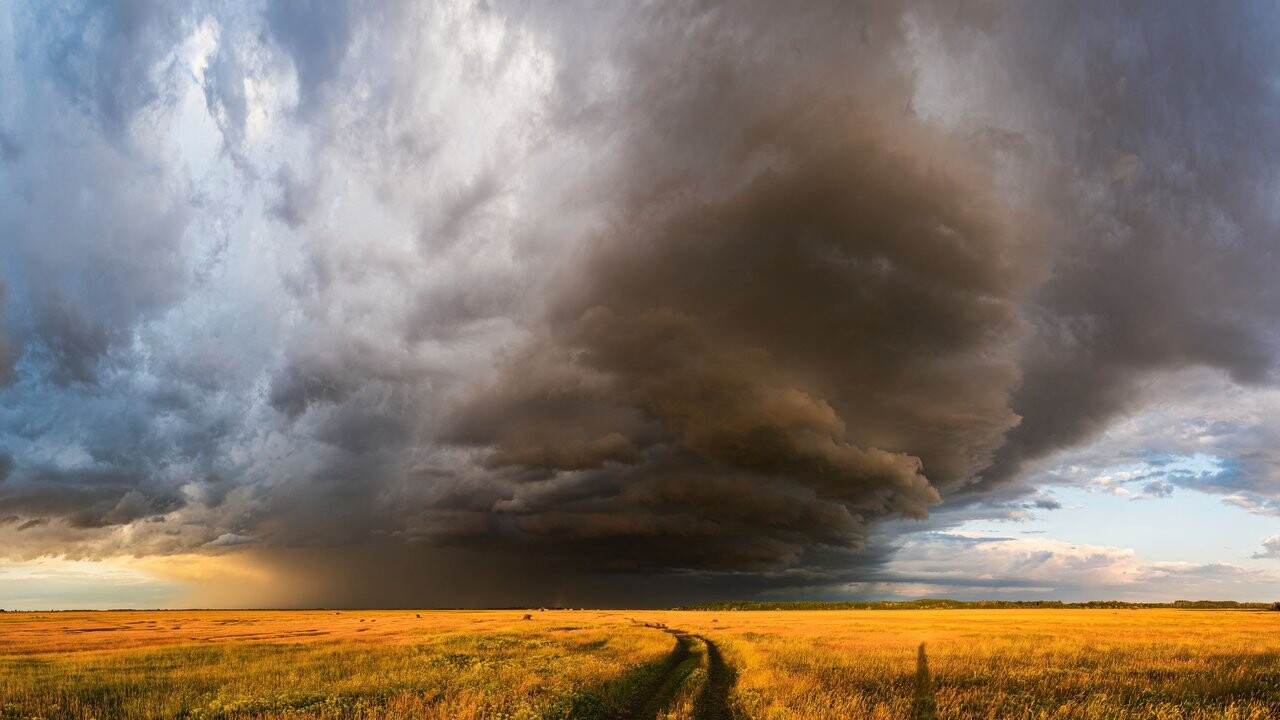
Broad language allows readers to supply missing details after an event. The American Psychological Association defines the Barnum effect as “the tendency to believe that vague predictions or general personality descriptions, such as those offered by astrology, have specific applications to oneself.”
A typical year brings storms, political tension, market worries, and technological change. A prediction that names only broad categories offers many chances to find a resemblance while making it easy to overlook details that did not fit.
A fair test asks three questions: Was the forecast preserved beforehand? Did it identify a reasonably precise outcome? Did it include conditions that could prove it wrong? The supposed 2026 predictions fail those tests because no reliable original record is available.
So Which Predictions Came True?
None can honestly be called a verified success. Natural disasters, armed conflicts, and AI investment were real, but their resemblance to broad claims circulated under Baba Vanga’s name is not evidence of foresight. Alien contact was not verified, and the global economy continued to grow.
The central problem is not simply whether something dramatic happened during 2026. There is no trustworthy original record against which Baba Vanga’s alleged words, dates, and conditions can be checked.
The fairest verdict is to remember the real events while keeping later folklore separate from evidence. Which supposed prediction did you hear most often during 2026?
Follow The HyperHive on MSN for more stories like this.
Sources:




