Carney Says U.S. Trade Deal Is Possible After Trump Meeting

Canadian Prime Minister Mark Carney attends an opening ceremony in Montreal in November 2025. Lea-Kim / Wikimedia Commons, CC BY-SA 4.0 (cropped)
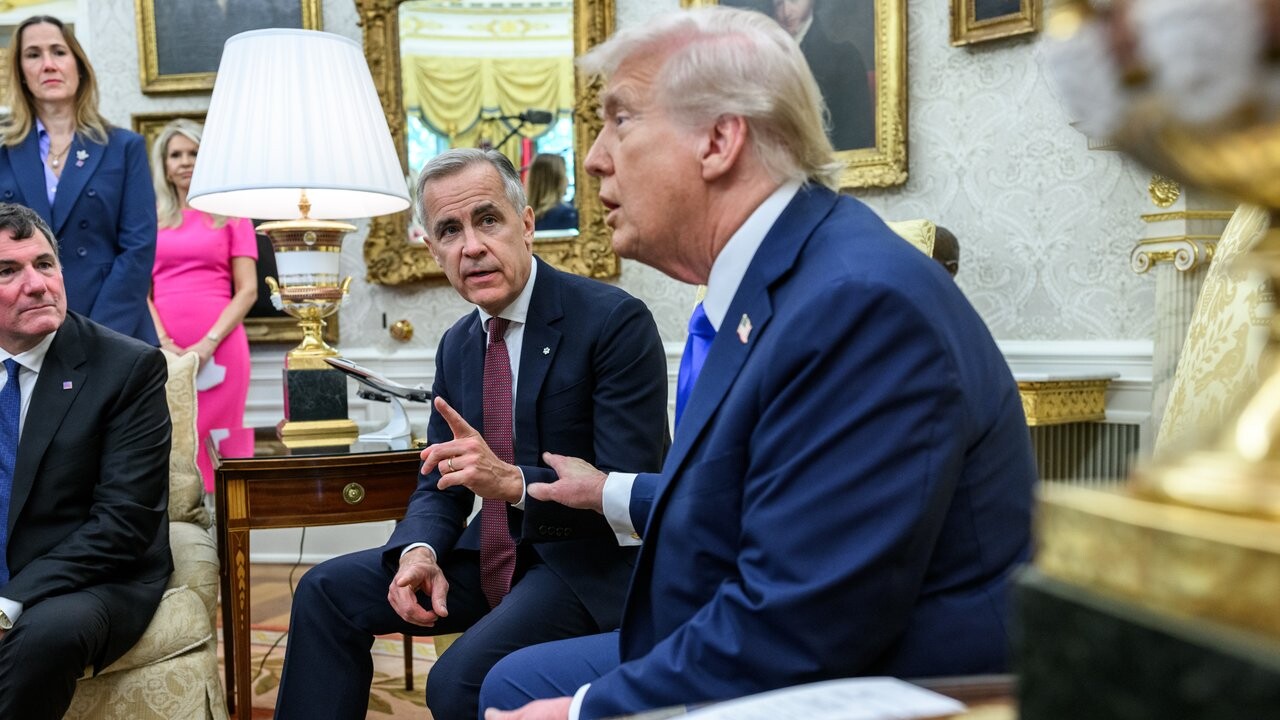
Canadian Prime Minister Mark Carney said Canada and the United States could still reach a strong trade agreement following his Nov. 18 meeting with President Donald Trump in Shenzhen, China. However, he said the negotiations had not reached the finish line.
Carney discussed the talks remotely from Shenzhen during an interview for The New York Times’ 2026 DealBook Summit. His office later said the two leaders had agreed to continue their work and remain in close contact.
What Happened at the Meeting?
Carney and Trump met on the sidelines of the Asia-Pacific Economic Cooperation Economic Leaders’ Meeting. According to Carney’s office, they discussed efforts to reach a mutually beneficial trade agreement that would support jobs and affordability while respecting Canada’s languages, culture, and sovereignty.
The official readout said the leaders agreed to continue the work and stay in close contact. It did not describe specific concessions by either country.
Where Do the Trade Talks Stand?
Carney said a “very, very good trade arrangement” remained possible under the United States’ new trade policy, but added, “we’re not yet there.” He also said Canada would not sign an agreement that did not make sense for the country.
During the DealBook interview, Carney emphasized that Canada would continue pursuing other opportunities while talks with Washington remained unresolved. “We would like to do the deal. But if the U.S. doesn’t want to do the deal, we’re busy,” he said.
The Associated Press reported that Carney had also said Canada would not accept an agreement that undermined its auto industry. That position leaves a significant point of contention as the two governments continue their work.
What Has Carney Said About Trump?
Carney has previously described a difference between Trump’s public approach and his manner during private discussions. At a March 4 appearance at the Lowy Institute in Sydney, Carney said Trump was different in private and more interested in hearing another leader’s viewpoint, ABC News reported.
Carney also told the Sydney audience that leaders should avoid being obsequious while continuing to show Trump respect. His comments presented private dialogue as a possible way to work through disagreements, although he cautioned that the process was not easy.
Why Is Canada Expanding Its Trade Options?
The Associated Press reported that U.S. tariffs had strained the trading relationship and pushed Ottawa to seek additional markets. Carney has framed diversification as a way to reduce Canada’s dependence on any single partner, rather than as a replacement for trade with the United States.
Four days before meeting Trump, Carney announced that Canada had substantially concluded free-trade negotiations with the Association of Southeast Asian Nations. Canada also concluded negotiations on a separate agreement with the Philippines. Those developments give Ottawa additional options as its more complicated talks with Washington continue.
The meeting ended without an announced agreement, but their teams will remain in contact as Canada expands its other trade relationships. Do you think continued private diplomacy can help Canada and the United States reach a deal?
Follow The HyperHive on MSN for more stories like this.
Sources: