Giant Trees Loggers Cut Down a Century Ago, in Photos

Curtis, C. C. / Wikimedia Commons, Public domain (cropped)
These photographs turn immense trees into a human-scale history. Crews used hand tools, animal power, steam, cables, and railroads to bring down and move trunks that dwarfed the people working beside them.
The slides move from famous sequoia stumps through mechanized logging and the conservation era. The history comes from federal and state park records, while museums, libraries, and government archives preserve the images.
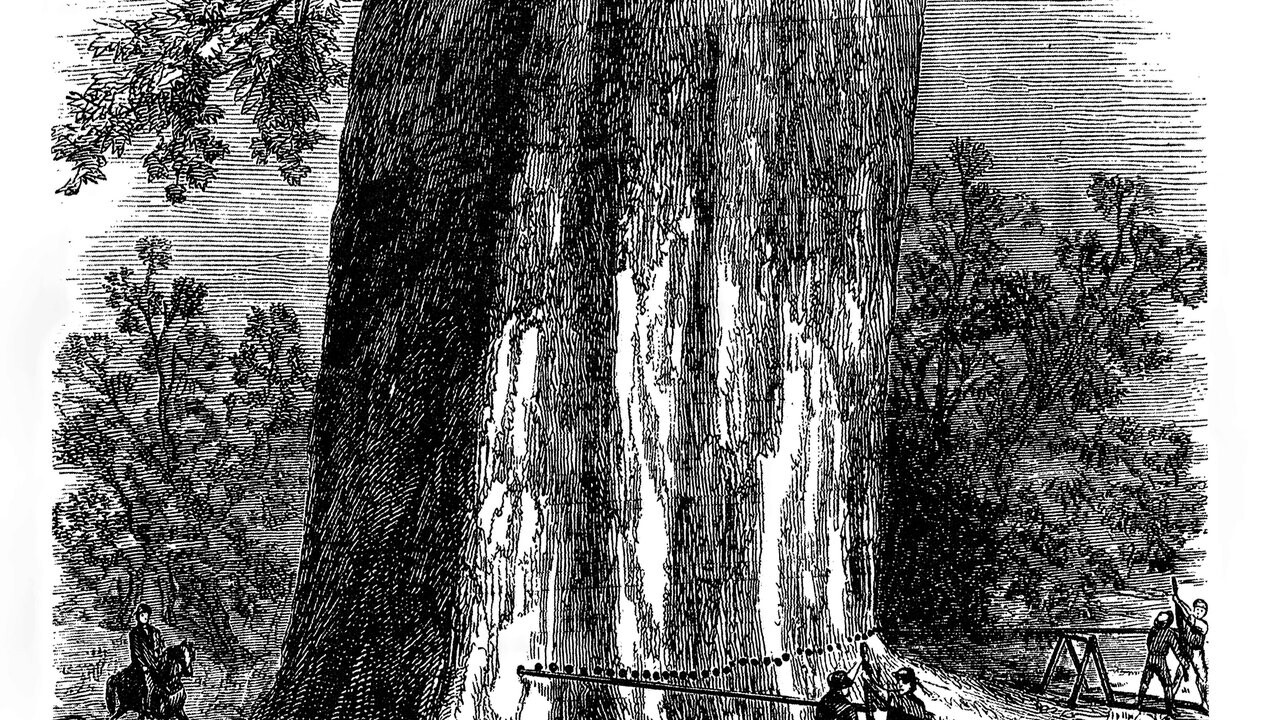
1853: The Discovery Tree Becomes the Big Stump
The Discovery Tree at Calaveras was cut down for a public exhibit. Its bark and a section of the trunk were shipped to New York, where the exhibit failed and the pieces were later destroyed by fire. What remained in the North Grove became known as the Big Stump.
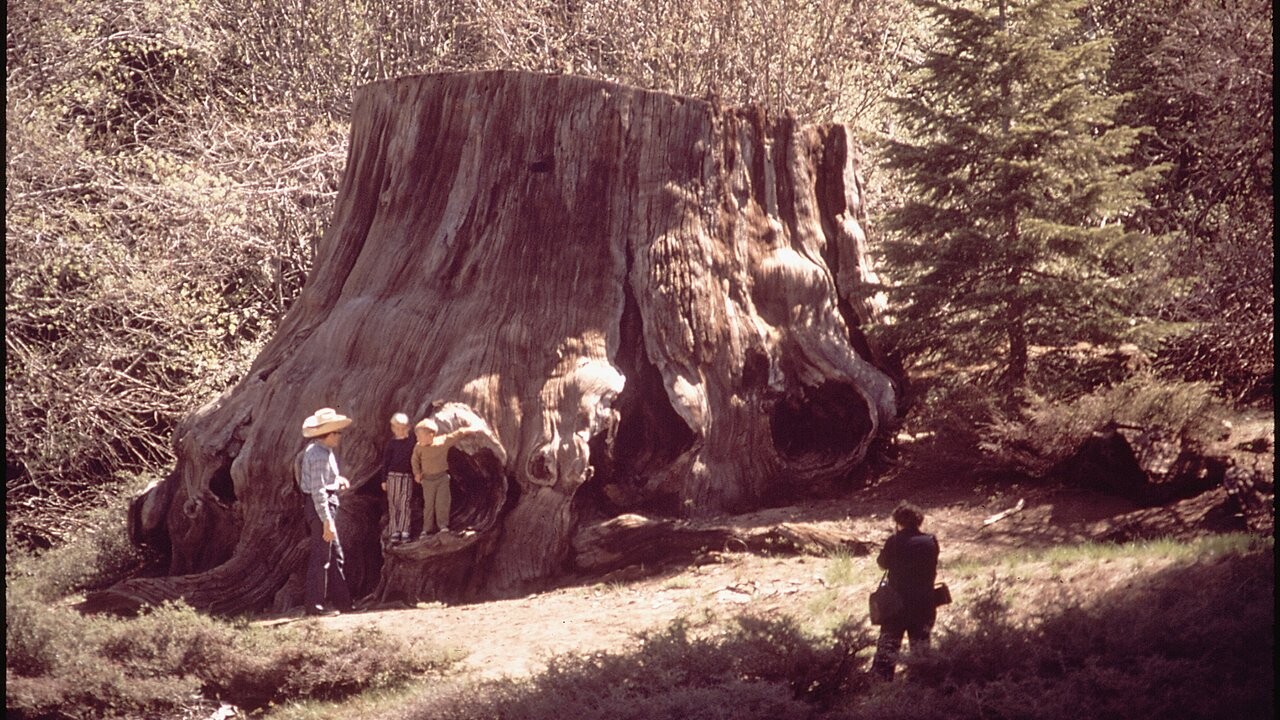
1883–1891: Big Stump Grove Is Logged
Most of the old-growth giant sequoias in Big Stump Grove were cut during these years. The stump field that followed was not simply empty ground. Young sequoias later became established in many of the openings, leaving living stands among the remnants of the earlier forest.
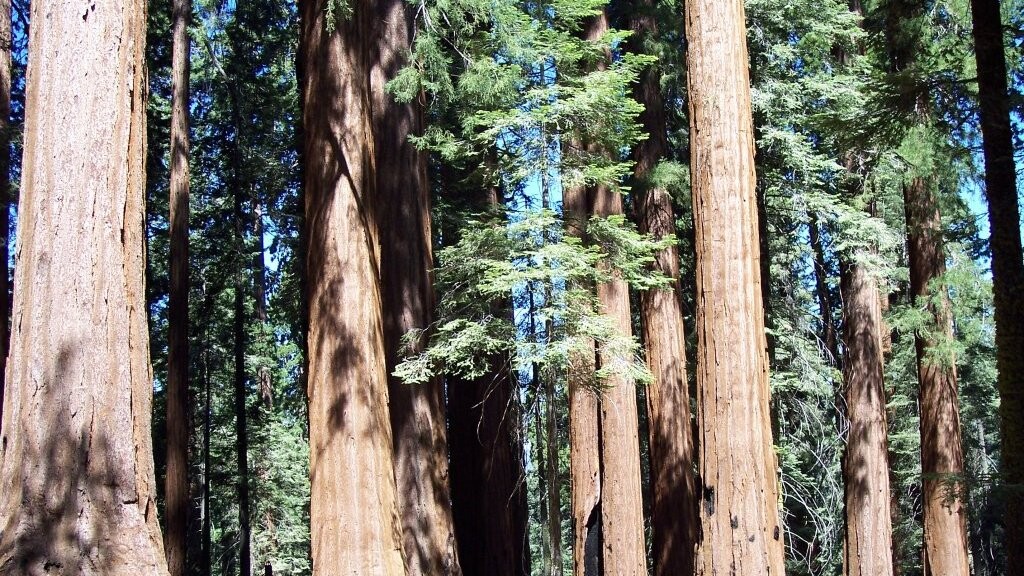
1890: A National Park Protects Giant Forest
Sequoia National Park was created to protect giant sequoias from logging. Its boundaries preserved Giant Forest, one of the largest groves, while large-scale cutting continued elsewhere. The new park placed a living forest, rather than harvested timber, at the center of its purpose.
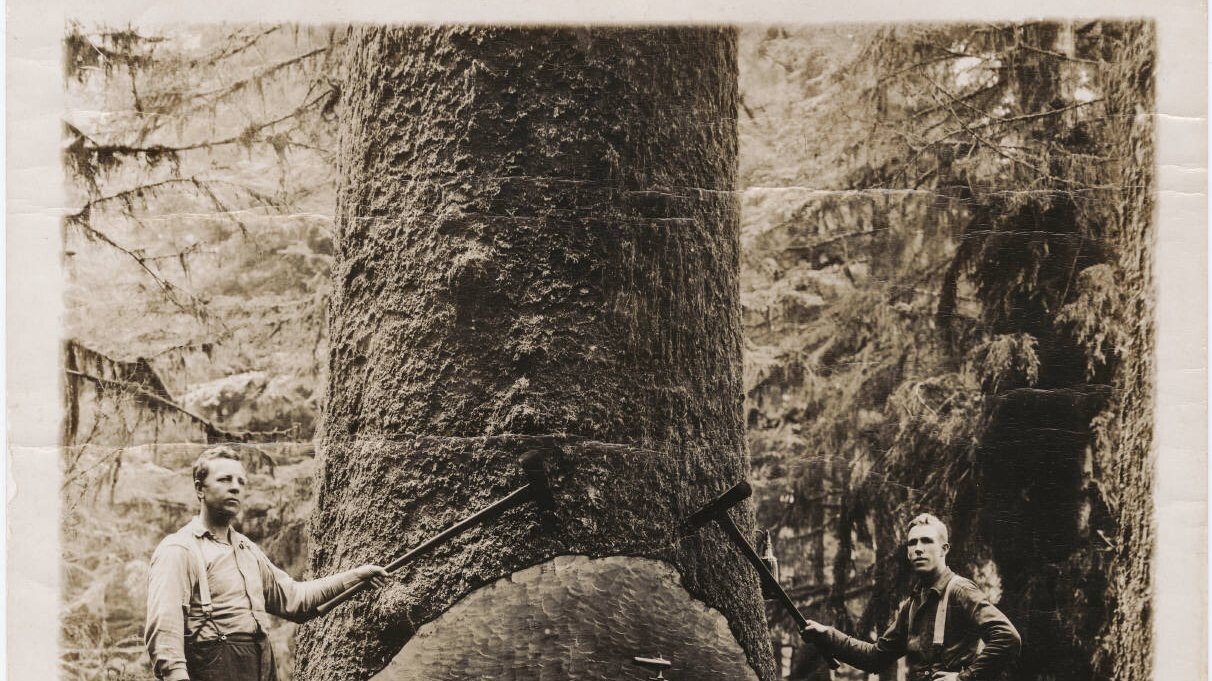
1890: Darius Kinsey Takes Up a Camera
Darius Kinsey bought his first camera that year. In 1906, the Kinseys moved their business to Seattle. His photographs preserve the working system: fallers, crews, animals, engines, railroads, mills, and trees that dwarfed them all.
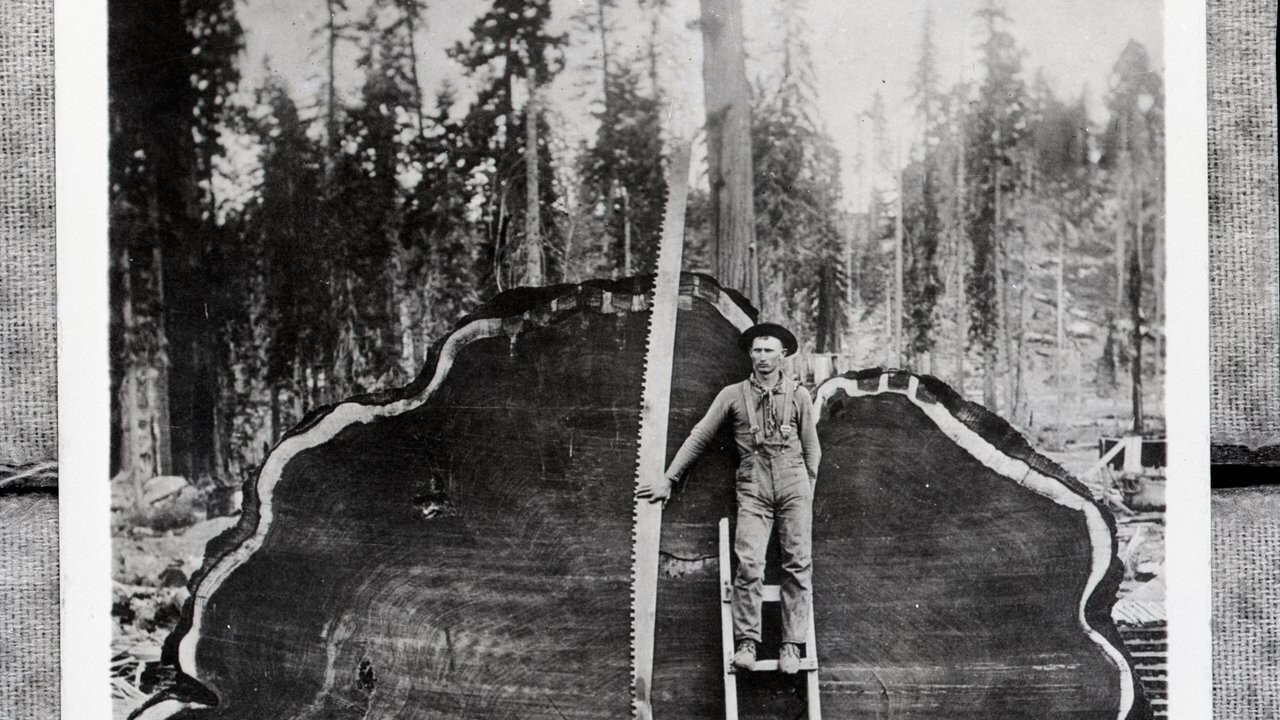
1891: The Mark Twain Tree Falls
The Mark Twain Tree was felled at Big Stump Grove for museum display. The giant sequoia measured 16 feet across, and sections were displayed in New York and London. The exhibits allowed distant visitors to confront the scale of a tree unlike anything most had seen.
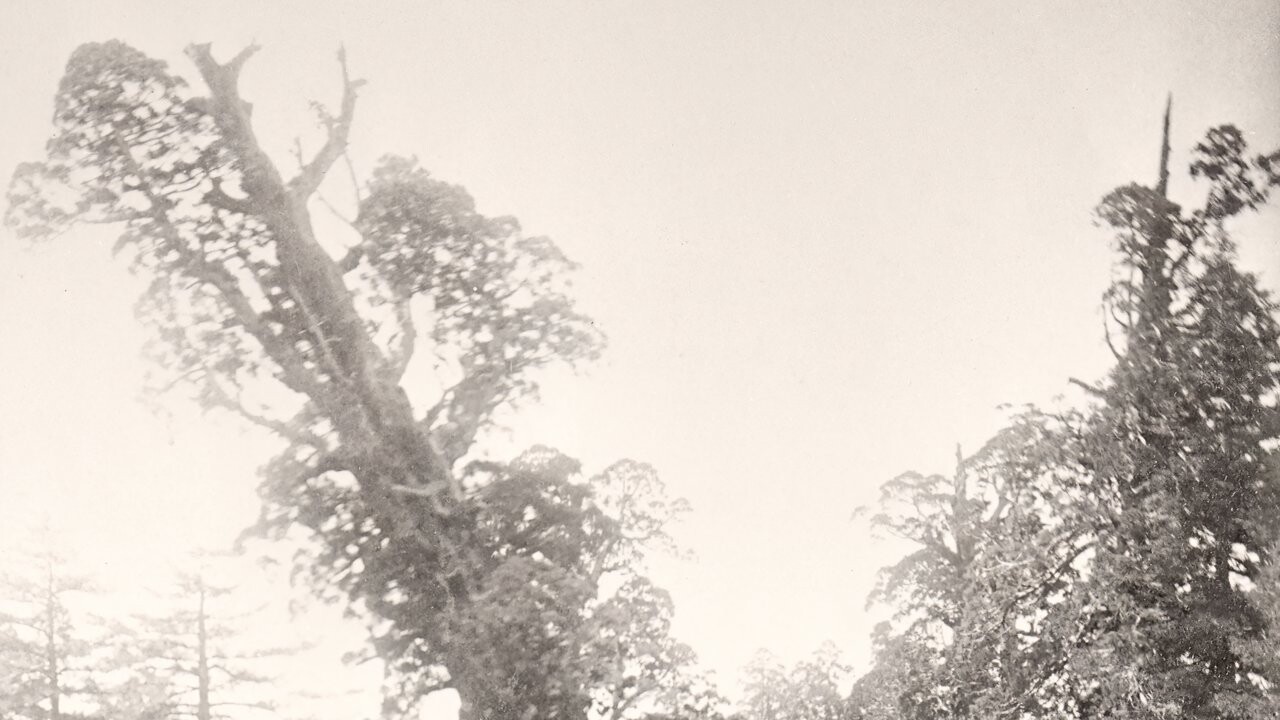
1892: The General Noble Tree Is Cut
An 1892 photograph documents the cutting of the General Noble Tree in Converse Basin. The surviving base later became known as the Chicago Stump. The image places workers beside the immense trunk and links the still-standing tree to the stump that visitors would know later.
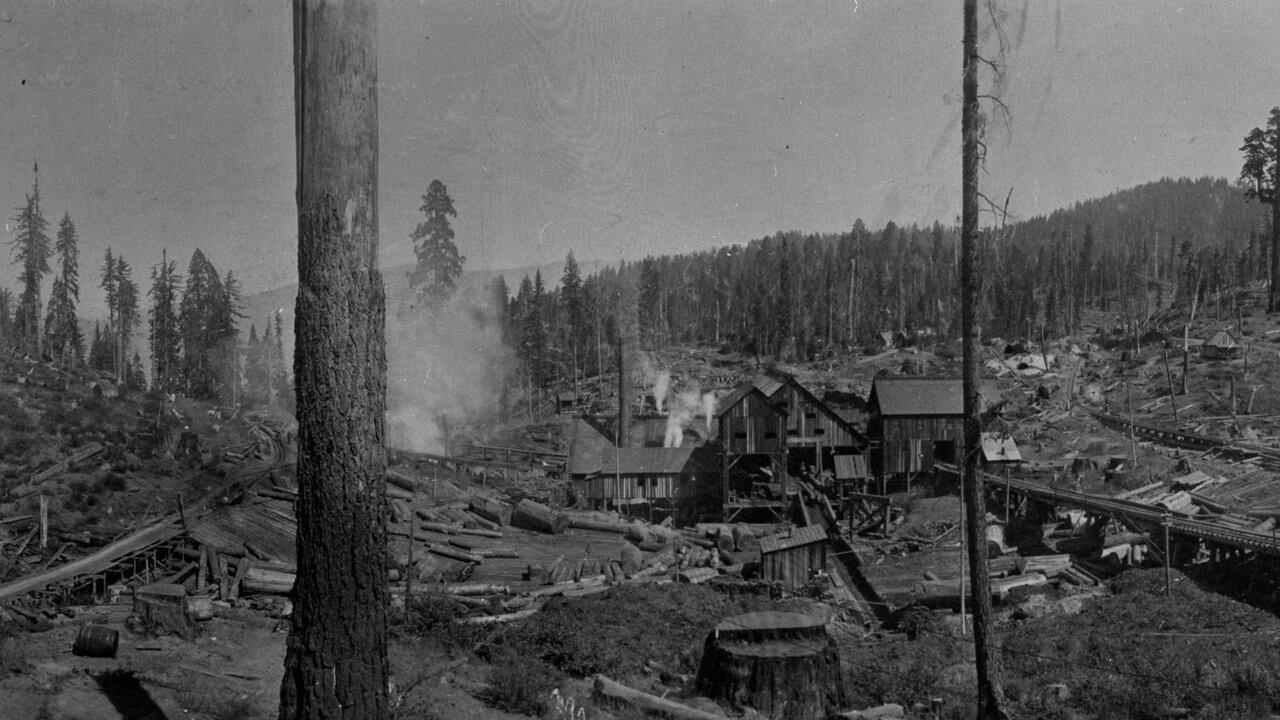
1893–1908: Converse Basin’s Logging Era
During this period, loggers extensively clear-cut Converse Basin without power saws. The scale was extraordinary: the National Park Service says more mature and old-growth sequoias were probably cut there than in all other groves combined. The surviving photographs place individual workers against the vast size of that operation.
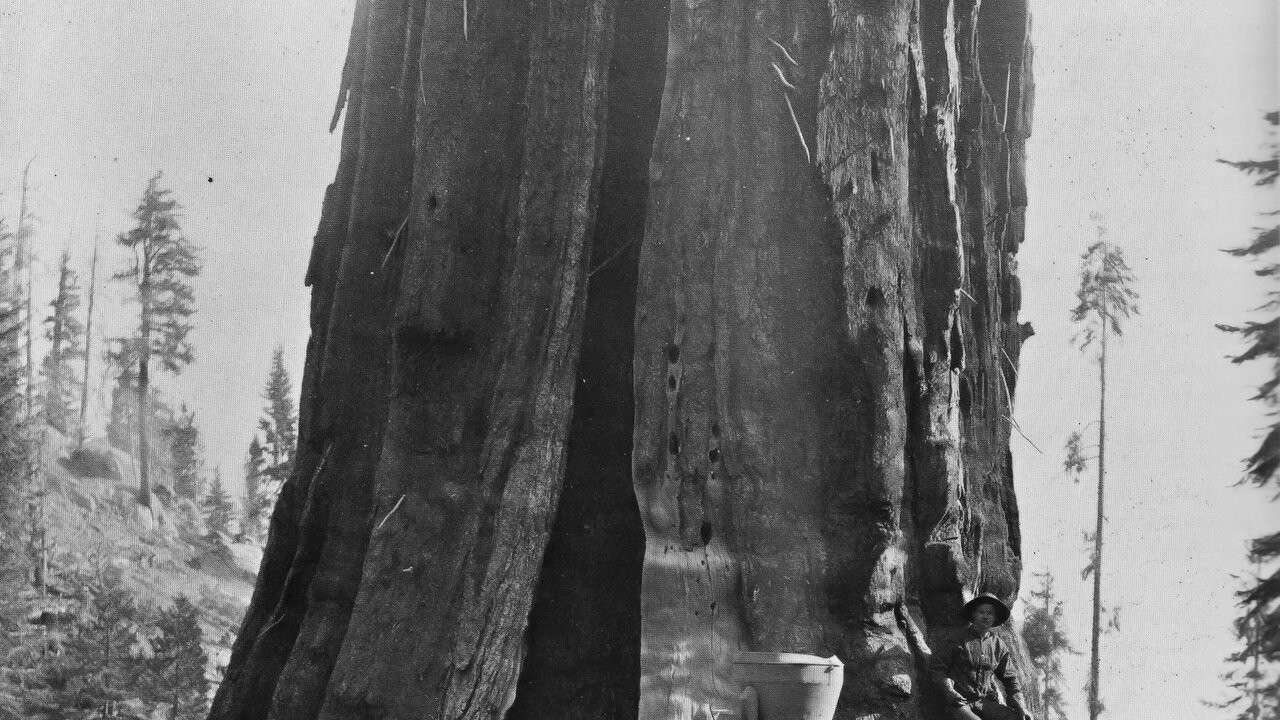
The Boole Tree Is Left Standing
Not every giant in Converse Basin fell. The Boole Tree was spared and remains the largest tree in America’s national forests. It bears the name of Sanger Lumber Company manager Frank Boole, who is thought to have ordered that it be left standing. Its survival offers a living counterpoint to nearby stumps.
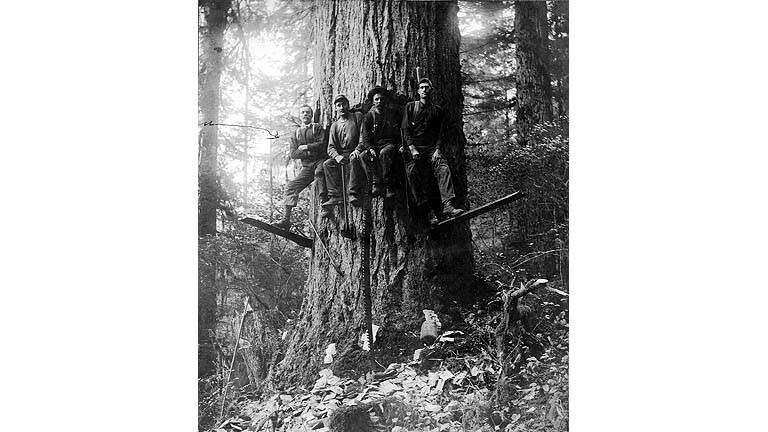
1903: Springboards Lift the Fallers
Springboards were narrow platforms fitted into slots chopped in a trunk. By lifting fallers above the wide, sap-heavy base, they made the working cut easier to reach. An archival photograph from Deep River, Washington, shows loggers balanced on the platforms while using a crosscut saw and felling axes.
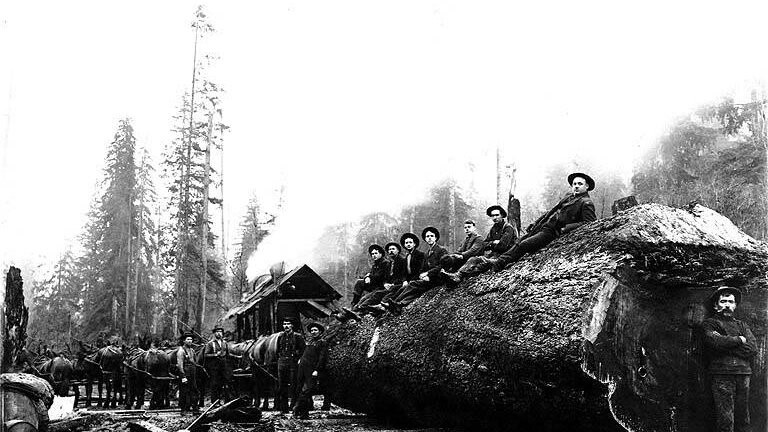
1905: Horse Power on the Skid Road
Horse teams also pulled heavy logs along skid roads. The basic task remained the same: move timber from the cutting ground toward a landing. Kinsey’s 1905 photograph shows ten horses hauling a spruce log 10 feet in diameter along a skid road in Washington.
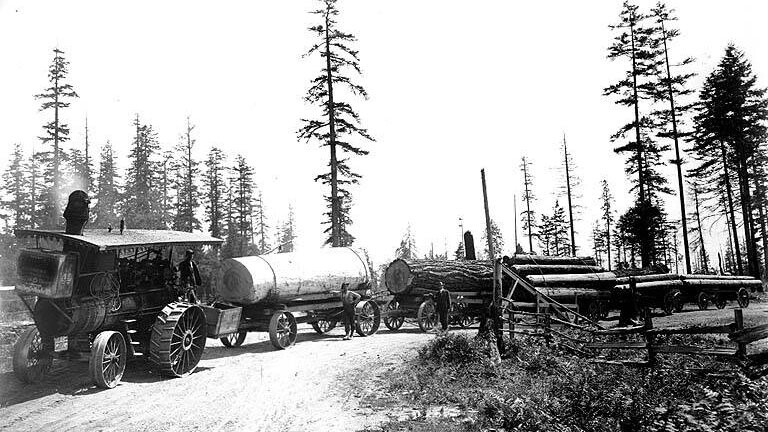
1907: Traction Engines Pull the Load
Traction engines offered another bridge between animal teams and logging railroads. These self-propelled steam machines could pull several loaded wagons over a prepared route. A Kinsey photograph from that year records one hauling five wagonloads of logs in Washington as older and newer transport systems overlapped.
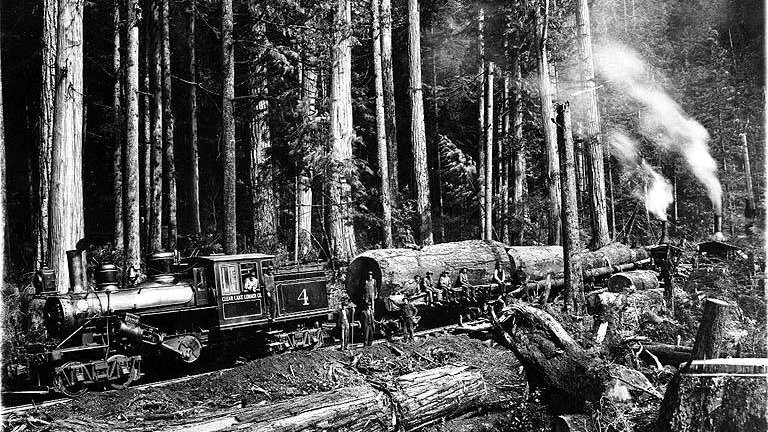
1908: Log Trains Extend the Cutting Ground
Logging railroads moved cutting operations beyond waterways and animal-powered routes. Rail lines reached timber previously isolated by rugged terrain and distance from water. Kinsey’s photograph of a Clear Lake Logging Company train captures this moment, when rails carried immense loads toward mills and shipping points.
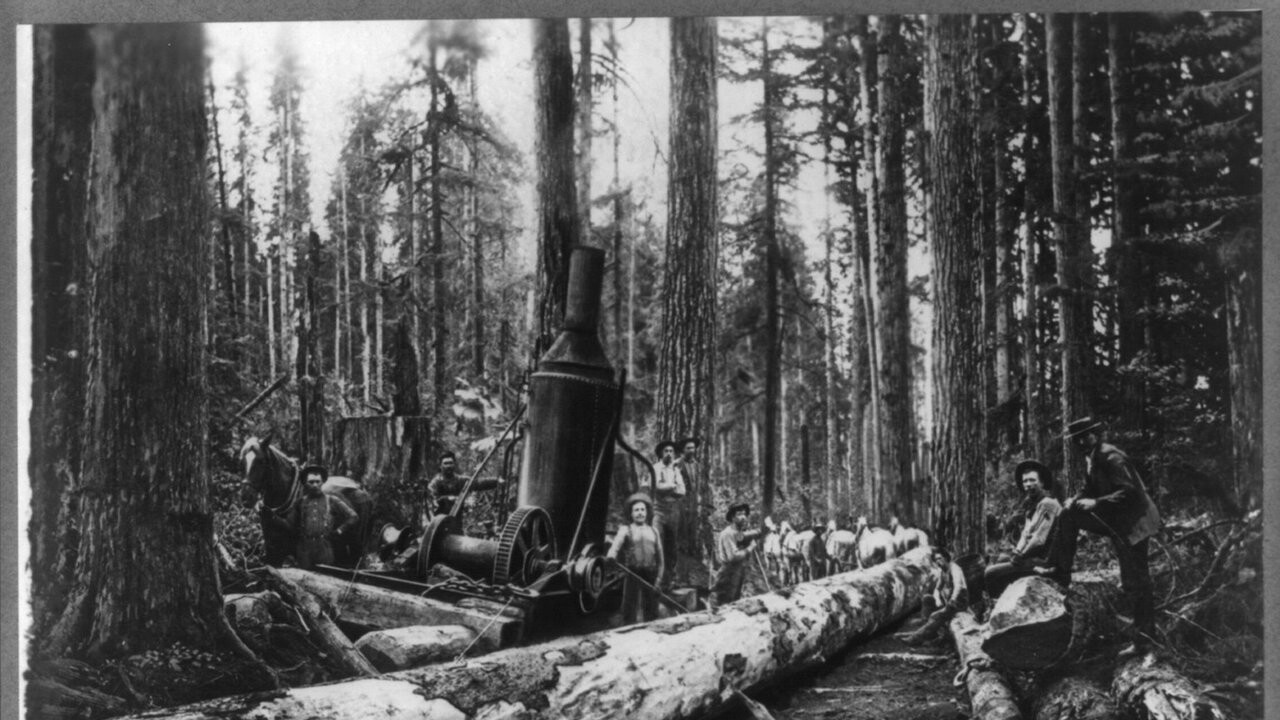
The 1910s: Steam Donkeys Take Over
A steam donkey was an engine and winch used in logging operations. Its cables and blocks dragged logs along skid roads, replacing much of the pulling once done by animals. A Library of Congress photograph from near Tacoma shows the machine amid workers, horses, and enormous timber.
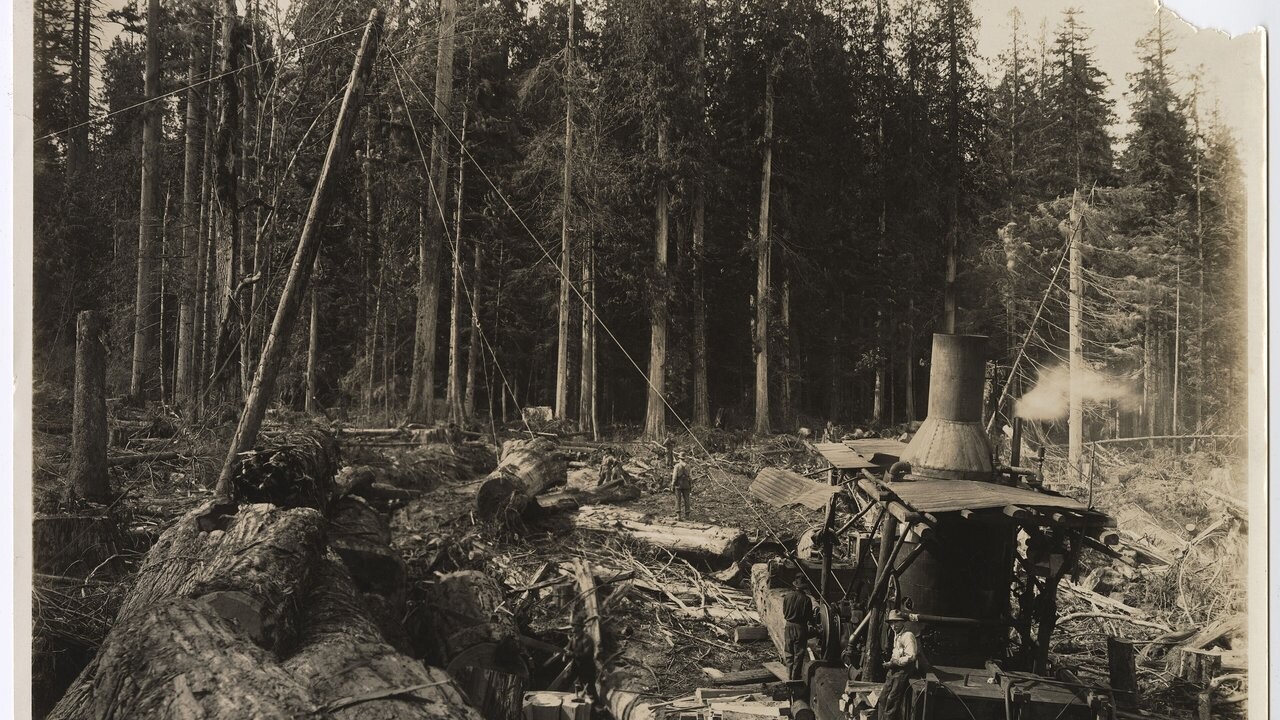
1913: Cables Lift Logs Onto Railcars
Steam-powered cable systems did more than drag logs across the ground. With blocks, rigging, and a loading structure, a crew could hoist heavy timber for the next leg to the mill. Kinsey’s photograph from that year records a lumber crew and steam donkey lifting logs together.
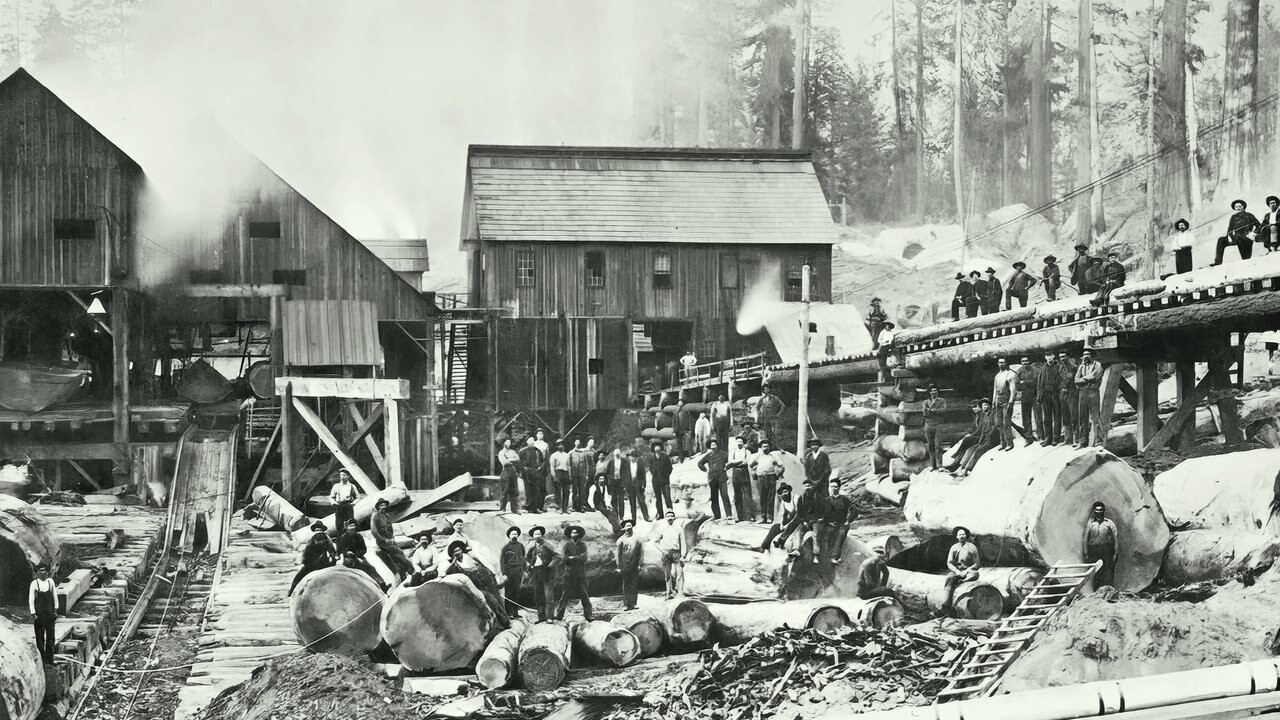
The Sawmill Completes the Chain
Sawmills turned the forest’s largest trunks into saleable lumber. At Converse Basin, milling happened near the cutting grounds before the wood traveled through flumes toward valley towns. Historic mill views make clear that felling a tree was only the opening stage of a larger industrial chain.
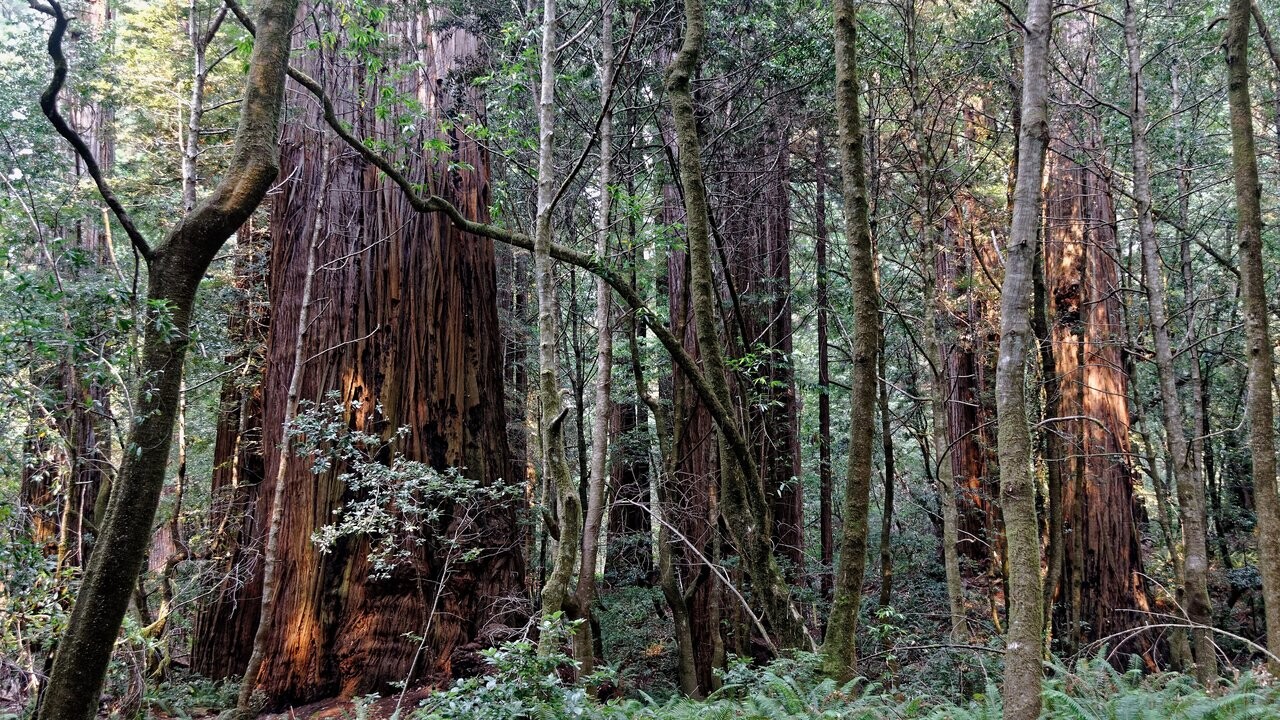
1968: Redwood National Park Is Established
Redwood National Park secured stands of uncut old-growth near Orick, California. The park expanded in 1978, bringing more land into the protected landscape. Today, ancient forest stands beside previously logged ground, where restoration shows that preservation can involve both safeguarding survivors and repairing damaged terrain.
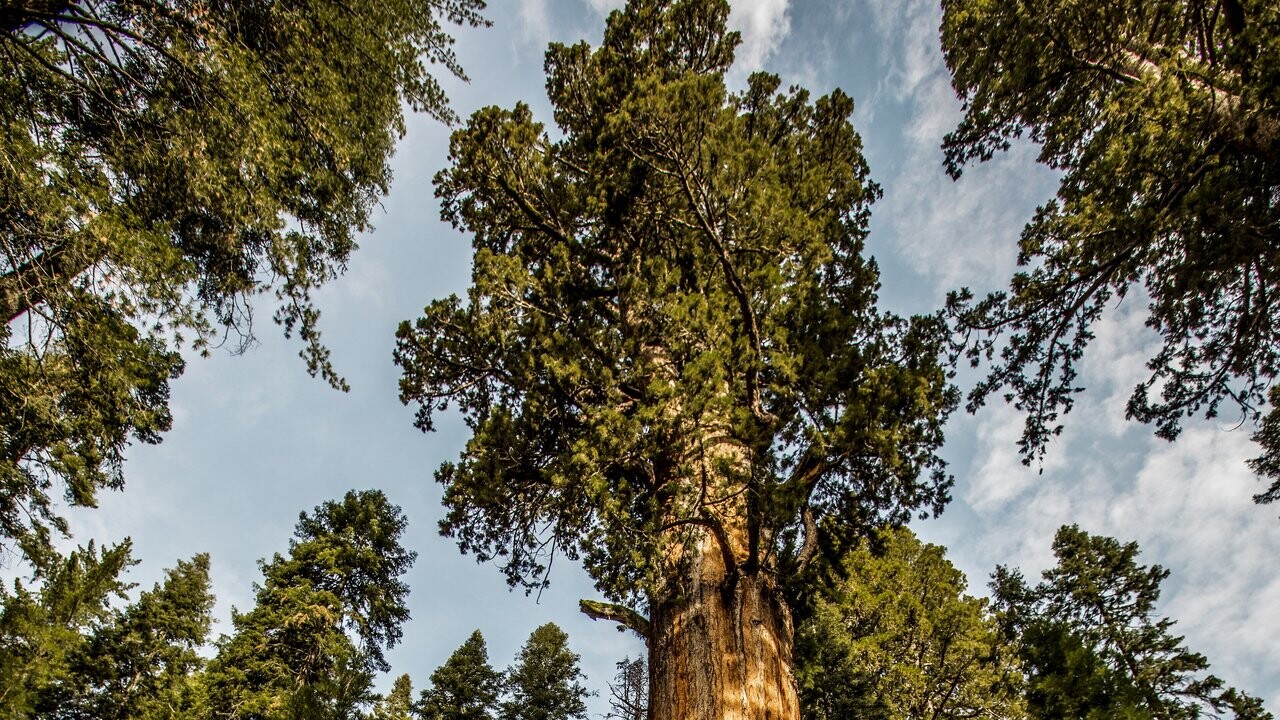
What Was Saved: General Sherman
General Sherman, the largest living sequoia, stands in Giant Forest. Its most recent age estimate is about 2,200 years, making its continued presence difficult to measure on a human timescale. The tree closes this history with a different view of value: not what one trunk could yield, but what an intact grove could preserve.
The old photographs preserve both the ingenuity of the work and the scale of what disappeared. Which image or surviving tree would you most want to see in person?
Follow The HyperHive on MSN for more stories like this.
Sources:






