How Often Should Adults Over 65 Wash Their Hair? What Dermatologists Advise

© Kampus Production / Pexels
How often should you shampoo once you’re past 65? Every day, once a week, or somewhere in between?
As we age, hair gets thinner, and the skin makes less oil, so the routine that worked at 40 may not be the right one now.
There’s no official number of washes for older adults, but dermatologists and aging experts offer clear guidance. Here’s what they recommend.
How Does Hair Change After 65?
Hair turns gray because hair follicles make less pigment, and nearly everyone loses some hair with age, according to MedlinePlus from the National Library of Medicine. Hair also grows more slowly, and the strands become thinner and finer.
Many men are nearly bald by age 60. Women can develop female pattern hair loss, which the American Academy of Dermatology (AAD) calls the most common cause of hair loss in women. It usually starts in the 40s, 50s, or 60s.
The skin changes, too. “Older adults may produce less sweat and oil from the glands in their skin,” the National Institute on Aging (NIA) says. In women, that drop in oil often begins after menopause.
How Often Should Older Adults Wash Their Hair?
The AAD’s advice is simple: “Wash your hair based on how often it gets dirty or oily.”
That means the right schedule depends on your hair and scalp, not on age alone. According to the AAD, people with straight hair and an oily scalp may need to shampoo every day, while those with dry, curly, or thick hair can wash as needed, but at least once every two to three weeks.
Because the scalp tends to make less oil later in life, many older adults find they can wash less often. The AAD has advised in the past that as you get older, you may not need to shampoo as often. Flakes, however, can be a sign that you’re not shampooing enough.
Gentle Care for a Dry or Itchy Scalp
- Shampoo the scalp, not the ends. The AAD suggests focusing shampoo on the scalp so the rest of the hair doesn’t dry out.
- Always condition. Use conditioner after every wash, on the ends for fine hair or along the full length for dry or curly hair.
- Skip hot water. The NIA recommends mild soap and warm, not hot, water. The AAD notes that hot showers can trigger seborrheic dermatitis, a flaky, itchy scalp condition.
- Go easy on heat. Limit blow-drying and hot irons, and use a low or medium setting.
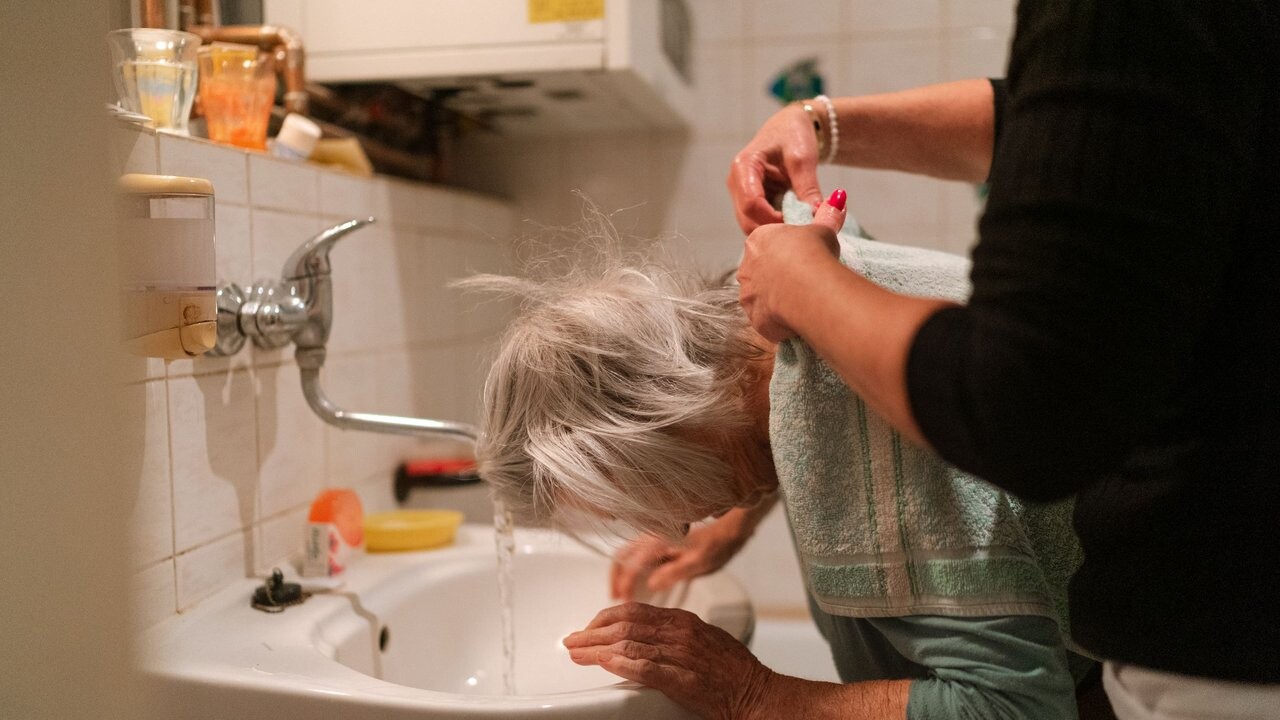
- Pat, don’t rub. Wrap wet hair in a towel or T-shirt and detangle it gently with a wide-tooth comb.
Mild dandruff usually improves with regular washing, the AAD says. If it doesn’t, an over-the-counter dandruff shampoo with ingredients such as zinc pyrithione, selenium sulfide, or ketoconazole can help. Some need to stay on the scalp for five to 10 minutes before rinsing.
Dry shampoo can help between washes, but it absorbs oil rather than cleaning the hair. Dermatologists quoted by the AAD recommend a real wash after one or two uses.
See a board-certified dermatologist if flakes don’t clear up or are severe, if patches crust, ooze, or turn very red or painful, or if you notice sudden hair loss. Rough, scaly patches on the scalp can also be sun damage, so people with thinning hair should protect their scalp with sunscreen of SPF 30 or higher.
How Can You Wash Your Hair Safely?
The bathroom is a common place to fall. “More than one in four people age 65 years or older fall each year,” the NIA says. It recommends grab bars inside and outside the tub and shower, plus “nonskid mats, strips, or carpet on all surfaces that may get wet.”
For people who need help, the NIA suggests washing hair in the sink with a hose attachment, or using a handheld showerhead. Some barbers and hairstylists will also come to your home.
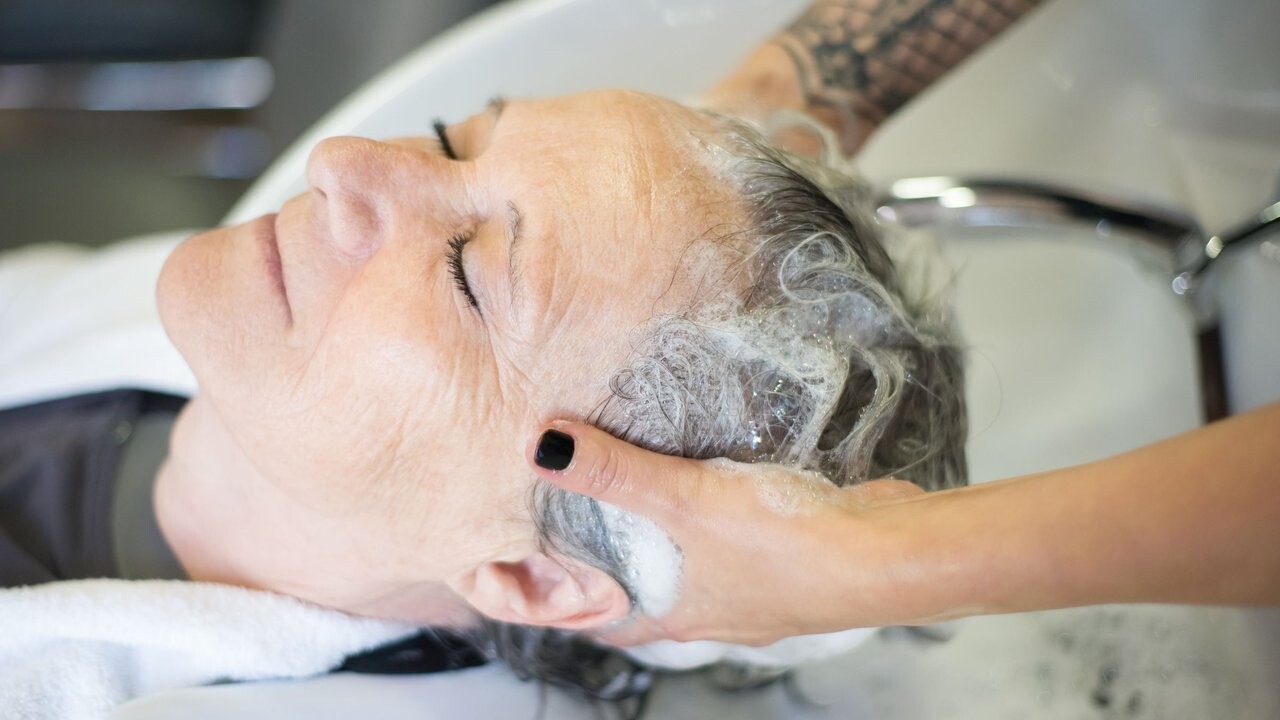
At the salon, there’s a rare risk to know about. Tipping the neck far back over a salon sink has been linked to a stroke-like event known as “beauty parlor stroke syndrome.” A 2025 review in The American Journal of Emergency Medicine found 54 reported cases in the medical literature and described the condition as rare. Dizziness, balance problems, and headache were common symptoms, so anyone who develops them suddenly should get medical help right away.
In the end, there’s no magic number. Wash when your hair feels dirty or oily, be gentle with an aging scalp, and make the bathroom as safe as possible.
Sources:
- American Academy of Dermatology: Tips for healthy hair
- American Academy of Dermatology: Female pattern hair loss
- American Academy of Dermatology: How to treat dandruff
- American Academy of Dermatology: Seborrheic dermatitis, self-care
- American Academy of Dermatology: Dry shampoo tips
- MedlinePlus: Aging changes in hair and nails
- National Institute on Aging: Skin Care and Aging
- National Institute on Aging: Bathing, Dressing, and Grooming (caregiving)
- National Institute on Aging: Preventing Falls at Home, Room by Room
- The American Journal of Emergency Medicine (2025): Beauty parlor stroke syndrome, a scoping review
You might also want to read: How Often Should Adults Over 65 Shower? What Dermatologists and Aging Experts Recommend



