Have you wondered whether you should shower in the morning or at night after 65?
A warm shower before bed may help you fall asleep, while a morning shower may work better for shaving and getting ready for the day. The better choice depends on your routine and when you feel steadiest, especially if you experience dizziness, dry skin, or nighttime bathroom trips.
Here is how to choose a time that works for your sleep, safety, and comfort.
Is Morning or Night Clearly Better?
No single routine suits every man. Think about your sleep, steadiness, skin comfort, and bathroom setup when choosing a shower time.
If you feel steady and already sleep well, choose the time that is convenient and unhurried. Morning may fit naturally if you shave, dress, and get ready for the day right after. An evening shower can become a relaxing part of your bedtime routine.
Pay attention to how you feel at each hour. If you wake up lightheaded, wait until you feel steady before showering. If you tend to feel tired or unsteady late at night, shower earlier in the evening.
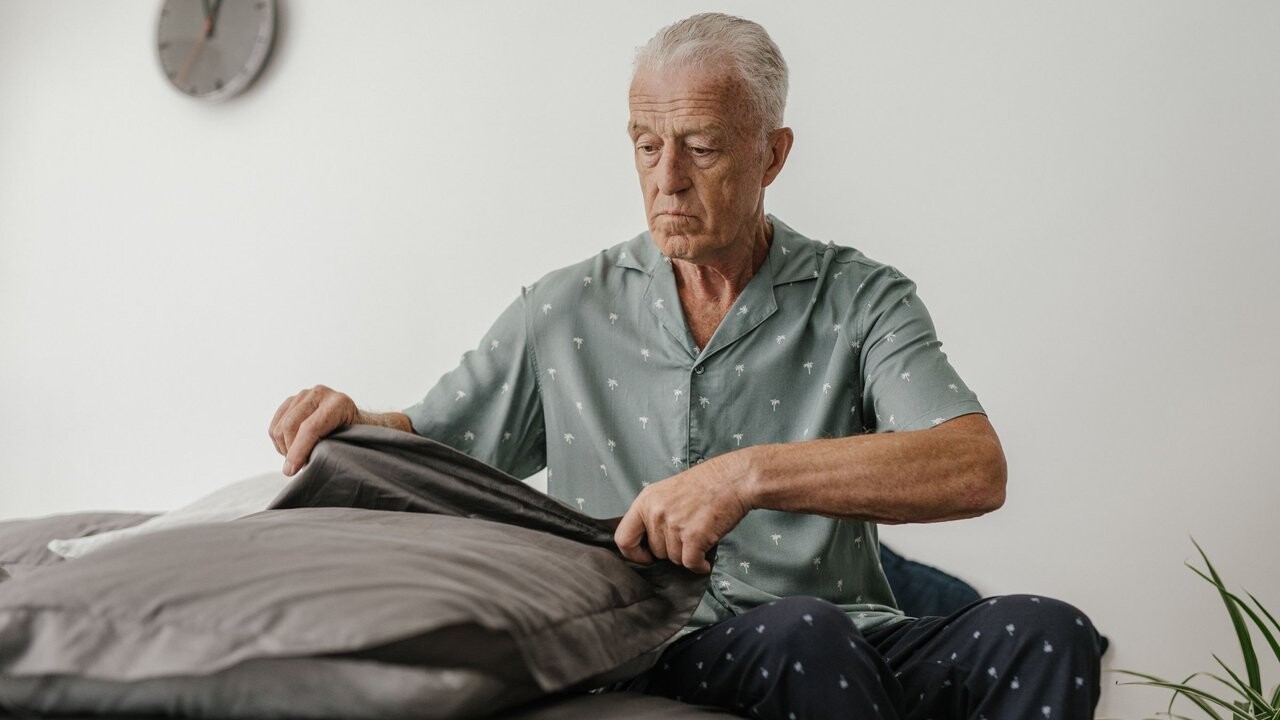
Can an Evening Shower Help You Sleep?
A 2019 systematic review and meta-analysis found that a warm shower or bath taken one to two hours before bed, for as little as 10 minutes, was associated with falling asleep faster.
The National Institute on Aging tells older adults, “Have a bedtime routine.” Its booklet lists a warm bath as one of several ways to relax before bed.
Try an evening shower for several nights and notice whether it helps you settle down. Keep the water comfortably warm rather than hot, and leave enough time to dry off and relax before getting into bed. If you already sleep well and prefer showering in the morning, you do not need to change a routine that works for you.
What If You Get Up at Night to Urinate?
Nighttime urination makes a safe bathroom setup especially useful. The National Institute of Diabetes and Digestive and Kidney Diseases estimates that an enlarged prostate affects 29% to 33% of men ages 65 and older, and nocturia is one possible symptom.
That symptom does not identify its cause on its own. The NIDDK advises men to “discuss any urinary symptoms” with a health care professional. Seek advice if nighttime urination is persistent, disruptive, painful, or accompanied by other urinary changes.
If you shower in the evening, dry the bathroom floor afterward and keep the route from your bed clear. A few simple changes can make later bathroom trips easier to navigate.
- Light the route. Place a nightlight between the bed and bathroom, and remove clutter or loose objects you could trip over.
- Add traction. Use a non-slip rubber mat or self-stick strips in the shower, and leave the surrounding floor dry.
At night, move at a comfortable pace instead of rushing. Changing your shower time will not address the reason for persistent urinary symptoms, so discuss them with a health care professional.

Can Morning Be the Dizzy Time?
Morning is not automatically the best choice if you feel lightheaded after getting up. Cleveland Clinic says orthostatic hypotension symptoms can occur more frequently and more severely in the morning. It also says a hot shower can make symptoms worse.
Medication may also be relevant. The National Heart, Lung, and Blood Institute lists medicines used to treat high blood pressure among the possible causes of low blood pressure.
If you often wake up woozy, rise slowly. Sit for a few moments before standing, and wait until you feel steady before walking to the shower. Choose warm water instead of very hot water. If showering first thing consistently feels difficult, try a later hour when you are more alert.
Tell your clinician about repeated dizziness, particularly if it began after a medication change. Ask the prescriber before changing how you take any medication.
What About Aging Skin and Shaving?
Water temperature and gentle care matter for older skin. The American Academy of Dermatology says skin can become dry and irritated with age because it is thinner and loses water more easily.
Its advice is direct: “Use warm (not hot) water.” After showering, pat your skin gently instead of rubbing it, then apply a fragrance-free moisturizer while your skin is still damp.
If you shave in the shower, do it near the end. Dermatologists explain that shower water softens the skin and hair, making irritation less likely. Morning may be more convenient if shaving is part of getting ready, but the same preparation works during an evening shower.
Choose the hour when you feel most alert and steady, then let comfort, sleep, and safety guide your routine.
This article is for general information and isn’t a substitute for advice from your doctor.
Sources:
- PubMed: Before-bedtime passive body heating by warm shower or bath to improve sleep
- National Institute on Aging: Sleep and Older Adults
- NIDDK: Enlarged Prostate (Benign Prostatic Hyperplasia)
- CDC STEADI: Check for Safety
- Cleveland Clinic: Orthostatic Hypotension
- NHLBI: Low Blood Pressure
- MedlinePlus Medical Encyclopedia: Dizziness
- American Academy of Dermatology: How to Care for Your Skin in Your 60s and 70s
- American Academy of Dermatology: Dermatologists’ Top Tips for Relieving Dry Skin