
Have you ever reached for the kitchen sponge and wondered how long it has been sitting beside your sink?
A sponge may still look usable after it has collected moisture, food residue, and microbes. Cleaning can reduce its bacterial load, but it does not make the sponge last indefinitely.
This matters in every household, especially when cooking for older adults. FoodSafety.gov says adults aged 65 and older face a greater risk of hospitalization or death from foodborne illness. Here is how to manage your sponge without making the routine complicated.
Why Do Kitchen Sponges Collect So Many Germs?
A kitchen sponge is porous, absorbent, and often damp. Bits of food can remain inside it after dishes or counters have been wiped, giving microorganisms places to collect and grow.
In a household study, NSF found coliform bacteria on more than 75 percent of the combined category of dish sponges and rags. The result did not apply to sponges alone, but it shows why both cleaning tools deserve attention.
A 2017 Scientific Reports study used microscopy to examine used kitchen sponges. At heavily colonized local sites, researchers measured bacterial densities as high as 54 billion cells per cubic centimeter. That was a local measurement, not an average for every part of every sponge.
The researchers also described sponges as reservoirs that can spread microorganisms across household surfaces. The practical concern is cross-contamination: a tool used for cleaning can move residue from one place to another when it is not managed carefully.
How Often Should You Replace Your Kitchen Sponge?
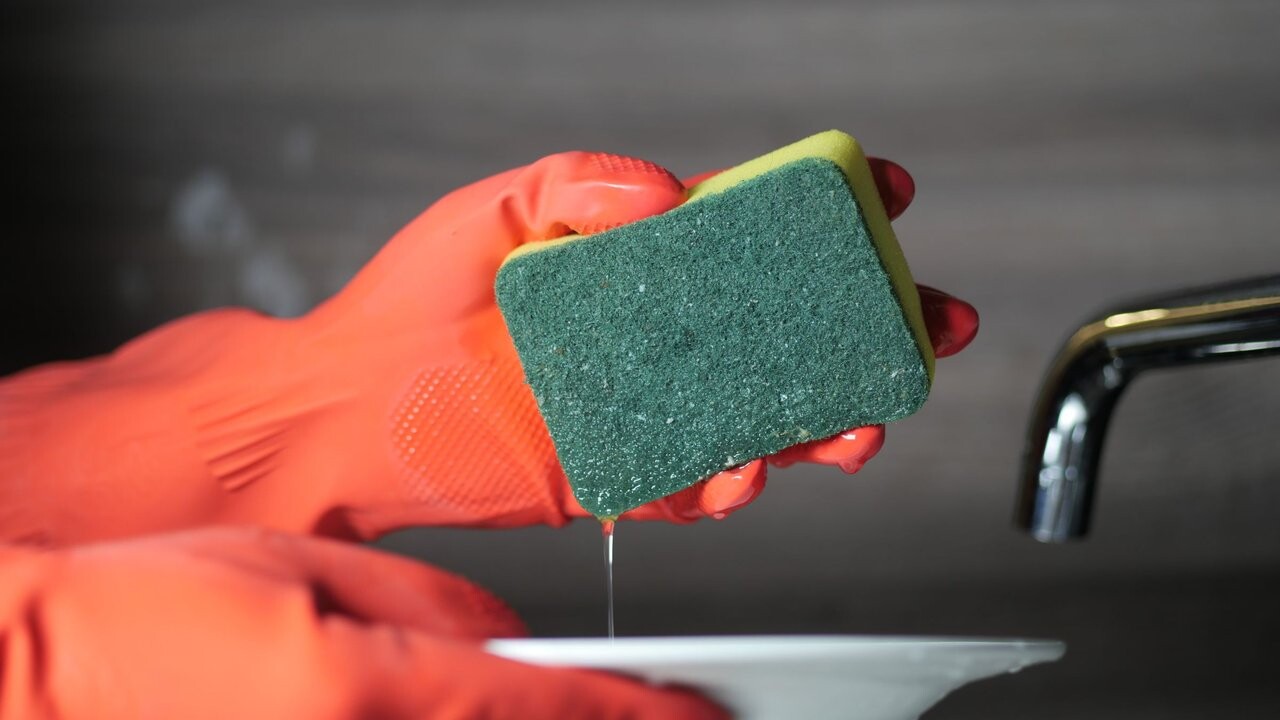
The Academy of Nutrition and Dietetics recommends replacing kitchen sponges every one to two weeks. The authors of the 2017 study suggested regular replacement on a weekly basis, while the USDA Food Safety and Inspection Service advises people who use sponges to buy new ones frequently.
How you use the sponge also matters. A sponge used repeatedly for greasy pans, food spills, and general cleanup will become soiled faster than one reserved for light dishwashing. Keep replacements handy, and start a new sponge sooner whenever the current one is dirty, damaged, or unpleasant to use.
Between uses, rinse away loose debris, wring the sponge out completely, and store it where it can dry. Do not leave a damp sponge in a bucket, beneath the sink, or flat in a puddle beside the faucet.
Professional guidance offers a useful point of comparison. The FDA Food Code is a model offered to government jurisdictions for adoption rather than a rule that automatically applies everywhere. Its model provision says sponges may not contact cleaned and sanitized or in-use food-contact surfaces.
Can You Disinfect a Sponge in the Microwave?
Microwaving or dishwashing can reduce bacteria, but the results depend on the method and conditions. In USDA Agricultural Research Service testing, sponges were treated with a three-minute soak in a 10 percent chlorine bleach solution, a one-minute soak in lemon juice or deionized water, one minute in a microwave, or a dishwasher cycle that included drying.
Under those laboratory conditions, microwaving killed 99.99999 percent of the bacteria present, while dishwashing killed 99.9998 percent. Those precise figures describe the experiment; they do not guarantee identical results for every appliance, sponge, or household.
The bleach, lemon juice, deionized water, and untreated groups showed bacterial reductions ranging from 37 to 87 percent. Importantly, the bleach treatment lasted three minutes, while the lemon juice and water treatments lasted one minute.
Sanitizing is not a substitute for replacement. The USDA Food Safety and Inspection Service says microwaving or boiling may reduce some bacteria but cautions that those methods alone are not enough to ensure that a sponge will limit potential cross-contamination of hands, counters, and food.
When Should You Throw a Sponge Away Immediately?
The calendar is not the only reason to start fresh. Replace a sponge whenever its condition makes you reluctant to use it on a clean dish or surface.
- A Bad Smell. The Academy of Nutrition and Dietetics advises tossing out a sponge as soon as it starts to smell. Do not keep using it while waiting for the usual replacement date.
- Contact With Raw Meat Juices. Do not use a dish sponge to wipe up spills from ground beef or poultry. The Academy recommends using a paper towel or disinfectant wipe for those spills.
- Torn or Crumbling Foam. A sponge that is shedding, splitting, or losing its shape is no longer pleasant or practical to clean with. Replace it instead of trying to stretch out a little more use.
- An Uncertain Start Date. If nobody remembers when the sponge was opened, replacing it is an easy reset. Mark the new package or set a recurring reminder so the next change is easier to track.
What Are the Most Hygienic Alternatives?
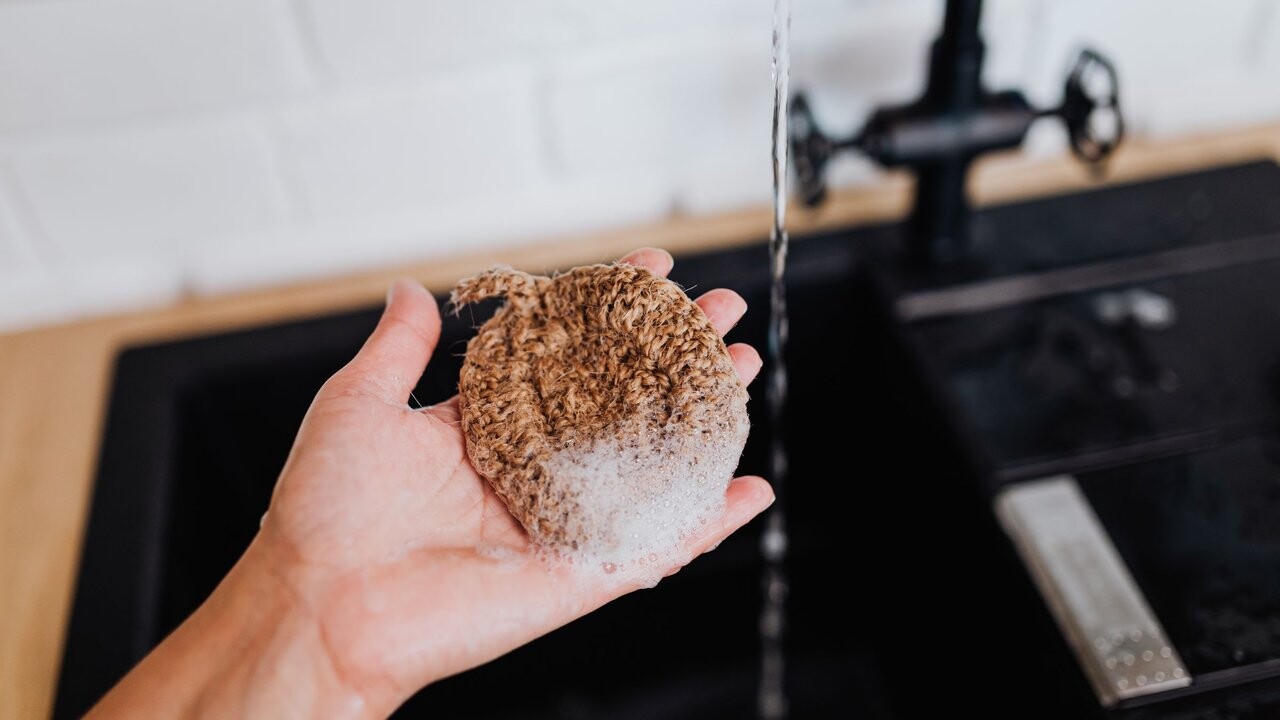
If frequently discarding foam sponges feels wasteful, consider a long-handled dishwashing brush. It is easy to rinse, hang, and inspect between uses.
A 2022 Journal of Applied Microbiology study observed lower bacterial levels in used brushes than in sponges. Salmonella also died more rapidly in the brushes tested, leading the researchers to conclude that brushes may be the more hygienic option.
That does not make a brush maintenance-free. Rinse away food, clean the bristles, and hang the brush where air can circulate. Replace it when the bristles become worn or misshapen.
Dishcloths are another reusable choice. The Academy recommends washing dishcloths frequently on a hot washing-machine cycle and drying them thoroughly on a high setting. Keep enough clean cloths available that a damp, soiled one does not have to remain in service.
Regular replacement, thorough drying, and the right tool for each spill make sponge care simple. How often do you usually replace the sponge beside your kitchen sink?
This article is for general information and isn’t a substitute for advice from your doctor.
You might also want to read: How Often Should Adults Over 65 Shower? What Dermatologists and Aging Experts Recommend
Follow The HyperHive on MSN for more stories like this.
Sources:
- USDA Food Safety and Inspection Service: How do I clean my kitchen sponge?
- Scientific Reports: Microbiome analysis and confocal microscopy of used kitchen sponges reveal massive colonization by Acinetobacter, Moraxella and Chryseobacterium species
- USDA Agricultural Research Service: Best Ways to Clean Kitchen Sponges



