Pioneer Life in the 1800s, in Photos

Solomon D. Butcher / Wikimedia Commons, Public domain (cropped)
These photographs bring the American frontier down to human scale: a roof made from prairie materials, a school built for a scattered community, and a wagon carrying a family toward an uncertain home.
Arranged from 1862 through 1895, the gallery draws on records from the Library of Congress, National Archives, National Park Service, History Nebraska, and other historical collections.
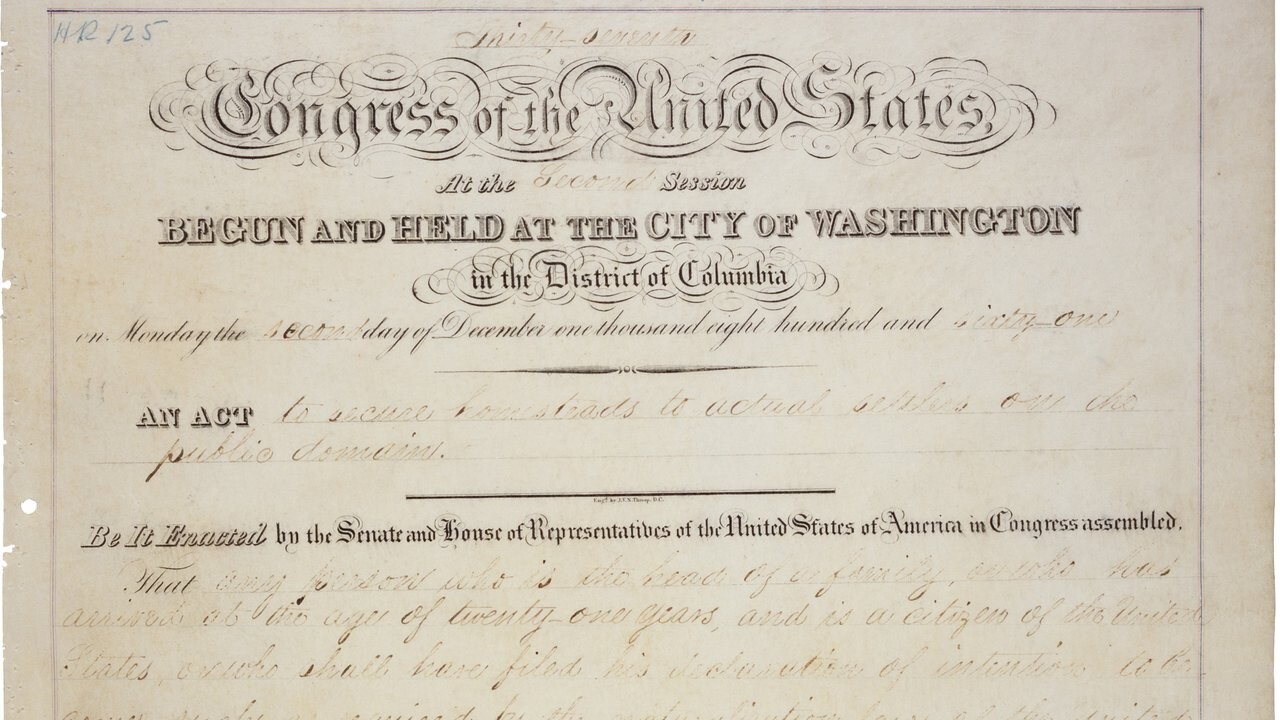
1862: The Homestead Act Reshapes the West
Passed in 1862, the Homestead Act offered qualifying settlers 160 acres of public land for a nominal filing fee. The policy encouraged western migration, but many claims covered traditional or treaty lands of Native nations. Opportunity for newcomers and dispossession for Indigenous communities were inseparable parts of the same expansion.
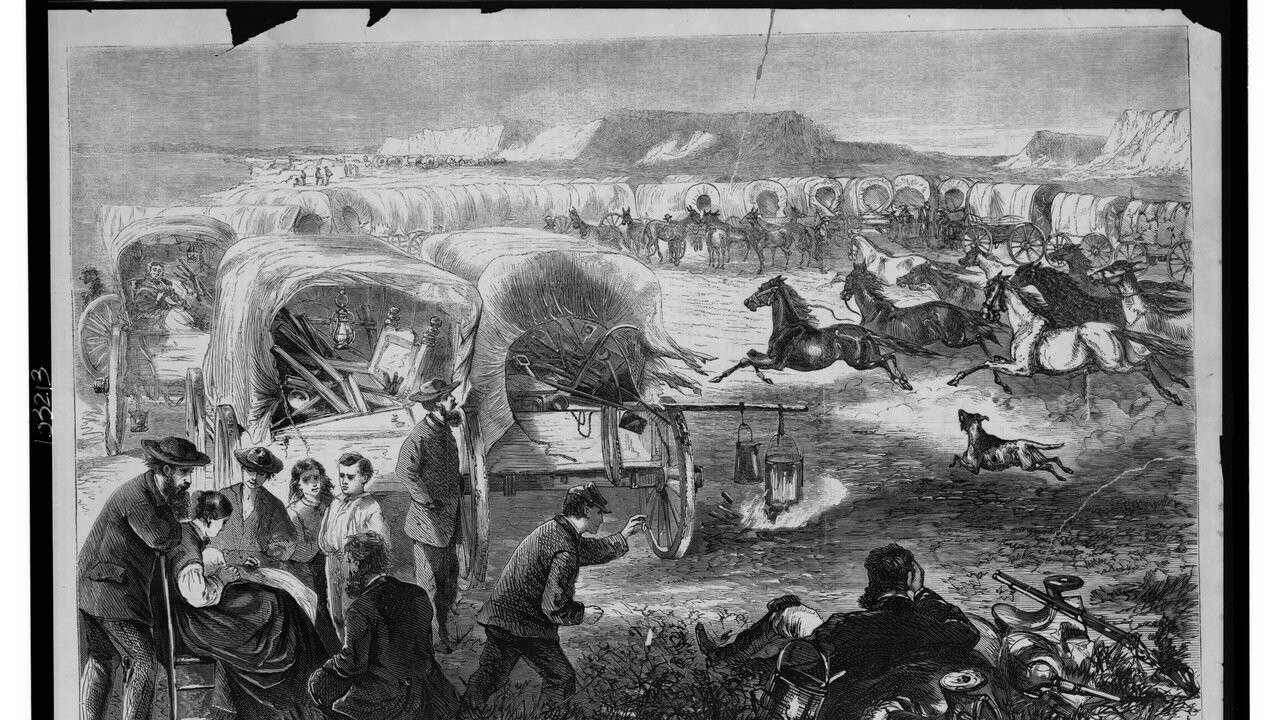
1869: Prairie Schooners Cross the Plains
A Library of Congress print from 1869 shows horses being driven into a corral formed by the covered wagons of a wagon train. Commonly called prairie schooners, these wagons became enduring symbols of westward migration, carrying travelers and their belongings across long stretches of open country.
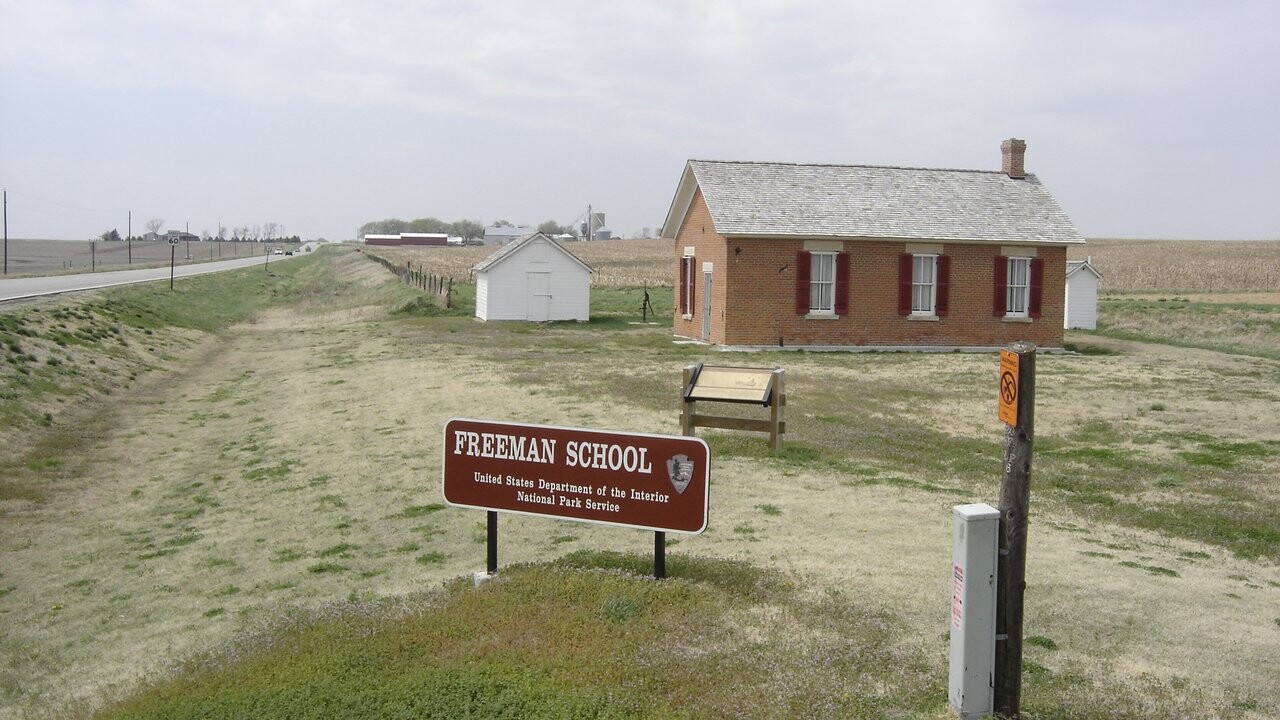
1872: The Freeman School Opens
Nebraska’s Freeman School opened in 1872, with its two terms organized around regional crop cycles. The one-room school also served as a meeting place for a Lutheran congregation and as the polling place for Blakely Township. Education, worship, and civic life shared the same modest building.
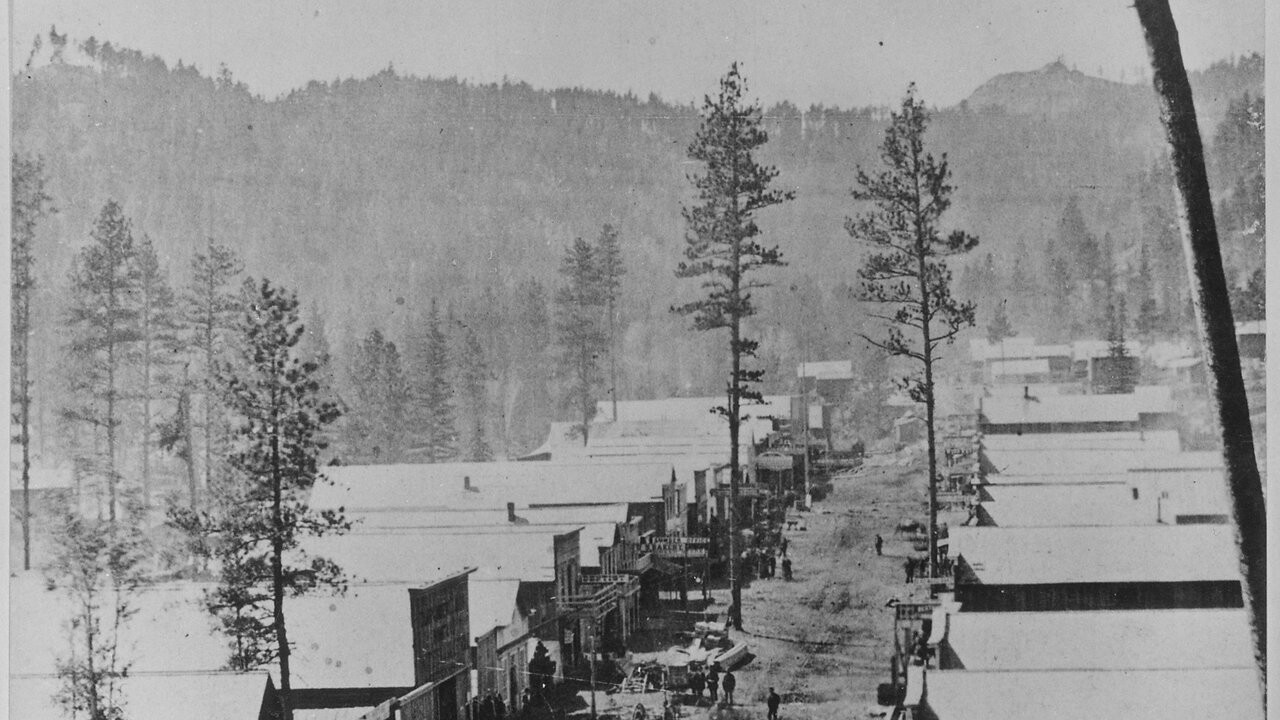
1876: Deadwood Becomes a Gold Rush Town
A National Archives photograph presents a hillside view of Deadwood during the Dakota Territory gold rush of 1876. The tightly grouped buildings show a settlement taking shape in rugged terrain. Such images place mining towns alongside farms, ranches, and homesteads in the broader visual history of western expansion.
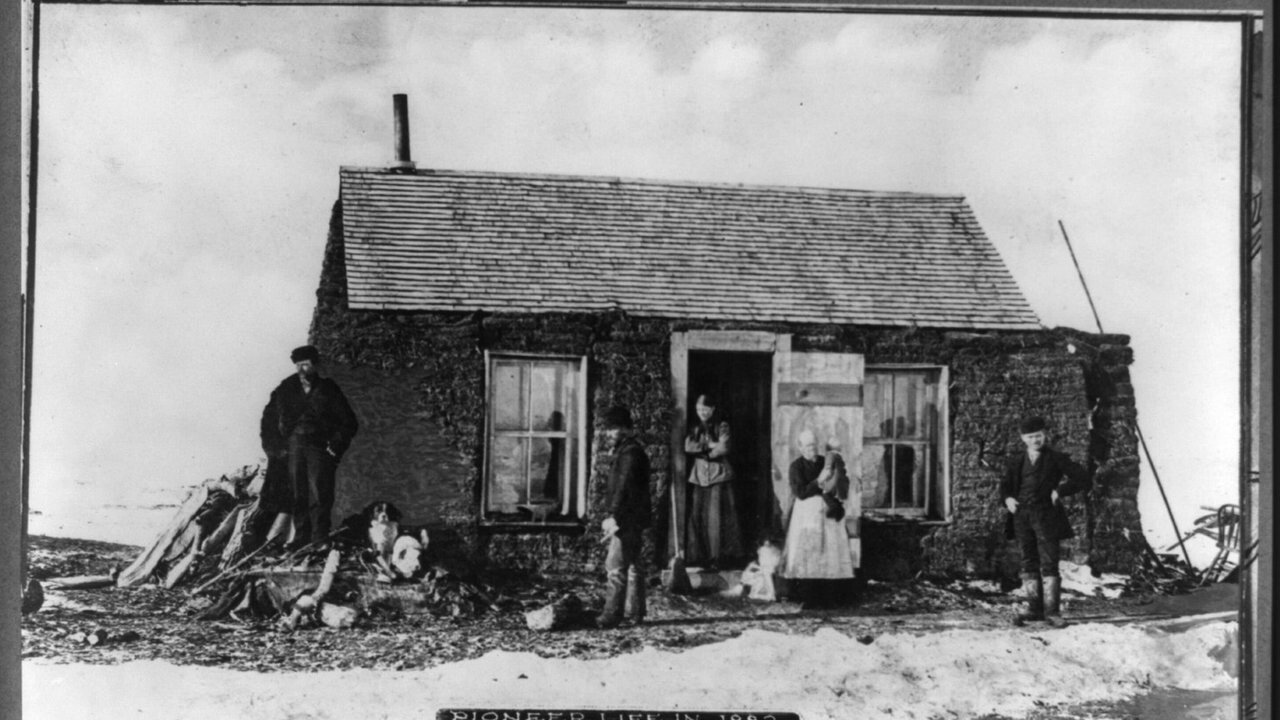
1882: A Sod Homestead in South Dakota
An 1882 photograph from near Aberdeen, South Dakota, shows a pioneer family standing outside a sod house. On the largely treeless plains, earth offered a building material close at hand. The family’s pose beside its home preserves a direct view of domestic life during the early years of settlement.
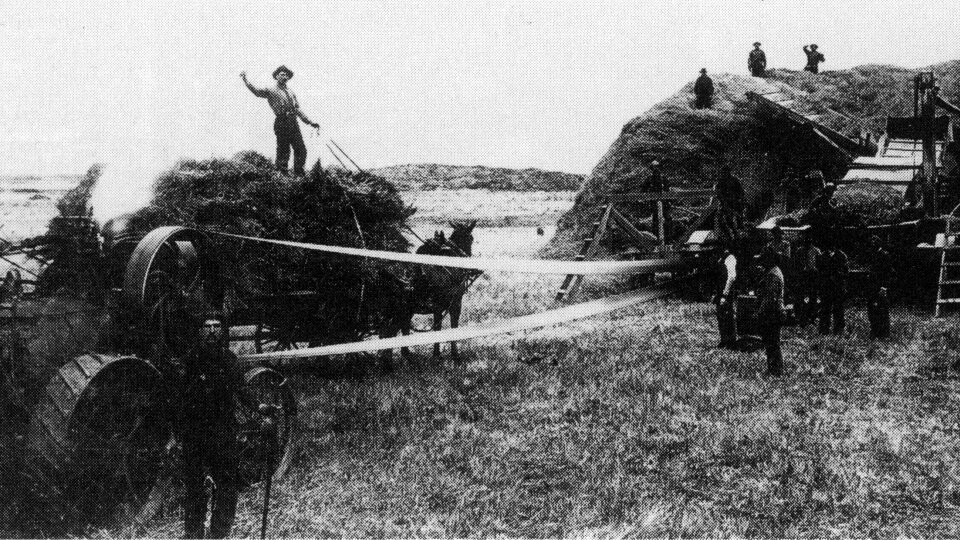
1882: Steam Power Reaches the Threshing Crew
A photograph taken near Hallock, Minnesota, in 1882 records a steam-driven threshing machine at work. Steam tractors did not gain wide acceptance for plowing, but they were commonly used at stationary threshing sites during harvest. Even with mechanical power, bringing in a crop remained a collective effort.
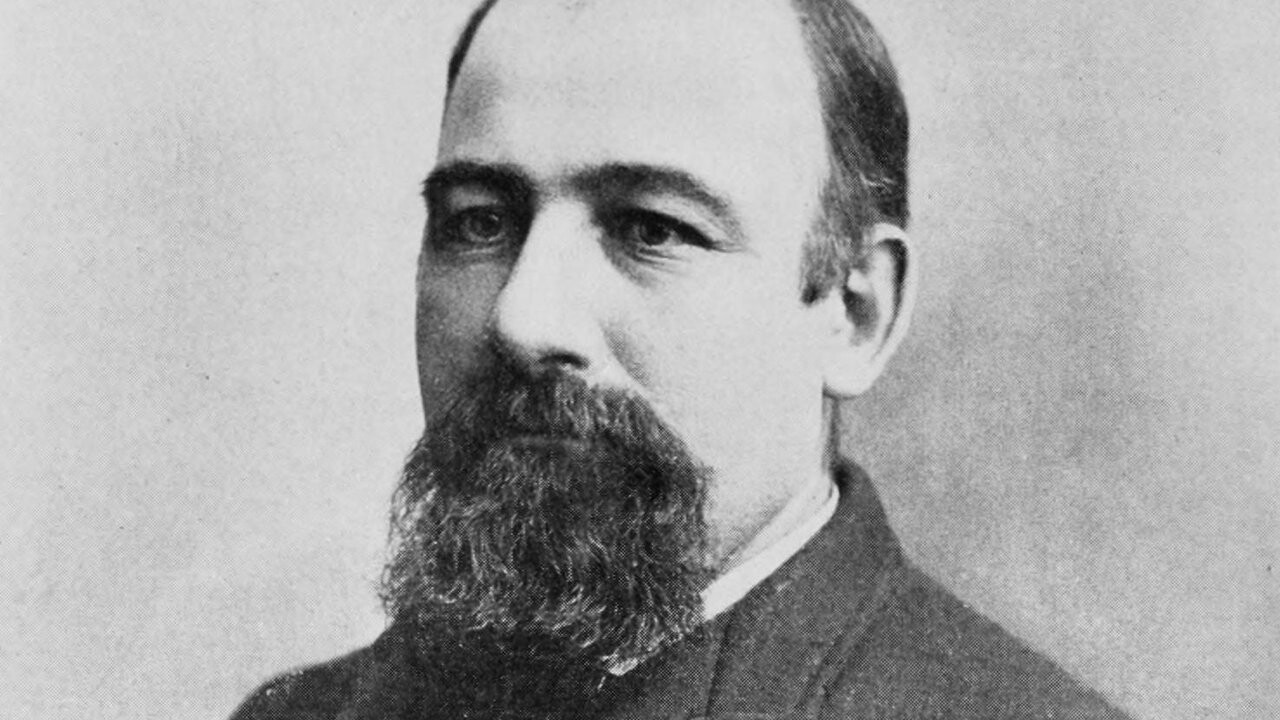
1886: Solomon Butcher Begins His Great Project
In 1886, Solomon D. Butcher began the work that would define his legacy. Recognizing that the settlement period would soon pass, he set out to create a photographic history of pioneer life. His images preserved families, homes, animals, tools, and farms as parts of an unfolding local story.
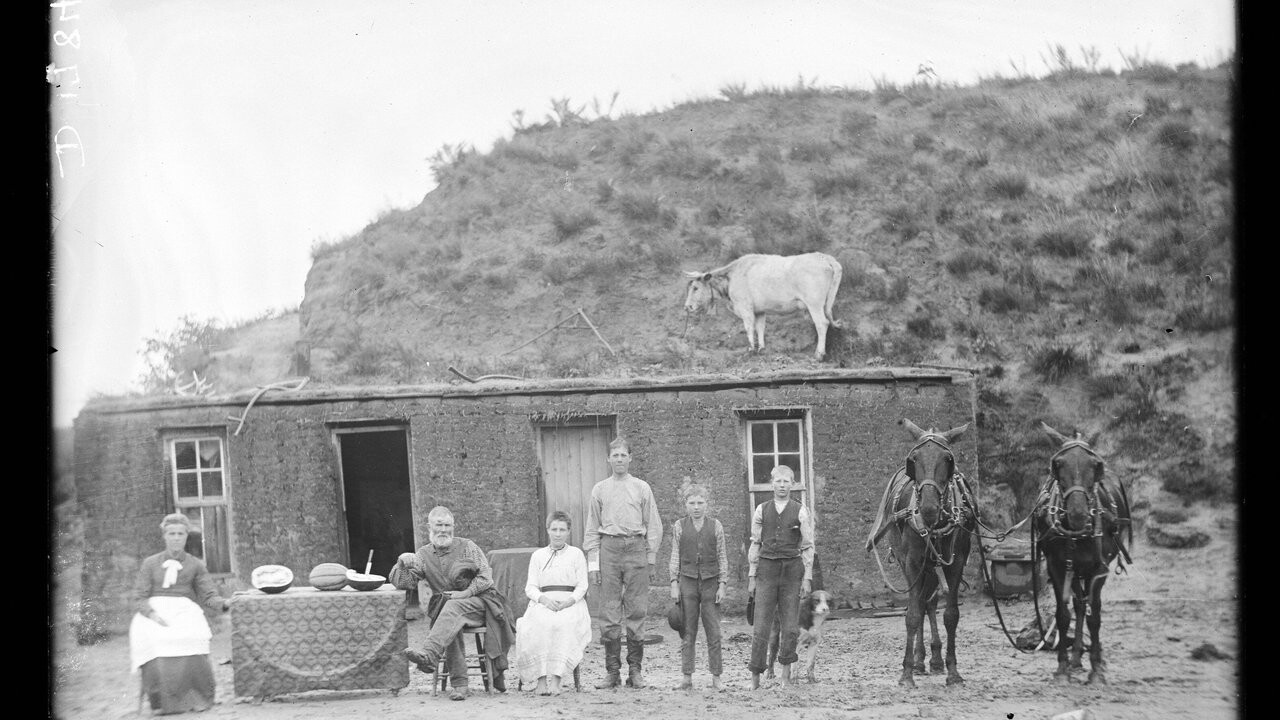
1886: The Rawding Family And Their Sod Home
Butcher’s 1886 portrait identifies Sylvester Rawding’s family outside their sod house north of Sargent in Custer County, Nebraska. The carefully arranged group and plainly visible home make the photograph both a family record and a detailed document of a prairie household during the county’s settlement era.
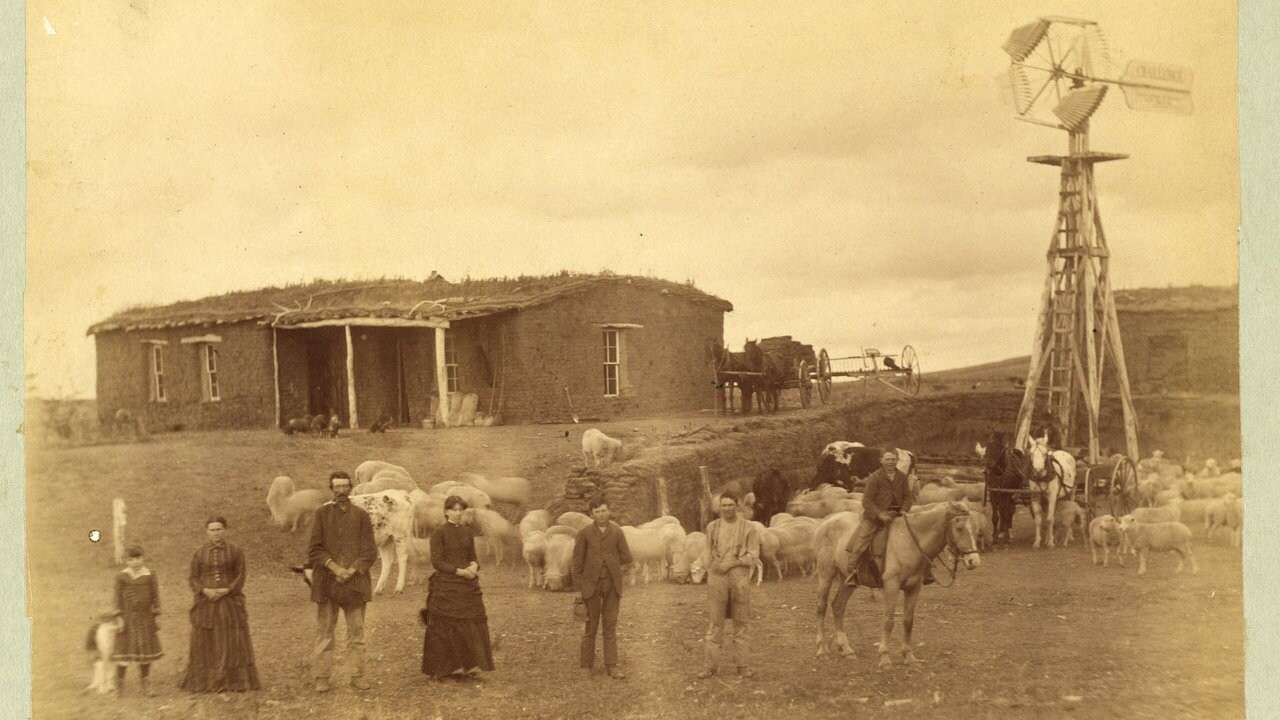
1886: The William Moore Family Farm
Butcher photographed William Moore and his family in Sargent, Nebraska, in 1886. Their farm scene broadens the gallery’s view beyond a single dwelling. People, animals, equipment, and water infrastructure appear together, revealing a homestead as a working place shaped by daily responsibilities and shared family labor.
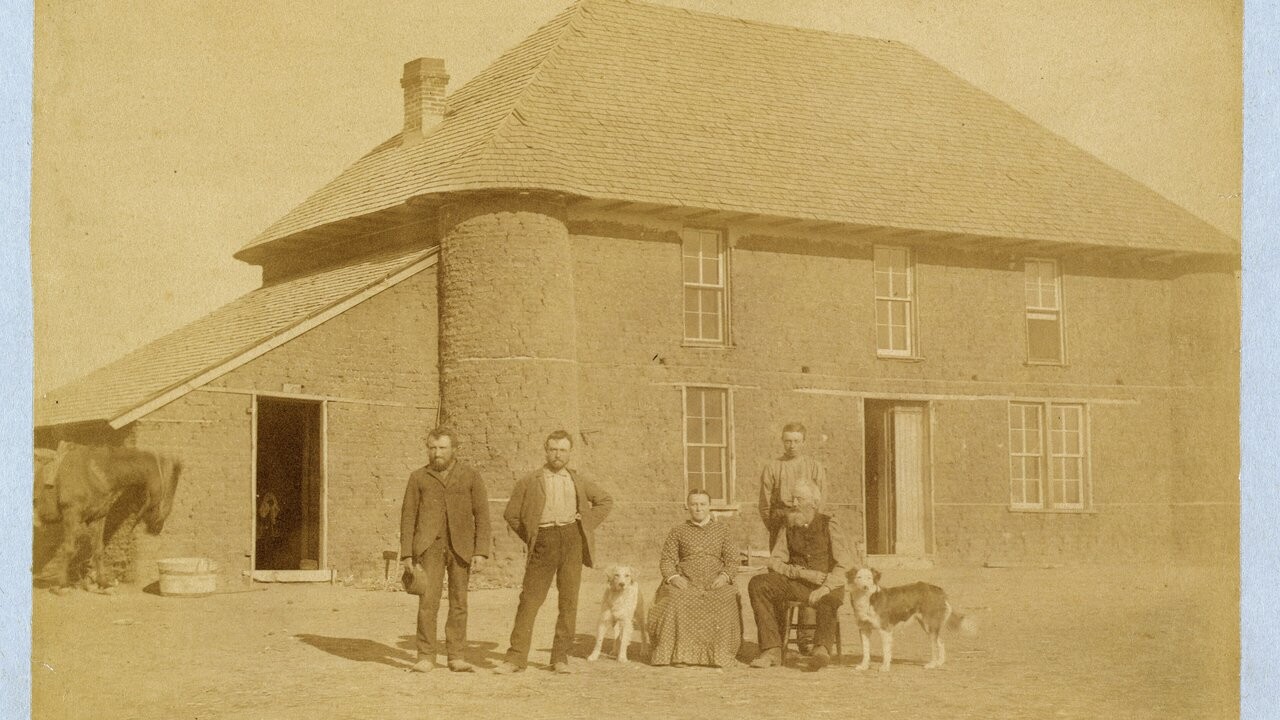
1886: Isadore Haumont’s Two-Story Sod House
The two-story sod house photographed with Isadore Haumont’s family in 1886 challenges the familiar image of every sod home as a tiny shelter. Built on French Table north of Broken Bow, Nebraska, the substantial structure shows how earth construction could be adapted to a larger household and a more ambitious design.
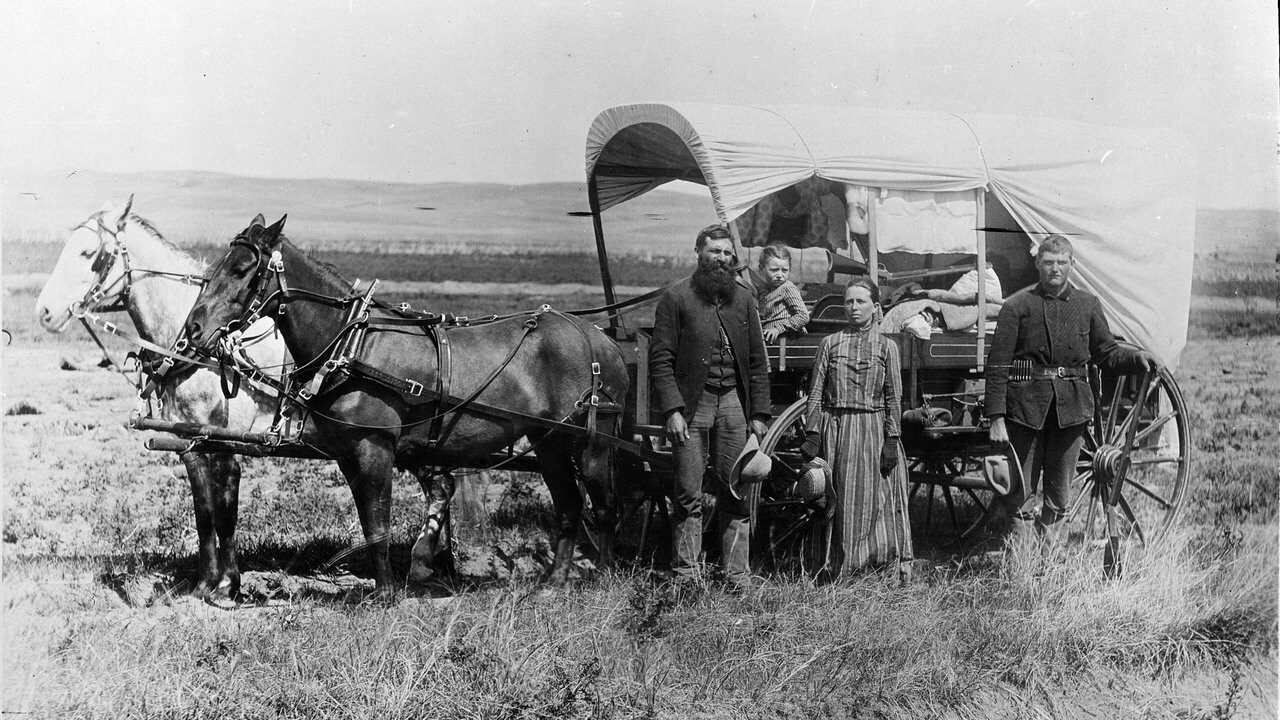
1886: Living From A Loup Valley Wagon
An 1886 photograph from Nebraska’s Loup Valley shows a family with the wagon in which they lived and traveled each day. The scene captures migration as an unsettled stage between departure and arrival. For this family, the covered wagon was both a vehicle and a temporary living space.
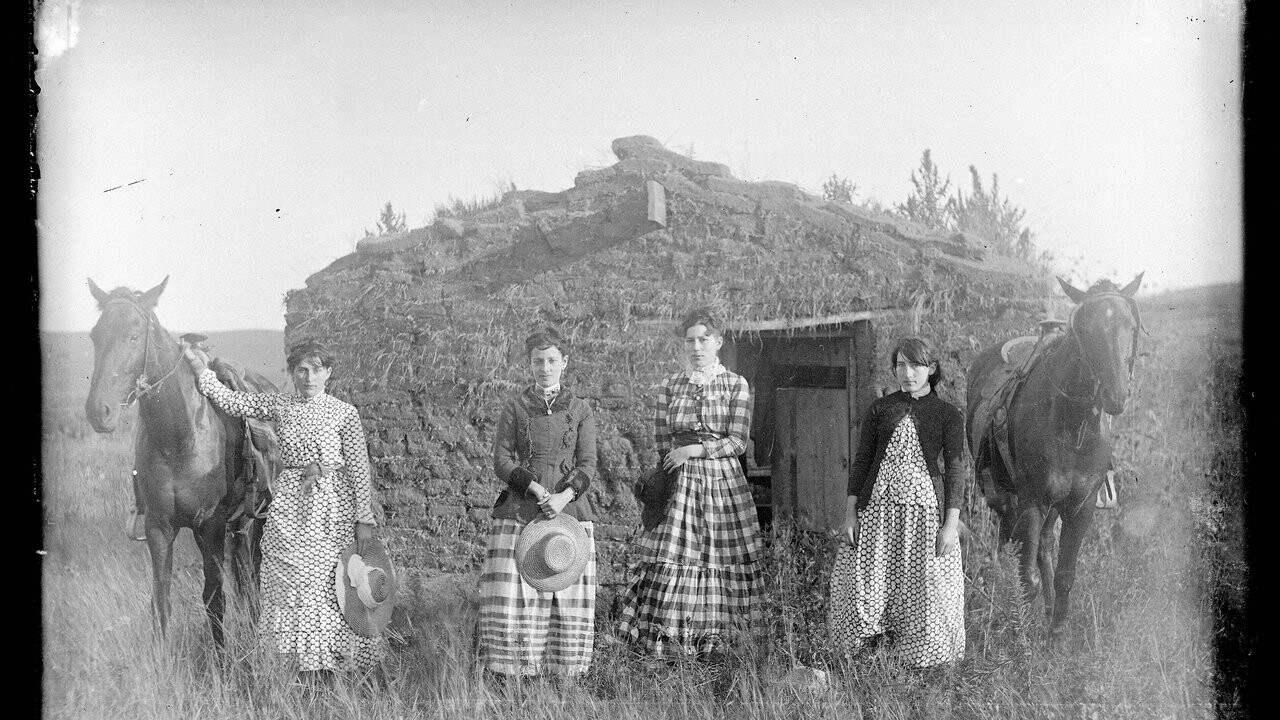
1886: The Chrisman Sisters Face The Camera
According to Butcher’s account, he made his well-known image of Joseph and Lucy Chrisman’s four daughters in 1886. The sisters became enduring figures in the visual history of women homesteaders. Later research into their ages, filing dates, and claims also shows why photographs are best read alongside documentary records.
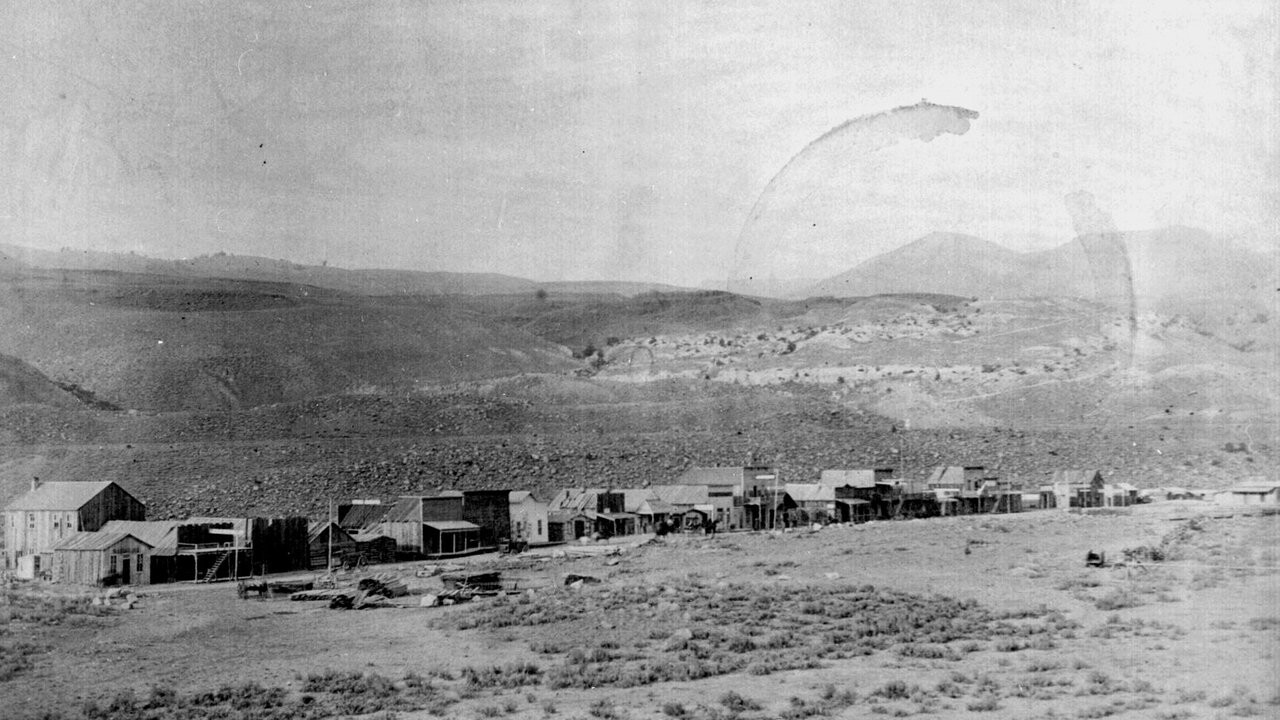
1887: A Frontier Street In Gardiner, Montana
An 1887 archive photograph records Gardiner, Montana, as a one-sided street backed by rocky foothills. The view emphasizes the settlement’s compact scale and dramatic setting. With only a few structures lining the road, the town appears less like a finished destination than a community still taking shape.
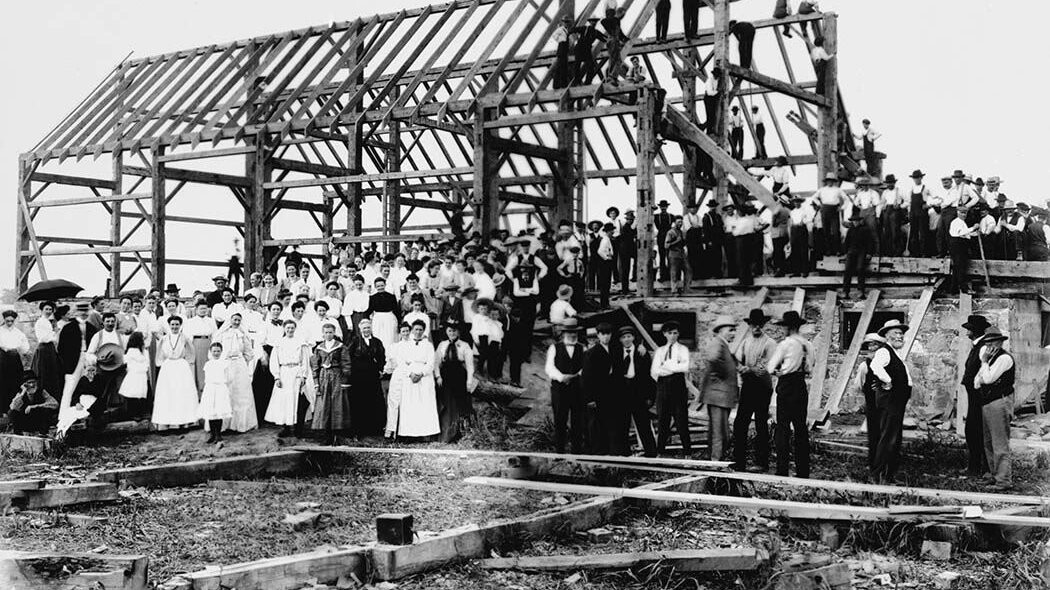
Barn Raisings Build Community
Barn raisings made cooperation visible. Raising a large frame called for many hands, and the relationships formed during a barn raising or threshing often led to further joint work among friends and neighbors. In sparsely settled country, reciprocal labor helped families complete demanding jobs and strengthen local ties.
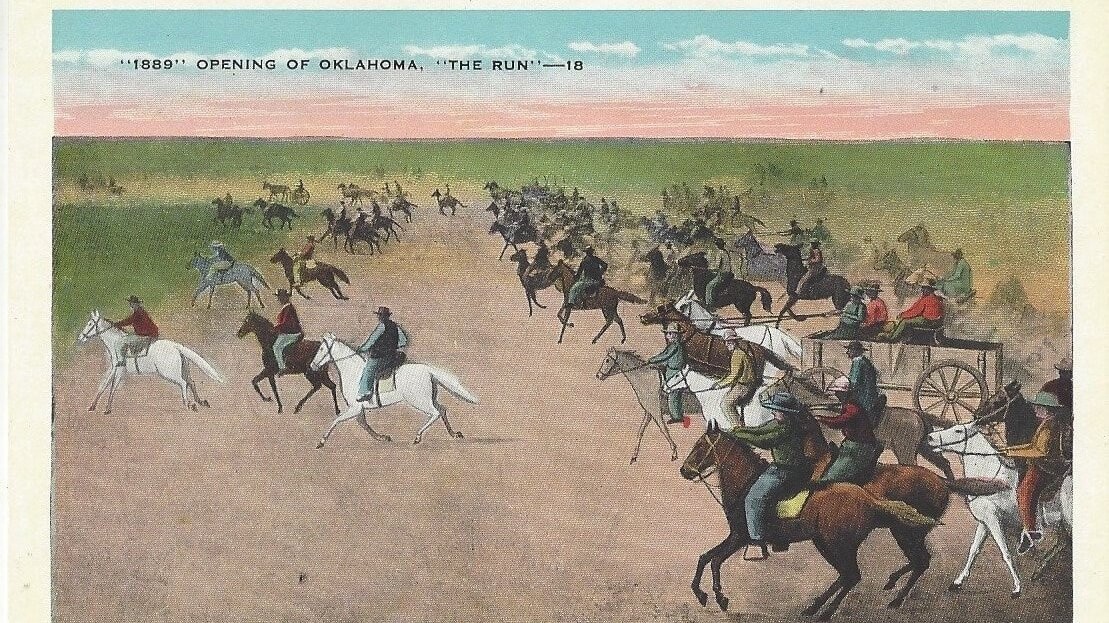
1889: The Oklahoma Land Run Begins
President Benjamin Harrison set noon on April 22, 1889, as the opening time for settlement on designated land in present-day Oklahoma. The famous rush unfolded on ground that had previously been reserved as Indian Territory. Its dramatic imagery must be viewed alongside that earlier history and the people displaced by federal policy.
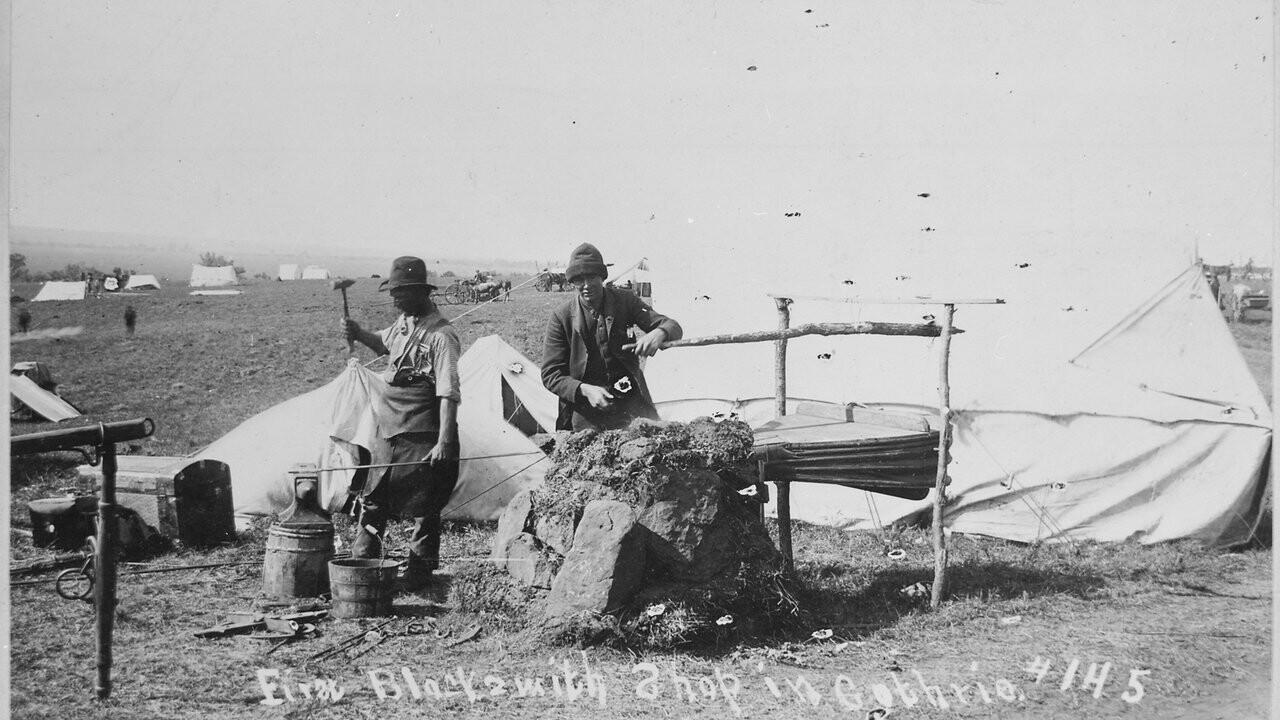
1889: Guthrie Gets Its First Blacksmith Shop
A National Archives photograph records Guthrie’s first blacksmith shop around 1889. The simple workplace represents the skilled labor required in a new settlement. Horses needed shoes, wagons needed repairs, and tools needed attention, making the blacksmith’s shop a practical companion to the tents, claims, and rapidly erected buildings around it.
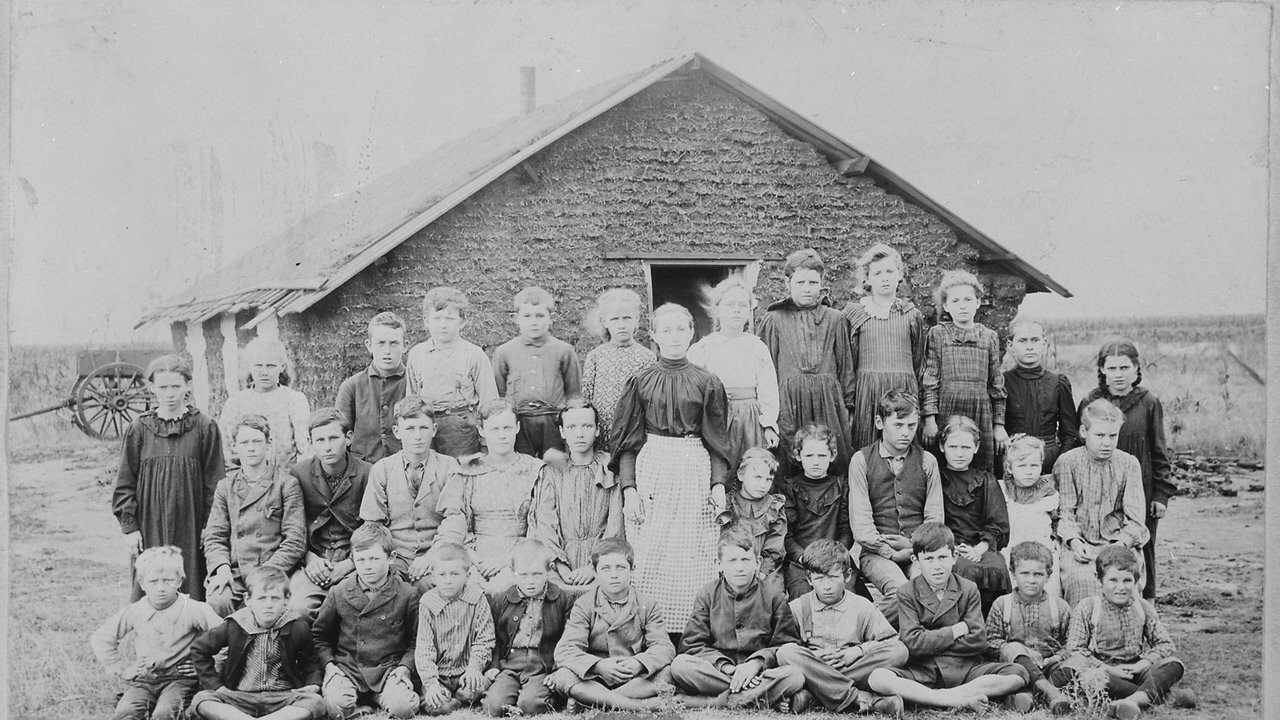
1895: Lessons In An Oklahoma Sod Schoolhouse
Around 1895, a teacher and children posed outside a sod schoolhouse in Woods County, Oklahoma Territory. Homestead-era schools often became centers of community life, serving as churches, polling places, and social gathering locations. The earth-built classroom marks the point where scattered households were forming shared institutions and a more settled neighborhood.
Together, these photographs show pioneer life through its homes, journeys, work, families, towns, and shared institutions while keeping the costs of western expansion in view. Which image most changed how you picture life on the nineteenth-century frontier?
Follow The HyperHive on MSN for more stories like this.
Sources:






