San Francisco Before and After the 1906 Earthquake, in Photos

Chadwick, H. D / Wikimedia Commons, Public domain (cropped)
San Francisco’s familiar streets and landmarks looked startlingly different after fire followed the great earthquake. This gallery avoids photographs of bodies and injured people while showing the disaster’s enormous physical impact.
The slides move chronologically from the city before the earthquake through the shaking, fires, ruins, relief camps, and temporary cottages. Photographs and historical details come primarily from the Library of Congress, the U.S. Geological Survey, and the National Park Service.
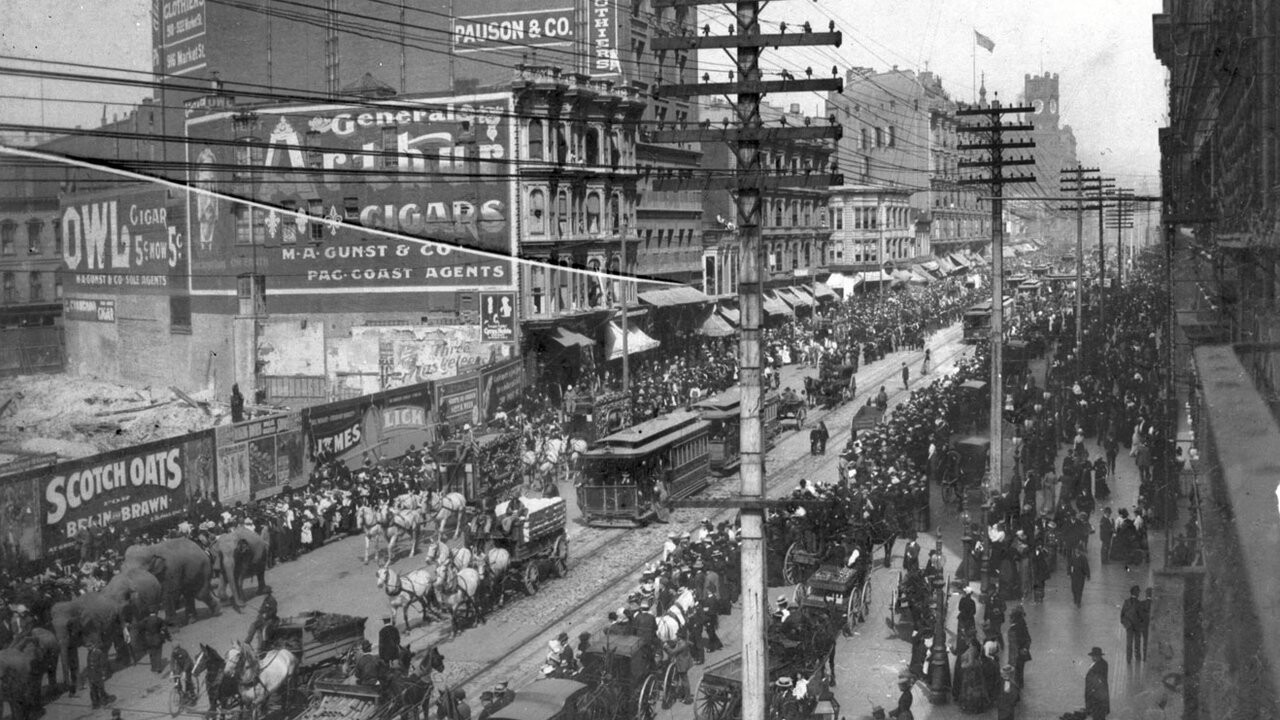
Before the Disaster: Market Street
A surviving film documented a typical day along Market Street, then San Francisco’s busiest thoroughfare. The moving view preserves the street’s pace before the disaster and gives later images of Market and Turk Streets a stark point of contrast: everyday urban life replaced by earthquake damage and fire.
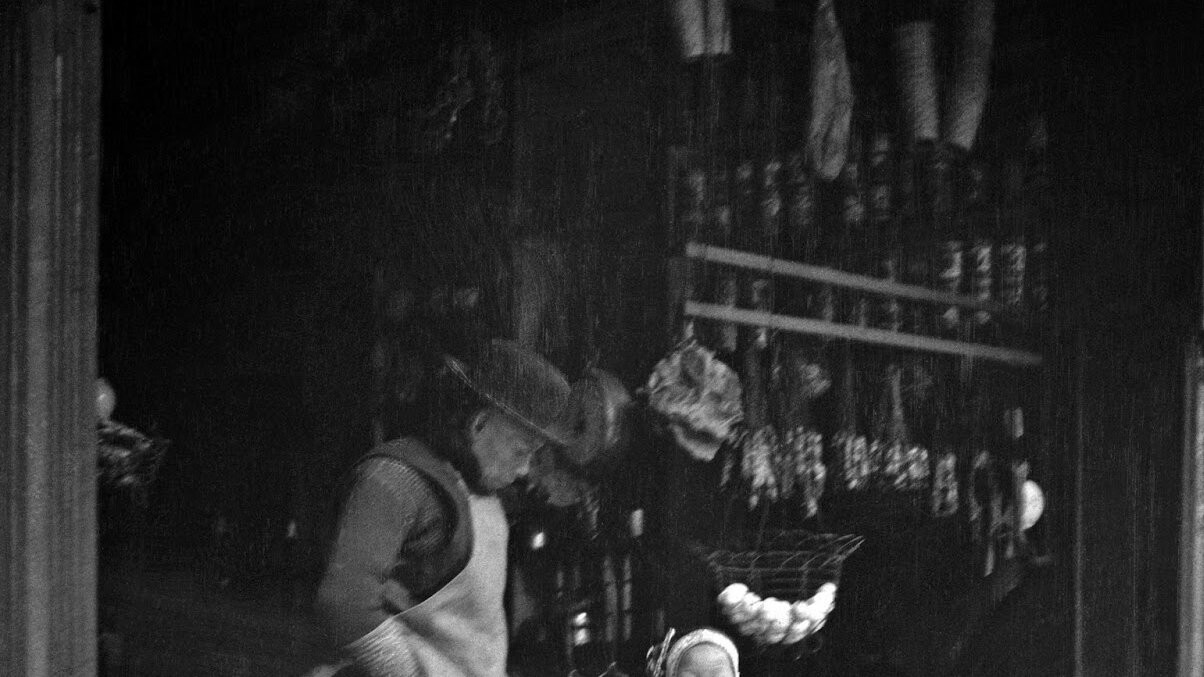
Before the Disaster: Chinatown’s Morning Market
A pre-earthquake photograph by Arnold Genthe records Chinatown’s morning market. The image offers a direct view of ordinary neighborhood life before the disaster, making it an important counterpart to photographs of Chinatown’s ruins. It presents the community as a living place rather than merely a scene of destruction.
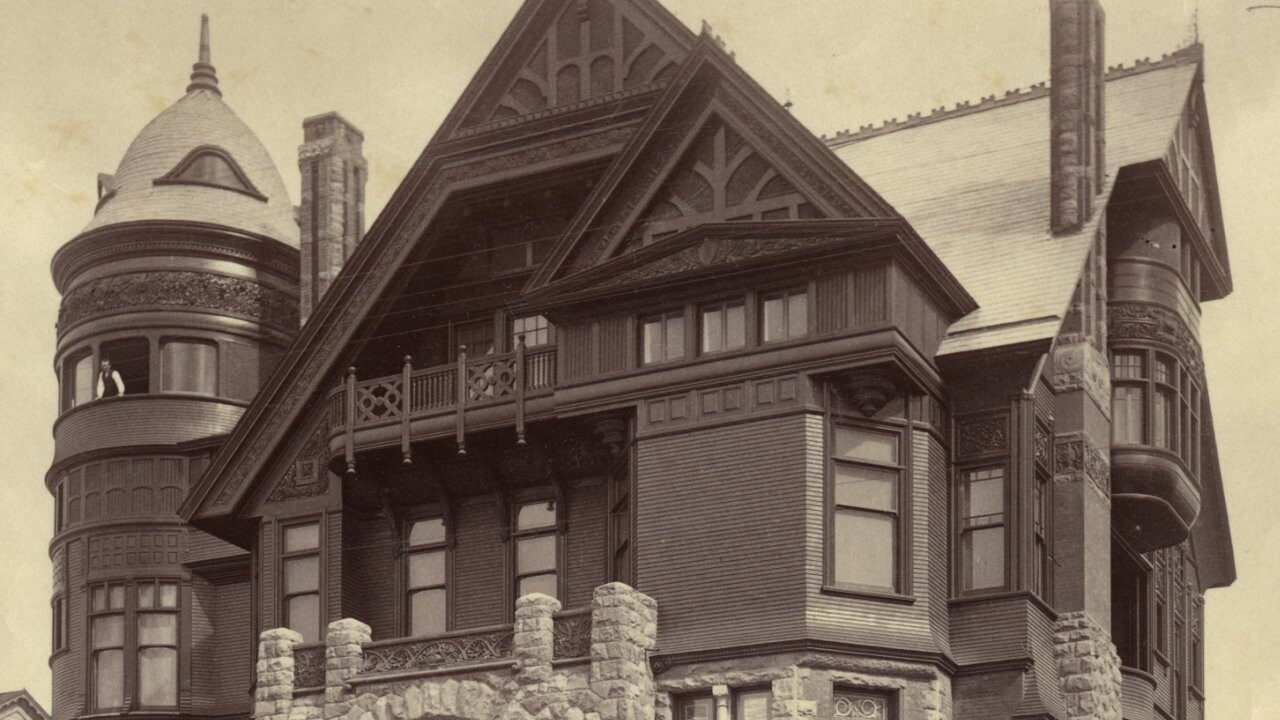
Before the Disaster: Nob Hill’s Mansions
Lavish residences rose along the crest of Nob Hill before the earthquake. Their presence reflected the concentration of wealth in this elevated district, but even soundly built structures could not withstand what followed. The fire swept uphill and destroyed the buildings that had defined the neighborhood.
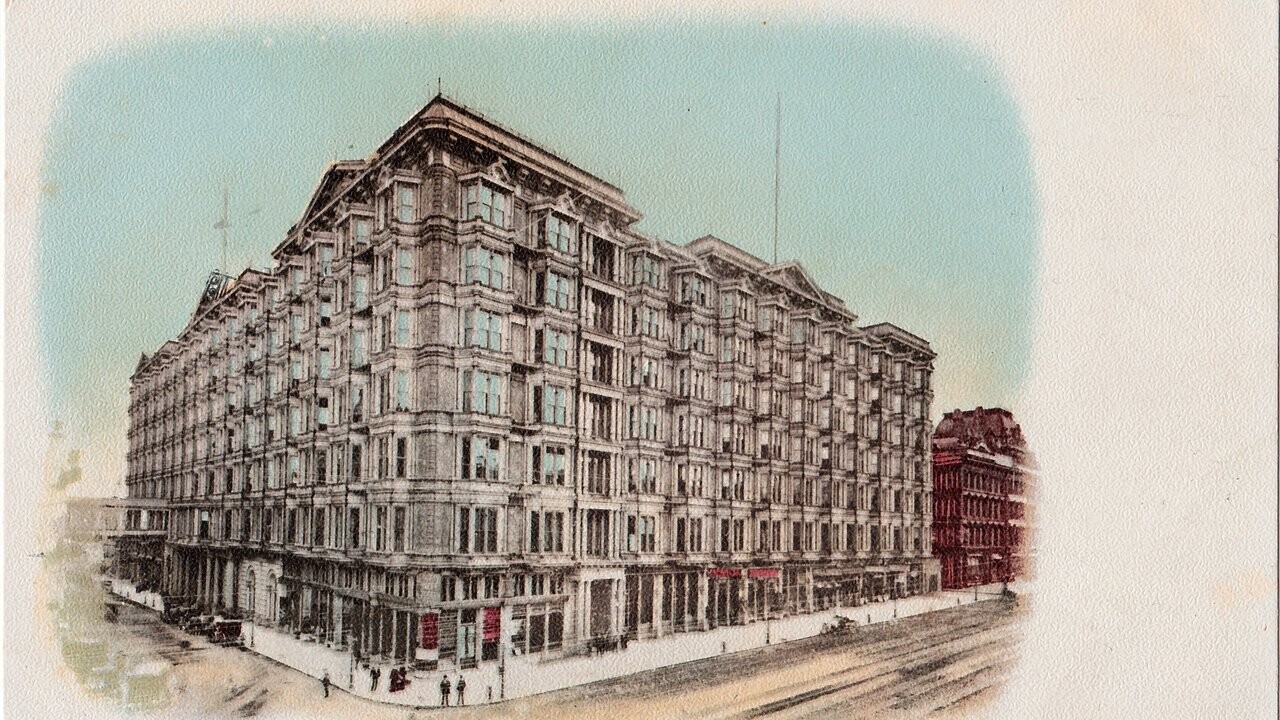
Before the Disaster: The Original Palace Hotel
The original Palace Hotel opened in 1875. Pre-disaster views show the scale of a major downtown hotel before the earthquake and fire transformed its surroundings. The building later caught fire and was reduced to a burned-out shell, creating one of the disaster’s most dramatic architectural contrasts.
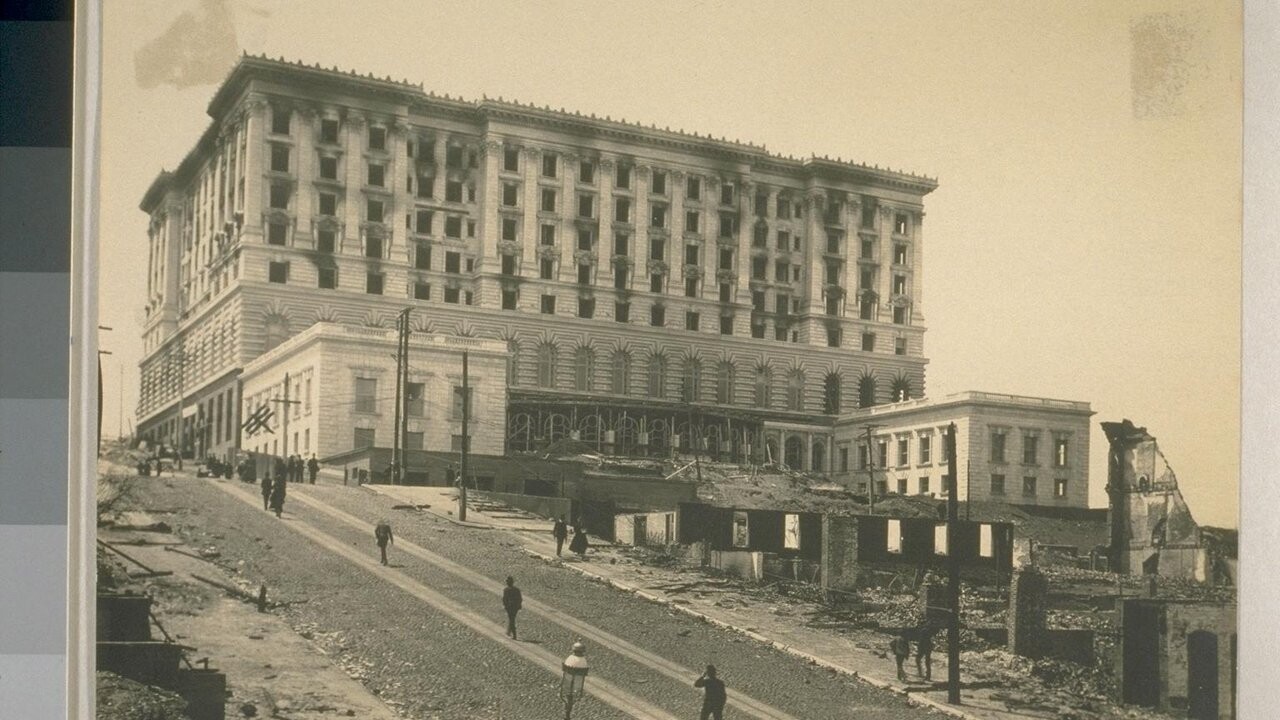
Before the Disaster: The Unopened Fairmont
Construction of the Fairmont Hotel was mostly finished when the 1906 disaster occurred, but the building had not yet opened. Damage to its interior delayed that opening until 1907. Images from this period capture a prominent new hotel suspended between completion, destruction, restoration, and its eventual public debut.
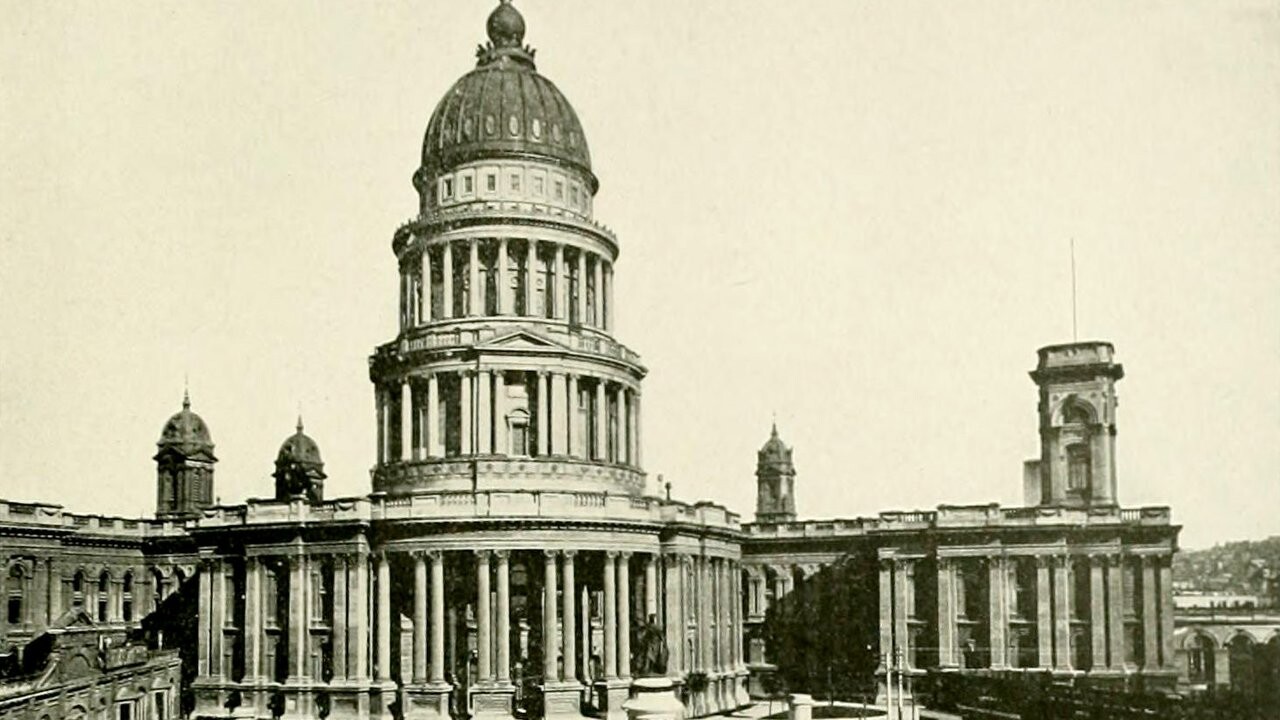
Before the Disaster: Old City Hall
San Francisco’s Old City Hall was completed in 1897 after 25 years of construction. The enormous investment of time made its loss especially striking. Only nine years after completion, the building collapsed during the first 60 seconds of the disaster, leaving a widely photographed ruin.
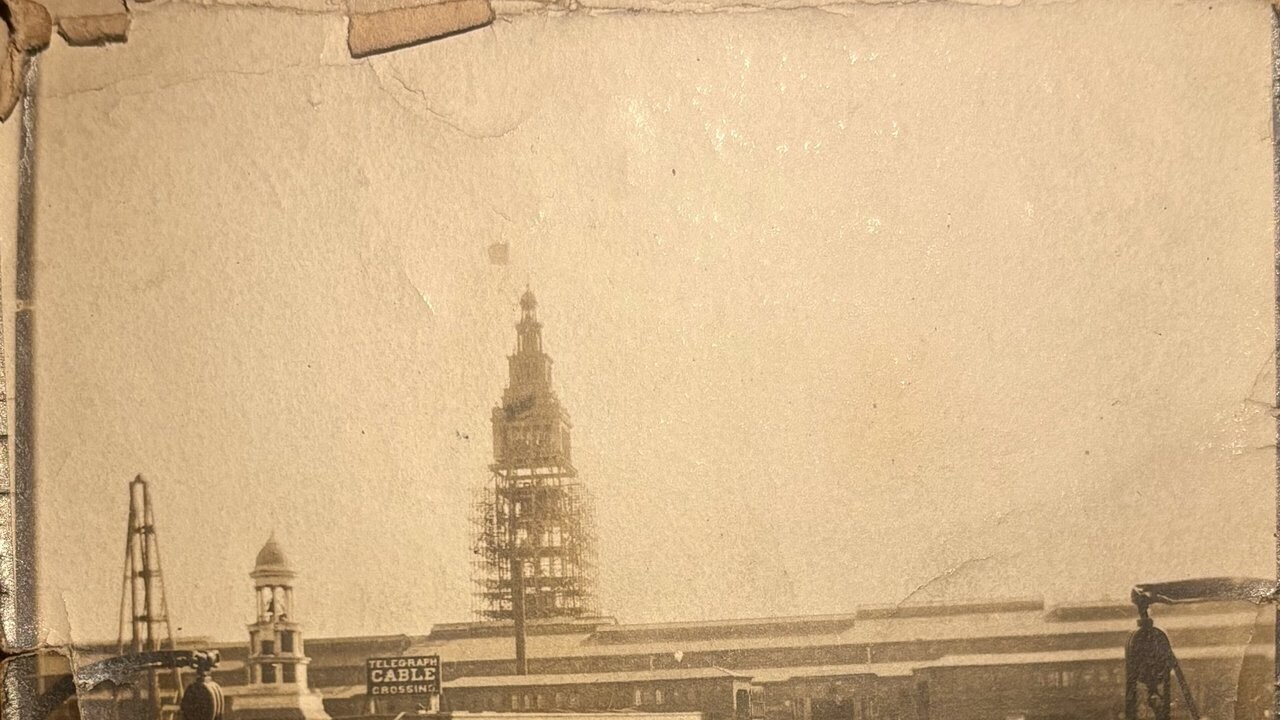
Before the Disaster: The Ferry Building
The Ferry Building was commissioned in 1894, officially opened in 1898, and fully completed in 1903. That timeline made it a relatively recent addition to San Francisco when the earthquake struck. Unlike many important buildings nearby, it sustained little earthquake damage and escaped the fire.
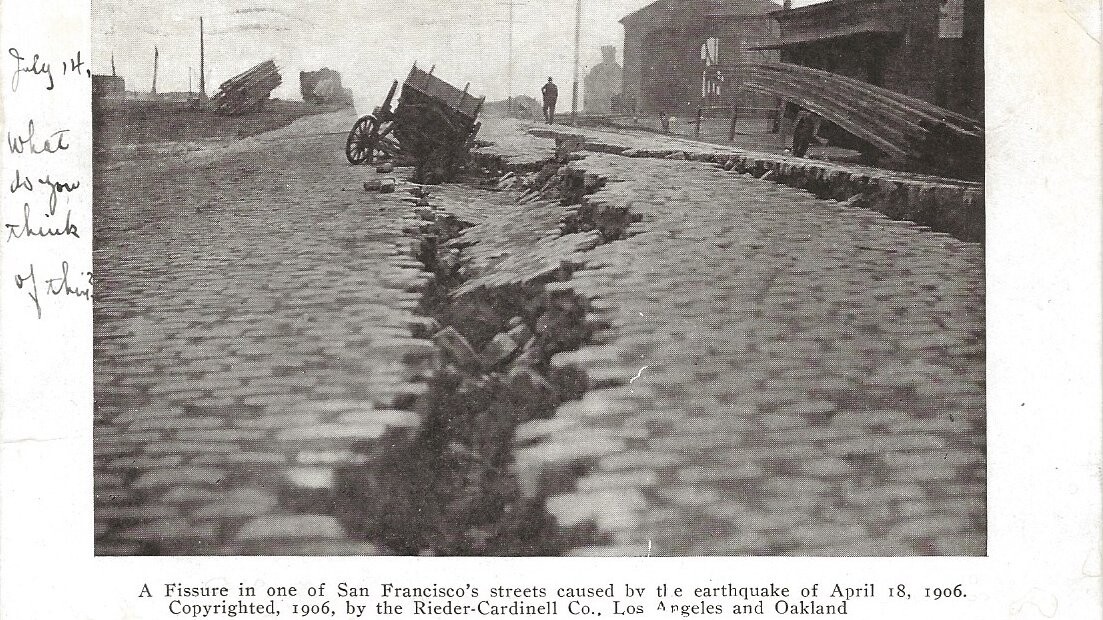
April 18, 1906: The Earthquake Strikes
At 5:12 a.m. on April 18, 1906, the earthquake struck San Francisco. The event caused severe damage across the city, but the fires that broke out almost immediately extended the destruction. Together, the shaking and fire devastated almost five square miles in the city’s heart.
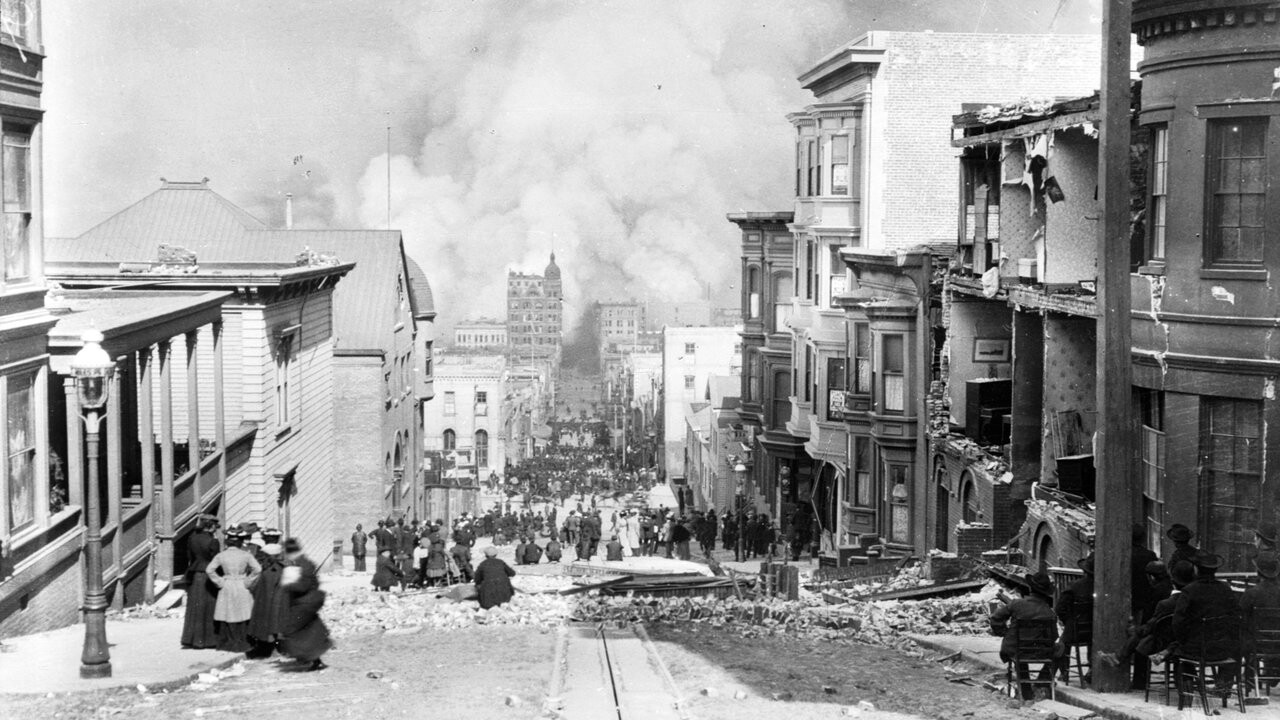
April 18, 1906: Watching the Fire Approach
A photograph credited to Arnold Genthe shows people standing on Sacramento Street and watching a distant fire. The image captures residents observing the danger as the disaster unfolded around them. Their stillness, set against the smoke beyond the street, gives the photograph its enduring tension.
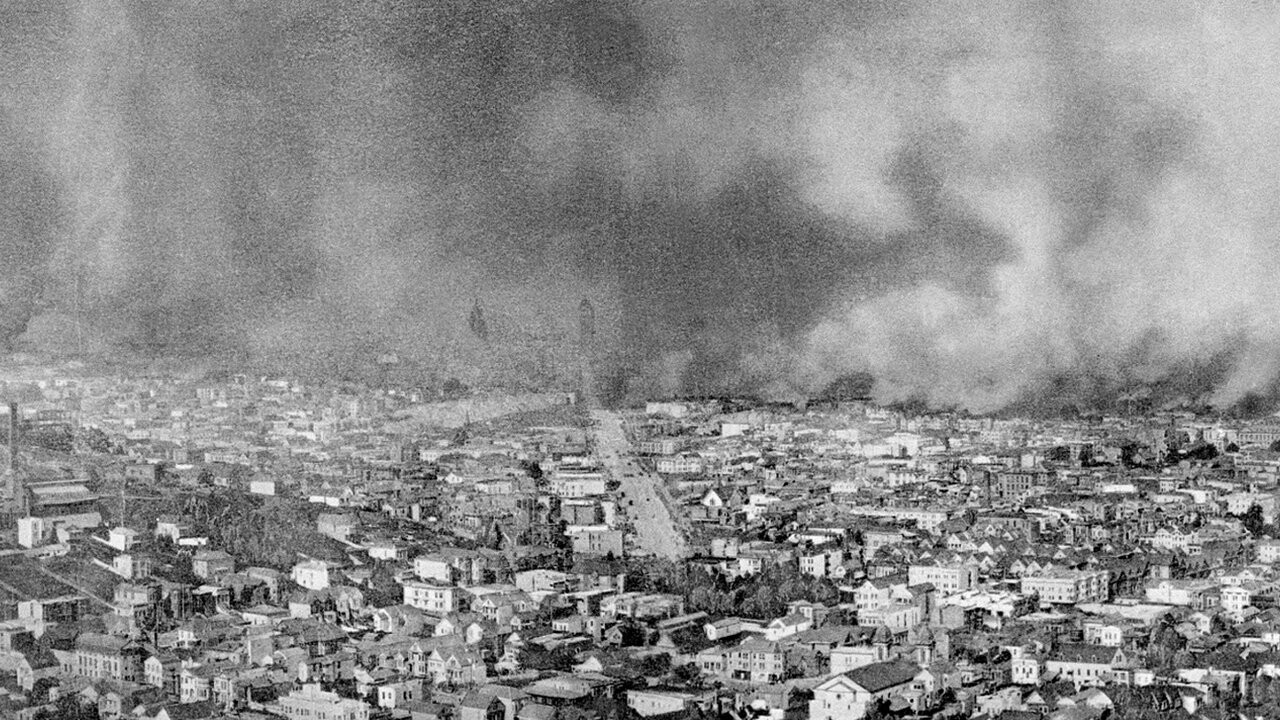
Fire Spreads Through the City
Thirty fires broke out almost immediately and burned for three days. The earthquake had shattered San Francisco’s water pipes, severely limiting the response. Photographs from across the city record rising smoke, advancing flames, and the remains of neighborhoods after the fires had finally run their course.
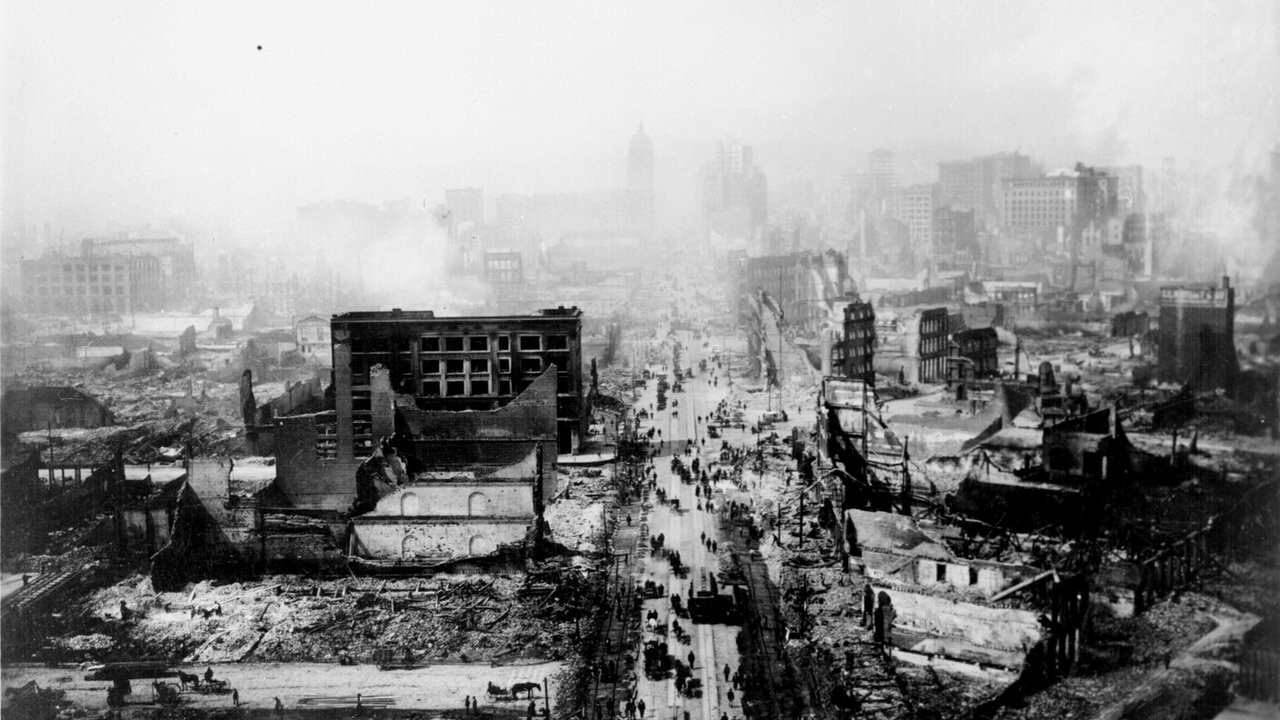
Market Street Becomes a Corridor of Ruins
A Library of Congress photograph documents Market and Turk Streets after the earthquake and fire. The familiar commercial corridor had become a landscape of rubble, exposed walls, and damaged buildings. Compared with the surviving film of Market Street before the disaster, the change is immediate and difficult to overstate.
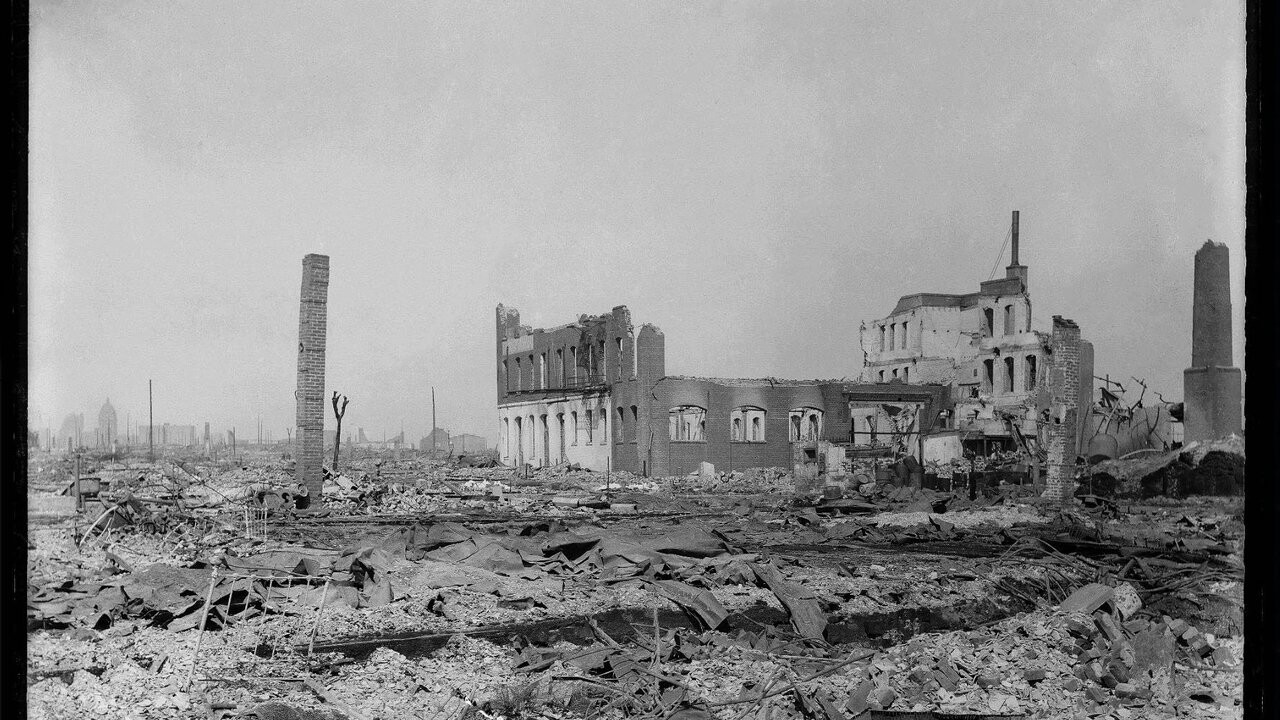
Chinatown Is Destroyed, Then Returns
Chinatown was destroyed along with much of central San Francisco. Officials then attempted to drive Chinese residents out of the city rather than allow them to reclaim the neighborhood. The effort failed, and the Chinese community returned to rebuild Chinatown, making resistance and recovery central parts of its history.
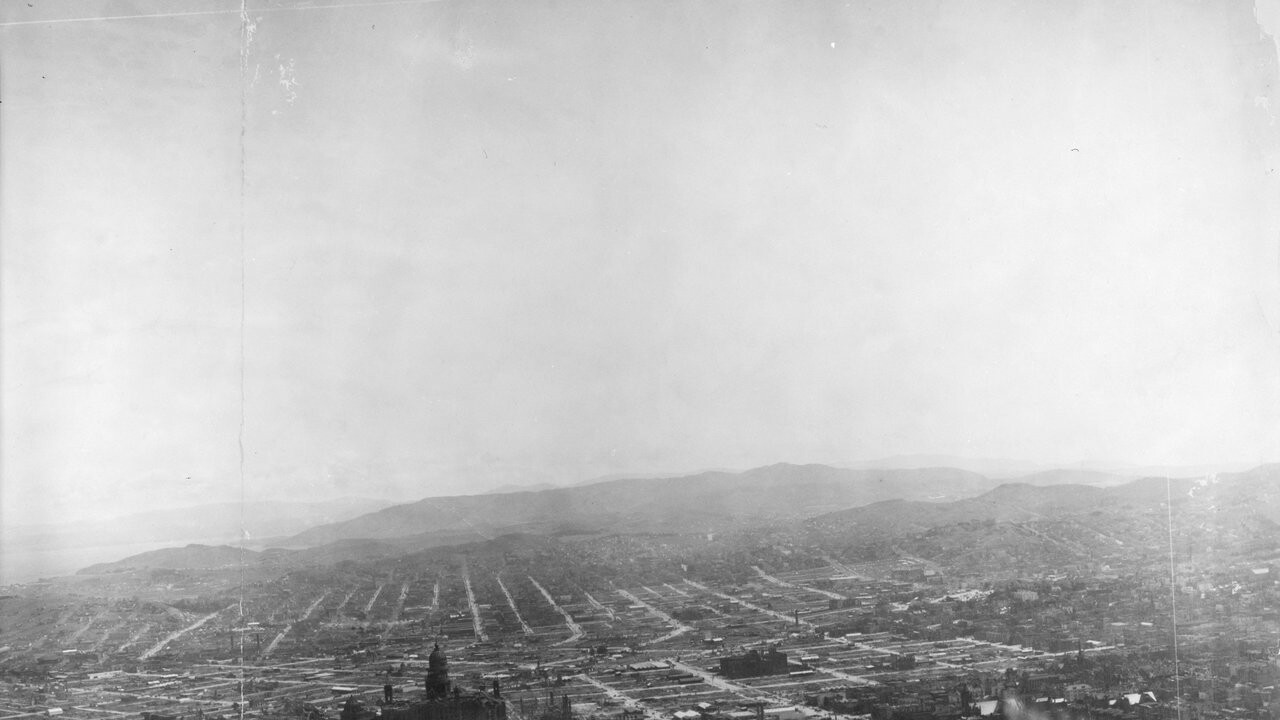
Fire Reaches Nob Hill
Some of Nob Hill’s structures were soundly built, but none escaped the fire as it swept uphill. Panoramic photographs show how thoroughly the neighborhood changed once the flames passed. The lavish residences that had occupied the crest were replaced by ruins and open stretches of devastated ground.
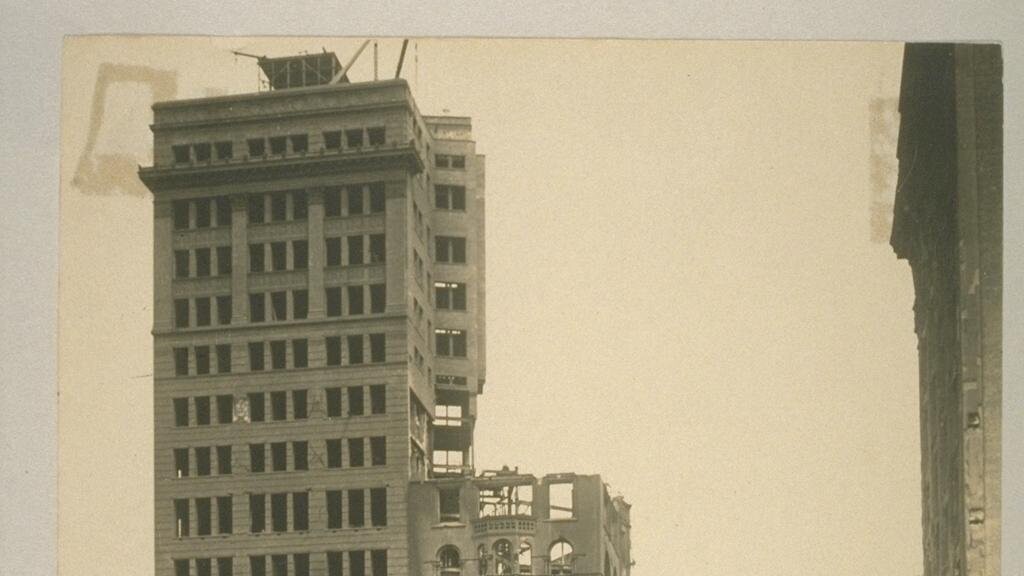
The Palace Hotel Becomes a Burned-Out Shell
The original Palace Hotel caught fire and was eventually reduced to a burned-out shell. Its ruined exterior became part of the devastated downtown landscape captured by photographers. The Palace Hotel later returned, reopening in 1909 and restoring a familiar name to the recovering city.
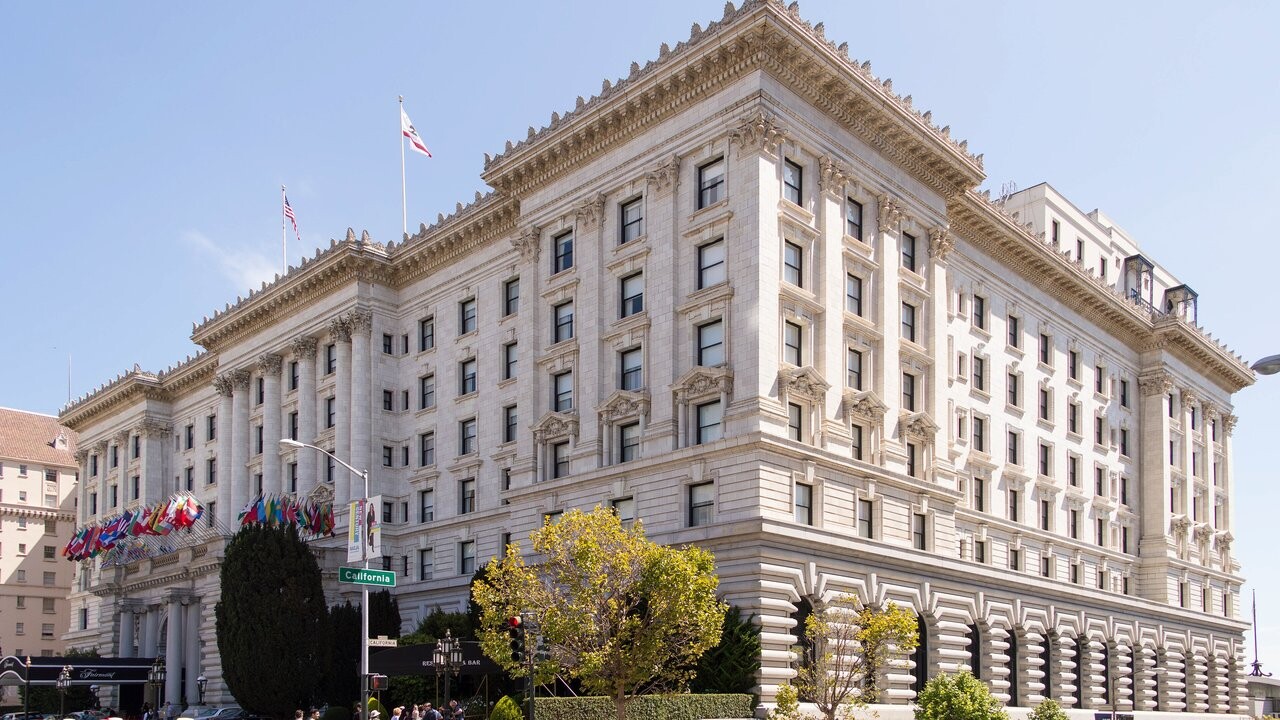
The Fairmont Is Restored
The earthquake and fire damaged the Fairmont Hotel’s interior and delayed its opening until 1907. Architect Julia Morgan was selected to oversee the landmark’s restoration, completing the reconstruction in less than a year. The project transformed the damaged, unopened hotel into a visible part of San Francisco’s recovery.
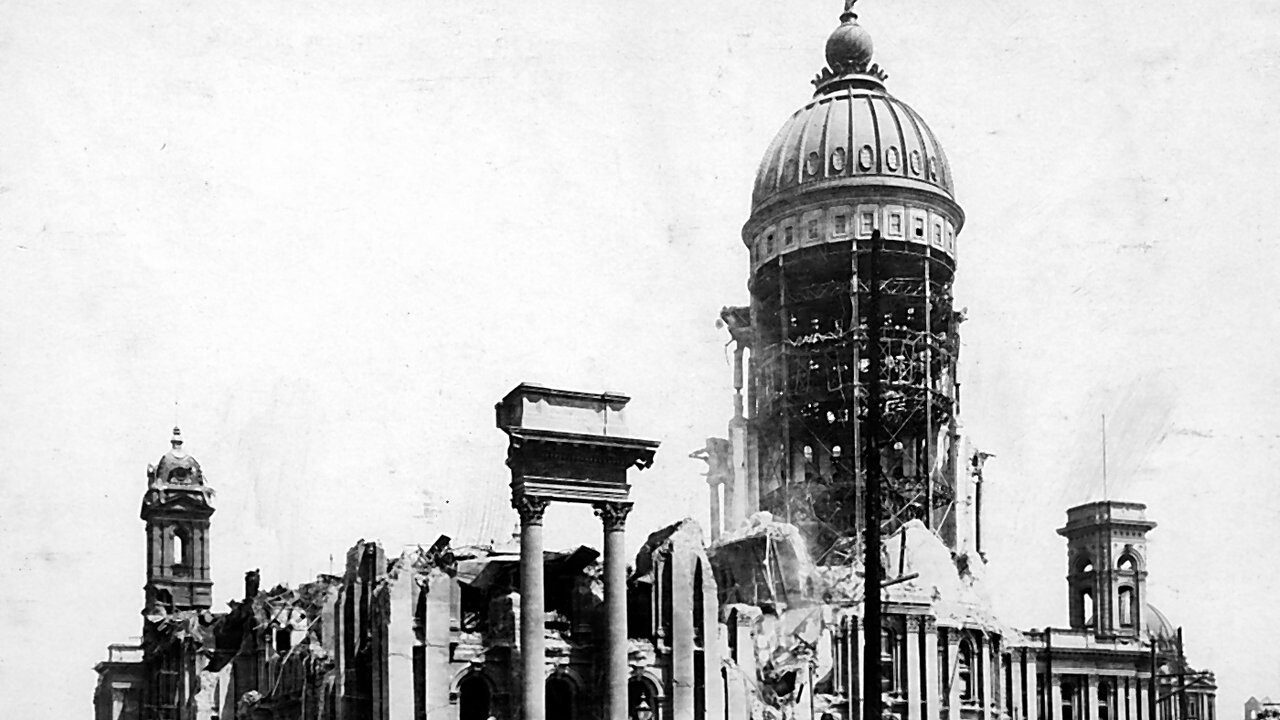
Old City Hall Collapses
Old City Hall collapsed during the first 60 seconds of the disaster, only nine years after its completion. Photographs of the wreckage record the abrupt loss of a building that had taken 25 years to construct. Its shattered remains became among the earthquake’s most recognizable architectural images.
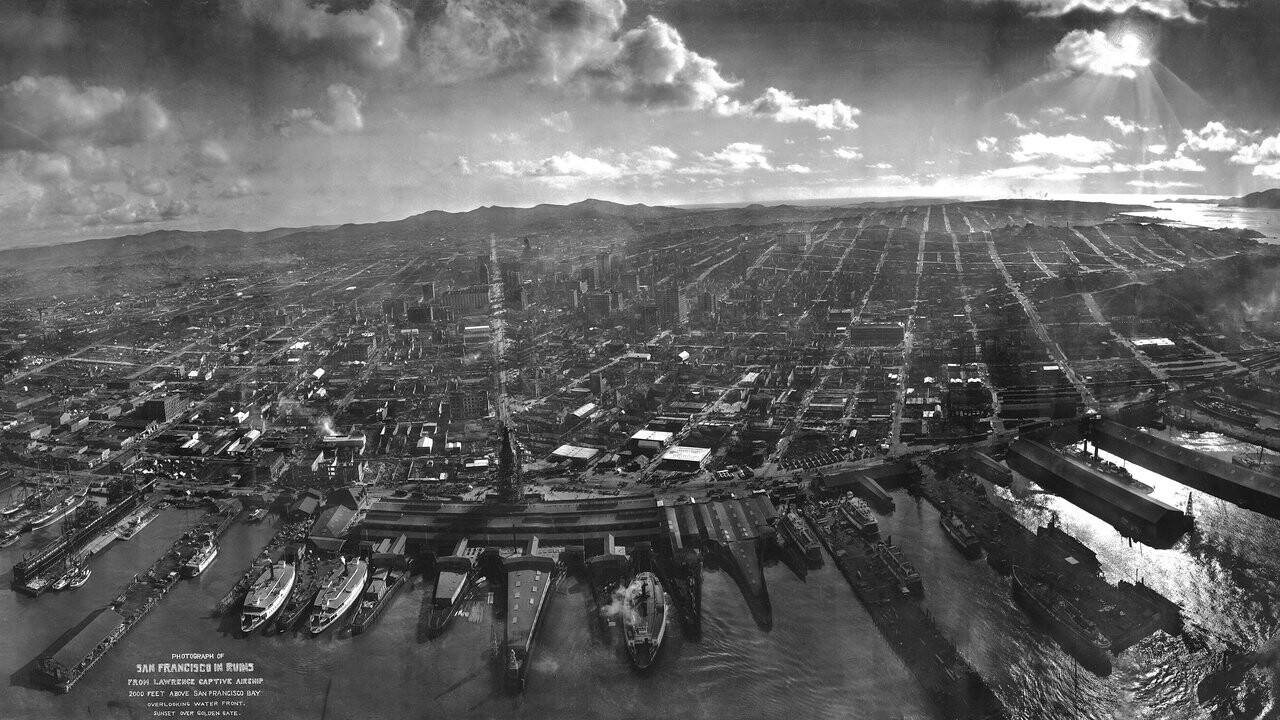
A Citywide View of the Destruction
Elevated panoramas revealed destruction on a scale that individual street scenes could not show. According to the U.S. Geological Survey, shaking and fire destroyed almost five square miles in the heart of San Francisco. From above, surviving structures stood amid vast blocks of ruins.
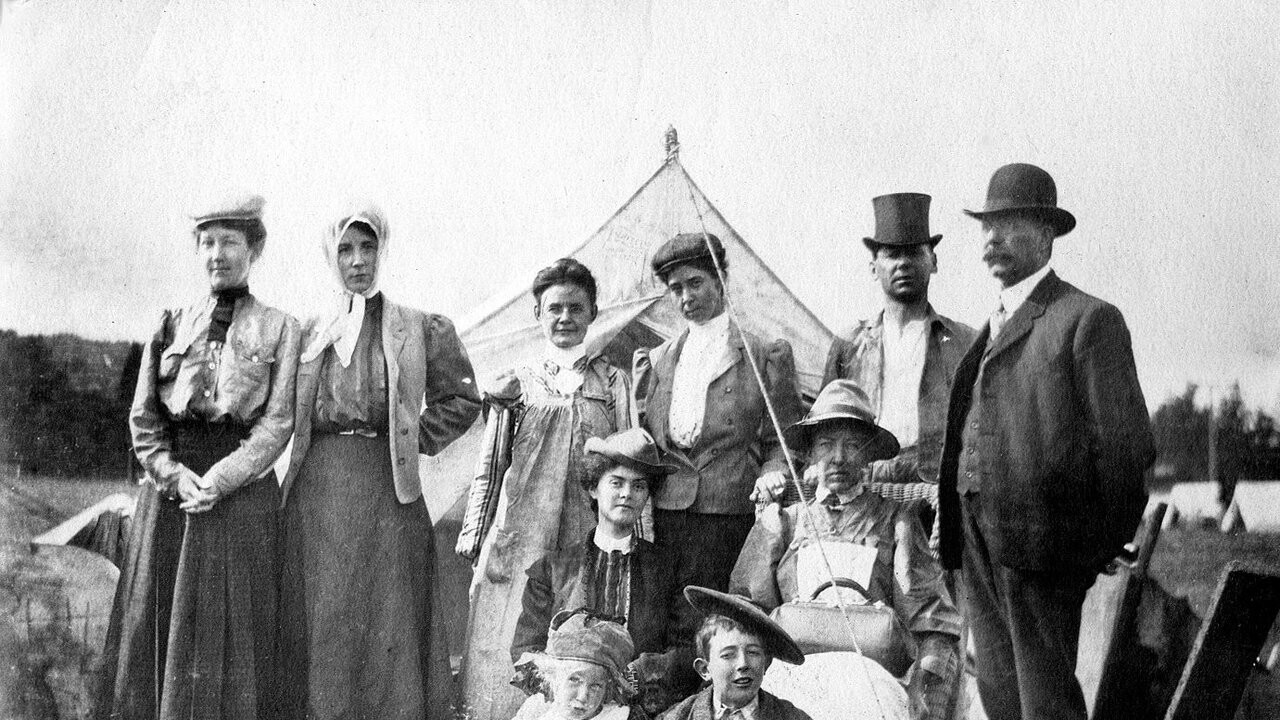
Refugee Camps Fill Open Ground
An estimated 250,000 homeless residents established makeshift camps after the disaster. Many refugees moved west toward Golden Gate Park and the Presidio in search of food and shelter. Photographs of tents and temporary settlements document the enormous displacement that followed the earthquake and fire.
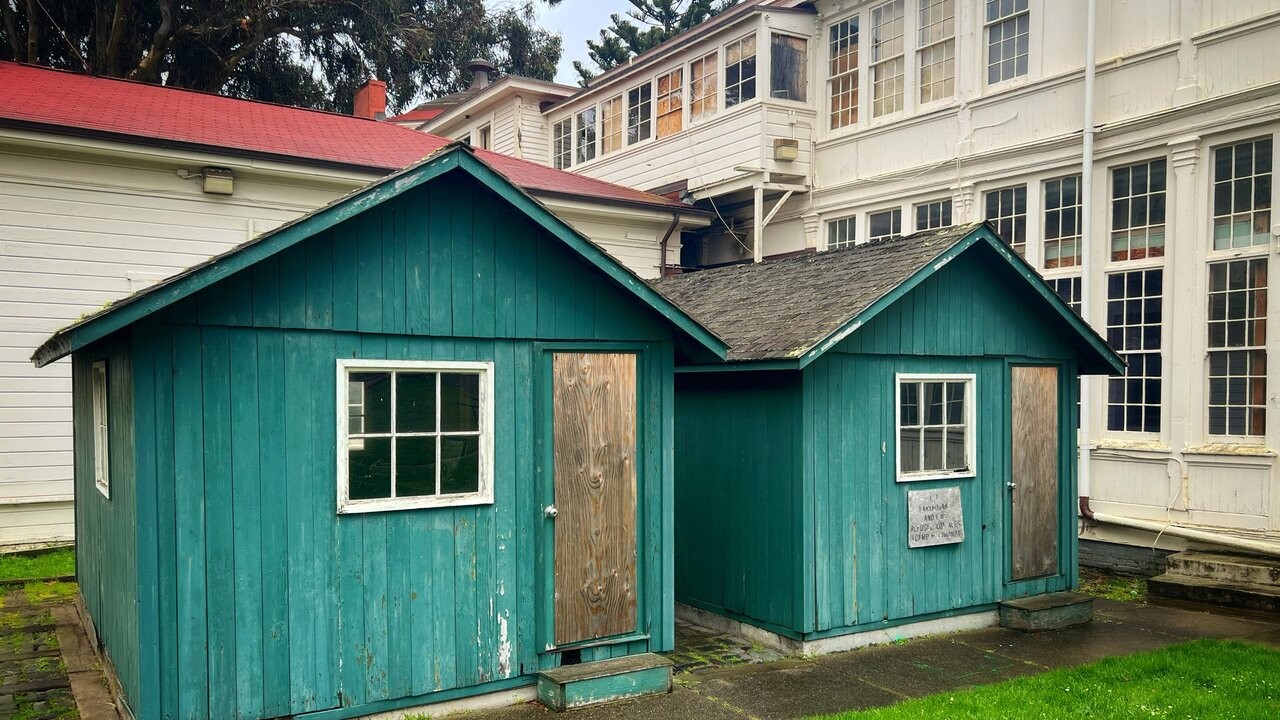
Earthquake Cottages Offer Longer-Term Shelter
As winter approached, San Francisco built 5,300 small wooden earthquake cottages. At the height of their use, the cottages housed more than 16,000 refugees. Residents paid $2 per month toward a purchase price of $50, creating a modest route from emergency shelter to ownership.
These photographs preserve both the scale of San Francisco’s loss and the determination of communities that began rebuilding amid the ruins.
Follow The HyperHive on MSN for more stories like this.
Sources:






