Things You Probably Remember From School in the 1950s and ’60s

Richard Stacks / Wikimedia Commons, Public domain (cropped)
A school day from this era had its own sounds, smells, routines, and objects. Some felt comforting, while others could make the entire room go quiet in an instant.
This gallery loosely follows the day from the first bell to the ride home. Federal archives, museum collections, photographs, and oral histories supply the background behind these familiar memories.
The Heavy Desks With Inkwell Holes
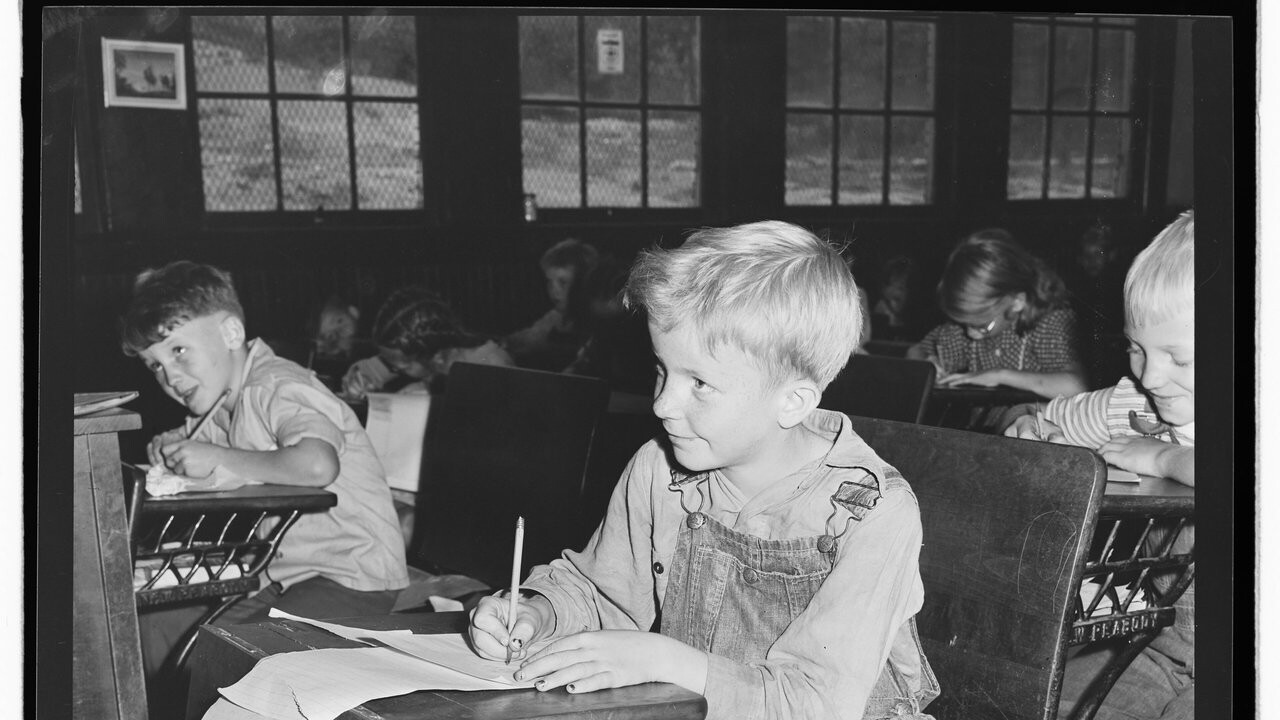
Those old desks could feel as permanent as the school building. A surviving Smithsonian school-desk patent model includes a place for an inkwell, a feature that many former students still recognize. The scarred writing surface also seemed to preserve every pencil mark, initials, and restless tap from the classes that came before.
The Bell That Ruled the Day
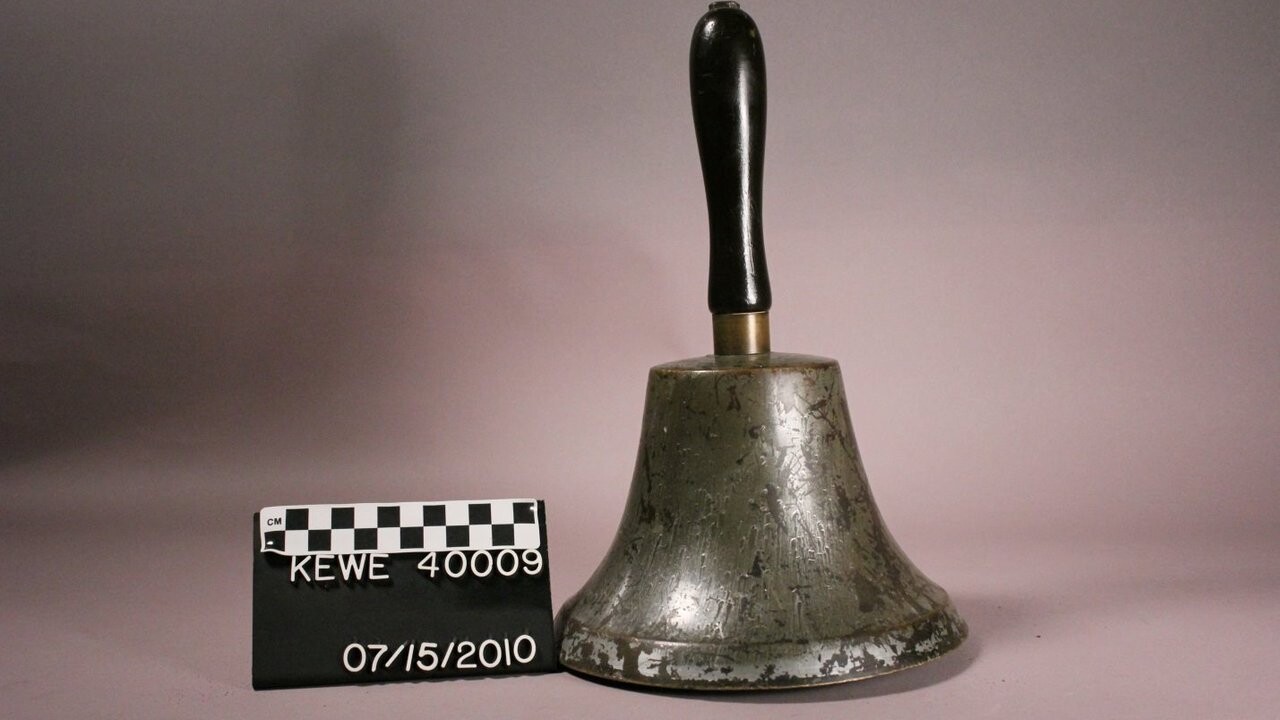
Before every student carried a clock, the school bell divided the day into unmistakable pieces. The Smithsonian preserves a handbell used to alert students to the start of school and the end of recess. Its sharp ring meant that conversations stopped, books opened, or everyone hurried back inside.
The Morning Pledge
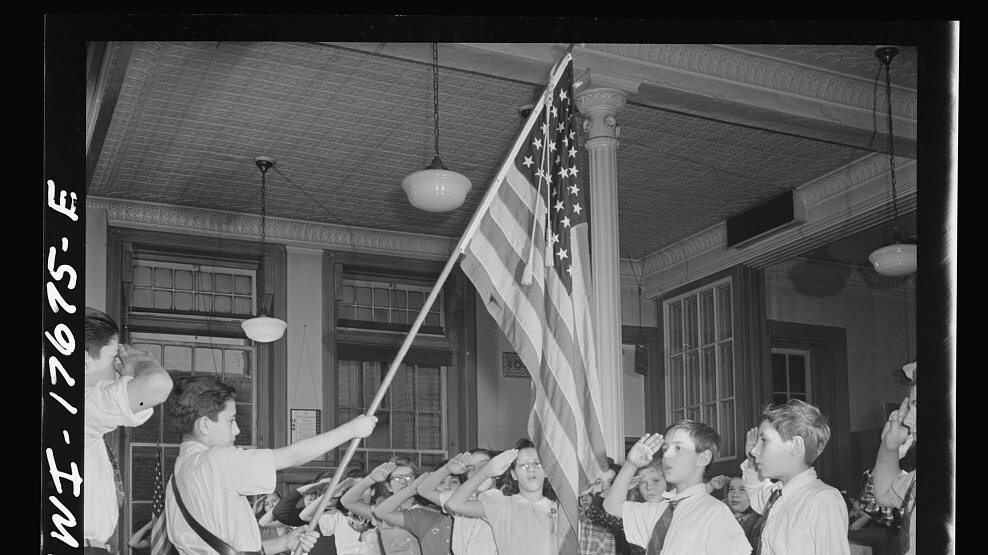
For many students, class began beside an American flag, with everyone standing and facing the same direction. The wording changed during this era: Congress added “under God” to the Pledge of Allegiance in 1954. That revised version became part of the morning routine for generations of American schoolchildren.
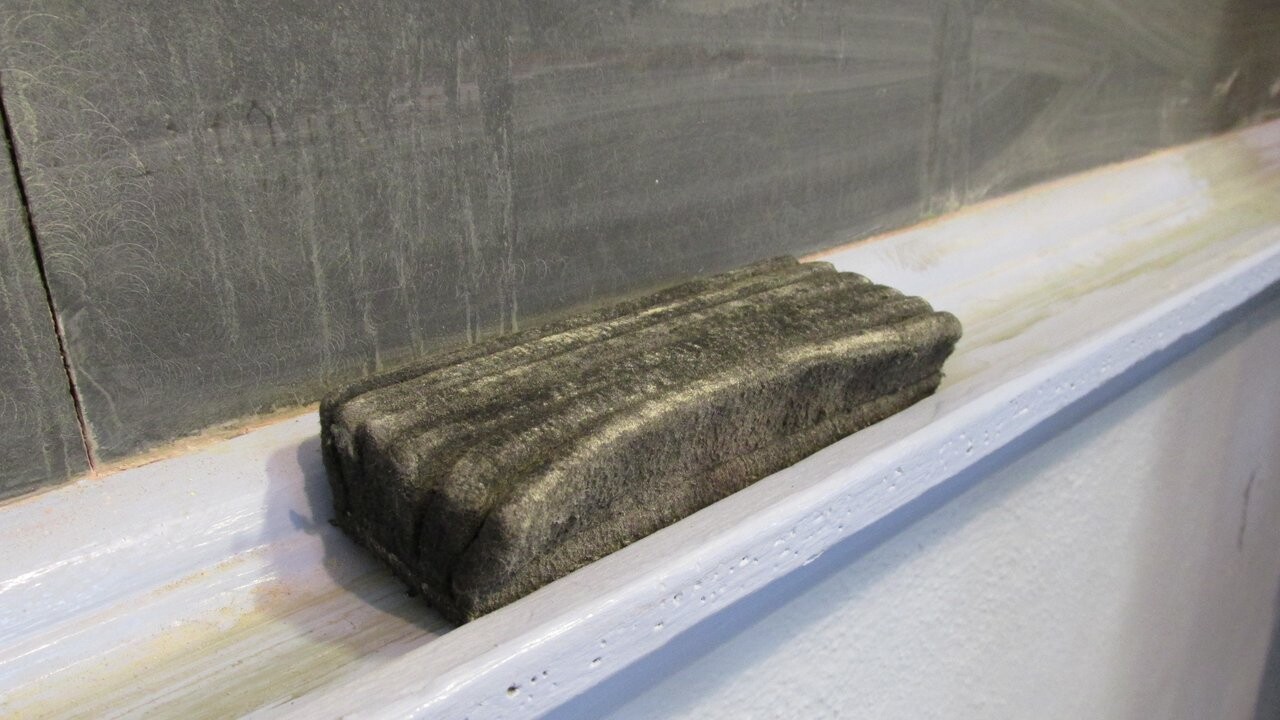
Chalkboards, Erasers, and Clouds of Dust
Lessons arrived in white chalk across a dark board. Teachers filled the surface, erased it, and began again, sometimes leaving pale traces of yesterday’s arithmetic. The Smithsonian preserves a traditional blackboard eraser made from wood, paper, and ink, a modest object that once supported much of the school day.
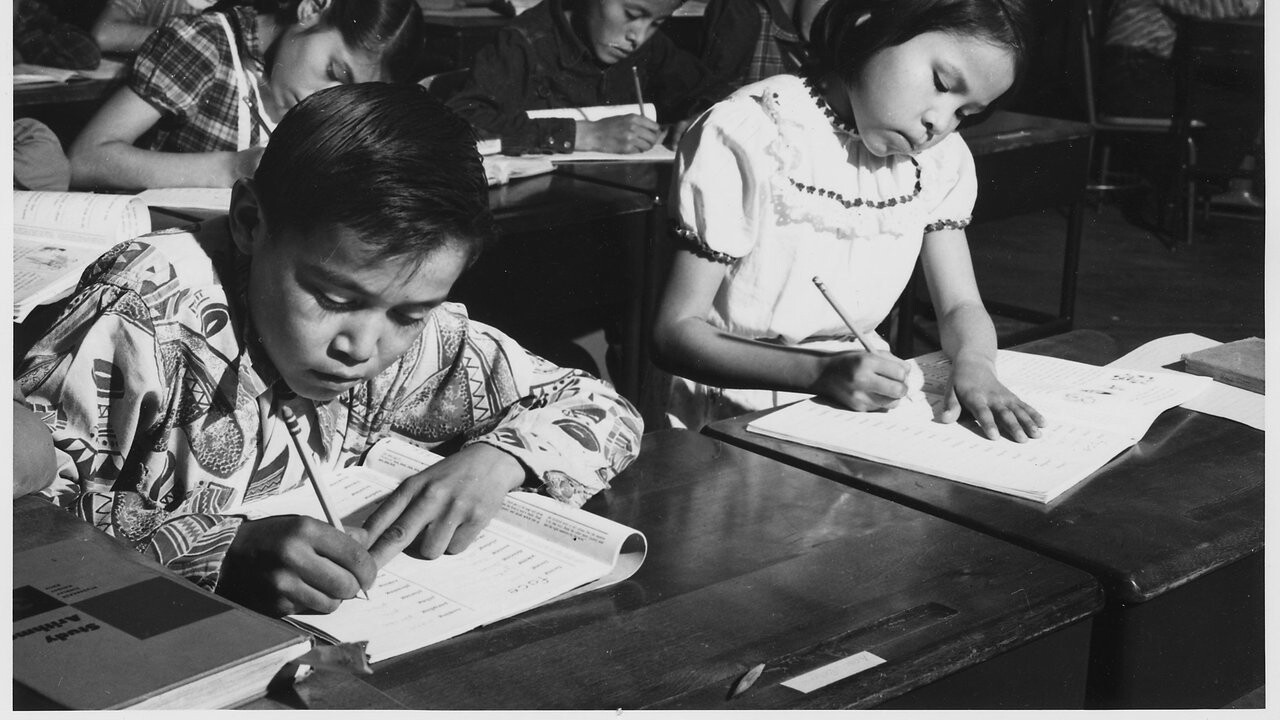
Palmer Method Cursive Practice
Rows of loops, slants, and repeated letters turned handwriting into a daily exercise. The Palmer Method emphasized uniform writing made with rhythmic motion. Its rules were especially difficult for left-handed children, who were required to use their right hands. On a carefully graded page, neatness could seem as important as the words themselves.
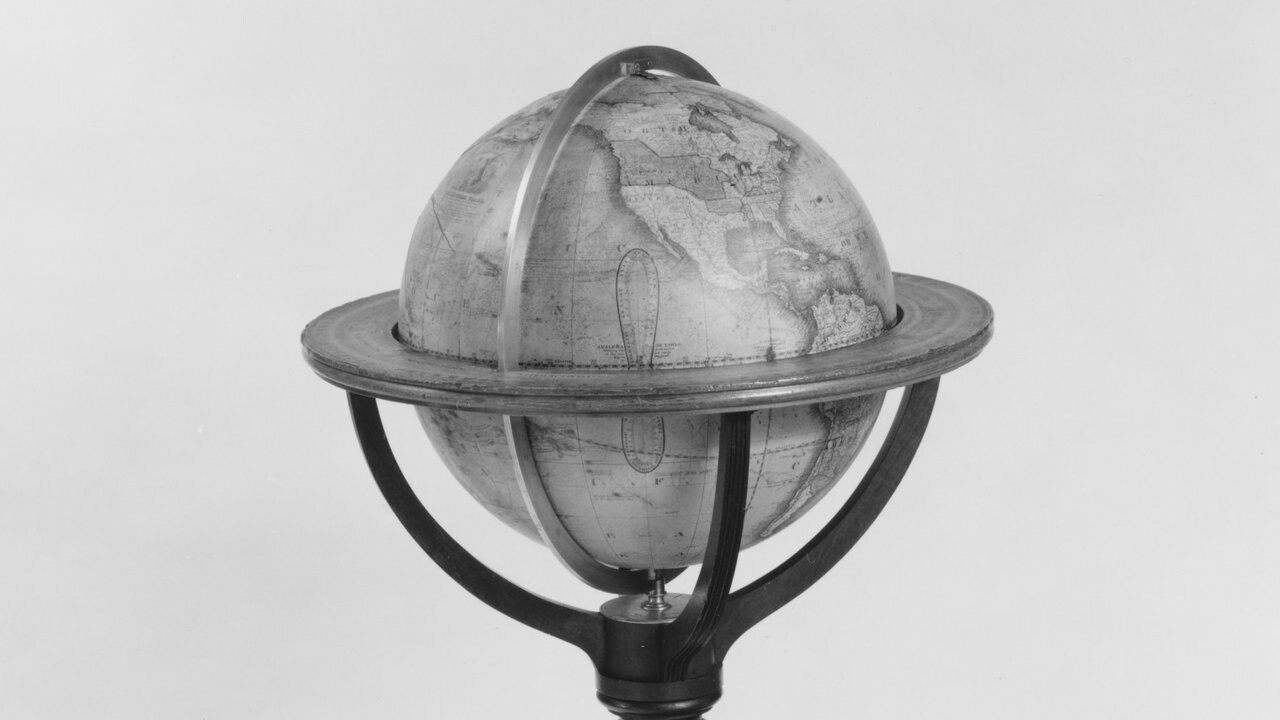
The Globe in the Corner
A large globe made distant places feel almost reachable, especially when the teacher spun it and stopped it with one finger. Smithsonian history describes globes as basic geography teaching tools through the 1960s. Even after borders changed, a well-used classroom globe might remain a trusted companion for another lesson.
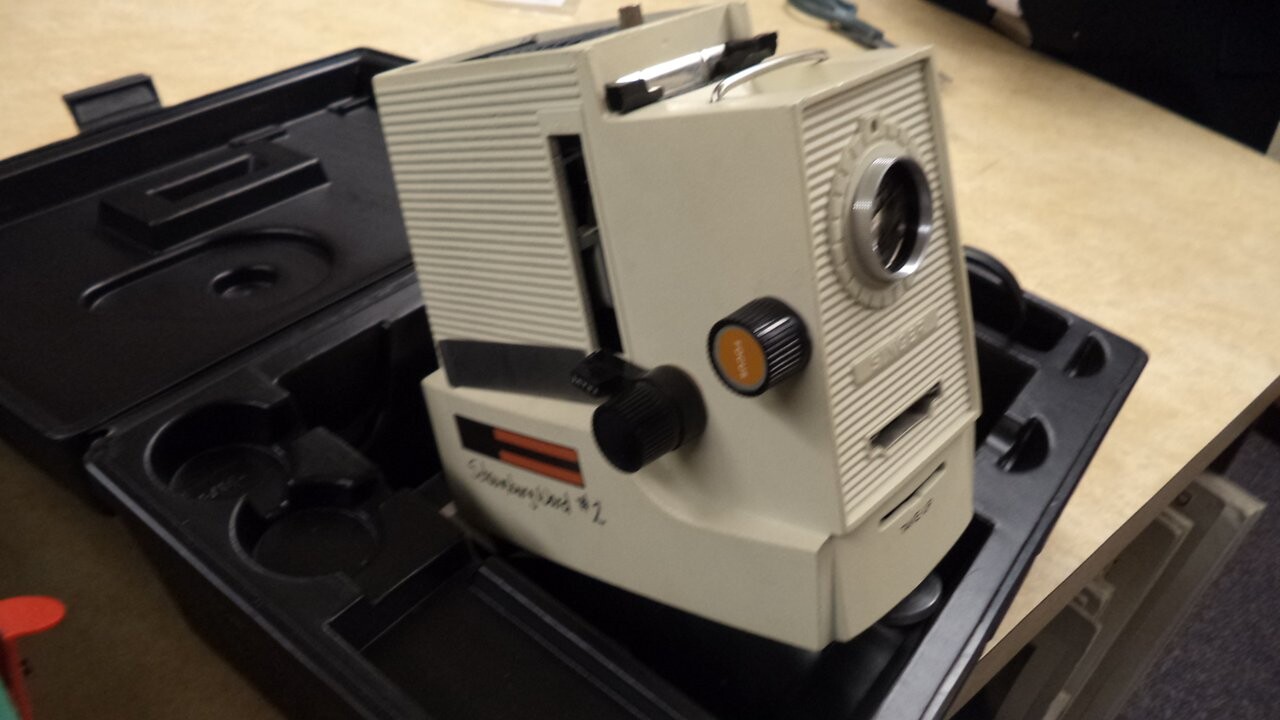
Filmstrips in a Darkened Room
Pulling the shades could transform an ordinary lesson into an event. The Library of Congress describes the filmstrip as a common form of still-image instructional technology from the 1950s through the 1970s. Its orderly frames brought faraway places, historical scenes, and carefully illustrated lessons into the classroom.
Purple Ditto Pages and That Unmistakable Smell
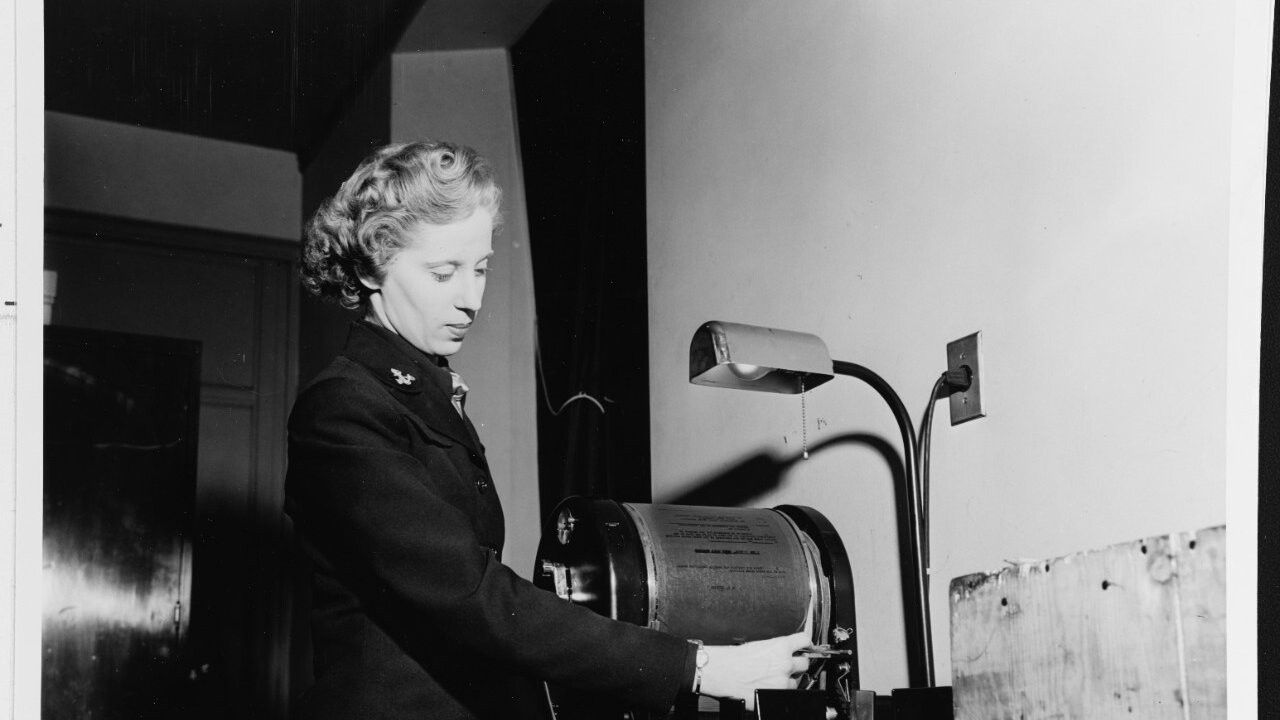
Fresh purple copies had an odor that could fill the room before the lesson even began. Spirit duplicating typically used purple ink and solvents, producing its distinctive chemical smell. For former students, the color and scent remain closely tied to quizzes, worksheets, classroom notices, and pages passed from desk to desk.
The Space Race Reaches Science Class
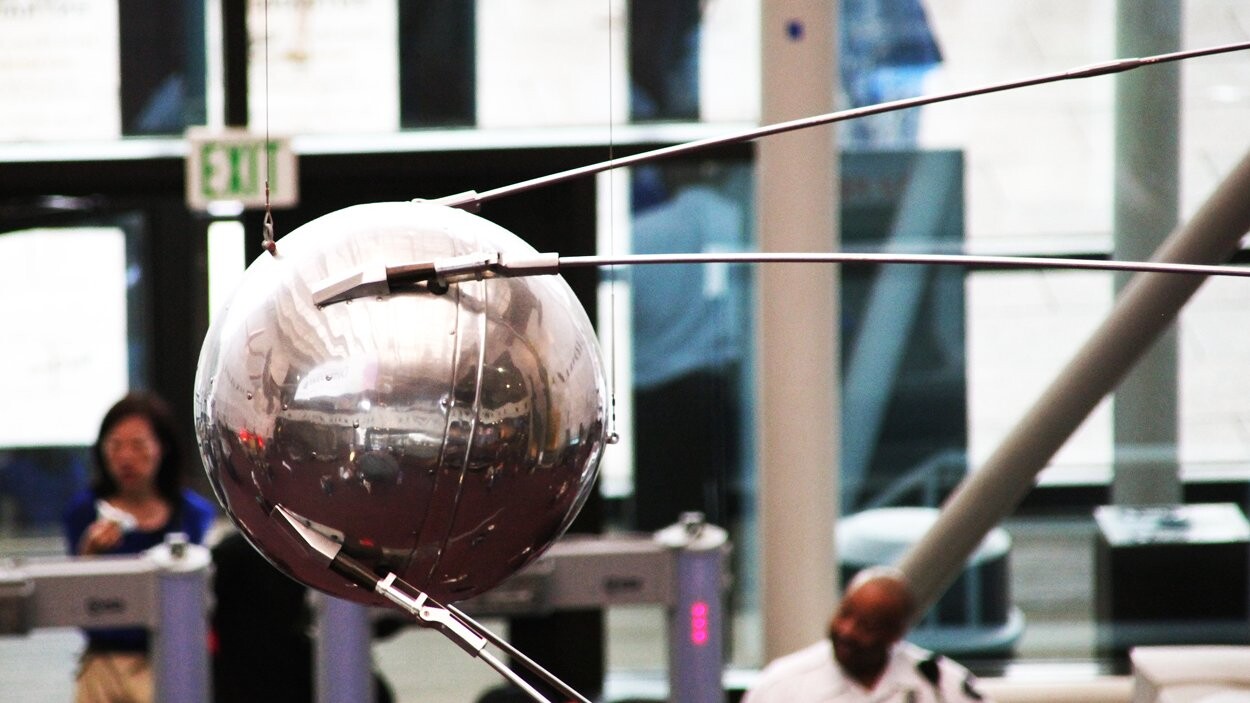
Sputnik changed more than the evening news. Federal education policy soon supported stronger science, mathematics, and foreign-language instruction through the National Defense Education Act. For students, the shift gave lessons about scientific discovery and international competition an urgency that matched the rapidly changing world beyond the classroom.
Slide Rules Before Pocket Calculators
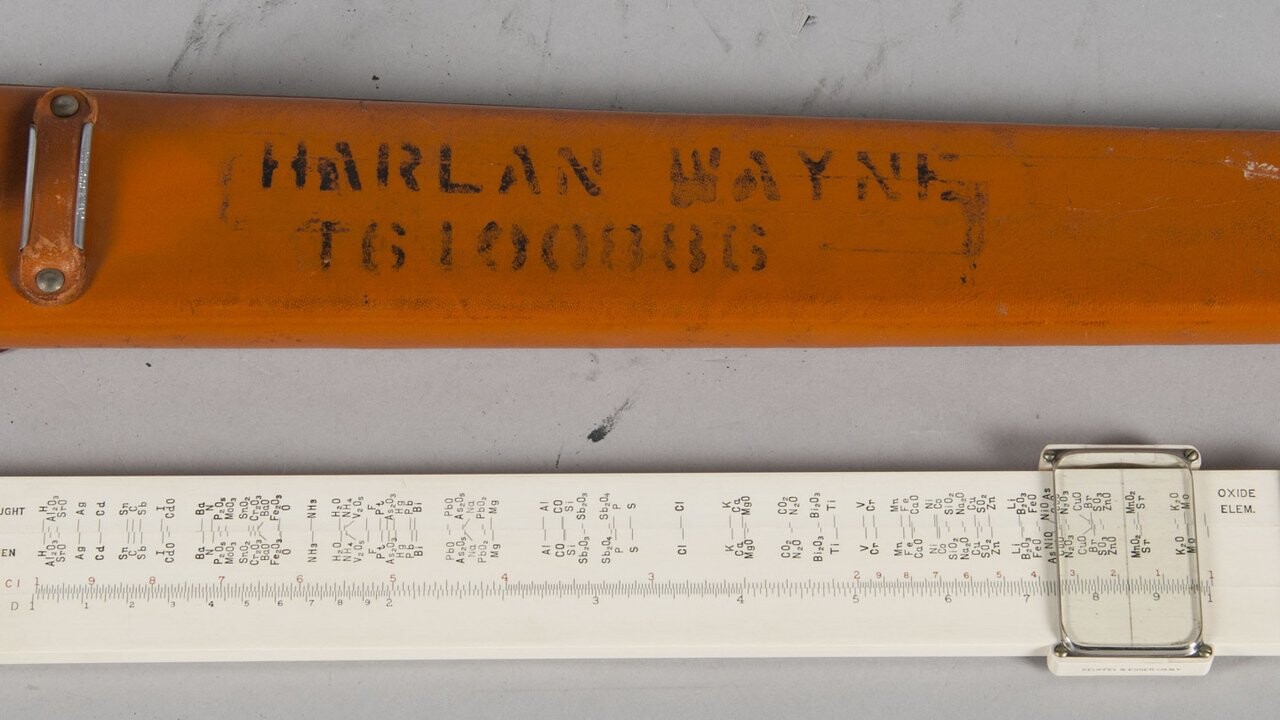
A slide rule could look mysterious until its scales began to make sense. The Smithsonian preserves a clear plastic version designed to introduce students to the instrument with an overhead projector. Watching the teacher move its parts across the projected image turned a compact calculating tool into a lesson the whole room could follow.
Polio Vaccination Arrives
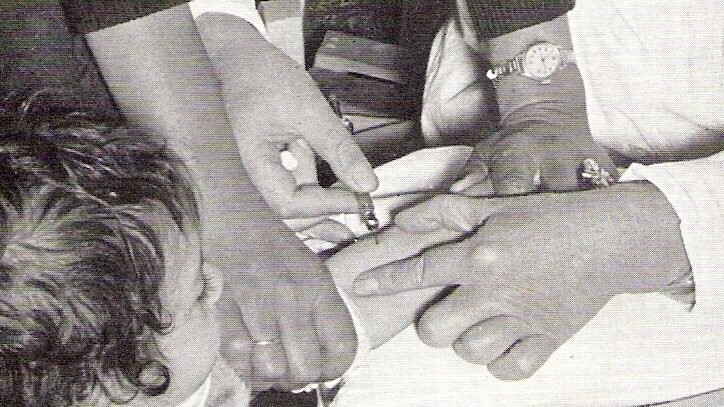
The early polio vaccination campaign carried enormous hope along with understandable childhood anxiety. Federal health records state that approximately four million doses were administered, mostly to elementary schoolchildren. For many students, the memory is less about the statistics than about rolled-up sleeves, a tense wait, and relief when it was over.
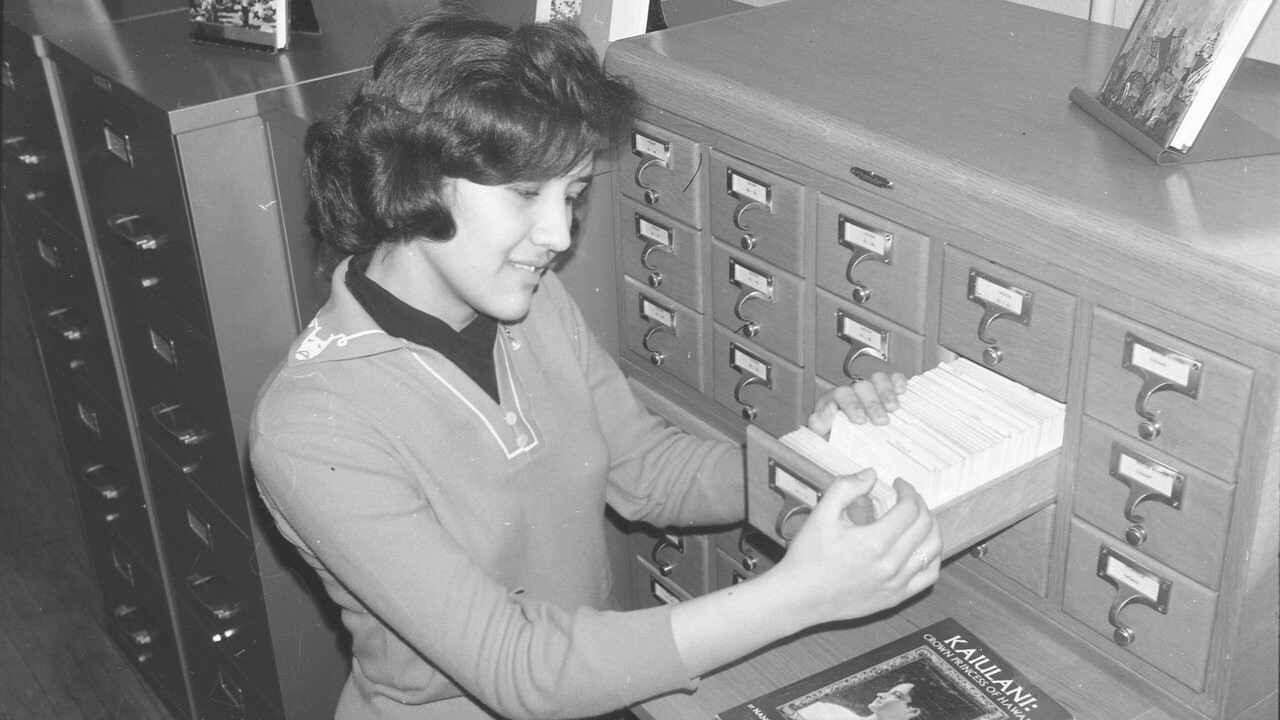
Searching the Library Card Catalog
Finding a book often began at the card catalog, where the right entry could point a student toward the shelves. Smithsonian history notes that card catalogs became familiar parts of community life as school and public libraries spread. Knowing where to look was a practical classroom skill in its own right.
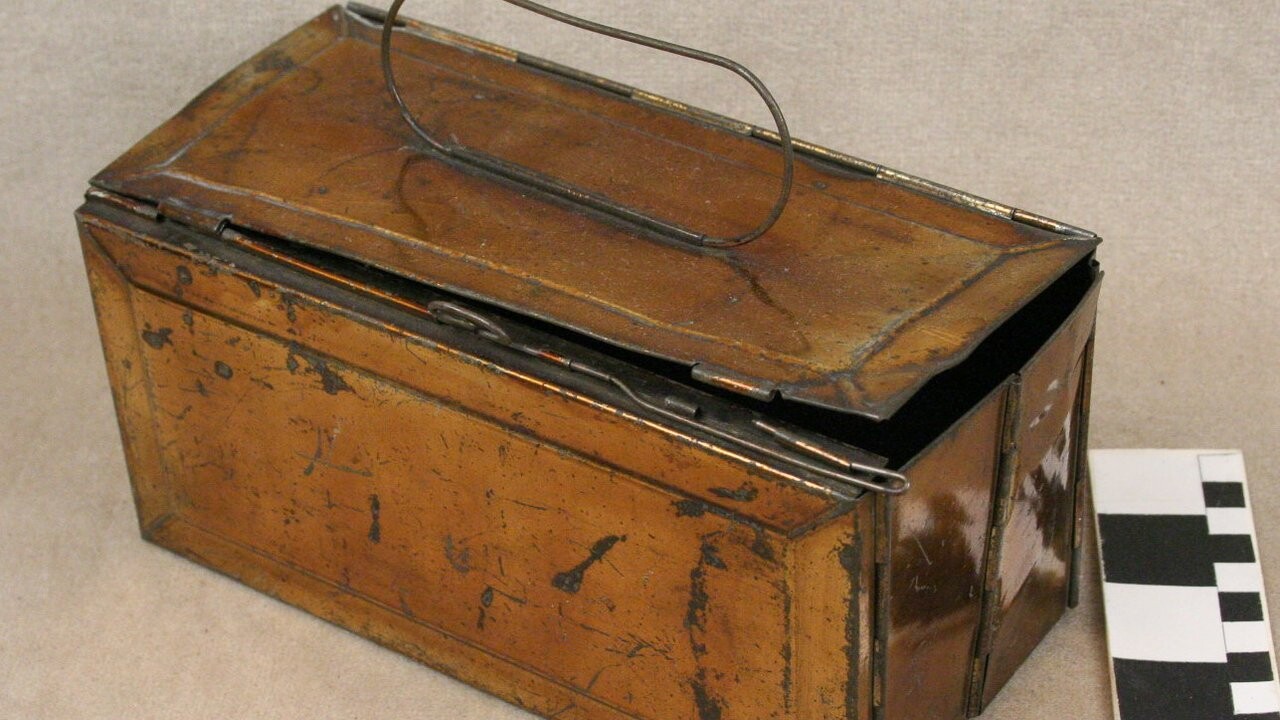
Metal Lunch Boxes at Noon
Lunch brought out some of the most personal objects in the school day. Smithsonian history notes that lunch boxes became common accessories for expressing a child’s interests or personality during the 1950s. Set beside rows of plain desks, a brightly decorated metal box could say something about its owner before it was opened.
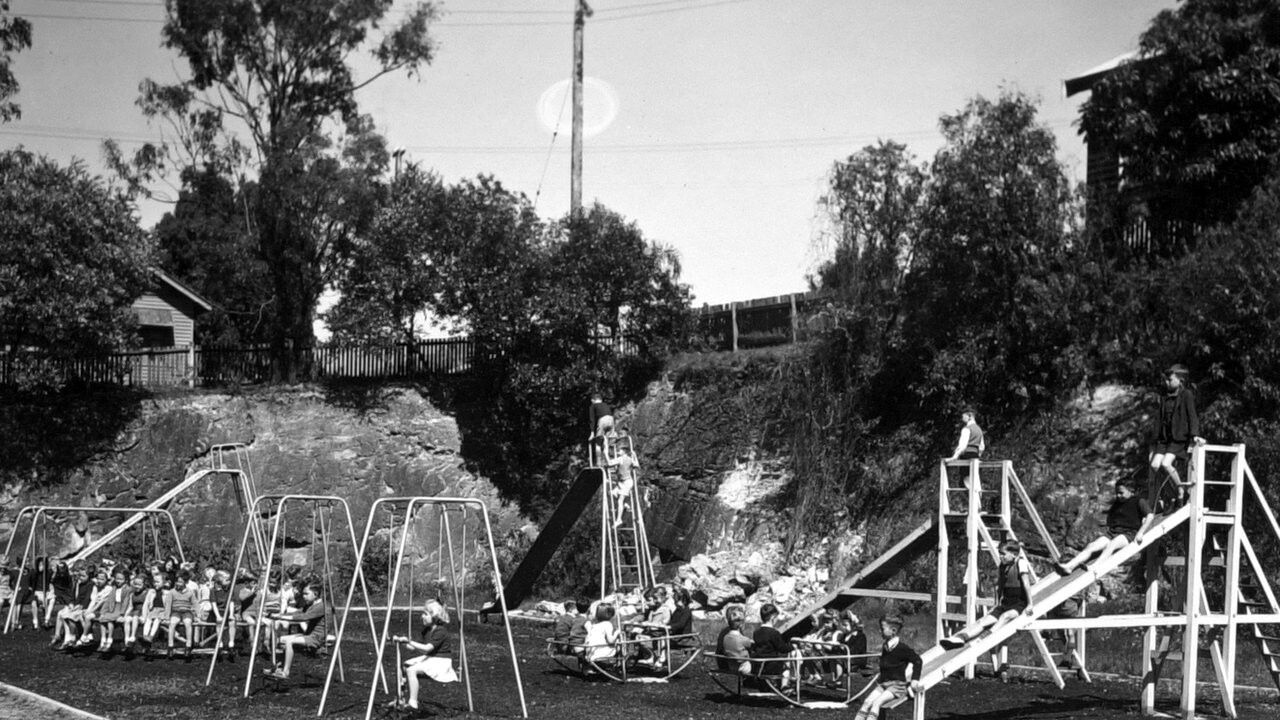
Recess on the Playground
Recess brought shouted games, hurried conversations, and a welcome break from sitting still. A Library of Congress recording made at a school in 1957 preserves playground sounds that include swings. That small detail is enough to recall the familiar rhythm of children racing outside and returning when the break ended.
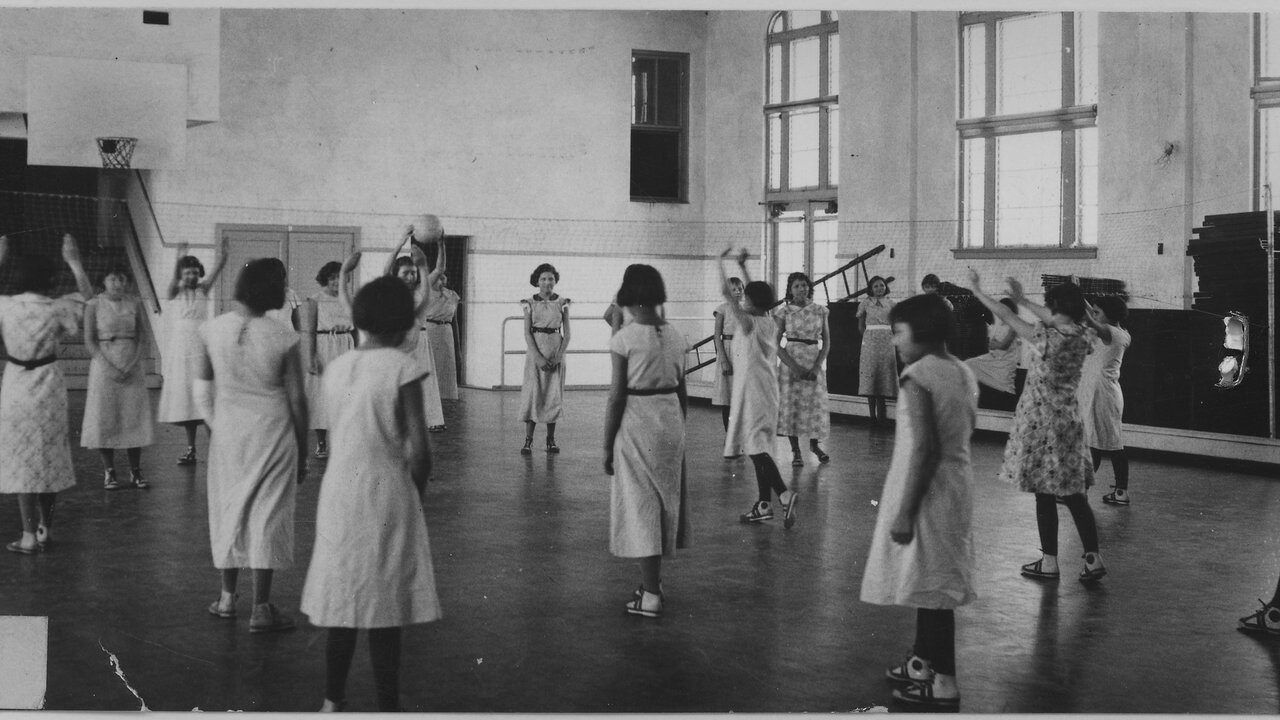
The Gym Uniform You Could Not Forget
School gym uniforms were often designed for conformity rather than personal style. A surviving Smithsonian example is a yellow three-piece suit consisting of a pleated jumper, bloomers, and a belt. Keeping every piece together added another challenge to changing clothes quickly in a crowded school locker room.
Home Economics in a Classroom Kitchen
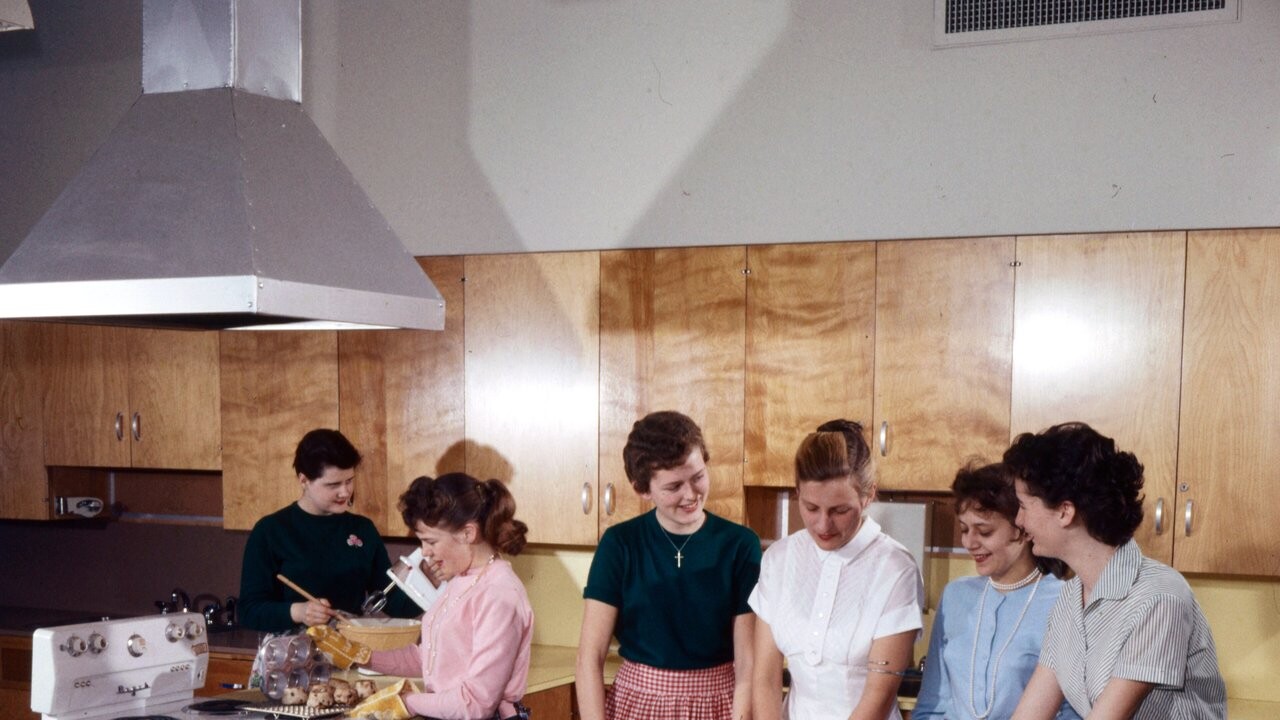
A Library of Congress photograph shows female students and a teacher in a home economics classroom with a kitchen and dining table. The setting looked strikingly different from rows of ordinary desks. A Smithsonian collection also describes consumer and home-economics filmstrips and recordings intended for use in public schools.
Shop Class and the Smell of Sawdust
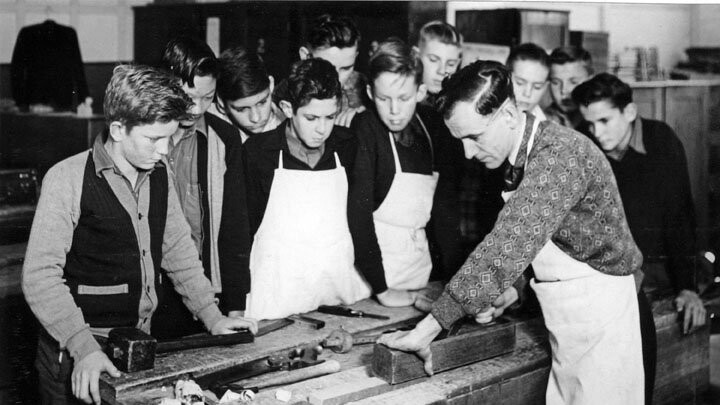
Shop offered a different rhythm from lessons built around books and blackboards. In a Smithsonian oral-history transcript, one artist recalled that his woodworking education began with a six-week high school class. A slightly uneven project could still inspire pride when it was carried home and shown to the family.
Rows of Manual Typewriters
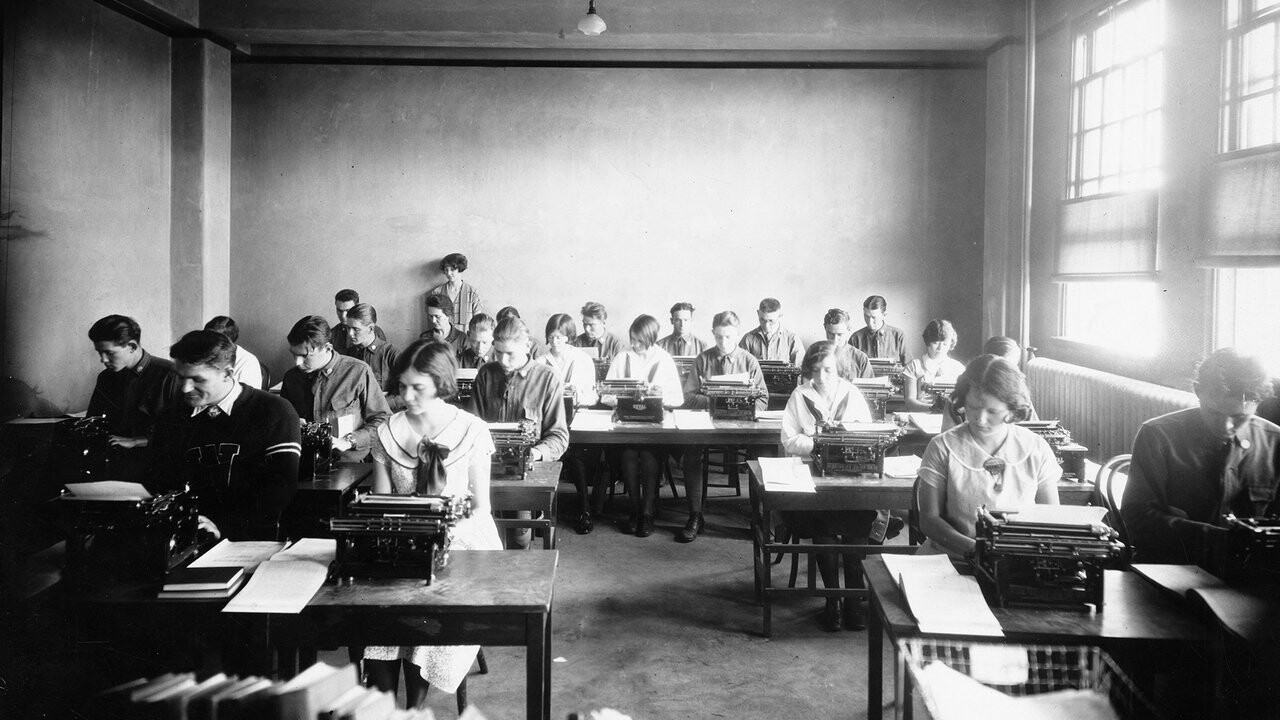
Typing class had its own mechanical soundtrack: keys striking, bells ringing, and carriages snapping back. The Library of Congress preserves a photograph of a junior-high typewriting class taken in 1949.
Duck-and-Cover Drills
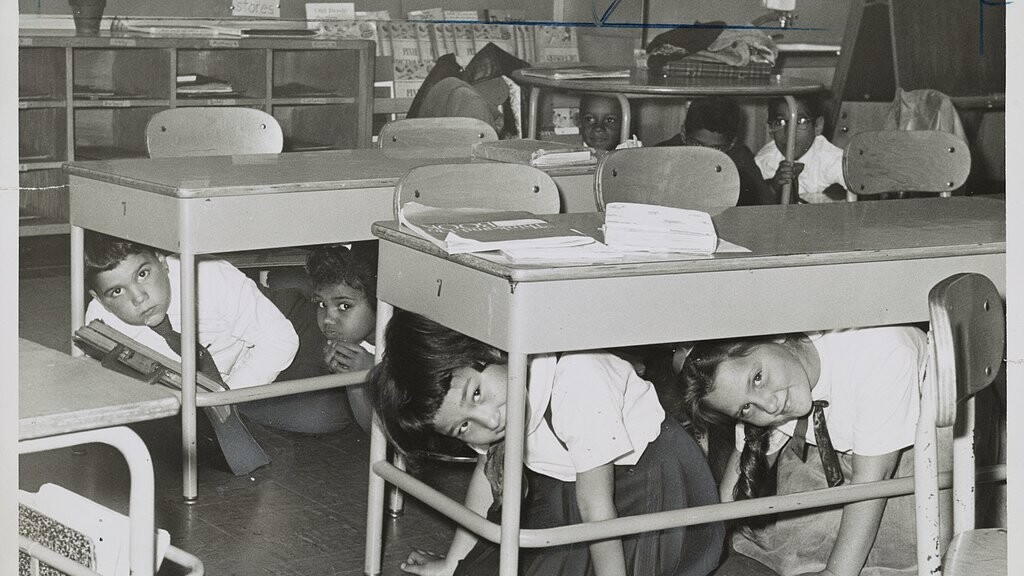
The command to duck and cover could interrupt an otherwise ordinary lesson. Students practiced the drills in preparation for a possible nuclear attack, sometimes using their desks as barriers. National Archives materials show how Cold War fears entered the classroom through civil-defense instruction and routines that children were expected to remember.
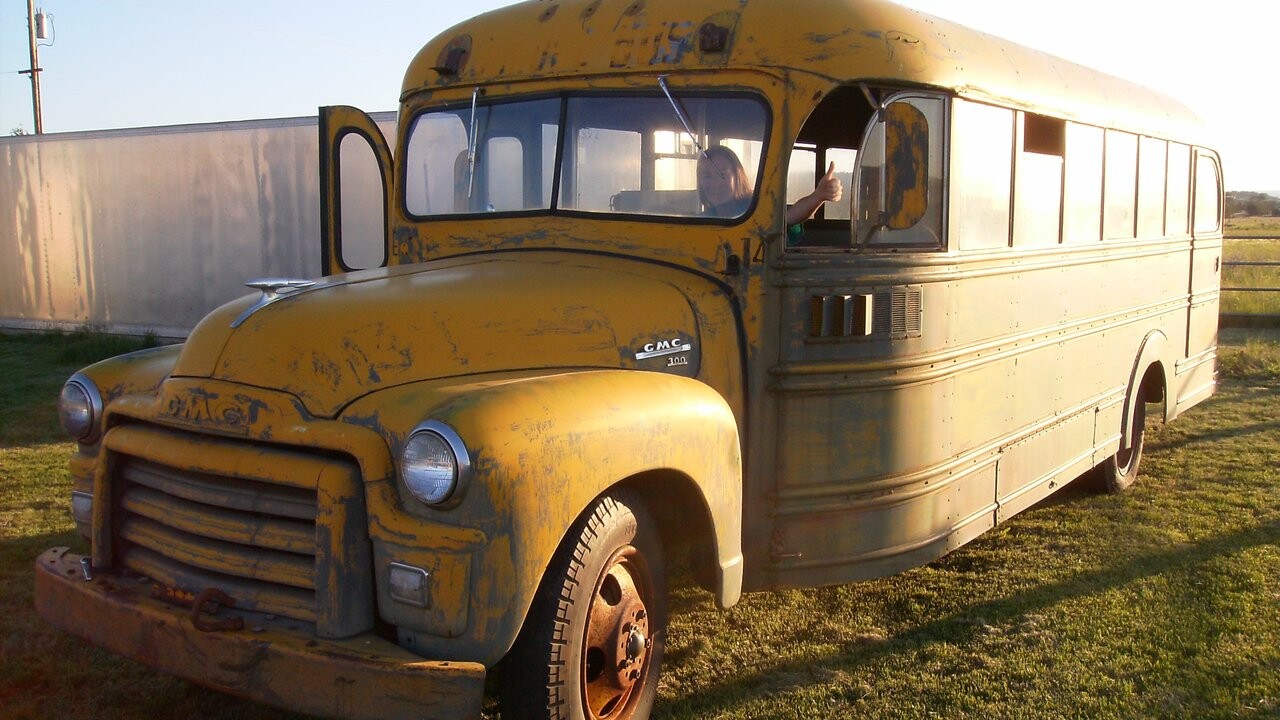
The Yellow Bus Ride Home
For many children, the day ended on a bus seat with books balanced on a lap. Smithsonian history notes that school buses had carried students to larger, centralized schools since the 1930s. The ride home was noisy, social, and just unstructured enough to feel like freedom after the final bell.
The smallest classroom details often become the memories that last the longest. Which of these school-day sights, sounds, or smells do you remember best?
Follow The HyperHive on MSN for more stories like this.
Sources: