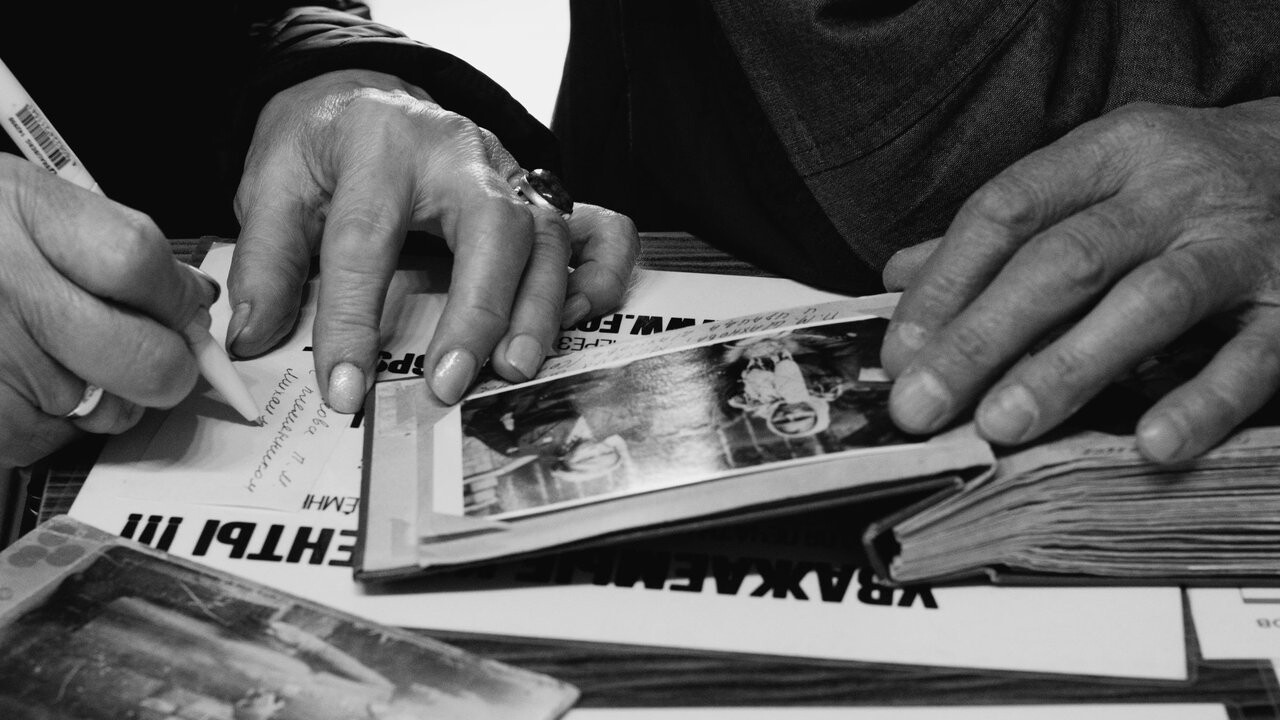
Have you ever looked through a family album and wondered why your mother or father seemed older at 40 than people do today?
Some of the difference may reflect changes in health and daily life. Smoking and prolonged sun exposure are associated with visible skin aging, while photographs can vary widely in color, lighting, angles, clothing, and hairstyles.
The evidence does not prove that every modern 40-year-old looks younger. It does, however, offer several useful explanations for why people of the same chronological age may look different across generations.
Are 40-Year-Olds Really Aging More Slowly?
There is evidence that people of the same chronological age can differ across generations. One national analysis found that biological age was lower in more recent periods, although the degree of improvement varied by age and sex.
Biological age reflects aspects of physical health, not how young someone’s face looks. The finding therefore cannot settle a comparison between two family photographs, but it suggests that chronological age tells only part of the story.
Did Less Smoking Change Middle-Aged Faces?
Smoking is one of the clearest documented differences between generations. According to the CDC, adult cigarette smoking declined “from 42.4% in 1965 to 11.6% in 2022.”
An observational study compared identical twins with different smoking histories. Smokers received worse scores than their nonsmoking twins for several visible features around the eyes and lower face, including lower-lid bags, malar bags, and nasolabial folds.
The study cannot explain the appearance of any particular person, and an observational comparison cannot account for every influence on the face. Still, the combination of lower smoking rates and research linking smoking with visible facial changes makes smoking a plausible part of the generational difference.
What Did Sunscreen and Changing Work Add?
Prolonged ultraviolet exposure can contribute to skin aging. The American Academy of Dermatology says sunscreen can “help prevent premature skin aging,” and a randomized trial involving healthy, middle-aged adults concluded that regular sunscreen use slowed skin aging.
Employment patterns have also changed. The USDA reports that farming’s share of total U.S. employment fell from 12.2% in 1950 to 1.6% in 2017. NIOSH has warned that prolonged ultraviolet exposure can age the skin and has identified farmworkers among the outdoor workers exposed to ultraviolet radiation.
Those findings should not be stretched too far. The decline in farm employment does not prove that individuals now receive less daily sun, and many people continue to work outdoors. It simply shows that a smaller share of the workforce holds one type of outdoor job associated with occupational ultraviolet exposure.

Did Dentistry, Nutrition, and Healthcare Help?
The National Institute of Dental and Craniofacial Research reports that partial and total tooth loss among U.S. seniors has declined since the early 1970s. The figures concern seniors rather than people in their 40s, so they should not be treated as direct evidence about middle-aged appearance. They do show a long-term improvement in tooth retention.
Diet may be another contributor, although the evidence is limited. In a large Dutch observational study, closer adherence to healthy-diet guidelines was associated with fewer facial wrinkles among women, but not men. The researchers noted that causation could not be proven, and the study does not establish that people today eat better than earlier generations did. Diet is one possible influence, not a complete explanation.
How Do Old Photos and Fashion Affect Our Judgment?
A fair comparison between generations requires more than two pictures taken at the same age. The Smithsonian’s National Portrait Gallery explains that a hairstyle can offer clues about a sitter’s age and period, while clothing can reveal information about the person or the era represented in a portrait.
When comparing family photographs, try to separate those historical clues from the person’s facial features. Formal clothing or a hairstyle from another decade may identify when a portrait was taken, but the museum guidance does not establish that dated styles make someone look older.
Color can also affect age judgments. In one study, observers produced more consistent age estimates when viewing color faces than when viewing grayscale versions. The result does not mean that black-and-white photographs automatically make every subject look older; it shows that removing color information changes the task.
Lighting introduces another variable. A separate experiment found that changing the light angle could significantly affect facial perception. For a more balanced comparison, choose pictures with similar lighting, expressions, camera angles, color, and image quality. Even then, treat the result as an informal observation rather than a measurement of how quickly either person aged.
Family albums capture real people and moments, but they are not neutral measures of age. Health, habits, work, fashion, and photography can all influence the comparison, and no single factor explains every face. Did your parents look older at 40 than you or your children do today?
Follow The HyperHive on MSN for more stories like this.
Sources: