
Have you ever wondered why your older father groans whenever he gets up from the couch or lowers himself into a chair? Perhaps you have started doing it too.
Rather than guessing what the sound means, ask how the movement feels. New pain, swelling, lasting fatigue, or increasing difficulty getting around may warrant a conversation with a health care provider.
Here is what can make sitting and standing more demanding with age, along with signs that deserve attention.
Does a Groan Always Mean Pain?
The sound by itself does not reveal what the person is experiencing. Ask a simple, respectful question: Does that movement hurt?
Pain still matters. The National Institute on Aging says, “Pain can be your body’s way of warning you that something is wrong.” People also respond to pain differently, so one person may report it quickly while another may say little.
Pay attention to the person’s answer and to any visible difficulty with the movement. Avoid teasing or assuming that the sound is merely a habit.
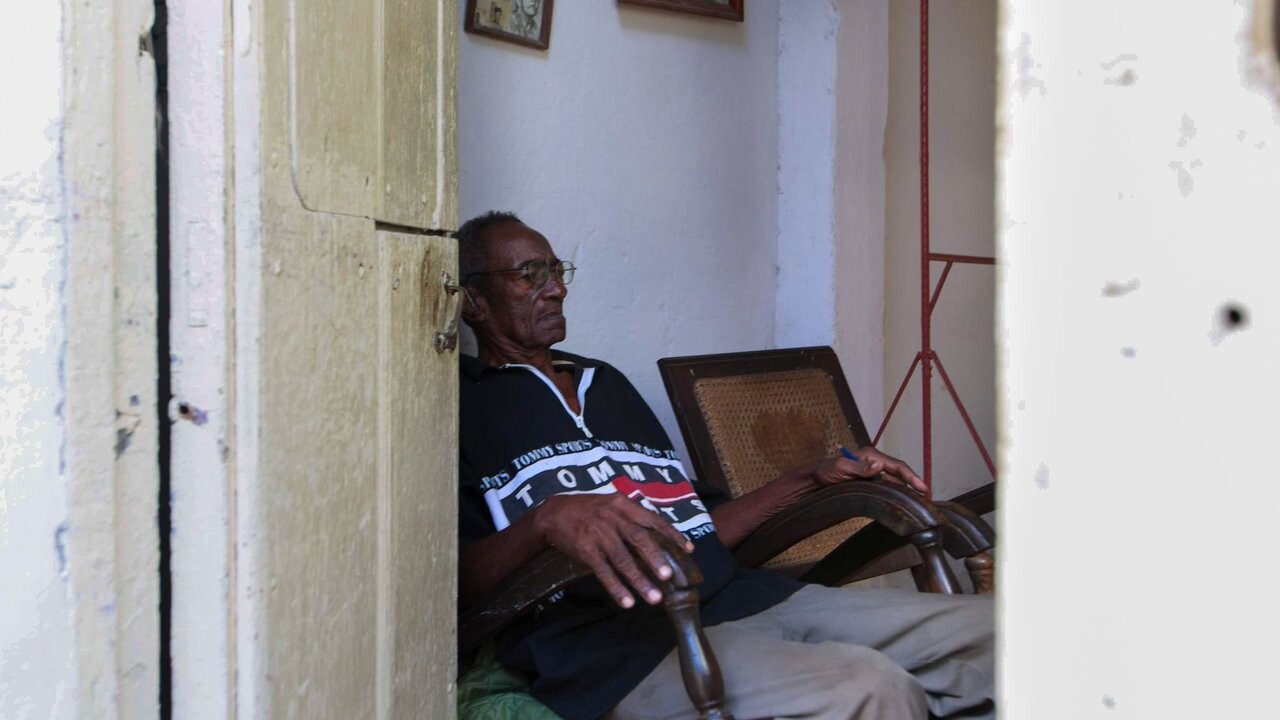
Why Does Standing Take More Effort With Age?
Rising from a chair uses muscles throughout the lower body. The National Institute on Aging identifies sarcopenia as the age-related loss of muscle mass and strength. Muscle power and physical performance also decline with age.
One study compared chair rises in 11 healthy younger adults and 11 healthy older adults. The older participants had lower knee-extensor strength and used a greater share of their quadriceps capacity. After the researchers tired the participants’ knee muscles, both groups relied more heavily on muscles around the ankles and hips.
The study helps explain why chair rises can demand considerable lower-body effort, particularly when strength is limited or muscles are tired. It did not investigate groaning.
How Do Stiff Joints Contribute?
“Osteoarthritis is the most common form of arthritis among older adults,” according to the National Institute on Aging. It develops as tissues that cushion the ends of bones break down over time, and it can cause pain, stiffness, and swelling.
Osteoarthritis commonly affects weight-bearing joints, including the knees and hips. Symptoms of knee osteoarthritis can make getting into and out of chairs difficult.
A noisy chair transfer does not establish that someone has arthritis. The agency notes that “not everyone with osteoarthritis feels pain.” Persistent symptoms should be discussed with a health care professional.
With a clinician’s approval, a safe, well-rounded exercise program can reduce osteoarthritis pain and stiffness while improving flexibility, strength, and endurance.
What Can Research on Vocal Effort Tell Us?
One study examined forced exhalation, inhalation, grunting, and the Valsalva maneuver while collegiate tennis players performed a simulated forehand stroke. Breathing conditions changed muscle activity, and the authors concluded that grunting or quieter forced exhalation could enhance force production in that task.
This was a study of athletes performing a forceful sports movement, not older adults rising from chairs. It offers an example of vocalization occurring during physical effort, but it does not explain why a particular person groans while sitting or standing.

Can Muscle Fatigue Affect Chair Rises?
Fatigue is “a feeling of weariness, tiredness, or lack of energy,” according to the National Institute on Aging. It can be a normal response to physical activity, emotional stress, boredom, or insufficient sleep, but it can also signal a health problem.
In the chair-rise study, tiring the knee-extensor muscles changed how participants used other lower-body muscles. That finding concerns muscle activity during chair rises; it does not establish a connection between fatigue and groaning.
When Should You Talk to a Doctor?
Look beyond the sound and notice what happens during and after the movement. These changes make a medical conversation more important:
- New pain. The National Institute on Aging recommends seeing a doctor about new pain because addressing it early may make it easier to manage.
- Pain that lasts. MedlinePlus advises contacting a health care provider when joint pain continues for more than several days.
- Severe swelling. Contact a provider about severe, unexplained joint pain and swelling, particularly when other unexplained symptoms are present.
- A hot joint. A red, hot, and swollen joint warrants urgent medical attention. A fever alongside possible arthritis symptoms may require immediate care.
- Lasting fatigue. Call a provider when tiredness or low energy continues for several weeks without relief.
Before the appointment, note what is stiff or swollen, when symptoms occur, how long they last, and what helps. The Arthritis Foundation recommends tracking those details before seeing a doctor.
A groan cannot provide a diagnosis. A calm question and careful attention to pain, swelling, fatigue, and changing mobility will tell you more than the sound alone.
Chair rises can become more demanding when strength is limited, muscles are tired, or painful joints interfere with movement, but a groan alone offers little certainty. Have you noticed yourself or someone you care about groaning when sitting down or standing up?
This article is for general information and isn’t a substitute for advice from your doctor.
Follow The HyperHive on MSN for more stories like this.
Sources:



