Twin beds, separate bedrooms, one partner on the couch. Is sleeping apart a sign of trouble in a long marriage?
Not necessarily. Sleep experts say it’s often about getting a good night’s rest, and sometimes it points to a health problem that can be treated.
Here’s what surveys show, why couples end up sleeping apart, and what experts suggest.
How Common Is It?
It may be less common among older couples than you’d expect. In a 2025 survey for the American Academy of Sleep Medicine (AASM), 31% of U.S. adults said they had a “sleep divorce,” sleeping apart from a partner to get better rest. Adults 65 and older were the least likely to do it, at 18%, compared with 39% of those ages 35 to 44.
An earlier AASM survey, from 2023, found that 22% of baby boomers sometimes or always slept in another room to accommodate a bed partner, compared with 43% of millennials.
AASM spokesperson Dr. Seema Khosla, a pulmonologist, said the term may sound harsh, but it simply means “people are prioritizing sleep and moving into a separate room at night when needed.”
Common Reasons Older Couples Sleep Apart
- Snoring and sleep apnea. In a study of more than 5,000 adults 65 and older, 33% of men and 19% of women snored loudly. The National Heart, Lung, and Blood Institute (NHLBI) says the risk of sleep apnea increases with age.
- Insomnia. The NHLBI says the chances of insomnia also increase with age, and it is more common in women.
- Nighttime bathroom trips. Up to 60% of older people get up two or more times a night to urinate, according to a 2010 review in the Journal of Urology.
- Restless legs. Restless legs syndrome affects 5% to 10% of U.S. adults, becomes more common with age, and tends to be worse at night, according to MedlinePlus.
- Different schedules. The body clock shifts with age, so some older adults get sleepy and wake up earlier, MedlinePlus notes. Couples may also disagree about room temperature, light, or noise.
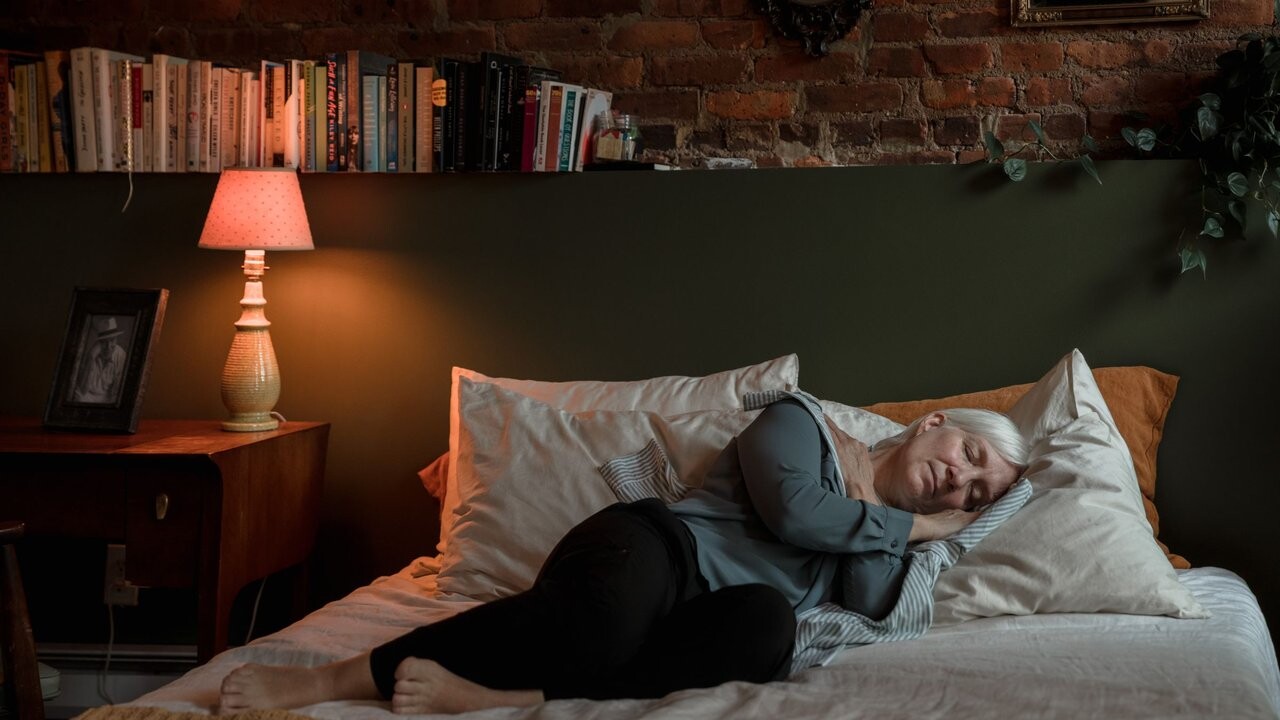
Can Sleeping Apart Help a Relationship?
For some couples, it may. Research has linked poor sleep with more conflict. In a study at the University of California, Berkeley, people reported more conflict with their partners after a bad night’s sleep.
Another study, by sleep researcher Wendy Troxel and a colleague, found that when men slept better, couples had fewer negative interactions the next day.
Sharing a bed has benefits, too. A small study of younger couples linked sleeping together with more dream (REM) sleep, and a survey of working-age adults linked sharing a bed with less severe insomnia and lower stress. Those findings show associations, not proof.
When Sleeping Apart Is a Warning Sign
If loud snoring is what’s driving you apart, it’s worth getting checked. Khosla has advised that the partner who snores should talk with a doctor about sleep apnea, and that applies to women as well as men. Choking, gasping, or pauses in breathing during sleep are strong warning signs.
Sleep apnea often goes unnoticed. The AASM estimates that nearly 30 million U.S. adults have it, and about 80% of cases are undiagnosed.
Treatment can help both partners. In a small Mayo Clinic study of 10 couples, after the person with sleep apnea started using a CPAP machine, the spouse’s sleep efficiency rose from 74% to 87%.

How to Stay Close While Sleeping Apart
- Talk about it. The AASM suggests talking openly about your sleep needs rather than making it a silent decision.
- Plan time together. Spend time together before bed, or start the morning together, before going to separate rooms.
- Treat the cause. If snoring, pain, or nighttime bathroom trips are the reason, ask your doctor about treatment.
- Revisit the choice. In a 2023 Sleep Foundation survey, about 1 in 4 couples who had started sleeping apart later went back to sharing a bed.
Sleeping apart isn’t a sign that a marriage is failing. For many older couples, it’s a practical choice, and sometimes it’s a clue to a health problem worth treating.
This article is for general information and isn’t a substitute for advice from your doctor.
Sources:
- American Academy of Sleep Medicine: Nearly one-third of Americans engage in a sleep divorce (2025)
- American Academy of Sleep Medicine: Over a third of Americans opt for a sleep divorce (2023)
- Sleep: Snoring and sleep apnea in adults 65 and older (1996)
- NHLBI: Sleep Apnea, Causes and Risk Factors
- NHLBI: Insomnia, Causes and Risk Factors
- Journal of Urology: The prevalence and causes of nocturia (2010)
- MedlinePlus Genetics: Restless legs syndrome
- MedlinePlus: Aging changes in sleep
- Berkeley News: Lack of sleep and couples’ conflict (2013)
- Psychosomatic Medicine: Couples’ sleep and daily interactions (2010)
- Frontiers in Psychiatry: Bed-sharing and REM sleep in couples (2020)
- EurekAlert: Sharing a bed with a partner and sleep health (2022)
- Mayo Clinic Proceedings: Effect of sleep apnea treatment on the spouse’s sleep (1999)
- Sleep Foundation: Sleep divorce versus sharing a bed (2023)
You might also want to read: How Much Sleep Do Adults Over 65 Need? What Sleep Experts and Health Agencies Recommend